Quick Summary
To balance hormones naturally, focus on a consistent sleep routine, daily stress management, balanced nutrition and regular movement, then talk with a licensed provider about any persistent symptoms. Small, steady habits tend to matter more than dramatic changes.
- Set the same wake time most days, including weekends, to support your body’s daily hormone rhythm.
- Limit caffeine after early afternoon and dim lights about an hour before bed.
- Practice slow breathing with a longer exhale for 5 to 10 minutes daily.
- Pair protein, fiber and healthy fats at each meal rather than relying on refined carbohydrates.
- Check with a licensed provider before starting or stopping any hormone supplement.
Table of Contents
- Understanding the Signs Your Hormones May Be Out of Balance
- Step 1: Build a Consistent Sleep Routine
- Step 2: Manage Stress to Support Your Adrenal System
- Step 3: Adjust Your Nutrition and Daily Movement
- How Acupuncture for Hormonal Balance Fits Into a Natural Plan
- Naturopathic Medicine for Hormones and Functional Medicine Hormone Support: What to Ask
- Booking Your First Hormone-Focused Visit at Source Acupuncture in Pacific Beach
- Frequently Asked Questions
Understanding the Signs Your Hormones May Be Out of Balance
Hormone balance affects almost everything, from how you sleep to how your mood holds up through a long workday. Knowing the common signs is the first step toward understanding what your body may be telling you. This guide walks you through practical, lifestyle-based steps to help you support hormone health. (Source: the Centers for Disease Control and Prevention (CDC))
Hormones are chemical messengers made by glands like the thyroid, adrenals, and ovaries. When levels shift too far in one direction, the effects tend to show up in ways that are easy to dismiss. Fatigue, poor sleep, and irritability are often the first clues.
Common Physical and Mood Signs
Many people notice changes in energy, weight, sleep, or menstrual patterns before they connect them to hormones. Keep an eye on these patterns:
- Persistent tiredness that rest does not fix
- Trouble falling or staying asleep
- Sudden shifts in mood, anxiety, or irritability
- Changes in weight, especially around the midsection
- Irregular or heavier periods, or PMS that feels worse than before
- Hot flashes, night sweats, or dry skin
A single symptom rarely points to one cause. Track what you notice for a few weeks so you can talk through the pattern with a qualified provider.
What Commonly Throws Hormones Off Track
Several everyday factors can disrupt the balance over time. Chronic stress, poor sleep, and a diet high in sugar and processed food are common culprits. Major life changes, including perimenopause, can also shift levels noticeably.
Watch out: Stopping or starting a hormone supplement without guidance can make symptoms worse. Always check with a licensed provider first.
Step 1: Build a Consistent Sleep Routine
Sleep is one of the most direct levers you have for supporting overall hormone health. Your body releases many hormones on a daily rhythm, and irregular sleep can throw that rhythm off.
Aim for the same bedtime and wake time most days, including weekends. Consistency matters more than chasing a perfect eight hours on any single night.
- Set a fixed wake time and stick to it
- Dim lights and put screens away about an hour before bed
- Keep the bedroom cool, dark, and quiet (the CDC)
- Limit caffeine after early afternoon
Step 2: Manage Stress to Support Your Adrenal System
Stress matters for hormone health mainly because the body’s stress response and the hormonal systems that govern reproduction, thyroid function, and metabolism share signaling pathways. When stress is frequent or prolonged, the hypothalamic-pituitary-adrenal axis stays activated and cortisol output can stay elevated for longer than it should. Over time, many people notice disrupted sleep, cravings, irritability, and irregular cycles, though stress is rarely the only cause of any of these.

A practical approach works better as a routine than as a single dramatic change. A workable weekly structure looks like this:
- Daily (5 to 10 minutes): Slow breathing with a longer exhale than inhale, for example four seconds in and six seconds out, repeated for several minutes. Doing this before checking email in the morning or before bed gives the nervous system a predictable cue.
- Daily (one short break): A walk of ten minutes or more outside, ideally without a phone. Daylight exposure in the morning also supports the body’s daily rhythm.
- Three times a week: A workout or activity that you finish feeling more capable rather than depleted. Gentle strength work, cycling, swimming, or yoga are common choices, and they tend to be easier to sustain than high-intensity programs that leave you more fatigued.
- Weekly: A brief review of what drained your energy and what restored it. Notice patterns, such as particular meetings, commutes, or obligations, and decide one thing to adjust.
Boundaries matter as much as relaxation techniques. Saying no to one recurring commitment, or moving a demanding task to a time when you have more capacity, often helps more than adding another habit.
Watch out: Relying on alcohol, late-night eating, or doomscrolling to wind down can feel calming but usually disrupts sleep and makes next-day stress harder to manage.
See a clinician if stress is accompanied by persistent low mood, panic symptoms, thoughts of self-harm, significant weight change, or fatigue that does not improve after several weeks of consistent habits. Those symptoms can have medical causes, including thyroid or other endocrine conditions, and a licensed provider can evaluate them directly.
The article lays out a simple weekly stress routine, summarised below so you can scan it at a glance. (Source: the National Institutes of Health (NIH))
| Frequency | Practice | Detail |
|---|---|---|
| Daily | Slow breathing | 5 to 10 minutes, longer exhale |
| Daily | Short break | Walk of 10 minutes or more outside |
| Three times a week | Workout | Activity you finish feeling capable |
| Weekly | Energy review | Note what drains and restores you |
Step 3: Adjust Your Nutrition and Daily Movement
Eating regular, balanced meals helps keep blood sugar steady, which supports hormone function. Pair protein, fiber, and healthy fats at each meal rather than relying on refined carbohydrates.
Movement helps too. Moderate exercise supports insulin sensitivity and mood, while extreme training without enough recovery can add stress. Mix strength work, walking, and rest days.
- Include protein and vegetables at every meal
- Choose whole grains and fiber over refined starches
- Walk daily and add strength training two or three times a week
- Allow recovery days when you feel run down
How Acupuncture for Hormonal Balance Fits Into a Natural Plan
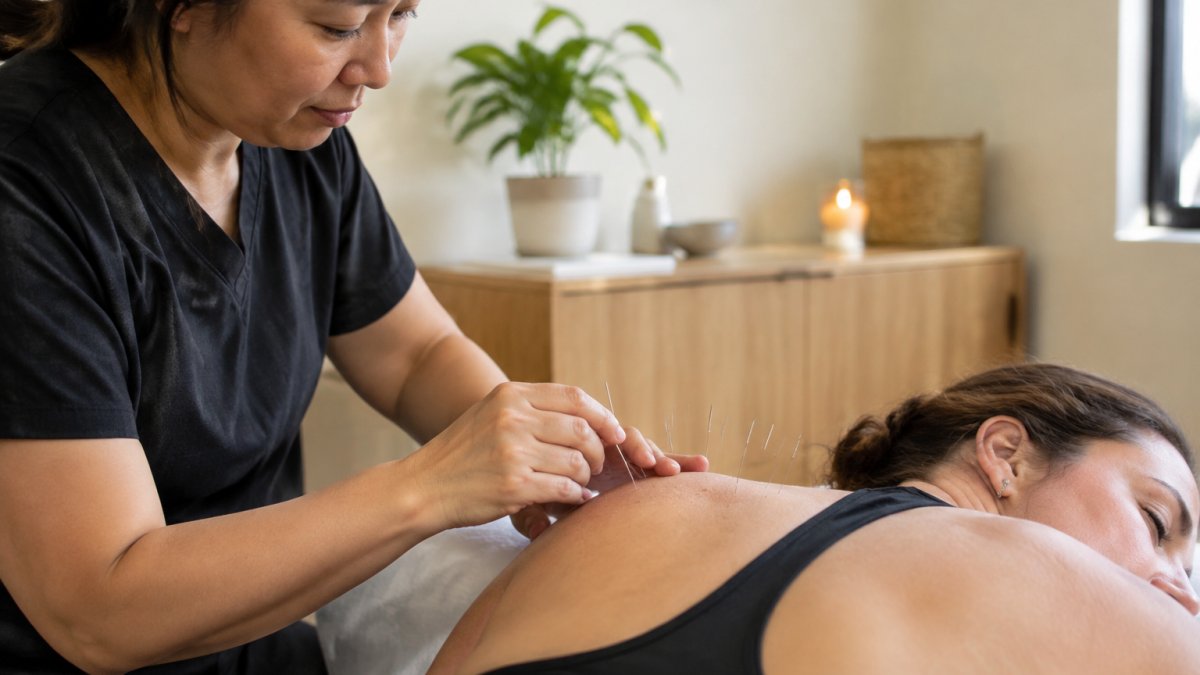
Acupuncture is a complementary therapy that some people explore for stress, sleep, and pain-related concerns. Read a focused guide on acupuncture for PCOS symptom management to see how the approach is applied to a related hormonal condition. It involves inserting thin, sterile needles at specific points on the body.
Here is what the evidence generally supports and what it does not. Research on acupuncture for hormone-related conditions is limited and inconsistent, so it should not be viewed as a way to correct a diagnosed hormone condition. Discuss any use of acupuncture with a qualified clinician.
When evaluating an acupuncture provider, practical questions help separate evidence-informed care from overstated claims:
- Is the practitioner licensed to practice acupuncture in California?
- Do they explain what they can and cannot expect to achieve, and how progress will be measured?
- Do they ask about your medications, medical history, and any diagnosed conditions before treating you?
- Do they encourage you to continue medical care rather than replace it?
- Are they transparent about session costs and how many visits they recommend before reassessing?
Watch out: Acupuncture should not replace evaluation of a hormone-related symptom such as heavy bleeding, abnormal discharge, rapid weight change, or symptoms that persist. Acupuncture carries some risks, such as bruising or soreness, and may not be appropriate for everyone, including people with certain bleeding disorders or who are pregnant. Discuss your health history with a qualified provider before treatment.
Acupuncture may be one element of a broader plan that also addresses sleep, nutrition, movement, and medical follow-up. If you are considering it, tell your primary care clinician or gynecologist so your care stays coordinated.
Naturopathic Medicine for Hormones and Functional Medicine Hormone Support: What to Ask
Some naturopathic and functional medicine providers take a broader approach that considers lab markers, diet, sleep, and stress together.
When you meet a provider, ask what testing they recommend and why, how they will track progress, and when you should seek conventional medical care. A good provider explains the reasoning behind every recommendation.
Review functional lab testing in Pacific Beach, San Diego to see what personalized lab insights look like locally. For a broader comparison of providers, see holistic clinics in Pacific Beach.
Booking Your First Hormone-Focused Visit at Source Acupuncture in Pacific Beach
Bring a list of current medications and supplements, along with any recent lab results, to your consultation.
Keeping notes on sleep, energy, and mood between sessions can help you and your provider discuss changes over time.
Ready to get started? Book an acupuncture session in Pacific Beach and talk through your options with the team.
Hormone balance is a long game, and small, consistent habits matter most. At Source Acupuncture, our licensed practitioners can help you build a plan around sleep, stress, nutrition, and acupuncture. Get started with Source Acupuncture and take the next step toward feeling like yourself again.
Frequently Asked Questions
What is the best natural way to balance hormones?
There is no single fix. Most people start with consistent sleep, stress management, balanced meals with enough protein and fiber, and regular movement. These basics support the body’s hormone systems and are low risk to try. Track changes in sleep, energy and cycle patterns for several weeks. If symptoms persist or worsen, a licensed clinician can evaluate the cause, since hormone problems can have medical causes that need testing and treatment.
Can acupuncture help with hormonal balance?
Some people report symptom relief from acupuncture for hormonal balance, including stress, sleep and menstrual symptoms, but evidence is still limited and varies by condition. Acupuncture carries some risks and should complement, not replace, medical evaluation. Ask a practitioner how they assess your case and what outcomes they track, and tell your primary care provider about any treatments you are using.
When should I see a doctor about hormone symptoms?
Seek medical care if you have irregular or very heavy bleeding, sudden weight change, persistent fatigue, unusual hair growth, mood changes that interfere with daily life, or symptoms that do not improve after several weeks of lifestyle changes. Pregnancy, thyroid problems and other conditions can mimic hormone imbalance, so testing matters. A qualified clinician can order appropriate labs and explain your options.
Are supplements safe for balancing hormones?
Supplements are not regulated the same way as prescription drugs in the United States, and quality and dosing vary widely. Some herbs and hormone products can interact with medications or cause side effects. Check the Office of Dietary Supplements at the National Institutes of Health for evidence summaries, choose third-party tested products, and review any supplement with your clinician before starting it.