Last Updated: November 5, 2026
Quick Summary
Alternatives to microneedling for acne scars include laser resurfacing, chemical peels, subcision and TCA CROSS, chosen by scar type. Rolling scars often need subcision, boxcar scars may respond to fractional laser or peels, and ice-pick scars may need TCA CROSS. Skin tone and recovery time also shape which option fits.
- Scar type matters most: rolling, boxcar, ice-pick and hypertrophic scars each respond to different treatments.
- Subcision releases fibrous bands tethering rolling scars to deeper tissue.
- TCA CROSS applies high-concentration acid directly into ice-pick scars, often over several sessions.
- Darker skin tones face higher risk of pigment changes after ablative CO2 laser.
- Neither laser nor microneedling removes scars; the realistic goal is meaningful improvement.
Table of Contents
- Why Look Beyond Microneedling for Acne Scars
- Match the Treatment to Your Scar Type
- Laser Treatment for Acne Scars
- Chemical Peels for Acne Scars
- Microneedling vs Laser for Acne Scars: How They Compare
- At-Home Treatments for Acne Scars and Their Limits
- Planning Your Next Step: Skin Tone, Safety, and a Consultation
- Frequently Asked Questions
Acne scars can linger for years after breakouts clear, and microneedling is often the first treatment people hear about. It is not the only option, and it is not always the right one. This guide walks through the main alternatives to microneedling for acne scarring so you can compare them on your own terms.
Acne scars generally fall into a few types, and each responds differently to treatment. Some approaches work by removing a thin layer of skin, others by heating deeper tissue, and others by encouraging the skin to rebuild collagen over several weeks. Knowing where your scars fall on that spectrum matters more than picking a treatment name from a list.
Why Look Beyond Microneedling for Acne Scars
Microneedling creates tiny channels in the skin that trigger a healing response. Results vary, and downtime, skin sensitivity and cost differ from person to person.
People with darker skin tones, active inflammation or very deep scars often need a different plan. A dermatologist or qualified clinician can help you judge whether microneedling fits your skin. Looking at alternatives is simply a way to make sure you choose with full information.
Match the Treatment to Your Scar Type
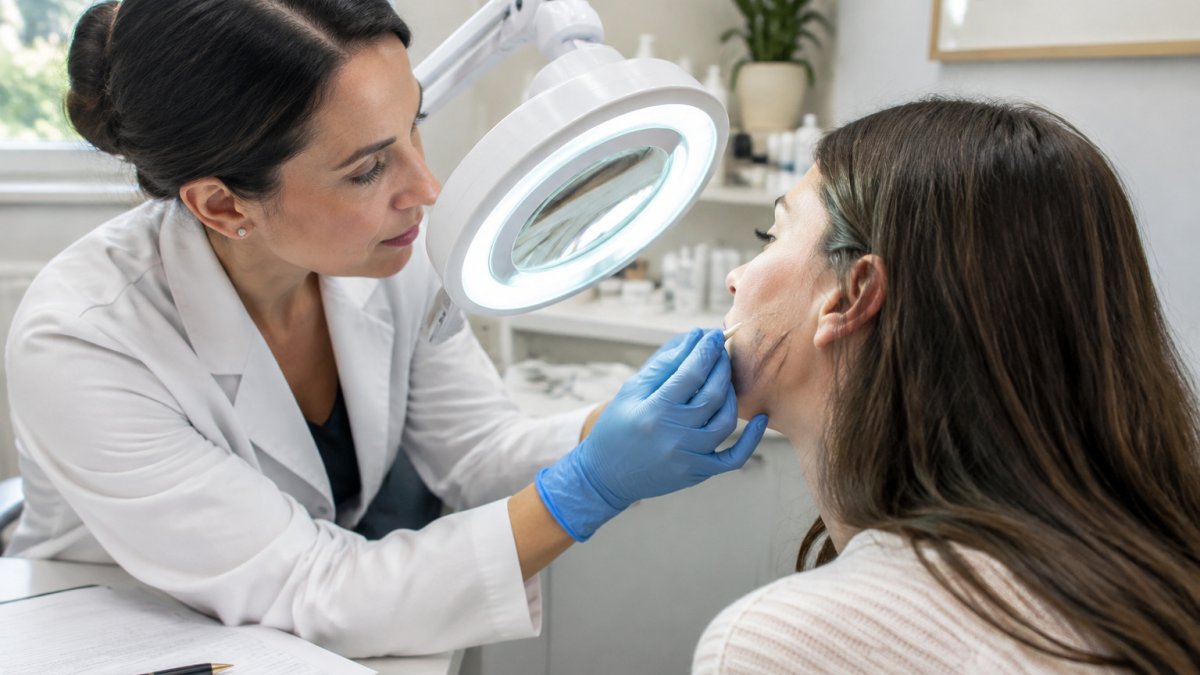
Acne scarring is not one condition, and the single biggest reason a treatment disappoints is that it was matched to the wrong scar type. Atrophic scars, the depressed kind that account for most acne scarring, break down into three shapes, and each responds to different tools. A clinician will usually examine the skin under good light, sometimes with magnification, and may palpate the scar to judge whether tethers are holding it down.
Rolling scars are broad, shallow depressions with sloping edges, often described as wave-like. They are frequently tethered to deeper tissue by fibrous bands. Because the problem is partly structural, resurfacing alone often produces only modest change. Subcision, in which a small needle or cannula is used to release the fibrous bands under the scar, is commonly recommended for rolling scars, sometimes combined with fillers or resurfacing in the same or later sessions. Fractional laser or radiofrequency microneedling can then refine texture once the tether is released.
Boxcar scars have distinct, sharply defined vertical edges and a flat or slightly rounded base. Shallow boxcar scars often respond to fractional resurfacing, medium-depth chemical peels, or radiofrequency microneedling. Deeper boxcar scars may need ablative fractional CO2 laser, or a combination of subcision and resurfacing, because the edges need to be leveled as well as the base lifted. Determining whether these structural interventions or surface-level treatments are appropriate often requires a detailed chemical peels comparison to weigh the recovery time against the depth of the tissue remodeling required.
Ice-pick scars are narrow, deep, and pitted, and they are the most stubborn. Broad resurfacing frequently misses them because the beam or peel does not reach the base of a narrow tract. TCA CROSS, the focal application of high-concentration trichloroacetic acid directly into the scar, is a commonly used option for ice-pick scars, often over several sessions. Punch excision, in which the scar is removed and the defect closed, is another option for isolated deep ice-pick or boxcar scars.
A few practical points follow from this. Most people have a mix of scar types, so a realistic plan usually combines approaches rather than relying on one device. Hypertrophic scars, raised rather than depressed, follow a different pathway entirely and are often treated with intralesional corticosteroids or silicone sheeting rather than resurfacing (the American Academy of Dermatology). Post-inflammatory hyperpigmentation, the flat dark marks left after breakouts, is not a scar at all and usually fades with topical treatment and sun protection; treating it with resurfacing can make pigment worse.
A provider who recommends the same device for every scar type without examining tethering, depth, and scar shape is a reason to get a second opinion.
Each acne scar type responds to different treatments, as summarised below.
| Scar type | Typical approach | Key note |
|---|---|---|
| Rolling | Subcision, often with fillers or resurfacing | Fibrous bands tether the scar to deeper tissue |
| Boxcar (shallow) | Fractional resurfacing, medium peels, or radiofrequency microneedling | Sharp vertical edges with a flat or rounded base |
| Boxcar (deep) | Ablative fractional CO2 laser or subcision plus resurfacing | Edges need leveling as well as the base lifted |
| Ice-pick | TCA CROSS over several sessions, or punch excision | Narrow, deep tracts that broad resurfacing often misses |
| Hypertrophic (raised) | Intralesional corticosteroids or silicone sheeting | Raised rather than depressed, so a different pathway |
| Post-inflammatory hyperpigmentation | Topical treatment and sun protection | Not a scar; resurfacing can worsen pigment |
Laser Treatment for Acne Scars
Laser resurfacing is one of the more widely studied alternatives to microneedling for atrophic acne scars. Lasers deliver focused light energy that either removes tissue or heats it, prompting collagen remodeling over the following weeks and months. The meaningful differences between devices come down to depth, aggressiveness, recovery time, and pigment risk.
Ablative Fractional CO2 Lasers
Ablative fractional CO2 lasers remove microscopic columns of skin while leaving surrounding tissue intact. A clinician can explain the expected recovery timeline, number of sessions and when results are assessed for your specific plan.
Pigment risk is the main trade-off. People with darker skin tones face a higher chance of post-inflammatory hyperpigmentation or hypopigmentation after ablative CO2, so many clinicians use lower densities, pre-treat with a topical retinoid or hydroquinone regimen, and test a small area first. Sun protection before and after treatment is not optional.
Non-Ablative and Fraxel-Style Lasers
Non-ablative fractional lasers heat the dermis without removing the surface. Because they involve less surface disruption, they are sometimes discussed as an option for milder scarring, and a clinician can advise whether they suit your skin.
What the Evidence and Real-World Plans Look Like
Neither approach removes scars; the realistic goal is meaningful improvement in depth, texture, and shadowing rather than elimination.
In practice, lasers are frequently sequenced with other treatments rather than used alone. A common pattern is to control active acne first, release tethered rolling scars with subcision, then use fractional laser to refine texture, with topical retinoids maintained between sessions. Active acne, recent isotretinoin use, pregnancy, a history of keloids, and recent sun exposure or tanning are all reasons a clinician may delay or modify laser treatment.
Aggressive settings chosen to speed results can increase the risk of pigment problems, especially on darker skin, so a conservative approach and a clear pigment plan matter.
Chemical Peels for Acne Scars
Chemical peels apply a solution to the skin that causes controlled exfoliation (the American Academy of Dermatology). Superficial peels, often using glycolic or salicylic acid, are generally used for mild texture issues and uneven tone. Medium and deep peels can address more significant scarring but carry greater risk of irritation, pigment change and prolonged redness.
Peels are rarely a stand-alone fix for deep scars. They are more often used as part of a broader plan. Your clinician will consider your skin type and history before deciding which strength is appropriate.
Microneedling vs Laser for Acne Scars: How They Compare
Both approaches stimulate collagen, but they differ in intensity and recovery. Microneedling is generally considered less aggressive and may suit people who want modest change with limited downtime. Laser treatments often produce more pronounced results for deeper scars but usually involve longer recovery and a careful assessment of pigment risk.
The honest answer to which is better depends on your scar type, skin tone, budget and tolerance for downtime. Neither is universally superior. A consultation can help you weigh these trade-offs against your goals.
At-Home Treatments for Acne Scars and Their Limits
Over-the-counter products containing retinoids, vitamin C or exfoliating acids are widely used for texture and tone. These can improve the appearance of mild marks over time and support the results of in-office treatments. However, they do not reshape deep scars, and results take months rather than weeks.
Be cautious with at-home devices and aggressive scrubbing, since pressing too hard or using strong acids without guidance can worsen inflammation and darken certain skin tones.
Planning Your Next Step: Skin Tone, Safety, and a Consultation
Skin tone plays a large role in choosing treatments. Lasers and peels carry a higher risk of post-inflammatory hyperpigmentation in darker skin, so the safest approach often starts with a conservative option and builds from there. Certain conditions, medications and recent sun exposure can also affect candidacy.
A consultation with a qualified professional is the best way to build a realistic plan. Bring photos of your skin, a list of current products and any past treatments. If you are interested in gentler options or want to talk through your choices, you can book a consultation with Source Acupuncture to discuss which approach fits your skin. For lower-intensity options, you may also want to read about gentle microneedling alternatives for sensitive skin.
Frequently Asked Questions
What is the best alternative to microneedling for acne scars?
No single option is best for every scar. Fractional lasers suit deeper atrophic scars, chemical peels suit superficial texture and mild pigment changes, and topical retinoids support gradual remodeling. The right choice depends on scar type, skin tone, and how much downtime you can accept. A qualified clinician can examine your scars in person and recommend a plan matched to your skin rather than a generic ranking.
Can laser treatment improve acne scarring?
Yes, laser treatment is one of the most studied options for atrophic acne scars, and fractional lasers can produce visible improvement in rolling and boxcar scars. Results usually build over several sessions, and outcomes vary with scar depth and skin type. Laser carries risks of post-inflammatory hyperpigmentation, especially in darker skin tones, so the treating provider should choose settings carefully and discuss safety before you begin.
Are chemical peels effective for acne scars?
Chemical peels can help superficial acne scars, uneven texture, and mild discoloration, but they generally do little for deep ice-pick or boxcar scars. Medium-depth peels carry more downtime and pigmentation risk than superficial ones. Peels often work best as part of a series, and a provider can determine whether your scar type and skin tone make a peel a reasonable option.
Are there at-home alternatives to microneedling for acne scars?
Topical retinoids, vitamin C serums, and sunscreen can modestly improve texture and fading over months of consistent use. These products cannot reshape deep scars the way procedures can. Sunscreen daily is essential, since sun exposure worsens pigmentation. If scarring is significant, a consultation with a qualified clinician is a sensible next step.