Quick Summary
A foot massage can help ease numbness and tingling by providing gentle touch and pressure, though research is limited and it is a comfort measure rather than a cure. Use light pressure, check your skin often, and see a clinician if symptoms worsen.
- Keep pressure around 3 to 4 on a 0-to-10 scale, light enough that skin does not stay red.
- Check feet regularly for redness, blisters, or skin breaks, since numbness can hide pressure.
- Never use very hot oils, heating pads, or hot water on feet with reduced sensation.
- Skip massage on areas with open sores, swelling, infection, or new pain.
- Seek emergency care for sudden weakness, numbness on one side, or trouble speaking or walking.
Table of Contents
- How Foot Massage May Help Numbness and Tingling
- Safety First: Adapting Massage for Reduced Sensation and Fragile Skin
- Self-Massage for Neuropathy: A Step-by-Step Foot Routine
- How Long Should You Massage Your Feet for Neuropathy?
- Best Foot Massage Techniques, Lotions and Tools for Tingling Feet
- Foot Massagers for Neuropathy: Hands, Balls or Electric Devices
- When Numbness or Tingling Needs a Medical Evaluation
- Booking a Consultation for Foot Numbness at Source Acupuncture
- Frequently Asked Questions
How Foot Massage May Help Numbness and Tingling
Foot massage is a gentle way many people use to ease numbness and tingling in the feet. Research on massage for nerve symptoms is still limited, so think of it as a comfort measure, not a cure. (Source: National Institute of Neurological Disorders and Stroke)
Gentle touch and pressure may help you feel more comfortable. Some people report that light, steady pressure makes tingling feel less intense for a short time.
Here is what massage is generally thought to do:
-
Ease tension in the muscles of the feet and calves
-
Provide sensory input that can make odd sensations feel more manageable
-
Support relaxation, which may make symptoms easier to notice and track
Massage is not a replacement for medical care. If your numbness is getting worse, spreading, or causing weakness, see a clinician before trying any routine.
Safety First: Adapting Massage for Reduced Sensation and Fragile Skin
Numbness often means you cannot feel pressure well. That makes it easy to press too hard without knowing it. Check your feet regularly for redness, blisters, or skin breaks after each session.
If you have diabetes or poor circulation, take extra care (Diabetic footcare). Skip massage on any area with open sores, swelling, infection, or new pain. Ask your doctor before starting if you have a history of foot ulcers.
Watch out: never use very hot oils, heating pads, or hot water on feet with reduced sensation, because you may not notice a burn until the skin is damaged.
Self-Massage for Neuropathy: A Step-by-Step Foot Routine
This routine takes about 10 minutes per foot and is built for people whose feet feel numb, tingly, or less sensitive than usual. The goal is gentle, consistent sensory input, not deep tissue work. Use light to medium pressure, and stop if anything hurts.
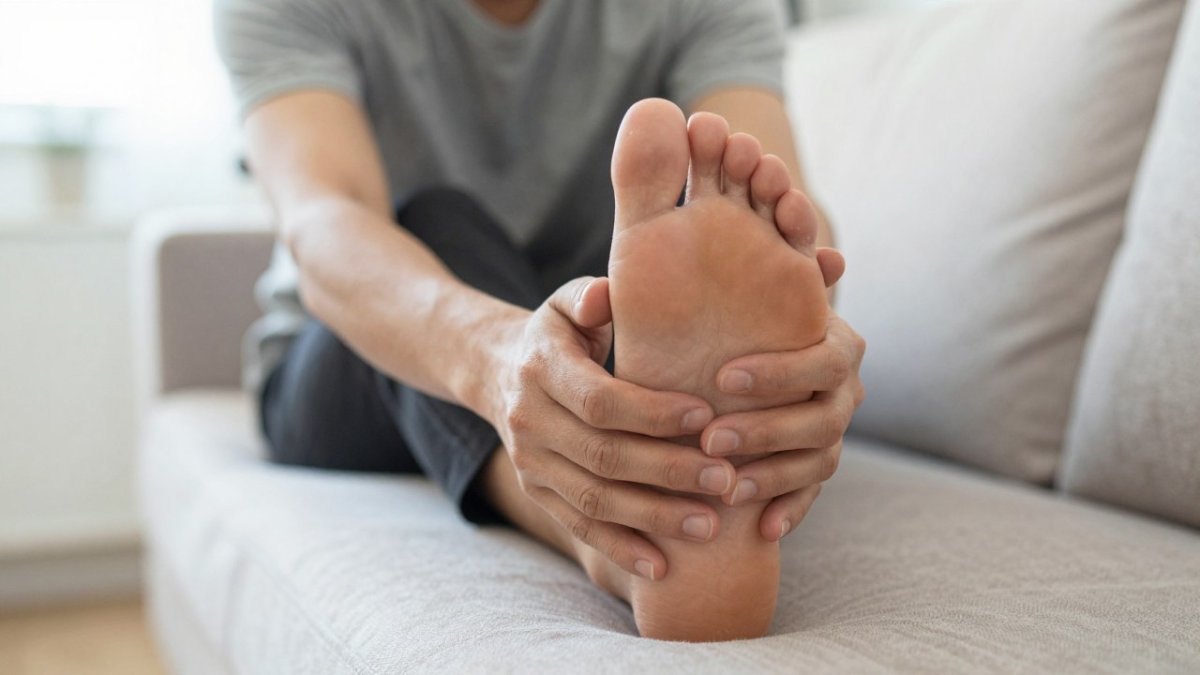
Before you start, set a pressure scale for yourself. On a 0-to-10 scale where 0 is no touch and 10 is pain, aim for 3 to 4, firm enough that you can feel the contact, light enough that the skin does not blanch white or stay red after you move on. Because numbness can hide pressure, check the skin every minute or two rather than trusting the sensation in your hands alone.
- Warm up your feet (about 1 minute). Sit comfortably and rest one foot on your opposite knee. Gently rub the top of the foot with your palm for 30 seconds, then the sole for 30 seconds. This wakes up the skin and gives you a baseline for how sensation feels today.
- Apply lotion (about 30 seconds). Use a plain, fragrance-free lotion, which can help your hands glide without friction. Use a small amount, a dime-sized dollop per foot is enough, and wipe off any excess so your grip stays predictable.
- Stroke the sole (1 to 2 minutes). Use your thumbs to make slow, upward strokes from the heel toward the toes. Move at roughly one stroke per second. Keep pressure at 3 to 4 on your scale.
- Massage the arch (about 1 minute). Use gentle circles with your thumb along the arch, moving from heel to ball of the foot. Circle in one direction for 30 seconds, then the other. If the arch feels tender, lighten up rather than pushing through.
- Work the toes (about 1 minute). Hold each toe and gently squeeze and roll it for about 10 seconds per toe. Do not pull or twist. If a toe feels numb, spend a few extra seconds on gentle squeezing rather than adding pressure.
- Finish with the calf (about 1 minute). Use long, upward strokes from the ankle to below the knee. Keep the pressure light, the calf can take more than the foot, but the point here is circulation and relaxation, not deep massage.
Afterward, sit for a minute and notice how the foot feels: calmer, more tingly, or unchanged. A calm, comfortable feeling is the goal. If tingling increases and stays increased for more than an hour, shorten the next session or lighten the pressure.
Watch out: if you cannot feel your hands on your feet at all, do not rely on sensation to judge pressure, use a mirror or ask someone to watch the skin for redness, and keep sessions short until you have a reliable way to check.
A simple way to make this routine useful over time is to log it. Note the date, which foot, how long you massaged, the pressure level you used, and how the foot felt immediately after and one hour later. A week of notes shows patterns that a single session cannot.
The routine below is laid out step by step, with the approximate time for each part.
| Step | What to do | Time |
|---|---|---|
| Warm up | Rub the top and sole of the foot with your palm | About 1 minute |
| Apply lotion | Use a small, plain, fragrance-free amount | About 30 seconds |
| Stroke the sole | Slow upward thumb strokes from heel to toes | 1 to 2 minutes |
| Massage the arch | Gentle thumb circles, heel to ball of foot | About 1 minute |
| Work the toes | Squeeze and roll each toe, no pulling | About 1 minute |
| Finish with the calf | Long upward strokes, ankle to below knee | About 1 minute |
How Long Should You Massage Your Feet for Neuropathy?
Many people start with short sessions and adjust based on how their feet respond.
Longer is not always better, and some people notice more tingling or soreness after long sessions. Keep a short note of how long you massaged and how your feet felt an hour later. This simple log helps you and your clinician see what works.
Best Foot Massage Techniques, Lotions and Tools for Tingling Feet
Hands are the simplest option. Compare foot massage techniques for nerve pain relief in our dedicated article. Gentle thumb strokes and kneading give you full control over pressure.
A tennis or lacrosse ball rolled under the foot can add firm pressure. Roll slowly and avoid any spot that causes sharp pain.
For lotion, choose a plain, unscented option. Strong fragrances can irritate sensitive skin. Avoid products with menthol or peppermint if they cause burning on numb skin.
Foot Massagers for Neuropathy: Hands, Balls or Electric Devices
Each option suits different needs:
- Hands: Best for full control and low cost. Good for beginners.
- Balls: Best for targeted firm pressure on the sole. Inexpensive and portable.
- Electric massagers: Best for hands-free use, but they can deliver intense vibration you may not feel well. Use the lowest setting and check your skin often.
Many people start with hands and add a ball later. Choose whatever you can use consistently and comfortably.
When Numbness or Tingling Needs a Medical Evaluation
Massage is a comfort measure, and it should never delay a diagnosis. The tricky part is knowing which symptoms can wait for a routine visit and which need care right away.
Seek emergency care now if you notice sudden weakness or numbness on one side of the body, sudden trouble walking or loss of balance, slurred speech, vision changes, a drooping face, or new loss of bladder or bowel control. These can signal a stroke or another serious neurological problem and are not a reason to try massage first.
**Book a prompt visit, within days, not weeks, ** if you have a foot wound, blister, or sore that is not healing, especially if you have diabetes; redness, warmth, or swelling that is spreading; a foot that looks blue, pale, or unusually cold; or numbness that appeared suddenly after an injury or a long period of pressure. Persistent sensations of electric shock or sharp, stabbing pain often require the specialized clinical oversight found at the Precision Diabetes Hub to prevent further nerve degradation.
Schedule a routine visit if your numbness or tingling is steadily worsening, has lasted several weeks, is spreading up the leg, comes with pain that wakes you at night, or does not improve with simple care like the routine above. See what the evidence says about acupuncture for a related nerve-driven condition before you decide. A common pattern is tingling that starts in the toes and moves inward, that progression is worth mentioning to a clinician even if it is mild.
At the visit, a clinician will typically ask about timing and location, check sensation with light touch and a small vibrating tuning fork, test reflexes and muscle strength, and look at your feet and shoes. They may order blood work for blood sugar, vitamin B12, and thyroid function, because those are common and treatable contributors to peripheral neuropathy. Bring a short log of your symptoms, when they started, what makes them better or worse, and how massage affects them, so the visit is efficient.
Massage can continue alongside a workup, but pause it on any area that is being evaluated for a wound, infection, or new swelling until you have been cleared. If a cause is found, massage may still help with comfort, but it does not replace treatment of the underlying condition.
Booking a Consultation for Foot Numbness at Source Acupuncture
If you want professional support alongside self-care, book a consultation at Source Acupuncture to talk through your symptoms with a licensed practitioner. Choosing the right practitioner matters, and this guide on choosing an acupuncturist for thyroid support explains what to look for.
For a deeper walkthrough of foot techniques, see our foot massage techniques for nerve pain relief article. A practitioner can help you decide what fits your routine and when to check in with your doctor.
Frequently Asked Questions
Does foot massage help with numbness?
Foot massage may help some people feel more comfortable when numbness or tingling is present. Gentle pressure can encourage a sense of warmth and relaxation, and some people report temporary relief of discomfort afterward. Massage does not repair damaged nerves, and it is not a replacement for medical care. If numbness is worsening, is new, or affects both feet, speak with a healthcare provider before relying on massage as a main approach.
How long should you massage your feet for neuropathy?
Many people start with five to ten minutes per foot, using light to moderate pressure. Stop if the massage causes sharp pain, increased tingling, or skin irritation. Shorter sessions done more often are often easier to tolerate than one long session. Because sensation may be reduced, check the skin often for redness or blisters, and adjust the time based on how your feet respond.
Is there a way to reverse numbness in feet?
Massage alone does not reverse nerve damage. Numbness can have many causes, including diabetes, vitamin deficiencies, and circulation problems, and the right treatment depends on the cause. A healthcare professional can evaluate the symptoms, order tests if needed, and recommend a plan. Foot massage may be a comfort measure alongside that care, not a cure.
When should numbness or tingling in the feet be checked by a healthcare professional?
Seek evaluation if numbness or tingling is new, spreading, worsening, or affecting both feet, or if you notice weakness, balance problems, foot sores that heal slowly, or changes in skin color. People with diabetes should check their feet regularly and report any changes promptly. A licensed clinician can help identify the cause and discuss safe options for care.