Last Updated: October 31, 2026
Quick Summary
A foot massage for nerve pain uses gentle, steady pressure to ease daily discomfort and help you relax, but it does not repair damaged nerves or replace medical care. Start with five to ten minutes per foot, keep pressure light, and check your feet before every session because reduced sensation can hide injuries.
- Soak feet in warm water for about five minutes, then apply lotion or oil before massaging.
- The full routine takes about eight to twelve minutes per foot and moves from sole strokes to ankle mobility.
- Avoid deep kneading and vigorous rubbing, which can irritate sensitive nerves.
- Set a timer for early sessions and halve duration and pressure if soreness appears the next day.
- Get clinician clearance first if you have diabetes, poor circulation, or fragile skin.
Table of Contents
- Why Foot Massage Can Soothe Nerve Pain
- Foot Massage for Neuropathy: What the Evidence Says
- Foot Massage Safety for Neuropathy: Check Before You Touch
- Step-by-Step Foot Massage Techniques for Nerve Pain
- How Long Should a Foot Massage Duration Be?
- Foot Exercises for Neuropathy That Support Massage
- Book a Professional Session at Source Acupuncture
- Frequently Asked Questions
Why Foot Massage Can Soothe Nerve Pain
Gentle, steady pressure is often described as helping people with burning, tingling, and numbness feel more comfortable on their feet. A foot massage for neuropathy is not a cure, but it can ease daily discomfort and help you relax. (Source: National Institute of Neurological Disorders and Stroke (NINDS))
Nerve pain in the feet often comes from damaged or compressed nerves. Common causes include diabetes, vitamin deficiencies, and pressure from standing or poor footwear. Massage does not repair a nerve. Gentle massage is generally used to ease muscle tightness around the foot and support comfort.
What Nerve Pain in the Feet Feels Like
Peripheral neuropathy is nerve damage that often starts in the feet and hands. The symptoms vary from person to person, but most people describe a few clear patterns:
- A burning sensation, like heat under the skin
- Tingling or “pins and needles”
- Numbness or reduced sensation
These symptoms can make walking, standing, or even resting uncomfortable. Some people lose feeling in parts of the sole, which raises the risk of small injuries going unnoticed.
Foot Massage for Neuropathy: What the Evidence Says
The honest answer is that research on massage for nerve pain is limited and mixed. Large, high-quality studies proving that massage repairs nerves are not available.
So set realistic expectations. A foot massage for neuropathy may help you feel better day to day.
Anyone with diabetes-related nerve pain should have their feet checked by a clinician before starting a massage routine, since reduced sensation can hide injuries.
Foot Massage Safety for Neuropathy: Check Before You Touch
Foot massage safety for neuropathy starts with a simple rule: inspect the feet before every session, because reduced sensation can hide a cut, blister, or bruise that you would otherwise feel. A short, consistent foot check is the single most important habit for anyone with burning, tingling, or numbness in the feet.
A Practical Pre-Massage Foot Check
Do this in good light, using a mirror or a caregiver’s help for the soles and between the toes. It takes about two minutes.
- Look at the soles, heels, sides, and between the toes for cuts, blisters, cracks, or redness
- Feel for hot spots, swelling, or areas that are warmer than the rest of the foot
- Check nails for ingrown edges, thickening, or signs of infection
If you find an open wound, signs of infection (redness spreading, warmth, pus, or fever), or a sudden increase in swelling, skip the massage and contact a clinician. Do not massage over a recent injury, a suspected fracture, or an area of active inflammation.
When to Get Clearance First
Ask a clinician before starting a massage routine if you have any of the following:
- Diabetes, especially with a history of foot ulcers or loss of sensation
- Poor circulation or peripheral artery disease
- Fragile, thinning skin or a history of skin tears
People with diabetes-related nerve pain should discuss a regular professional foot exam with their clinician, more often if sensation is reduced. A clinician can confirm whether massage is appropriate and flag areas to avoid.
Never use a massage tool, ball, or your hands on a foot you cannot fully feel. If you cannot reliably detect pressure, heat, or pain in an area, you cannot judge whether the technique is causing harm. Use lighter pressure, shorter sessions, and have a caregiver check the skin afterward.
Pressure and Sensation: The Feedback Problem
Nerve pain often comes with reduced sensation, which means the usual feedback loop of “does this hurt?” is unreliable. A foot can be injured by pressure that feels fine in the moment. Use these safeguards:
- Start with the lightest pressure that still feels like contact, and stay there for the first few sessions
- Check the skin after every session for new redness, marks, or swelling
- Keep sessions short (five to ten minutes per foot) until you know how your feet respond
If you have a caregiver, agree on a simple signal for “too much” before you begin, and have them inspect the feet afterward. For more on daily foot care between sessions, see our guide on how to manage chronic nerve pain in foot naturally.
Check the feet before every massage, get clinician clearance if you have diabetes or circulation problems, and never rely on pain feedback alone when sensation is reduced. When in doubt, use lighter pressure and a shorter session. Consistent attention to these safety protocols provides a stable foundation for those who also need to manage sciatica pain through a structured recovery process.
Step-by-Step Foot Massage Techniques for Nerve Pain
Here is a timed, pressure-calibrated routine you can do at home. The sequence moves from warming the tissue to gentle mobilization, and it is designed to be shortened or modified based on how your feet feel.
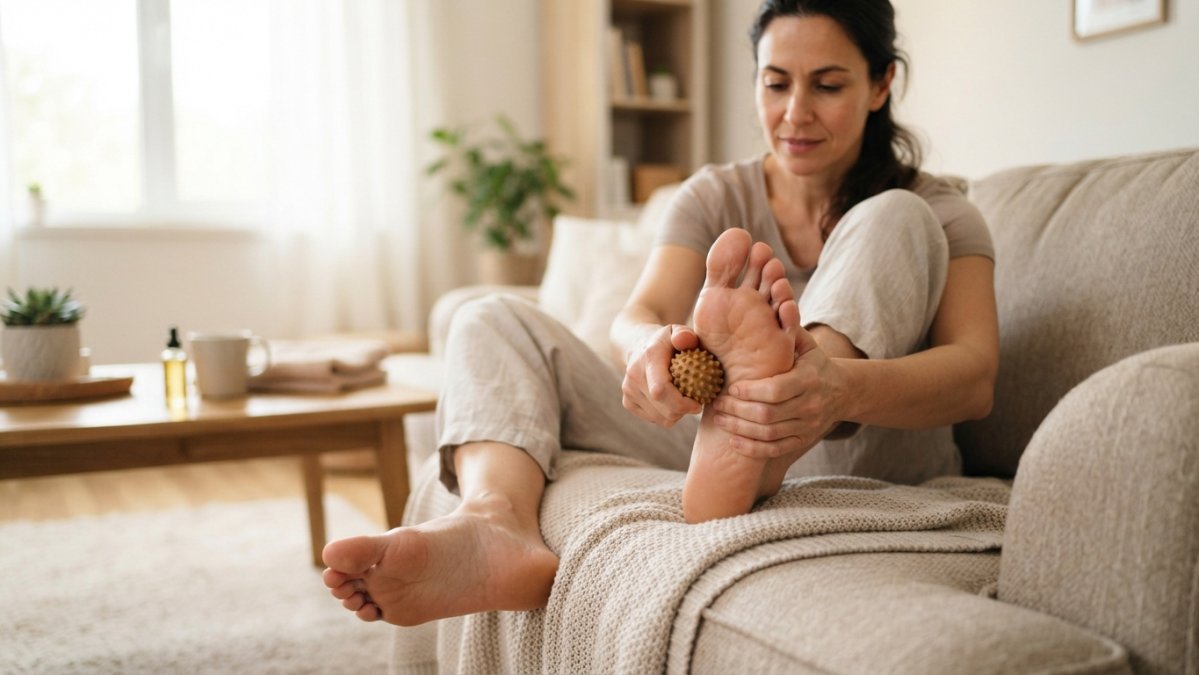
Warm Up and Prepare the Feet (3-5 minutes)
Soak your feet in warm water for about five minutes. Warm water softens the skin and supports circulation. Dry them gently, then apply a light lotion or oil so your hands glide without dragging. If you have reduced sensation, test the water temperature with your wrist or a thermometer rather than your foot, and keep it comfortably warm rather than hot.
The Routine: Sequence, Duration, and Pressure
Aim for five to ten minutes per foot when you start. The full sequence below takes about eight to twelve minutes per foot; shorten it by dropping the later steps if you are new to massage or your feet are sensitive.
- Sole stroke (1-2 minutes): Use your thumbs to press gently along the sole, moving from heel to toes in slow, circular motions. Pressure should feel like a firm handshake, not a deep press.
- Heel work (1 minute): Cup the heel and knead lightly with your fingers, working around the edge rather than pressing into the center of the heel.
- Arch press (1 minute): Press softly on the arch with your thumb, holding for three to five seconds at a time, then release. Move to a new spot rather than grinding the same point.
- Toe squeeze (1 minute): Gently squeeze and roll each toe between your thumb and index finger. Avoid pulling or cracking the toes.
- Ball roll (1-2 minutes): Roll a tennis ball or massage ball under your sole with light pressure. Keep the ball moving rather than pressing it into one spot.
- Ankle and foot mobility (1 minute): Slowly circle each ankle both ways and gently flex and point the foot.
Keep pressure light. Deep kneading can irritate sensitive nerves, so start soft and only add pressure if it feels comfortable and the skin looks normal afterward.
Modifications by Symptom
Different nerve symptoms call for different approaches. Use the version that matches your feet:
- Burning: Use slower, lighter strokes and shorter sessions. Heat can worsen burning for some people, so try a cool compress before massage if warmth increases discomfort.
- Tingling: Keep pressure very light and focus on slow, rhythmic strokes rather than point pressure. Stop if tingling spreads or intensifies.
- Numbness: Do not rely on sensation to judge pressure. Use a timer, keep pressure light, and inspect the skin afterward. A caregiver can help monitor.
Accessible Alternatives and Caregiver-Assisted Massage
If hand strength, arthritis, or limited mobility makes self-massage difficult, try these alternatives:
- Use a massage ball against a wall or under the foot while seated
- Use a soft roller or a rolled towel under the arch
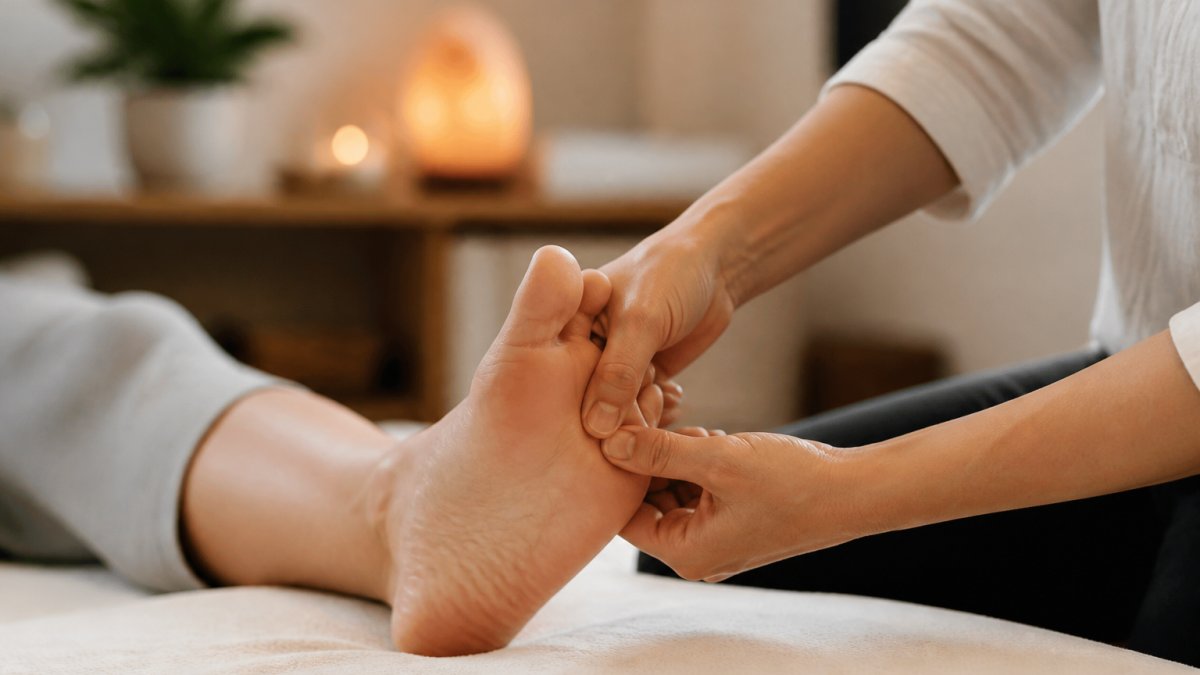
- Ask a caregiver to perform the routine, with a pre-agreed signal for pressure and a skin check afterward
Set a timer for the first few sessions so you do not accidentally over-massage. Some people feel fine during a massage and notice soreness or increased sensitivity the next day. If that happens, cut the duration and pressure by half for the next session.
Use a timed sequence, keep pressure light, and modify by symptom. When sensation is reduced, rely on a timer and a skin check rather than pain feedback, and involve a caregiver if self-massage is difficult.
Here is the timed sequence at a glance, with the pressure and duration for each step.
| Step | What to do | Time |
|---|---|---|
| Warm up | Soak feet in warm water, dry, apply lotion or oil | 3-5 minutes |
| Sole stroke | Thumbs press gently along sole, heel to toes, circular motions | 1-2 minutes |
| Heel work | Cup heel and knead lightly around the edge | 1 minute |
| Arch press | Press softly on arch, hold three to five seconds, release | 1 minute |
| Toe squeeze | Gently squeeze and roll each toe; no pulling or cracking | 1 minute |
| Ball roll | Roll tennis ball or massage ball under sole, light pressure | 1-2 minutes |
| Ankle and foot mobility | Circle each ankle both ways, flex and point foot | 1 minute |
How Long Should a Foot Massage Duration Be?
Foot massage duration should stay short at first. Start with five to ten minutes per foot and see how your feet respond the next day.
Aim for a few short sessions per week rather than one long one. Consistency matters more than length. If your feet feel sore, numb, or more sensitive afterward, cut back the time and pressure next round.
Foot Exercises for Neuropathy That Support Massage
Foot exercises for neuropathy keep your feet strong and flexible between massages. They also support mobility, strength, and balance, which matter when sensation is reduced.
Try these a few times a week:
- Toe curls: scrunch a towel with your toes
- Ankle circles: rotate each ankle slowly both ways
- Heel raises: rise onto your toes and lower slowly
For natural strategies beyond massage, our guide on how to manage chronic nerve pain in foot naturally covers exercises, diet changes, and daily habits that support comfort.
Book a Professional Session at Source Acupuncture
A professional session can help you find an appropriate level of pressure and technique. Source Acupuncture offers licensed practitioners and a blend of traditional healing practices and advanced therapeutic techniques.
If you are deciding between treatments, our comparison of acupuncture vs massage for muscle recovery can help you choose. Explore our integrative care for pain recovery and see how we build a plan around you.
Frequently Asked Questions
Can foot massage help with neuropathy?
Massage may help some people with neuropathy feel more comfortable by relaxing tight muscles around the feet. It is a comfort measure, not a cure for the underlying nerve damage. If you have reduced sensation, diabetes, or open sores, check with a doctor first and keep pressure light. A licensed practitioner can tailor a foot massage for neuropathy to your sensitivity level.
How do you massage your feet for nerve pain?
Start by soaking your feet in warm water for five to ten minutes and drying them fully. Use light pressure with your thumbs to make small circular motions along the sole, then work the heel and gently stretch each toe. A tennis ball rolled under the arch works well if your hands tire. Stop if you feel sharp pain or numbness gets worse, and keep each session to about 10 to 15 minutes.
When should you avoid a foot massage?
Skip massage if you have an open wound, ulcer, infection, or recent injury on the foot, or if you have a blood clot or active skin infection. People with diabetes or reduced sensation should get a foot check from a doctor before starting, since they may not feel pressure that is too firm. Stop immediately if symptoms worsen, and see a healthcare provider for persistent nerve pain.
How long should you massage your feet for nerve pain relief?
Aim for 10 to 15 minutes per foot, once or twice a day, and keep pressure gentle throughout. Shorter, frequent sessions tend to be more comfortable than one long session, especially when nerves are sensitive. If you are new to massage, start with five minutes and build up. A professional session at a clinic may run longer and can be adjusted to your pressure tolerance.
Nerve pain in the feet can make every step feel like a chore, and figuring out safe techniques on your own is hard. Source Acupuncture offers personalized care, licensed practitioners, and a blend of traditional and modern methods to support natural pain relief and better circulation. Get started with Source Acupuncture and take the first step toward more comfortable, calmer feet.