Quick Summary
Acupuncture may help some people fall asleep more easily and stay asleep longer, though it is not a guaranteed fix for insomnia. Researchers have proposed effects on stress response, cortisol and melatonin, but the evidence on acupuncture sleep quality is still developing and mixed.
- Research suggests acupuncture may help some people with trouble falling or staying asleep.
- Proposed mechanisms include calming the nervous system and possible effects on cortisol and melatonin.
- Many trials are small and use different designs, so results are inconsistent.
- Keep a sleep log for two to four weeks before and during treatment to track progress.
- Confirm the practitioner is licensed and uses sterile, single-use needles before booking.
Table of Contents
- How Acupuncture May Improve Sleep Quality
- What the Research Says About Acupuncture for Insomnia
- Acupuncture Points for Insomnia and How They Are Chosen
- How Many Acupuncture Sessions for Insomnia Are Typical
- Acupuncture for Sleep and Anxiety
- Preparing for Your First Appointment and Safety Considerations
- Booking Your First Session at Source Acupuncture
- Frequently Asked Questions
How Acupuncture May Improve Sleep Quality
Last Updated: November 13, 2026
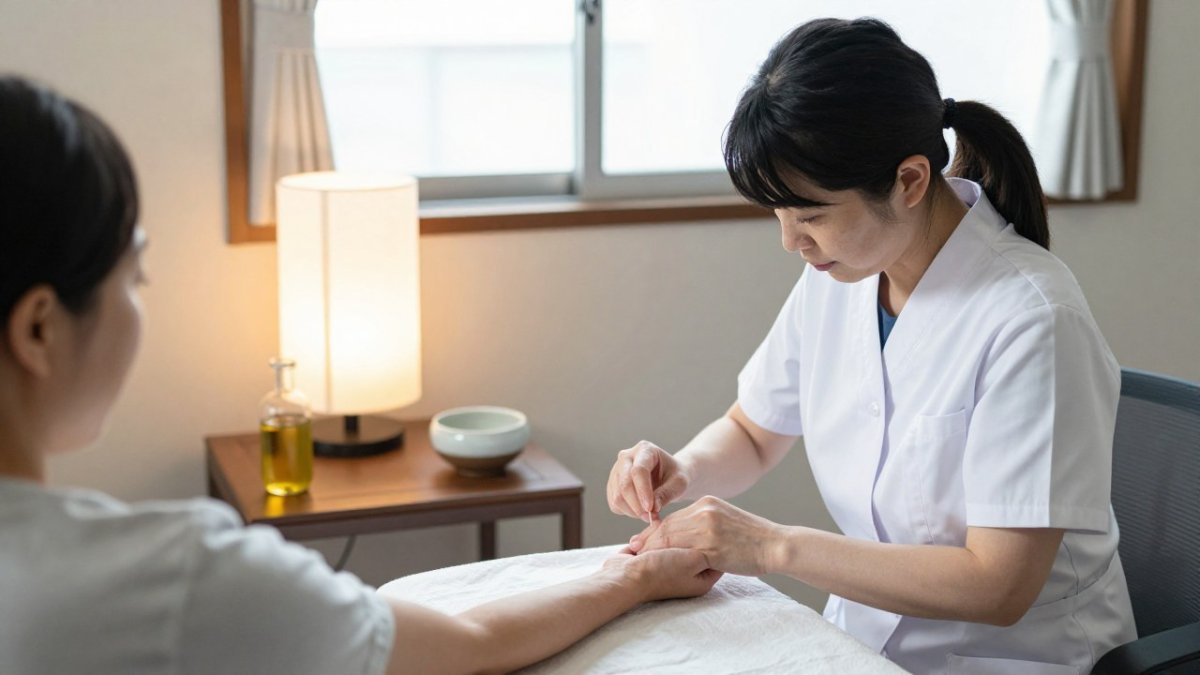
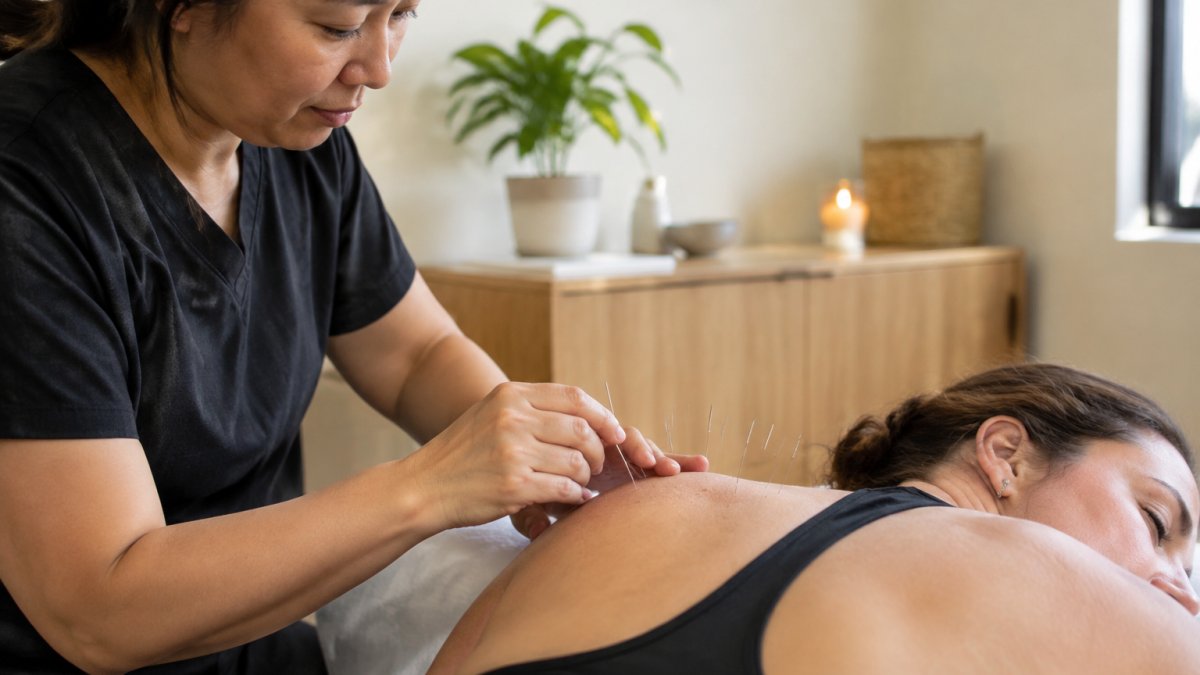
Acupuncture is one of the more closely studied complementary approaches for sleep trouble, and people in Pacific Beach and across San Diego often ask how it affects acupuncture sleep quality. The honest starting point is this: acupuncture is not a guaranteed fix for insomnia, but some research suggests it may help certain people fall asleep more easily and stay asleep longer. National Center for Complementary and Integrative Health overview of acupuncture describes acupuncture as the insertion of thin needles at specific points on the body, and the research on sleep is still developing.
Many people reach for acupuncture after other approaches have fallen short. The sections below walk through the proposed mechanisms, the research, and what to expect, so you can judge whether it fits your situation.
Proposed mechanisms: stress response, cortisol and melatonin
Researchers have proposed several ways acupuncture could influence sleep. Our guide to regulating the nervous system for chronic stress explains how stress responses affect rest. The most discussed involve the stress response.
Stress hormones such as cortisol are another focus. Cortisol normally peaks in the morning and falls through the day. Persistent stress can disrupt that pattern.
Melatonin, the hormone that signals the body it is time to sleep, is also part of the conversation.
Which sleep problems it may address
Acupuncture is most often considered for sleep problems linked to stress, anxiety, and chronic pain. Difficulty falling asleep, waking often during the night, and waking too early are the complaints people most commonly bring to a practitioner.
- Trouble falling asleep, especially when the mind feels busy
- Frequent waking during the night
- Waking too early and being unable to return to sleep
- Sleep disrupted by ongoing pain or muscle tension
Acupuncture is not a substitute for a medical evaluation. If sleep problems are severe, persistent, or accompanied by other symptoms, a qualified healthcare professional should assess them first.
What the Research Says About Acupuncture for Insomnia
The research on acupuncture and insomnia is promising in places but not conclusive. Many trials are small, and their designs differ in important ways. That makes it hard to give a single answer to whether acupuncture works for sleep.
Several systematic reviews have pooled results from multiple studies. Their general finding is that acupuncture may offer modest benefits for some people with insomnia, compared with control groups. Reviewers also repeatedly note that more rigorous, larger trials are needed.
Effects on sleep duration, efficiency and nighttime awakenings
Researchers measure sleep in several ways. Sleep duration is the total time asleep. Sleep efficiency is the share of time in bed actually spent sleeping.
Some studies report improvements in one or more of these measures after acupuncture. Others find little difference from sham or control treatments.
A key distinction is how outcomes are captured. Subjective measures come from sleep diaries and questionnaires, such as the Pittsburgh Sleep Quality Index (PSQI) or the Insomnia Severity Index (ISI).
Why study protocols and evidence quality differ
Much of the disagreement comes down to how studies are designed. Trials vary in the number of sessions, the acupoints used, whether treatment is individualized, and what the comparison group receives.
Blinding also matters. Patients often know whether they received real acupuncture, which can shape their expectations. A strong study tries to control for this.
Watch out: a trial that reports a statistically significant difference may still show a change too small to affect how you feel day to day, so look at the size of the effect and not only the direction.
Acupuncture Points for Insomnia and How They Are Chosen
Practitioners select acupoints based on the person’s symptoms, health history, and how they describe their sleep.
In studies, commonly used points are often located on the head, wrists, ankles, and feet.
A practitioner will usually ask questions about your sleep pattern, stress levels, digestion, and other symptoms before choosing points.
The article notes that practitioners choose acupoints based on the person’s symptoms and sleep pattern, and that commonly used points are often on the head, wrists, ankles and feet.
| Factor | How it affects point choice | Source |
|---|---|---|
| Main complaint | Falling asleep, staying asleep or stress-related restlessness | Article |
| Symptoms and history | Sleep pattern, stress, digestion and other symptoms | Article |
| Common locations | Head, wrists, ankles and feet | Article |
| Standard set | None; points differ by tradition and clinician | Article |
How Many Acupuncture Sessions for Insomnia Are Typical
Session counts differ widely across studies. Session counts differ widely across studies, and protocols vary in length. Our article on how many acupuncture sessions are typical explains how frequency is planned over time.
Because the evidence is limited, there is no universal answer about how many sessions are needed. A practitioner can explain what a reasonable plan looks like for your situation and how progress will be reviewed.
Realistic timelines and how to track your progress
Set expectations before you begin. Our guide to tracking nervous system reset results shows how to measure change over time. Some people notice changes within a few sessions, while others need several weeks to see any difference, and some notice none at all. A realistic timeline is one you can check against your own experience.
To track progress, keep a simple sleep log for two to four weeks before your first session and continue it during treatment. Record:
- Bedtime and the time you fell asleep
- Number of times you woke during the night
- Time you woke in the morning
- A rating of how rested you felt, from 1 to 10
Share the log with your practitioner. Comparing the numbers over time gives a clearer picture than memory alone.
Acupuncture for Sleep and Anxiety
Sleep and anxiety often feed each other. Worry can keep you awake, and poor sleep can make anxiety feel stronger. Some people seek acupuncture for both at once.
Research on acupuncture for anxiety is also mixed, with some studies reporting reduced anxiety symptoms and others showing small or no effects. Where anxiety is severe or interferes with daily life, professional mental health care should come first. Acupuncture can be considered alongside that care, not as a replacement for it.
Preparing for Your First Appointment and Safety Considerations
Preparation makes a first visit smoother and helps you get more from the treatment. Read what to expect before your first appointment for practical steps. This section walks through the practical steps in order, from choosing a practitioner to what to do after the session, along with the safety details that matter for specific circumstances.
Step 1: Choose a qualified practitioner
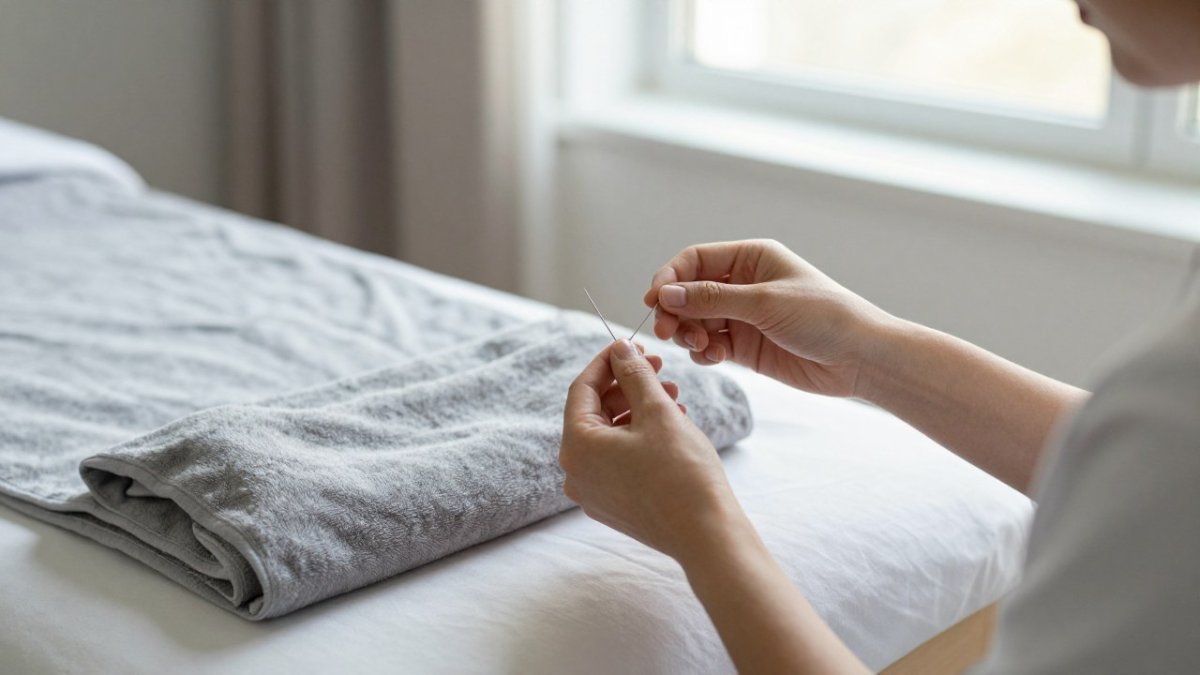
Look for a licensed acupuncturist and ask about training, licensure, and experience with sleep concerns. In the United States, licensure requirements are set at the state level, so check the requirements in your state. Ask whether the practitioner uses sterile, single-use needles and how the practice handles infection control. A short phone call before booking can answer most of these questions.
Step 2: Prepare before the visit
Write down your main sleep concerns, including how long they have lasted and what you have already tried. List all medications, supplements, and health conditions, and note any allergies. Eat a light meal beforehand and wear loose clothing that lets the practitioner reach the treatment areas. If you have recent lab results or a sleep study, bring them.
Step 3: What to disclose
Tell the practitioner about any bleeding disorder, anticoagulant or blood-thinning medication, pregnancy or possible pregnancy, implanted device such as a pacemaker, and any history of fainting during medical procedures. These details affect needle placement and aftercare. Also mention if you are receiving care for anxiety, depression, or another condition, so the plan can fit with your other care.
Step 4: During the session
You will usually lie on a treatment table while thin, sterile needles are placed. Many people feel little or no discomfort, though some feel a brief sensation of pressure or tingling. Tell the practitioner if anything feels uncomfortable. Session length varies by practitioner and plan, so ask Source Acupuncture for details before your visit.
Step 5: After the session
Minor soreness or bruising at needle sites is common and usually resolves within a few days. Drink water, avoid strenuous activity if you feel lightheaded, and note how you sleep over the next few nights. Bring those notes to your next visit.
Safety details for specific circumstances
Acupuncture is generally considered low risk when performed by a trained practitioner using sterile, single-use needles. Possible side effects include minor bruising, soreness, or lightheadedness.
Watch out: serious complications are rare but are most often linked to unsterile needles or treatment by an untrained provider, so confirm licensure and single-use needles before booking.
For guidance on what to ask a practitioner, National Center for Complementary and Integrative Health guidance on acupuncture safety offers useful background.
Here is a simple checklist for your first visit:
- Write down your sleep goals and main concerns
- List all medications, supplements, and health conditions
- Ask about the practitioner’s training and licensing
- Confirm how many sessions the practitioner recommends and how progress will be reviewed
- Confirm the practice uses sterile, single-use needles
Booking Your First Session at Source Acupuncture
Sleep problems can wear on your health, mood, and daily life. Acupuncture is best viewed as one part of a broader approach to sleep, so talk with your primary care provider as well.
When you are ready, you can book a session with Source Acupuncture to discuss whether acupuncture fits your needs. Sleep Foundation guide to treating insomnia also offers helpful background on sleep care options to review alongside your visit.
Frequently Asked Questions
Does acupuncture really work for sleep?
Research on acupuncture for sleep is promising but mixed. Several clinical trials and systematic reviews report improvements in sleep quality, sleep duration and nighttime awakenings for some people with insomnia, while other studies find effects that are small or not clearly different from sham treatment. Study designs, session counts and outcome measures vary widely, so results should be read with that in mind. Acupuncture may work best as a complement to established insomnia care, such as cognitive behavioral therapy for insomnia, rather than a standalone replacement. Talk with a qualified healthcare provider about whether it fits your situation.
How many acupuncture sessions are needed for insomnia?
The number of acupuncture sessions for insomnia varies. Session counts differ considerably across studies, and protocols vary. Some people notice changes early, while others need longer to see any effect or see none at all. A practical approach is to agree on a set number of sessions with your practitioner, track your sleep in a simple log such as total sleep time, time to fall asleep and number of awakenings, and reassess at the end of that course. Pricing depends on the services chosen, so check Source Acupuncture’s website or contact the clinic for current rates.
Can acupuncture help with sleep and anxiety together?
Acupuncture is sometimes studied for both sleep problems and anxiety because stress and poor sleep often occur together. Some research suggests acupuncture may help reduce stress-related arousal and support relaxation, which may indirectly support sleep. However, evidence for combined sleep and anxiety effects is limited and not consistent across studies. If anxiety is affecting your daily life or sleep, a licensed mental health professional or your primary care provider can help assess it and recommend options that may include therapy, lifestyle changes or medication.
Is acupuncture safe for improving sleep?
Acupuncture is generally considered low risk when performed by a licensed practitioner using sterile, single-use needles. Common side effects are mild, such as soreness, minor bruising or lightheadedness at the needle sites. Serious adverse events are uncommon but can occur, so it is important to tell your practitioner about any medical conditions, pregnancy, bleeding disorders, implanted devices or medications you take. Acupuncture is not a substitute for medical evaluation of persistent insomnia, and symptoms such as loud snoring, gasping during sleep or severe daytime sleepiness should be assessed by a doctor.