Last Updated: November 5, 2026
Quick Summary
Nervous system regulation is the practice of using specific techniques to shift your body out of a stress response and into a calmer state. Because chronic stress keeps the sympathetic branch dominant, regulation means deliberately pressing the parasympathetic brake through breathwork, grounding, movement, and social connection.
- Slow exhales signal safety to the brain, so aim for a longer out-breath than in-breath.
- A 30-second reset uses a four-second inhale, gentle two-second hold, and six-to-eight-second exhale.
- If breathwork increases anxiety, try cold water, humming, orienting, or weighted contact instead.
- A workable routine is two minutes of breathwork in the morning, a ten-minute walk at lunch, and grounding before bed.
- Track sleep quality, muscle tension, technique use, and mood, then review the log every two weeks.
Table of Contents
- Why Chronic Stress Keeps Your Nervous System Stuck
- Nervous System Regulation Exercises You Can Start Today
- How to Reset Your Nervous System in 30 Seconds
- Movement, Mindfulness, and Meditation for Stress Relief
- Nervous System Regulation Therapy: When Self-Care Is Not Enough
- How to Sequence a Routine for Different Stress States
- Tracking Progress Without Promising a Cure
- Book a Consultation to Build Your Stress Relief Plan
- Frequently Asked Questions
Why Chronic Stress Keeps Your Nervous System Stuck
Nervous system regulation is the practice of using specific techniques to shift your body out of a stress response and into a calmer state.
The stress response was built for short bursts. A near miss in traffic. A tight deadline. Then it should switch off.
This is not a character flaw or a lack of willpower. It is physiology. And it explains why “just relax” never works.
Signs Your Nervous System Is Dysregulated
A dysregulated nervous system shows up in predictable ways. You may notice several of these at once:
- Muscle tension in the jaw, neck, or shoulders that never fully releases
- Shallow breathing, or catching yourself holding your breath
- Poor sleep, even when you are exhausted
Hypervigilance is a common thread: your body scans for threats even when you are safe, burning energy and keeping anxiety close to the surface. Learning what happens when your nervous system stays activated helps you see why the cycle is so hard to break on your own.
How the Sympathetic and Parasympathetic Systems Interact
Two branches of the autonomic nervous system do most of this work. The sympathetic nervous system runs the stress response: faster heart rate, tense muscles, sharp focus. The parasympathetic nervous system runs the relaxation response: slower heart rate, digestion, repair.
Think of them as a gas pedal and a brake. Both are useful; the problem is a gas pedal that stays pressed.
Nervous System Regulation Exercises You Can Start Today
Nervous system regulation exercises work best when you match the technique to your current state. A breathing drill will not land if you are already panicked. A gentle walk will not fix a racing mind at midnight. Start with the basics below, then adjust.
The woman is American.
Breathwork and Deep Breathing
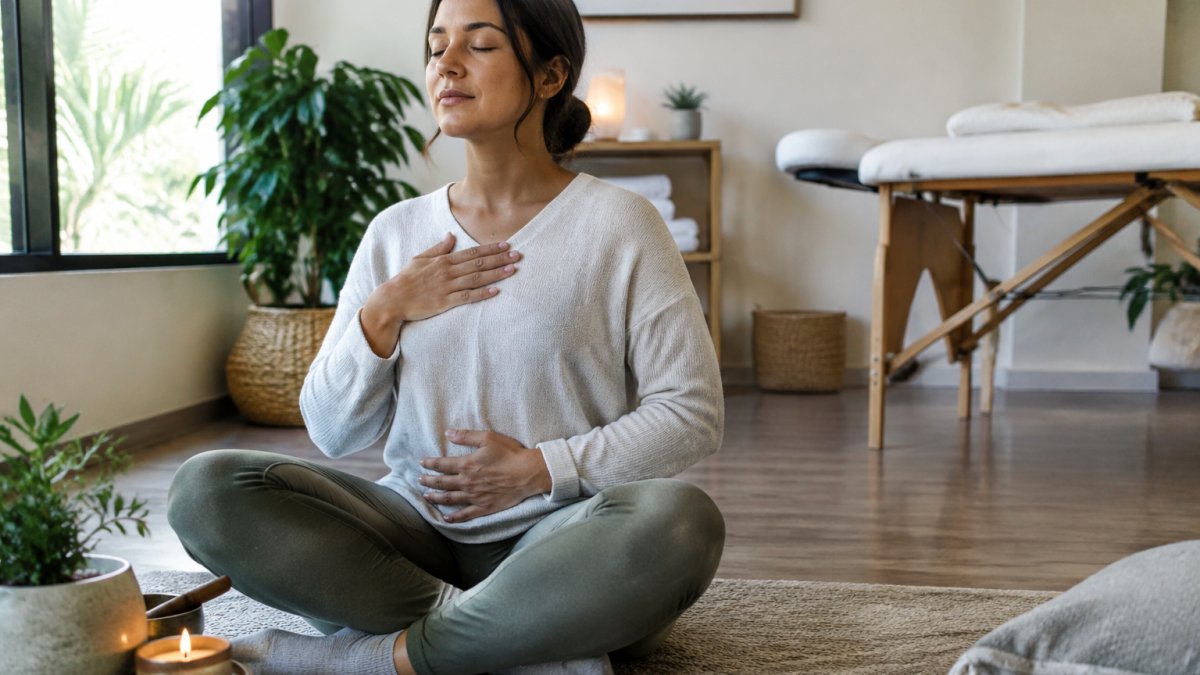
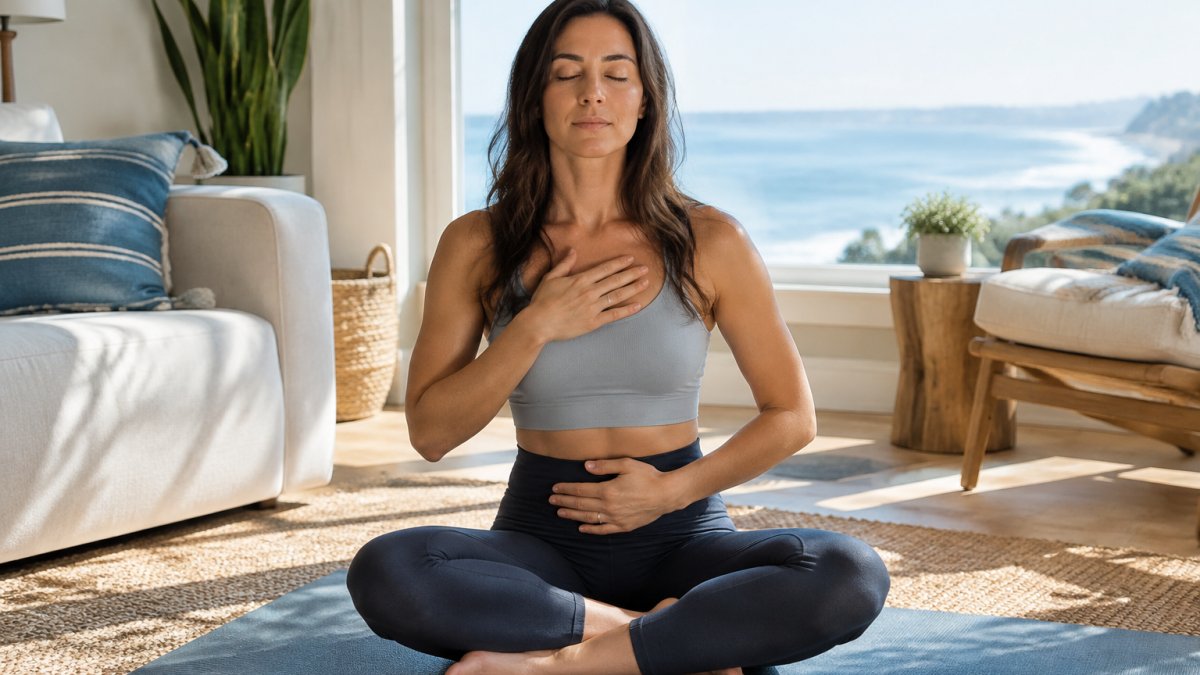
Deep breathing is the fastest lever you have. It works because slow exhales directly signal safety to the brain. Try this:
- Sit comfortably and drop your shoulders.
- Breathe in through your nose for a count of four.
- Exhale slowly for a count of six or eight.
- Repeat for one to two minutes.
The long exhale matters more than the inhale. Aim for a longer out-breath than in-breath every time. If counting feels stressful, skip the numbers and just slow down.
Grounding and Self-Soothing Techniques
Grounding pulls attention out of worry and into your body. These techniques are simple and portable:
- 5-4-3-2-1 scan: Name five things you see, four you feel, three you hear, two you smell, one you taste.
- Cold water: Run cool water over your wrists or splash your face.
- Feet on the floor: Press both feet down and notice the contact.
Self-soothing is not indulgent. It is a direct signal to the nervous system that the threat has passed. For a deeper set of options, our guide to nervous system regulation techniques walks through breathing, grounding, and acupuncture step by step.
How to Reset Your Nervous System in 30 Seconds
A 30-second reset is not a cure and is not meant to be. Think of it as a circuit breaker: a fast way to interrupt a stress spike so you can choose your next move instead of reacting on autopilot.
The default sequence most practitioners teach:
- Inhale through your nose for about four seconds.
- Hold gently for two seconds, skip the hold if it feels straining.
- Exhale through your mouth for six to eight seconds, longer than the inhale.
- Repeat three times.
That is roughly 30 seconds, no equipment, no app. Use it before a meeting, after a hard conversation, or the moment you notice your jaw clenching.
When the Standard Reset Backfires
Breath focus is not universally calming. A meaningful minority of people, especially those with panic history, trauma histories, or sensory sensitivities, feel more anxious when they deliberately slow their breathing. If that is you, the 30-second reset needs a different entry point:
- Cold water on the wrists or face. Cool water on the face can trigger the dive reflex, which slows heart rate. Run cool water over your wrists for 30 seconds or press a cold pack to your cheeks.
- Extended exhale without counting. Hum on the out-breath for as long as comfortable. Humming lengthens the exhale without asking you to track numbers.
- Orienting. Slowly turn your head and name three objects in the room, one at a time. This is a bottom-up safety signal that does not require breath control.
Watch out: if breathwork reliably makes you feel panicked or dizzy, stop and switch tools rather than pushing through. A technique that increases anxiety is the wrong technique for your nervous system right now, not a sign you are doing it wrong.
What 30 Seconds Can and Cannot Do
A 30-second reset may help interrupt a stress spike. It cannot undo weeks of sleep debt, resolve an ongoing stressful situation, or substitute for professional care.
If you find yourself needing the reset dozens of times a day, that is useful information. It suggests the baseline stress load is too high for short techniques alone, and it is worth looking at the daily routine and professional support sections below.
Movement, Mindfulness, and Meditation for Stress Relief
Most guides list these as interchangeable calm-down tools. They are not. Each works through a different mechanism, suits a different stress state, and has a different realistic dose. Matching the modality to the person is where most of the benefit is won or lost.
Movement: Completing the Stress Cycle
Physical activity helps the body finish the stress response instead of parking it in muscle tension. The dose that matters is smaller than people assume. Even short walks can help shift mood after a stressful event.
Accessibility matters here. If mobility is limited, chair-based movement, seated marching, gentle range-of-motion work, or water exercise can deliver the same “complete the cycle” effect.
Mindfulness and Meditation: Training Attention, Not Emptying the Mind
Mindfulness is attention training: practicing the skill of noticing a thought, sensation, or impulse and choosing not to follow it. Starting with a few minutes a day is a practical approach.
A common pattern is that people try a 20-minute silent sit on day one, find it intolerable, and quit. Shorter and guided beats longer and abandoned.
Somatic Awareness: Noticing Before Changing
Somatic awareness means tracking sensation in the body, where tension sits, how breath moves, what the gut is signaling, without immediately trying to fix it.
Watch out: for people with trauma histories, turning attention inward can initially increase distress rather than reduce it. If body-focused practice brings up flooding or dissociation, work with a trauma-informed practitioner rather than pushing through solo.
Social Connection: Regulation That Happens Between People
Time with trusted friends and family calms the nervous system in ways solo practices cannot fully replicate. Co-regulation, the process by which one calm nervous system helps settle another, is a real phenomenon and one of the reasons isolation worsens chronic stress. Shared calming experiences can extend beyond conversation, and sound baths for regulation offer another way to settle the nervous system alongside others.
Evidence Quality: What Is Established and What Is Emerging
It helps to separate the tiers. Established: slow breathing, physical activity, sleep hygiene, and social support have solid evidence for reducing stress symptoms. Emerging: somatic approaches and polyvagal-informed practices have promising clinical reports but a thinner research base than popular content suggests.
If movement-based or somatic work appeals to you, these somatic exercises for chronic stress give you specific options to try.
Nervous System Regulation Therapy: When Self-Care Is Not Enough
Self-care has a ceiling. If you have practiced breathing, grounding, and movement for weeks and still feel stuck, that is not failure. It is information.
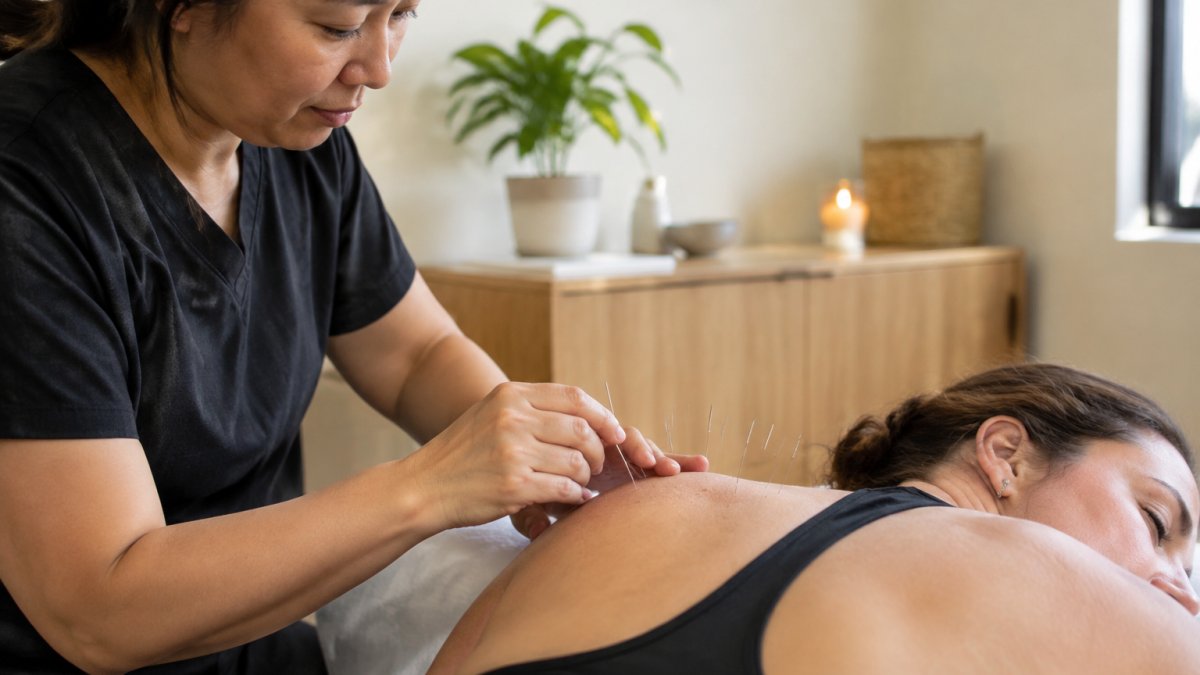
Nervous system regulation therapy covers several approaches. Our team explains how acupuncture therapy for stress relief works, which points we use, and what to expect in a session.
Watch out: no single therapy cures chronic stress. Regulation is a practice, not a procedure.
How to Sequence a Routine for Different Stress States
The biggest mistake we see is using one technique for every situation. Match the tool to the state:
| Your State | Best First Move | Why It Works |
|---|---|---|
| Panicked, racing heart | Long exhales, cold water | Slows heart rate fast |
| Tense but functional | Grounding scan, short walk | Pulls focus to the body |
| Wired at night | Body scan, weighted blanket | Lowers arousal for sleep |
| Flat and drained | Gentle movement, sunlight | Rebuilds energy slowly |
| Ongoing, weeks-long stress | Daily routine plus professional care | Addresses the root pattern |
A workable daily routine looks like this: two minutes of breathwork in the morning, a ten-minute walk at lunch, and a grounding practice before bed. Small and repeatable beats ambitious and abandoned.
Tracking Progress Without Promising a Cure
Track what you can observe, not what you hope to feel. A simple log works:
- Sleep quality, rated 1 to 5
- Muscle tension, rated 1 to 5
- Number of times you used a regulation technique
Review the log every two weeks. Look for trends, not daily swings. Progress usually shows up as shorter recovery times, not the disappearance of stress. You are building a skill, and skills take repetition.
Regulation is best understood as ongoing management rather than a one-time cure.
Book a Consultation to Build Your Stress Relief Plan
Chronic stress does not resolve on its own, and a plan built for your body beats a generic checklist. We offer acupuncture, cupping, and red light therapy, with a personalized approach to stress, hormones, and immune support.
If you are ready to stop guessing, book an acupuncture session and we will build a stress relief plan around your life.
Frequently Asked Questions
Can a dysregulated nervous system be fixed?
A dysregulated nervous system can often be calmed with consistent practice, but ‘fixed’ is not a helpful goal. Nervous system regulation is a skill you build over time through exercises like breathwork, grounding, and movement. However, if chronic stress is tied to trauma, persistent anxiety, or a medical condition, self-care alone may not be enough. A licensed practitioner can help you build a plan that matches your situation and track progress safely.
What exercises help regulate the nervous system?
Nervous system regulation exercises include slow deep breathing (such as extending your exhale longer than your inhale), grounding techniques like the 5-4-3-2-1 sensory method, gentle movement such as walking or yoga, and body awareness practices that help you notice muscle tension. Start with one or two techniques you can do daily, and sequence them based on how activated you feel. A practitioner can help you personalize the routine.
How long does it take to regulate your nervous system?
Some techniques, like a 30-second breathing exercise, can shift how you feel in the moment. Building lasting nervous system balance for chronic stress generally takes consistent practice over time. Progress depends on your stress history, sleep, social support, and whether you address underlying causes. Tracking small changes, such as better sleep or fewer tension headaches, helps you see movement without expecting a quick cure. If symptoms persist, a consultation with a qualified professional can clarify next steps.
When should I seek professional help for chronic stress?
Seek professional help if chronic stress is affecting your sleep, mood, relationships, or ability to function at work, or if you experience persistent physical symptoms like chest tightness, digestive issues, or ongoing muscle pain. A licensed therapist, physician, or acupuncturist can assess whether your symptoms need clinical care. Nervous system regulation therapy, including acupuncture and counseling, can support your self-care routine. Do not wait if symptoms feel unmanageable; early support often makes the process easier.
The hard part is not learning the techniques. It is staying consistent when stress keeps pulling you back. That is where guided care helps. At Source Acupuncture, we offer personalized treatment plans, a wellness membership program with discounted services, and walk-in availability for our Detox and Destress Auricular protocol. Get started with Source Acupuncture and build a stress relief routine you can actually sustain.