Last Updated: October 22, 2026
Quick Summary
To repair a damaged skin barrier, stop all exfoliating acids, retinoids, and scrubs, then follow a short routine: cleanse gently, hydrate on damp skin, and moisturize with a ceramide-rich cream to seal in water. Most mild cases improve in one to two weeks, while more irritated skin can take four to six weeks to fully settle.
- Barrier damage is often a stack of products, not one, so the whole stack needs to pause.
- Apply moisturizer within a minute of cleansing, while skin is still damp.
- Reintroduce actives one at a time, starting once or twice a week, only after skin has been calm for a week.
- See a clinician if inflammation worsens despite two to three weeks of a gentle, fragrance-free routine.
- Take a weekly photo in the same lighting, since barrier recovery is gradual.
Table of Contents
- Start Here: How to Repair a Damaged Skin Barrier
- Damaged Skin Barrier Symptoms: What to Look For
- Step 1: Identify and Stop the Trigger
- Step 2: Build a Gentle Skin Barrier Repair Routine
- Step 3: Choose the Best Moisturizer for Skin Barrier Repair
- How Long Does Skin Barrier Repair Take? A Timeline and Progress Checks
- Step 4: Reintroduce Active Ingredients Safely
- When to See a Professional About a Damaged Skin Barrier
- Frequently Asked Questions
Start Here: How to Repair a Damaged Skin Barrier
Your skin feels tight, stings when you apply almost anything, and looks red in patches. Those are classic signs that you need to know how to repair damaged skin barrier function, and the fix is simpler than most skincare aisles suggest. The skin barrier is the outermost layer of your skin, a thin shield that holds water in and keeps irritants out.
At Source Acupuncture, we see this often in clients who come in for microneedling or who simply overdid it with acids at home. The good news: a compromised skin barrier usually recovers with patience and a stripped-back routine.
This guide walks you through a practical, step-by-step recovery plan. You will learn what to stop, what to use, how long healing takes, and when to get professional help.
Most barrier damage is self-inflicted: too many actives, too much exfoliation, too little moisture. Removing the irritant matters more than adding any product.
Damaged Skin Barrier Symptoms: What to Look For
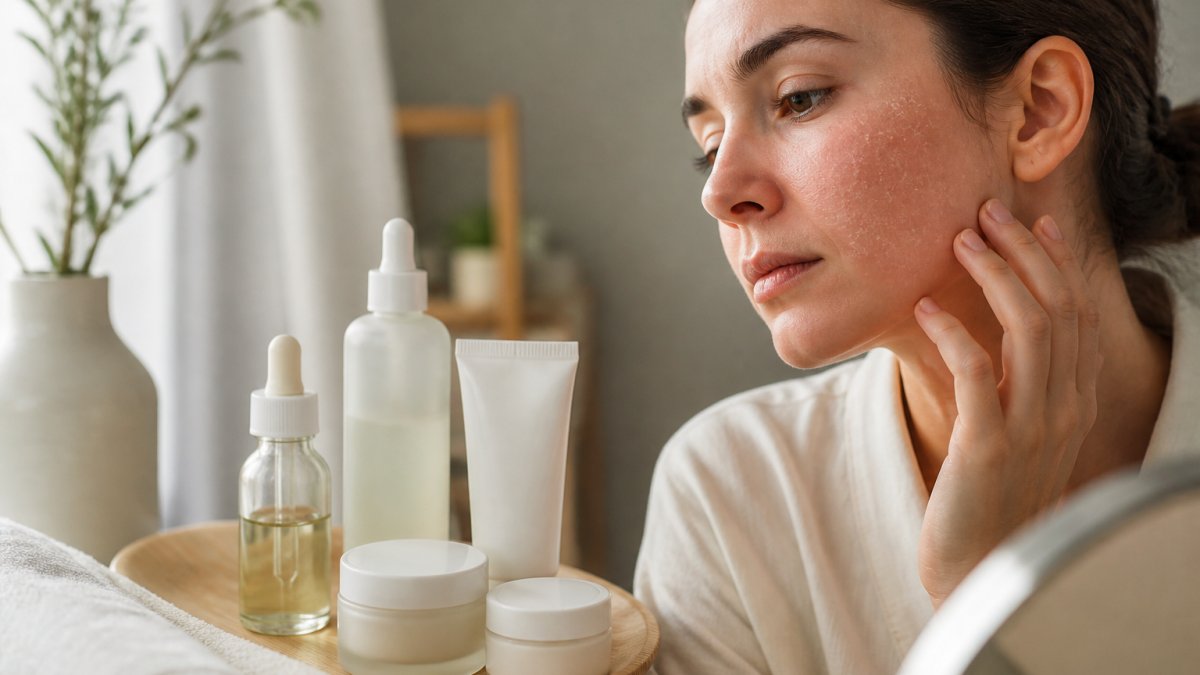
Damaged skin barrier symptoms usually show up as a mix of tightness, redness, stinging, flaking, and sensitivity that wasn’t there before. The skin may feel rough or look dull, and products that used to be fine now burn on contact.
Watch for these signs:
- Tightness after washing, even with plain water
- Redness or blotchiness across the cheeks and nose
- Stinging or burning when applying moisturizer
One key marker is transepidermal water loss, the rate at which water escapes through the stratum corneum. When the lipid barrier is weak, water loss rises and skin feels dry no matter how much you moisturize.
Step 1: Identify and Stop the Trigger
The fastest way to start skin barrier repair is to find what broke it and stop using it. Most guides list the usual suspects and stop there. A structured audit does more: it separates a routine problem from a condition that only looks like barrier damage.
Run a two-week product audit
Pull every product you used in the last 30 days and sort it into three piles: cleansers, leave-on treatments (serums, toners, essences), and moisturizers/sunscreens. Then answer four questions for each:
- When did you start it? A new product within the last two to six weeks is a prime suspect.
- How often do you use it? Daily acid toners, daily retinoids, and weekly peels stack up faster than most people realize.
- What is the active? Note exfoliating acids (glycolic, salicylic, lactic), retinoids, vitamin C, benzoyl peroxide, and any fragrance or drying alcohol.
A common pattern: barrier damage is not one product but a stack, a foaming cleanser, a daily acid toner, a retinoid, and a vitamin C serum used together. Removing any one of them may not be enough; the whole stack needs to pause.
Separate routine irritation from a condition
Barrier damage from products usually improves when the irritant stops. If it does not, consider that the symptoms may belong to a different condition that resembles barrier damage:
- Eczema (atopic dermatitis), itchy, dry, inflamed patches, often in the creases of elbows and knees, that flare in cycles rather than tracking a single product.
- Rosacea, flushing and redness across the center of the face, sometimes with bumps, triggered by heat, sun, alcohol, or spicy food rather than by a new serum.
- Allergic contact dermatitis, a rash that appears where a specific product was applied, sometimes with swelling or blisters, and recurs each time that product returns.
This matters because the care differs. Eczema and rosacea often need prescription or targeted treatment, and allergic contact dermatitis needs the allergen removed entirely. Continuing a gentle routine is reasonable for a week or two, but a rash that spreads, blisters, or keeps returning after trigger removal is a reason to see a clinician, not to keep experimenting.
Reintroduce one product at a time
Once stinging and redness have been gone for at least a week, add products back one at a time, a week apart, starting with the plainest cleanser and moisturizer. Keep a short log: date, product, and any reaction over the next three days. If stinging returns after a specific product, you have found your trigger without guessing.
Continuing to exfoliate “gently” while your barrier is damaged keeps the cycle going. Stop all acids and scrubs until stinging and redness fade, not just until skin feels a little better.
Step 2: Build a Gentle Skin Barrier Repair Routine
A skin barrier repair routine should be short: cleanse gently, hydrate, and seal in moisture. That’s it. Fewer steps give your skin less to react to and more room to recover.
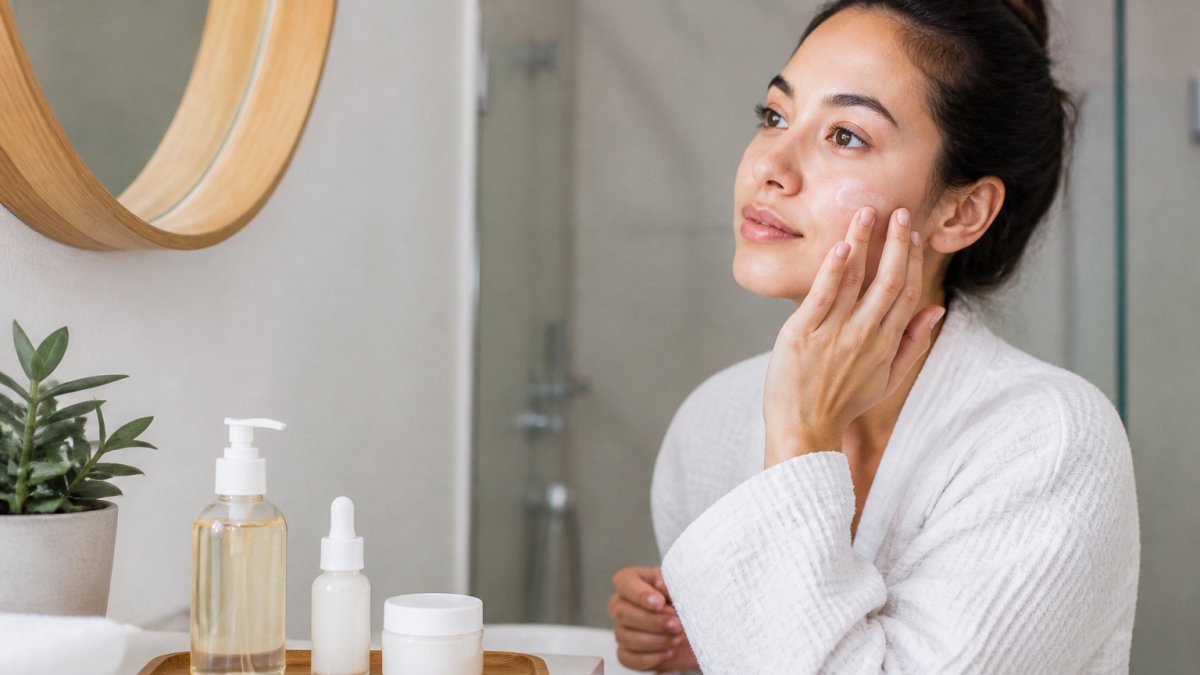
Follow this order:
- Cleanse once or twice daily with a hydrating cleanser. Use lukewarm water and skip morning washing if skin feels tight.
- Hydrate on damp skin with a hydrating serum containing hyaluronic acid or glycerin.
- Moisturize to lock water in and support the lipid barrier.
- Protect in the morning with broad-spectrum sunscreen.
Mild cleansing matters more than people think. A gentle cleanser with a creamy texture removes dirt without stripping skin lipids.
Keep the routine consistent. Consistency beats complexity every time during skin recovery.
Step 3: Choose the Best Moisturizer for Skin Barrier Repair
The best moisturizer for skin barrier repair contains three things: humectants to pull in water, emollients to soften and smooth, and occlusives to slow moisture loss. A barrier cream or nourishing moisturizer that combines all three does the most work.
Look for these ingredients:
- Ceramides, the fats that make up a large share of skin lipids
- Essential fatty acids from oils that support the lipid barrier
- Squalane or squalene, lightweight and well tolerated
Apply moisturizer within a minute of cleansing, while skin is still damp. That traps skin hydration where it counts. For very dry or irritated patches, a thicker barrier cream at night helps reduce transepidermal water loss while you sleep.
What most reviews miss: an expensive cream isn’t automatically better. A simple, fragrance-free nourishing moisturizer with ceramides often outperforms a fancy serum layered on a broken barrier.
How Long Does Skin Barrier Repair Take? A Timeline and Progress Checks
How long does skin barrier repair take? Most mild cases improve in one to two weeks, while more irritated skin can take four to six weeks to fully settle. The timeline depends on how damaged the barrier is and whether you remove the trigger.
Here’s a realistic look at what to expect:
| Timeframe | What You May Notice | What to Do |
|---|---|---|
| Days 1-3 | Less stinging, slightly less tightness | Keep routine minimal, avoid actives |
| Week 1 | Redness starts to fade | Continue gentle cleansing and moisturizing |
| Weeks 2-4 | Flaking eases, skin feels calmer | Recheck triggers, hold off on exfoliants |
| Weeks 4-6 | Barrier feels stable again | Begin slow reintroduction of actives |
Track progress with simple checks. Does water sting less? Does moisturizer go on without burning? Those are better signals than how skin looks in the mirror.
Take a photo in the same lighting each week. Barrier recovery is gradual, and photos catch small improvements your eyes miss day to day.
Step 4: Reintroduce Active Ingredients Safely
Once stinging and redness are gone, you can bring active ingredients back, but slowly. Gradual reintroduction protects the skin barrier function you just rebuilt.
Use this approach:
- Wait until skin has been calm for at least a week
- Add one active at a time, starting once or twice a week
- Apply a thin layer, then follow with moisturizer
Start with the gentlest option, like a low-strength retinoid or a mild acid, before returning to stronger formulas. If irritation returns, pull back for another week. This back-and-forth is normal, not failure.
Sun protection belongs here too. Environmental stressors like UV light slow skin recovery, so daily broad-spectrum sunscreen supports everything above. The American Academy of Dermatology sunscreen guidance explains how to choose one that suits sensitive skin.
When to See a Professional About a Damaged Skin Barrier
Some cases need more than a simplified routine. The tricky part is knowing which ones. Barrier damage from over-exfoliation or a harsh cleanser usually settles within a few weeks of gentle care. Symptoms that persist, spread, or keep returning point to something else.
Signs that warrant a clinician visit
Reach out for professional assessment when you notice:
- Inflammation that worsens despite two to three weeks of a gentle, fragrance-free routine
- Painful cracking, bleeding, or oozing that does not heal with moisturizer
- Signs of infection such as warmth, pus, or spreading redness
- A rash that spreads beyond where a product was applied
Conditions that can look like barrier damage
A clinician can tell whether you are dealing with simple irritation or a condition that needs targeted care. The overlap is real:
- Eczema (atopic dermatitis), chronic, itchy, and cyclical; often needs prescription topicals and a consistent moisturizing regimen rather than a short reset.
- Rosacea, flushing and redness triggered by heat, sun, and certain foods; some barrier-repair ingredients are fine, but exfoliating acids and strong actives often make it worse.
- Allergic contact dermatitis, an immune reaction to a specific ingredient; the fix is identifying and avoiding the allergen, sometimes with patch testing.
- Seborrheic dermatitis, flaking along the hairline and eyebrows that usually needs an antifungal or medicated approach, not just ceramides.
If you are unsure which pattern fits, a dermatologist or clinician can assess it. Bringing your product list and a photo log to the visit makes the conversation more useful.
What to expect at the visit
A clinician will typically ask about your routine, when symptoms started, and what makes them better or worse.
If you are also pursuing treatments like microneedling, timing matters. At Source Acupuncture, our licensed practitioners assess skin health before recommending services, so a compromised barrier gets time to recover first.
For general skin health information, the National Institute of Arthritis and Musculoskeletal and Skin Diseases is a reliable starting point.
Frequently Asked Questions
How do I know if my skin barrier is damaged?
Common damaged skin barrier symptoms include persistent dryness, redness, irritation, stinging when applying products, tightness, and flaking. Your skin may also feel more sensitive to products that used to be fine. These signs often appear after over-exfoliation, harsh cleansing, or environmental stress. If symptoms are severe, painful, or do not improve with gentle care, see a dermatologist for an assessment.
How long does skin barrier repair take?
Most people notice improvement within 1 to 2 weeks of gentle cleansing and consistent moisturizing, but full recovery can take 4 to 6 weeks depending on the cause and your skin’s condition. Track progress by noting reduced stinging, less tightness, and fewer flakes. If you see no change after a month of gentle care, consult a professional to rule out other conditions.
What should I stop using when my skin barrier is damaged?
Pause active ingredients such as retinoids, exfoliating acids (AHA/BHA), vitamin C, and strong scrubs until your skin feels calm. Avoid harsh cleansers, alcohol-based toners, and hot water. Stick to a gentle cleanser, a barrier-supporting moisturizer with ceramides, and sunscreen. Reintroduce one active at a time after 2 to 4 weeks of stable skin.
When should I see a dermatologist about a damaged skin barrier?
See a dermatologist if you have severe redness, swelling, oozing, or pain, or if symptoms persist after 4 weeks of gentle care. Also seek help if you suspect an infection or if the condition affects your daily life. A professional can assess whether an underlying condition like eczema or rosacea is contributing and recommend appropriate treatment.
A damaged skin barrier is frustrating, but it responds well to a patient, stripped-back approach. Stop the trigger, cleanse gently, moisturize with barrier-supporting ingredients, and give it weeks, not days. At Source Acupuncture, our licensed practitioners offer personalized assessments and treatments like red light therapy and microneedling to support skin recovery once your barrier is stable. Book a session with Source Acupuncture and get a plan built around your skin.