

Table of Contents
- Acupuncture vs Massage for Pain: Key Differences at a Glance
- How Acupuncture Works for Pain Relief
- Acupuncture Benefits for Chronic Pain Management
- How Massage Therapy Works for Muscle and Soft Tissue Pain
- Massage Therapy Benefits for Muscle Pain and Recovery
- Integrative Pain Management: When to Combine Both Approaches
- Cost of Acupuncture vs Massage: What to Expect
- Choosing the Right Treatment: Condition-Specific Decision Matrix
Acupuncture vs Massage for Pain: Which Works Better?
Last Updated: July 25, 2026
When choosing between acupuncture vs massage for pain relief, the truth is nuanced. Both address pain through fundamentally different mechanisms: one works primarily through nervous system regulation, the other through direct tissue manipulation. Understanding these differences is essential for selecting the right treatment for your specific pain type. At Source Acupuncture, we’ve worked with hundreds of patients navigating this exact decision, and we’ve learned that the "best" choice depends entirely on your pain’s origin, duration, and your body’s response patterns.
Acupuncture vs Massage for Pain: Key Differences at a Glance
The core distinction lies in their approach to pain modulation. Acupuncture stimulates specific points on the body using thin needles to trigger neurological responses, while massage applies direct pressure and manipulation to muscles and soft tissues. Neither is inherently "better", they excel in different scenarios.
Acupuncture is particularly effective for neurological pain, chronic conditions rooted in nervous system dysregulation, and pain patterns that don’t respond well to physical manipulation. Massage therapy shines for muscular tension, trigger point release, and acute muscle soreness. Some patients find the most relief by combining both modalities, using acupuncture for systemic pain regulation and massage for localized muscle work.
| Treatment | Primary Mechanism | Best For | Timeline to Results | Session Duration |
|---|---|---|---|---|
| Acupuncture | Nervous system regulation, pain modulation | Chronic pain, neurological issues, systemic pain | 4-6 sessions | 45-60 minutes |
| Massage Therapy | Tissue manipulation, trigger point release | Muscular tension, acute soreness, localized knots | 1-3 sessions | 50-90 minutes |
| Combined Approach | Both mechanisms working synergistically | Complex pain with muscular and neurological components | 6-8 sessions | Varies by protocol |
How Acupuncture Works for Pain Relief
Acupuncture operates on principles refined over thousands of years, grounded in both traditional theory and modern neuroscience. When a licensed acupuncturist inserts needles at specific points, they trigger a cascade of neurological events that reduce pain signaling and promote the body’s natural healing response.
Meridians and Acupoints
Traditional acupuncture theory identifies pathways called meridians that run throughout the body, carrying vital energy or "qi." Pain often reflects blockages or imbalances in these pathways. Acupoints are specific locations where this energy can be accessed and regulated. Modern research confirms that these acupoints correspond to clusters of nerve endings and have measurable effects on nervous system function.
Stimulating acupoints activates sensory nerves, which send signals to the brain and spinal cord, triggering the release of endorphins and other pain-relieving neurochemicals. This is why acupuncture can address pain far from the needle insertion site, the nervous system response is systemic, not localized.
Nervous System Regulation and Pain Modulation
Acupuncture becomes particularly powerful for chronic pain because it doesn’t just mask symptoms; it retrains how your nervous system processes pain signals. Chronic pain often involves sensitization, where the nervous system becomes overly reactive to normal stimuli. Acupuncture interrupts this cycle by activating parasympathetic nervous system pathways, the ones responsible for rest and recovery.
When you receive acupuncture, the initial needle insertion creates a mild stimulus that activates the descending pain inhibition system, essentially, your brain’s natural pain-blocking mechanism. Over multiple sessions, this system becomes more responsive, which is why consistent treatment tends to produce better results than sporadic sessions.
The needle sensation you feel during acupuncture, that dull, achy feeling called “de qi”, indicates the nervous system is engaged. This response signals that the treatment is working effectively.
Acupuncture Benefits for Chronic Pain Management
Acupuncture excels at addressing chronic pain conditions that have resisted other treatments. Unlike pain medications that wear off, acupuncture’s benefits tend to compound with consistent treatment. After 4-6 sessions, relief lasts longer between appointments, eventually creating sustained improvement.
For conditions like chronic lower back pain, neck stiffness, and fibromyalgia, acupuncture offers what integrative medicine practitioners call "nervous system reset." The treatment helps your body reestablish normal pain processing patterns. This is why acupuncture is particularly valuable for patients who’ve been dealing with pain for months or years and whose nervous systems have become hypervigilant.
Patients with chronic pain conditions benefit from acupuncture because it addresses the root nervous system dysregulation driving their symptoms, rather than just treating the pain itself. This makes it especially useful when combined with other therapies, as the nervous system improvements acupuncture creates can make physical therapy more effective.
How Massage Therapy Works for Muscle and Soft Tissue Pain
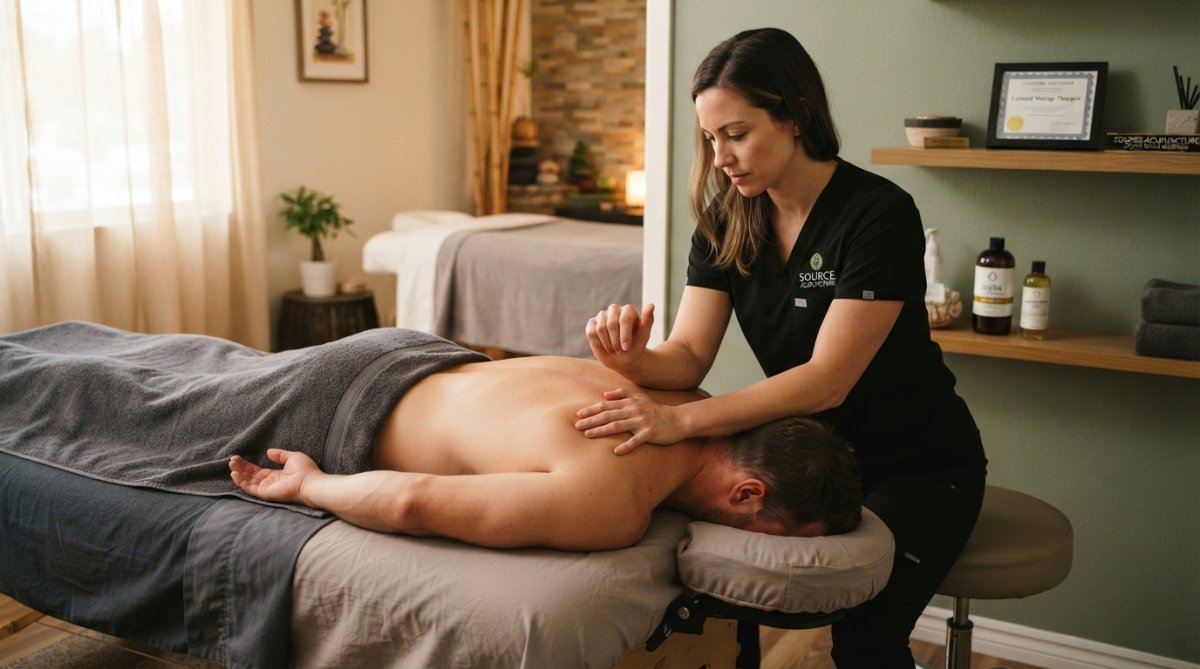
Massage therapy takes a completely different approach to pain relief. Rather than working through nervous system regulation, massage directly addresses the physical structures causing pain: tight muscles, restricted fascia, and trigger points that refer pain to other areas.
Trigger Points and Myofascial Release
Trigger points are hyperirritable spots within muscle tissue that cause localized and referred pain. A trigger point in your shoulder blade, for example, might cause pain radiating down your arm. Myofascial release targets the fascia, the connective tissue surrounding muscles, breaking up restrictions and restoring mobility while reducing pain.
Circulation and Relaxation Response
Massage increases blood flow to treated areas, delivering oxygen and nutrients while removing metabolic waste that accumulates in tight muscles. This circulatory improvement accelerates recovery from muscle soreness and tension.
The relaxation response itself is therapeutic. Massage activates the parasympathetic nervous system, the same system acupuncture engages, but through a different pathway. The combination of physical touch, pressure, and the safe environment of a massage session signals to your nervous system that it’s safe to relax, reducing stress hormones and muscle tension simultaneously.
Massage provides immediate relief because it directly addresses muscle tension, while acupuncture’s benefits often build gradually as the nervous system recalibrates over multiple sessions.
Massage Therapy Benefits for Muscle Pain and Recovery
Massage therapy is unmatched for acute muscle soreness, tension from overuse, and pain localized to specific muscle groups. If your back is sore from physical activity, massage will provide faster relief than acupuncture.
For athletes and active individuals, massage supports recovery by reducing inflammation, improving circulation, and breaking up scar tissue that can limit movement. Many fitness professionals recommend massage as part of a comprehensive recovery protocol because it accelerates adaptation and reduces injury risk.
Regular massage reduces overall muscle tension, improves posture by releasing tight muscles that pull the skeleton out of alignment, and creates a consistency of relief that some patients find more satisfying than acupuncture’s variable results. If your pain is muscular in origin and you want immediate, tangible relief, massage typically delivers faster results.
Integrative Pain Management: When to Combine Both Approaches
The most sophisticated pain management strategy often combines acupuncture and massage. Acupuncture retrains your nervous system’s pain processing while massage releases the muscular tension that’s feeding the pain cycle. Together, they address both the neurological and mechanical components of pain.
A typical integrative protocol might use acupuncture twice weekly to establish nervous system improvements, with massage once weekly to release muscular tension. As pain improves, the frequency of both can decrease. Some patients maintain improvement with monthly maintenance sessions after 8-10 weeks of combined treatment.
This approach is particularly valuable for complex pain conditions like chronic neck pain that involves both muscular tension and nerve irritation, or lower back pain where tight muscles are compressing nerves. By addressing both mechanisms simultaneously, you’re creating conditions for genuine healing.
Source Acupuncture’s practitioners often recommend this integrated approach because it produces more durable results than either modality alone.
Cost of Acupuncture vs Massage: What to Expect
Both acupuncture and massage require investment, but the cost structure differs significantly.
Insurance Coverage and Billing Navigation
Acupuncture coverage varies dramatically by insurance plan and state regulations. Some plans cover acupuncture for specific conditions, while others don’t cover it at all. Many plans that do cover acupuncture require a referral from your primary care physician and limit the number of sessions per year.
Massage therapy has historically received less insurance coverage than acupuncture, though this is changing. The best approach is to contact your insurance provider directly and ask about coverage, copays, referral requirements, and session limits.
Source Acupuncture offers flexible options including a wellness membership program that provides deep discounts on services when you commit to consistent treatment. This model works well for patients managing chronic pain who need regular sessions, as the membership reduces per-session costs significantly compared to paying per visit.
Membership and Long-Term Investment
A wellness membership approach makes sense if you’re planning to use acupuncture and massage consistently. Rather than paying full price for each session, members receive reduced rates that compound over time. For someone committing to 8-12 weeks of integrated treatment, a membership often pays for itself within the first month.
The membership model also encourages consistency, which is crucial for both modalities. Acupuncture requires regular sessions to build the nervous system changes that create lasting pain relief. Massage benefits from consistent treatment to maintain muscle length and tissue quality.
Choosing the Right Treatment: Condition-Specific Decision Matrix
The best treatment depends on your specific pain pattern.
Neurological vs Muscular Pain: Which Treatment Fits
Pain falls into two broad categories: neurological (involving nerves and nervous system signaling) and muscular (involving muscle tissue and soft tissue). Identifying which type you have dramatically simplifies treatment selection.
Neurological pain often feels sharp, burning, tingling, or radiating. It may involve numbness or weakness. Conditions like sciatica, neuropathy, and nerve impingement cause neurological pain. Acupuncture is exceptionally effective here because it directly addresses nervous system function.
Muscular pain feels like tension, soreness, stiffness, or localized aching. It typically worsens with activity and improves with rest or stretching. Muscle strains, tension headaches, and fibromyalgia fall into this category. Massage excels at muscular pain because it directly releases the tissue causing discomfort.
Many conditions involve both components. Chronic neck pain, for example, often combines muscular tension with nerve irritation. This is where combined treatment shines.
Acute vs Chronic Pain: Recovery Timelines
Acute pain, sudden onset from an injury or strain, typically responds faster to massage because it directly addresses the inflamed tissue.
Chronic pain, lasting more than three months, responds better to acupuncture. Chronic pain involves nervous system sensitization, where your nervous system has learned to be in pain. Acupuncture retrains this response, which takes time but produces durable results.
If you need relief in days, massage is your answer. If you’re willing to invest 6-8 weeks for lasting improvement, acupuncture is worth the commitment.
Contraindications and Medical Red Flags
Before pursuing either treatment, identify any contraindications. Acupuncture isn’t appropriate if you have certain bleeding disorders, are on blood thinners, or have severe immunosuppression. Massage can aggravate certain conditions like acute inflammation or areas with recent surgery.
Some pain patterns require medical evaluation before pursuing integrative treatments. Sharp, sudden pain; pain accompanied by numbness or weakness; or pain following trauma should be evaluated by a physician first. Once serious conditions are ruled out, acupuncture and massage become excellent options.
Do not pursue acupuncture or massage as a substitute for necessary medical evaluation. Pain that’s sudden, severe, accompanied by neurological symptoms, or following trauma requires physician assessment first. Once serious conditions are ruled out, these modalities become highly effective.
Making Your Decision: The Integration Framework
Most people benefit from trying both and observing their response. Some respond dramatically to acupuncture. Others see immediate relief from massage. Many find that combining both produces the best results.
If you’re deciding between the two, start with the treatment that matches your pain type (neurological → acupuncture; muscular → massage). Commit to 4-6 sessions spaced one week apart. Track your pain levels, sleep quality, and functional improvements. After 4-6 sessions, you’ll have clear data about whether that modality is working for you.
If you see improvement, continue that treatment. If you see minimal change, try the other modality. If you see partial improvement, consider combining both.
Source Acupuncture’s personalized care approach means your practitioner will assess your specific pain pattern and recommend the treatment most likely to help. If combined treatment makes sense, they can coordinate with massage therapists to ensure your protocols complement each other.
The key insight: you don’t have to choose between acupuncture vs massage for pain as an either-or decision. The most effective pain management strategy uses whichever tools work best for your specific situation, combined in a way that addresses all the factors driving your pain.
Chronic pain doesn’t have to be permanent. Whether your pain is rooted in muscular tension, nervous system dysregulation, or both, acupuncture and massage offer evidence-based pathways to relief.
At Source Acupuncture, we specialize in personalized assessment and treatment planning that combines traditional healing practices with modern therapeutic techniques. Our practitioners evaluate your specific pain pattern, recommend the right treatment approach, and adjust your plan as you improve. With our flexible wellness membership program, consistent treatment becomes affordable, making it easier to maintain the regularity that produces lasting results. Book a session with Source Acupuncture and discover which approach, or combination of approaches, restores your pain-free life.
Frequently Asked Questions
Is acupuncture better than massage for back pain?
Both acupuncture and massage can effectively address back pain, but the best choice depends on your pain type. Acupuncture works by regulating nervous system signals and reducing inflammation, making it particularly effective for neurological or referred pain. Massage targets muscular tension and trigger points, excelling at relieving muscle-based back pain. Many patients find combining both approaches, integrative pain management, yields superior long-term pain reduction. Consult with a licensed practitioner to determine which modality best suits your specific condition.
What are the main benefits of acupuncture for chronic pain?
Acupuncture benefits for chronic pain include pain modulation through nervous system regulation, inflammation reduction, improved circulation, and stress reduction. Evidence-based research shows acupuncture can help manage conditions like arthritis, neuropathic pain, and persistent musculoskeletal discomfort. Unlike temporary relief, consistent acupuncture treatment supports long-term pain reduction by addressing underlying imbalances. Many patients report improved sleep and overall quality of life alongside pain relief, making it a holistic approach to chronic pain management.
Can acupuncture and massage be used together for pain relief?
Yes, combining acupuncture and massage is an effective integrative pain management strategy. Massage therapy prepares soft tissues and improves circulation, while acupuncture regulates nervous system pain signals, together they address both muscular tension and neurological pain components. This complementary approach can accelerate recovery and provide more comprehensive relief than either modality alone. Many wellness centers, including Source Acupuncture, offer combined treatments tailored to your specific condition. Discuss your pain history with your practitioner to design an integrated treatment plan.
How much does acupuncture cost compared to massage therapy?
Pricing for acupuncture and massage varies by location, practitioner experience, and session length. Both modalities typically require multiple sessions for optimal results, making long-term cost an important consideration. Many insurance plans cover acupuncture for certain conditions, while massage coverage varies. Wellness membership programs, like those offered at Source Acupuncture, provide deep discounts on both services when you commit to consistent treatment. For current pricing and insurance details, contact your local wellness center directly for a personalized quote and coverage information.
What type of pain responds best to massage therapy?
Massage therapy works best for muscular tension, soft tissue pain, trigger points, and myofascial restrictions. It's highly effective for muscle soreness, stiffness, sports injuries, and postural strain. Massage improves circulation and promotes the relaxation response, aiding recovery from physical activity. However, massage is less effective for neurological pain (like nerve-based discomfort) or inflammatory conditions requiring systemic treatment. If your pain stems from muscle tightness, knots, or physical strain, therapeutic massage offers direct relief. For mixed pain types, integrative pain management combining both modalities may provide better outcomes.
External Sources Referenced
[EXTERNAL_LINK: National Institutes of Health research on acupuncture for chronic pain management | nih.gov]
[EXTERNAL_LINK: American Massage Therapy Association clinical evidence on massage therapy effectiveness | amtamassage.org]
[EXTERNAL_LINK: Journal of Alternative and Complementary Medicine study on integrative pain management | liebertpub.com]
This article was written using GrandRanker