Table of Contents
- How Acupuncture Works for Sports Injury Recovery
- Key Benefits of Acupuncture for Athletes
- Specific Acupuncture Points for Sports Injuries
- Acupuncture vs. Physical Therapy for Sports Injuries
- Evidence-Based Recovery Timelines and Results
- Cost of Acupuncture for Sports Injuries and Membership Options
- Self-Care and Acupressure: Complementary Recovery Strategies
- Why Source Acupuncture Is Your Partner in Athletic Recovery
Last Updated: July 22, 2026
Acupuncture for sports injury recovery has become increasingly popular among athletes seeking alternatives to conventional pain management. Whether you’re dealing with a recent ankle sprain or chronic shoulder tension, understanding how acupuncture works and whether it fits your recovery strategy matters for your long-term athletic performance.
At Source Acupuncture in Pacific Beach, San Diego, we’ve worked with countless athletes navigating injury recovery. This guide covers the science, practical applications, and realistic timelines for acupuncture as part of your sports medicine toolkit.
How Acupuncture Works for Sports Injury Recovery
When a practitioner inserts fine needles at specific anatomical points, they initiate a cascade of physiological responses. The mechanical stimulation triggers release of endorphins, your body’s natural pain-relieving compounds, while activating the parasympathetic nervous system, shifting from "fight or flight" to "rest and digest" and creating conditions necessary for tissue repair.
Blood flow increases dramatically in response to needle insertion. Vasodilation delivers oxygen and nutrient-rich blood to damaged tissue, accelerating removal of inflammatory metabolites and speeding delivery of growth factors essential for healing.
The needle causes intentional microtrauma that signals your body to initiate its own repair mechanisms. This is why athletes often feel improvement after sessions because of the needles, not despite them.
The Science Behind Needle Placement and Healing
Acupuncture points correspond remarkably well with anatomical structures, nerve bundles, blood vessels, and fascial planes. Trigger point therapy directly targets tight bands of muscle that form after injury, releasing muscular tension and interrupting pain signal pathways.
Acupuncture stimulates sensory nerves that activate the body’s gate control mechanism, essentially closing the "gate" on pain signals reaching your brain. Simultaneously, the treatment triggers release of serotonin and dopamine, neurotransmitters that improve mood and pain tolerance.
Neurological Response and Pain Relief
Pain relief from acupuncture is measurable and reproducible. When needles stimulate peripheral nerves, they activate specific neural pathways that suppress pain transmission, differing fundamentally from pharmaceutical pain management.
For athletes, this distinction matters. Acupuncture reduces pain while preserving proprioception, your body’s awareness of position and movement in space. You maintain better movement control during recovery, unlike strong pain medication, which can mask proprioceptive feedback and increase injury risk.
The endorphin release creates a secondary benefit: improved mood and reduced anxiety around the injury, helping athletes overcome psychological barriers to recovery.
Key Benefits of Acupuncture for Athletes
When integrated into a comprehensive recovery strategy, acupuncture addresses multiple dimensions of sports injury simultaneously.
Accelerated Muscle Recovery and Tissue Repair
Muscle recovery requires precise coordination between inflammatory response and tissue rebuilding. Acupuncture modulates this response, maintaining enough inflammation to trigger repair while preventing the chronic inflammatory state that causes prolonged pain and stiffness.
Athletes report noticeable improvements in range of motion within 3-5 sessions. This isn’t because tissue has fully healed, but because the treatment reduces muscle guarding and improves neural drive to the injured area, enabling more effective physical therapy.
Acupuncture addresses pain AND enables better rehabilitation. You get pain relief that doesn’t compromise proprioception, allowing you to do the strengthening work necessary for lasting recovery.
Inflammation Reduction and Swelling Management
Excessive swelling restricts movement and delays healing. Acupuncture reduces swelling through improved blood and lymphatic circulation, which removes excess fluid from the injury site. For acute injuries, acupuncture combined with rest and ice produces faster swelling reduction than ice alone.
Enhanced Blood Circulation and Performance
Improved circulation is perhaps the most consistent benefit athletes experience from acupuncture. The treatment increases blood flow systemically, delivering oxygen to working muscles during training and competition, improving aerobic capacity and endurance.
Many elite athletes use acupuncture as a performance enhancement tool, not just for injury recovery.
Specific Acupuncture Points for Sports Injuries
Understanding which acupuncture points address specific injuries helps you communicate effectively with your practitioner and set realistic expectations.
Trigger Point Therapy and Soft Tissue Treatment
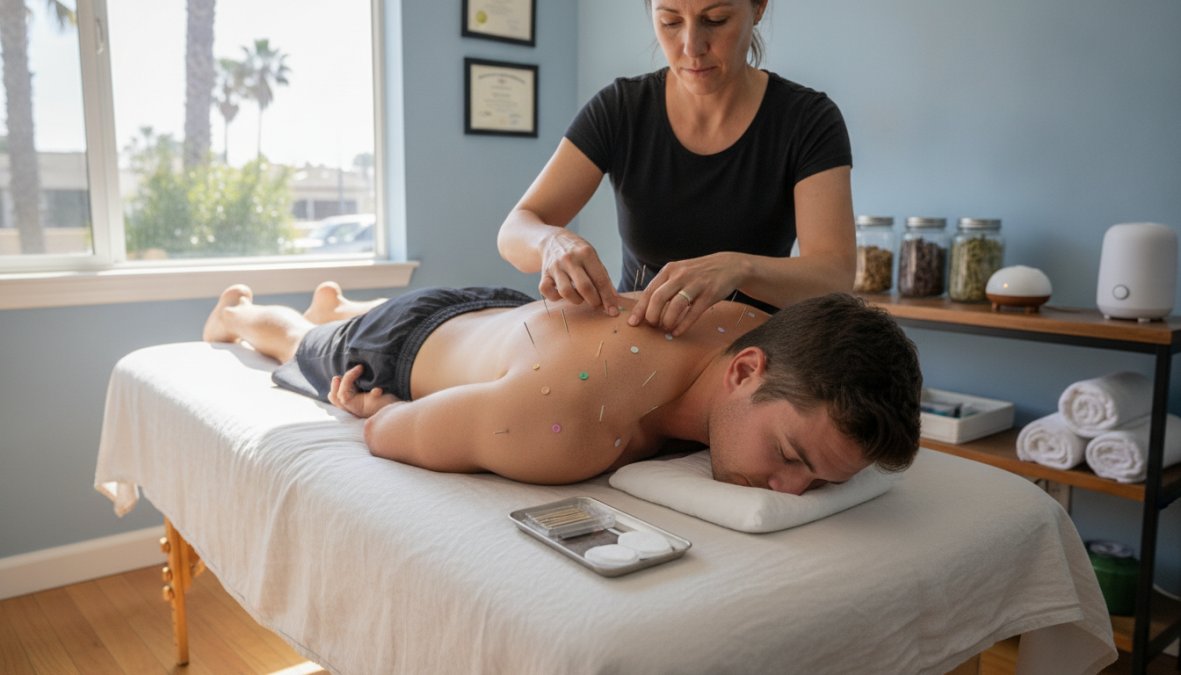
Trigger point acupuncture targets tight, painful bands of muscle that form after injury or overuse. These myofascial trigger points create referred pain in different locations than the actual problem. Needling a trigger point directly releases muscular tension, interrupting the pain cycle.
The treatment works particularly well for athletes with chronic muscle tightness from repetitive training. Runners develop tight hip flexors and IT bands. Swimmers develop tight chest and shoulder muscles. Weightlifters develop tight lower back and hip musculature.
Common Injury Protocols: Sprains, Strains, and Tendonitis
Ankle sprains respond well to acupuncture because the injury involves ligament damage and localized inflammation. Most athletes see significant improvement within 3-5 sessions, with full recovery supported by physical therapy focusing on proprioceptive training.
Muscle strains benefit from acupuncture’s ability to reduce muscle guarding and improve blood flow, allowing you to perform rehabilitation exercises without protective muscle tension limiting movement.
Tendonitis presents a particular challenge because tendons have limited blood supply. Acupuncture improves circulation to the affected tendon and reduces inflammation, but recovery typically requires 6-12 weeks of consistent treatment combined with activity modification.
Rotator cuff injuries respond to acupuncture targeting the rotator cuff muscles and surrounding musculature, reducing inflammation and improving mobility.
Tendonitis and rotator cuff injuries require longer treatment timelines than acute sprains. Plan for 8-12 weeks of consistent treatment and rehabilitation.
Acupuncture vs. Physical Therapy for Sports Injuries
The most effective approach to sports injury recovery is acupuncture AND physical therapy. Physical therapy addresses biomechanical and strength deficits that must be corrected to prevent re-injury. Acupuncture addresses pain, inflammation, and muscle tension that can limit your ability to perform physical therapy exercises effectively.
When you’re in significant pain, your nervous system protects the injured area by limiting movement. By reducing pain and inflammation through acupuncture, you can perform physical therapy exercises with better form and fuller range of motion.
When to Choose Acupuncture, Physical Therapy, or Both
Choose acupuncture primarily if: You’re dealing with significant pain or inflammation limiting movement, you have chronic muscle tension, or you’re seeking to optimize recovery speed.
Choose physical therapy primarily if: You have significant strength deficits, movement pattern dysfunction, or proprioceptive impairment.
Choose both if: You want optimal recovery outcomes and have access to both practitioners. This approach produces faster return to sport and lower re-injury rates.
Most athletes benefit from starting with acupuncture to manage acute pain and inflammation, then transitioning to physical therapy as pain decreases and movement improves.
Evidence-Based Recovery Timelines and Results
Understanding realistic recovery timelines prevents frustration and helps you structure your training appropriately during rehabilitation.
What to Expect: Acute vs. Chronic Sports Injuries
Acute injuries (recent onset, clear injury event) typically respond faster to acupuncture than chronic injuries. An ankle sprain sustained last week will likely show noticeable improvement within 3-5 sessions. Full functional recovery typically requires 4-8 weeks depending on injury severity.
Chronic injuries (ongoing for weeks or months) require longer treatment timelines because the body has adapted to the injury. Expect 8-12 weeks of consistent treatment for chronic conditions.
| Injury Type | Acute Timeline | Chronic Timeline | Key Factors |
|---|---|---|---|
| Ankle sprain | 4-6 weeks | 8-12 weeks | Severity, proprioceptive training |
| Muscle strain | 3-4 weeks | 6-10 weeks | Muscle group involved, training load |
| Tendonitis | 6-8 weeks | 12-16 weeks | Activity modification, load management |
| Rotator cuff | 8-12 weeks | 12-16 weeks | Strength training, movement pattern correction |
Session Frequency and Long-Term Recovery Plans
Frequency matters significantly for acupuncture outcomes. For acute injuries in the first 2-4 weeks, 2-3 sessions per week produces optimal results. As pain decreases and function improves, you can reduce to once-weekly sessions for maintenance.
For chronic injuries, starting with 2-3 sessions per week for 4-6 weeks, then transitioning to once-weekly sessions for 4-6 weeks, produces better outcomes than consistent once-weekly treatment.
Consistency matters more than frequency. Two sessions per week for 12 weeks produces better outcomes than four sessions per week for 6 weeks.
Cost of Acupuncture for Sports Injuries and Membership Options
At Source Acupuncture, we recognize that consistent treatment is essential for optimal outcomes. Our flexible membership options reduce the per-session cost significantly compared to pay-per-visit pricing, making it easier to maintain the treatment frequency that produces best results.
For athletes committing to 2-3 sessions per week during acute recovery phases, our membership program provides substantial savings. Source Acupuncture also offers complementary services that enhance sports injury recovery, including red light therapy and cupping, which work synergistically with acupuncture.
For specific pricing and membership details, visit Source Acupuncture’s website or call to discuss options that fit your recovery timeline and budget.
Self-Care and Acupressure: Complementary Recovery Strategies
Acupressure, applying pressure to acupuncture points without needles, offers a complementary self-care strategy you can use between professional sessions. Apply firm pressure using your thumbs or fingers, holding each point for 1-2 minutes while breathing deeply.
Acupressure works best as maintenance between professional sessions, not as a replacement for acupuncture. The depth and precision of needle insertion produces stronger stimulus than surface pressure. Many athletes also benefit from regular stretching, foam rolling, and ice or heat application depending on injury phase.
Why Source Acupuncture Is Your Partner in Athletic Recovery
Sports injury recovery requires a practitioner who understands athletic demands, injury mechanics, and the psychology of returning to sport after setback.
Source Acupuncture brings this comprehensive perspective to sports injury recovery. Our licensed practitioners have experience working with athletes across all sport types. We assess your injury within the context of your sport and training demands, developing treatment plans that integrate acupuncture with physical therapy and self-care strategies.
Our wellness membership program makes consistent treatment accessible. Consistency produces results, and our membership pricing removes financial barriers that cause athletes to skip sessions prematurely.
Sports injury recovery demands a strategy that addresses pain, inflammation, movement limitation, and the underlying biomechanical factors that led to injury. Acupuncture for sports injury recovery provides powerful tools for managing pain and inflammation while enabling the rehabilitation work necessary for lasting recovery. When integrated with physical therapy and guided by an experienced practitioner who understands athletic demands, acupuncture accelerates return to sport and reduces re-injury risk. Source Acupuncture offers the expertise, complementary services, and flexible membership program that support your complete recovery. Book a session with Source Acupuncture today and discover how professional acupuncture treatment combined with personalized recovery planning can get you back to performing at your best.
Frequently Asked Questions
What types of sports injuries can acupuncture treat?
Acupuncture for sports injury recovery is effective for acute injuries like sprains and strains, as well as chronic conditions such as tendonitis, joint pain, and soft tissue damage. Common treated injuries include shoulder injuries, knee problems, ankle sprains, and muscle strains. Acupuncture addresses both the pain and underlying inflammation that accompany these orthopedic conditions, making it a versatile option for athletes of all levels.
How many acupuncture sessions do I need for a sports injury?
Recovery timelines vary based on injury severity and type. Acute injuries may show improvement within 3-6 sessions, while chronic sports injuries often require 8-12 sessions or more for optimal results. Frequency typically ranges from twice weekly initially to once weekly during maintenance. Your practitioner will assess your specific condition and create an evidence-based recovery plan tailored to your athletic goals and injury profile.
Can I use acupuncture alongside physical therapy for sports injury recovery?
Yes, acupuncture and physical therapy complement each other exceptionally well. Acupuncture reduces inflammation, improves blood circulation, and manages pain, while physical therapy rebuilds strength and biomechanics. Many athletes benefit from integrated treatment plans that combine both modalities. Acupuncture can enhance recovery time and reduce muscle soreness between PT sessions, making it an excellent conservative modality to support your rehabilitation.
Is there scientific evidence that acupuncture helps with sports injuries?
Research supports acupuncture's effectiveness for sports-related injuries through multiple mechanisms: it stimulates endorphin release for pain management, increases vasodilation to improve blood circulation, and reduces inflammation at the injury site. Modern sports science increasingly recognizes acupuncture as a noninvasive, evidence-based treatment option. Elite athletes worldwide use acupuncture for performance enhancement and injury prevention, validating its role in comprehensive athletic recovery strategies.
This article was written using GrandRanker