Table of Contents
- What Is Red Light Therapy and How Does It Support Recovery
- How Red Light Therapy Works at the Cellular Level
- Red Light Therapy for Muscle Recovery and DOMS Relief
- How Long to Use Red Light Therapy for Muscle Soreness
- Red Light Therapy Dosage for Muscle Recovery
- Best Red Light Therapy Devices for Recovery
- Red Light Therapy vs Ice Baths for Recovery
- Safety, Side Effects, and Who Should Avoid Red Light Therapy
Red Light Therapy for Recovery: Complete Guide
Last Updated: July 15, 2026
Red light therapy for recovery has become a cornerstone of modern athletic training and rehabilitation. At Source Acupuncture in Pacific Beach, San Diego, we’ve integrated this advanced therapeutic technique into our comprehensive wellness offerings, helping clients accelerate muscle recovery and reduce inflammation through photobiomodulation.
What Is Red Light Therapy and How Does It Support Recovery
Red light therapy, also known as photobiomodulation, is a non-invasive treatment using specific wavelengths of light to stimulate cellular repair and reduce inflammation. When red and near-infrared light penetrate your skin, they reach the mitochondria and stimulate production of adenosine triphosphate (ATP), the primary energy currency cells use to function. This enhanced ATP production enables efficient tissue repair, inflammation reduction, and regeneration.
Unlike pharmaceutical interventions, red light therapy operates through natural biological pathways. Your body doesn’t develop tolerance, and there are no systemic side effects when used appropriately.
Red light therapy is most effective when used consistently. Most users notice improvements after 2-4 weeks of regular treatment, as cellular benefits accumulate over time.
The Science of Photobiomodulation
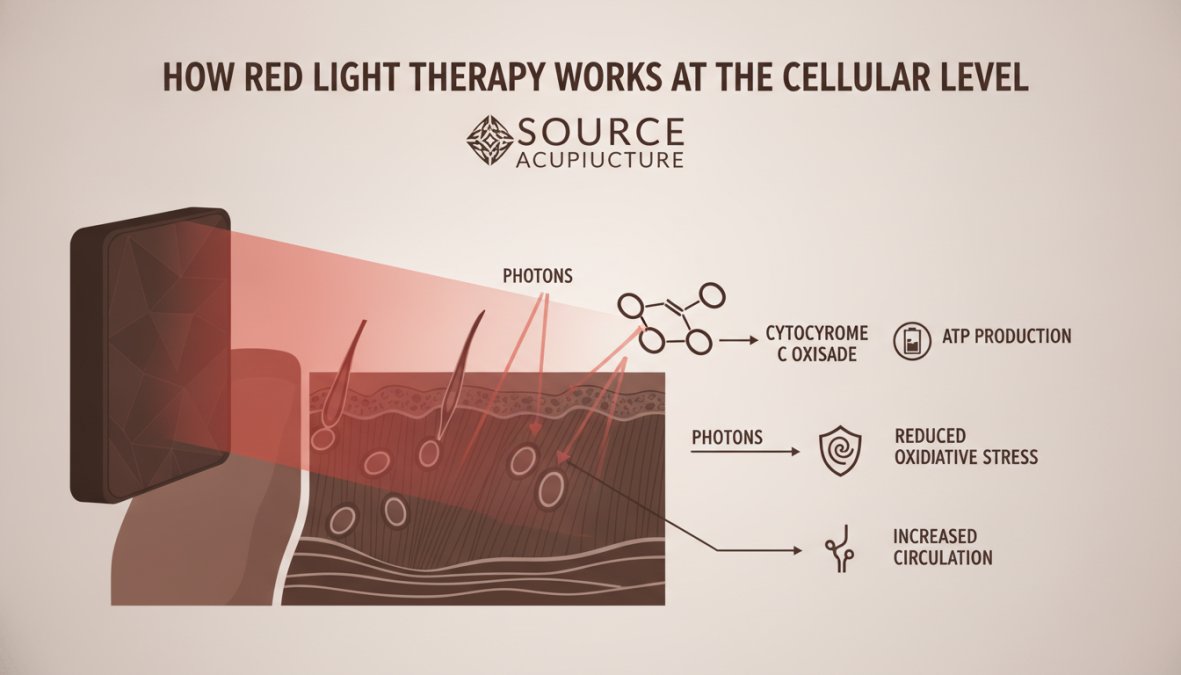
Photobiomodulation, light that regulates biological processes, begins when photons are absorbed by chromophores within your cells. The primary target is cytochrome c oxidase, an enzyme in the mitochondrial electron transport chain. When this enzyme absorbs photons, it becomes more efficient at transferring electrons, accelerating ATP production.
Research from the National Center for Biotechnology Information documents that photobiomodulation enhances mitochondrial function, reduces oxidative stress, and activates cellular repair pathways. The effect is dose-dependent: the right intensity and duration produce optimal results.
Wavelengths and Cellular Action
Red light typically falls in the 600-700 nanometer range, while near-infrared light ranges from 700-1100 nanometers. Red wavelengths are absorbed readily by surface tissues and excel at skin health and superficial muscle recovery. Near-infrared wavelengths penetrate deeper, reaching muscles, tendons, and joints several centimeters below the skin surface.
The optimal therapeutic window for muscle recovery is 630-1000 nanometers, with peak effectiveness around 850 nanometers for deep tissue penetration.
How Red Light Therapy Works at the Cellular Level
Red light therapy for recovery centers on energy production and inflammation control. When light energy reaches your mitochondria, it initiates biological responses that support healing.
ATP Production and Mitochondrial Function
ATP production is the foundation of cellular recovery. Every repair process, from protein synthesis to inflammation reduction, requires energy. Red light therapy accelerates ATP production by enhancing electron transport chain efficiency within mitochondria.
When cytochrome c oxidase absorbs photons, it facilitates electron movement more efficiently, generating a larger proton gradient across the mitochondrial membrane. This powers ATP synthase, the enzyme that manufactures ATP molecules. The result is more energy available for cellular repair processes.
This energy boost is particularly valuable for muscle cells recovering from exercise. During intense training, muscle fibers sustain microscopic damage. Red light therapy accelerates repair mechanisms by increasing ATP availability, reducing recovery time significantly.
Red light therapy makes your existing mitochondria work more efficiently, producing more energy from the same substrate. This is why consistency matters, you’re training your cellular energy systems to operate at higher capacity.
Inflammation Reduction and Tissue Repair
Acute inflammation after exercise triggers repair, but excessive inflammation extends recovery time and increases pain. Red light therapy modulates inflammation by activating anti-inflammatory signaling pathways and reducing oxidative stress, the accumulation of damaging free radicals that perpetuate inflammation.
Photobiomodulation also increases nitric oxide production, a signaling molecule that improves blood flow, reduces inflammation, and supports tissue healing. Collagen synthesis is enhanced by increased ATP availability and reduced oxidative stress, making red light therapy particularly effective for tendon and ligament recovery.
Red Light Therapy for Muscle Recovery and DOMS Relief
Delayed-onset muscle soreness (DOMS) peaks 24-72 hours after intense exercise. Red light therapy has emerged as one of the most effective interventions for managing DOMS and accelerating return to training.
Delayed Onset Muscle Soreness (DOMS) and Recovery Time
DOMS results from microscopic muscle fiber damage and the inflammatory response that follows. Red light therapy accelerates DOMS recovery by addressing both underlying muscle damage and the inflammatory cascade. Studies demonstrate that athletes using red light therapy immediately after intense training experience reduced peak soreness intensity and faster resolution.
Timing matters significantly. Applying red light therapy within 2-4 hours post-exercise, when inflammation is initiating, produces superior results compared to delayed treatment.
Red light therapy is not a substitute for adequate sleep, protein intake, or active recovery. Athletes who use red light therapy but neglect these fundamentals will see minimal improvement.
Blood Flow, Circulation, and Muscle Hypertrophy
Red light therapy increases nitric oxide production, which dilates blood vessels and enhances blood flow to treated areas. Better circulation delivers more oxygen and nutrients to recovering muscles and removes metabolic waste products more efficiently.
This enhanced blood flow supports muscle hypertrophy by creating a favorable environment for muscle protein synthesis and growth. Consistent red light therapy use improves baseline blood flow to treated tissues, supporting long-term tissue health and resilience.
How Long to Use Red Light Therapy for Muscle Soreness
Treatment duration and frequency are critical variables that determine whether red light therapy delivers results.
Session Duration and Treatment Frequency
Most effective protocols call for 10-20 minute sessions, 4-7 days per week. This duration allows sufficient light energy to penetrate tissue and stimulate mitochondrial function without excessive heat or photon overload. Frequency matters more than duration: a 15-minute session daily produces superior results compared to a 45-minute session once weekly.
For acute muscle soreness, many athletes use red light therapy twice daily: immediately after training and again in the evening. As soreness resolves, frequency can decrease to once daily or every other day for maintenance.
The type of device and irradiance (light intensity) affects optimal duration. A high-irradiance device (50-100 mW/cm²) may require only 5-10 minutes, while a lower-irradiance device (10-20 mW/cm²) may require 20-30 minutes to deliver equivalent energy.
Timeline to Noticeable Results
Most users report noticeable improvements within 2-4 weeks of consistent use:
Week 1-2: Subtle improvements in soreness intensity and duration.
Week 3-4: Noticeable reduction in peak soreness and faster resolution. Athletes can train again sooner after intense sessions.
Week 5-8: Significant improvements in baseline recovery speed. Athletes can train harder and more frequently without excessive soreness accumulation.
Stopping treatment results in gradual loss of benefits over 2-4 weeks, making consistent long-term use essential.
Red Light Therapy Dosage for Muscle Recovery
Dosage in red light therapy is measured in joules per square centimeter (J/cm²), the total light energy delivered to a given area.
Understanding Irradiance and Treatment Intensity
Irradiance is the intensity of light measured in milliwatts per square centimeter (mW/cm²). A device with higher irradiance delivers more photons per unit time, allowing shorter treatment sessions to achieve the same total dose.
The relationship is straightforward: irradiance × time = total dose. A device with 50 mW/cm² for 20 minutes delivers 60 J/cm², while a 20 mW/cm² device requires 60 minutes for the same dose. Shorter sessions with higher irradiance are preferable for convenience.
The optimal range for muscle recovery is 20-100 mW/cm², with most clinical devices operating at 30-80 mW/cm².
Optimal Dosage Protocols for Athletes
The therapeutic window for muscle recovery is 4-12 J/cm² per session. For superficial muscle soreness, 4-6 J/cm² is often sufficient. For deeper tissue penetration and chronic muscle issues, 8-12 J/cm² produces better results.
| Treatment Phase | Frequency | Duration | Target Dose | Purpose |
|---|---|---|---|---|
| Acute soreness (days 1-3) | 2x daily | 15-20 min | 6-8 J/cm² | Reduce inflammation |
| Active recovery (days 4-7) | 1x daily | 15 min | 4-6 J/cm² | Support tissue repair |
| Maintenance (week 2+) | 4-5x weekly | 12-15 min | 4-6 J/cm² | Prevent soreness |
Athletes who train intensely should aim for 4-5 treatments per week at maintenance level, with increased frequency during heavy training blocks.
Best Red Light Therapy Devices for Recovery
Choosing the right device requires understanding the difference between consumer-grade and clinical-grade equipment.
Home Devices vs. Clinical Equipment
Home devices range from small handheld panels (50-100 W) to large flat panels (200-500 W). These devices are designed for convenience and affordability, with prices ranging from a few hundred to a few thousand dollars. Most operate at 20-50 mW/cm² irradiance and require 15-30 minute sessions.
Clinical equipment includes larger panels (500-1000+ W) with higher irradiance (50-100+ mW/cm²), allowing shorter treatment sessions and deeper tissue penetration. For someone recovering from occasional muscle soreness, a home device is practical and cost-effective. For athletes training intensely or managing chronic muscle issues, clinical treatment offers advantages in speed and effectiveness.
Device Selection Criteria for Your Needs
When evaluating a device, prioritize these specifications:
Wavelength: Confirm the device uses wavelengths in the 600-1000 nanometer range, with emphasis on 630-850 nm for muscle recovery.
Irradiance: Look for devices with 20-100 mW/cm² irradiance, allowing practical session durations while delivering therapeutic doses.
Coverage area: Larger treatment areas require larger panels. A handheld device works for knees or elbows; full-body recovery requires a larger panel.
FDA clearance: Look for FDA-cleared or FDA-registered devices, indicating the manufacturer has submitted safety and efficacy data.
Build quality: Professional devices use medical-grade components and consistent light output across the panel.
Warranty and support: Reputable manufacturers offer 1-3 year warranties, reflecting confidence in product durability.
At Source Acupuncture, we use clinical-grade red light therapy devices that meet all these criteria.
Red Light Therapy vs Ice Baths for Recovery
Athletes often choose between red light therapy and ice baths, two popular recovery modalities with fundamentally different mechanisms.
Mechanisms and Complementary Benefits
Ice baths work through cold-induced vasoconstriction, reducing blood flow to damaged tissues and temporarily suppressing inflammation. This is effective for acute swelling immediately after intense training. However, ice baths also suppress the inflammatory cascade that triggers tissue repair, potentially extending overall recovery time.
Red light therapy enhances blood flow and modulates inflammation to support the repair cascade. Rather than suppressing inflammation, it helps your body transition from acute inflammation to tissue remodeling more efficiently.
The key insight is that these methods work on different timelines. Ice is most effective immediately post-exercise (first 30-60 minutes) for acute swelling. Red light therapy is most effective 2-4 hours post-exercise when inflammation is initiating.
The optimal recovery strategy uses ice immediately post-exercise for acute swelling management, then transitions to red light therapy 2-4 hours later to accelerate tissue repair.
Integration With Other Recovery Tools
Red light therapy integrates seamlessly with stretching, foam rolling, proper nutrition, and adequate sleep. Stretching and red light therapy are particularly synergistic: stretching improves circulation; red light therapy enhances cellular repair and reduces inflammation.
Massage and red light therapy also complement each other. Many athletes use red light therapy before massage to increase blood flow, then again after to support tissue healing. Nutrition timing matters when using red light therapy, the increased ATP availability requires adequate amino acid availability. Consuming protein within 30-60 minutes post-exercise combined with red light therapy creates an optimal environment for muscle repair.
Safety, Side Effects, and Who Should Avoid Red Light Therapy
Red light therapy has an excellent safety profile when used appropriately.
FDA-Cleared Status and Clinical Safety Profile
Multiple red light therapy devices are FDA-cleared for pain management, muscle recovery, and tissue healing. The most common side effect is temporary skin irritation or redness at the treatment site, which typically resolves within hours. Some users report mild headaches or eye discomfort when treating areas near the face or eyes, easily avoided by using protective eyewear.
Long-term safety data from thousands of clinical treatments confirms that red light therapy has no systemic toxicity, no cumulative toxicity, and no dependency effects.
Contraindications and Precautions
Individuals with photosensitivity disorders or those taking photosensitizing medications should consult a healthcare provider before using red light therapy. Thyroid conditions require special consideration, direct treatment of the thyroid area should be avoided, though treating other body areas is safe.
Individuals with active cancer or those undergoing cancer treatment should consult their oncologist before starting red light therapy. Pregnant individuals should consult their healthcare provider before beginning treatment.
Eye safety deserves emphasis: while red light at therapeutic doses is not harmful to eyes, bright light exposure can cause temporary discomfort. Using protective eyewear when treating the face or head area eliminates this concern.
Red light therapy for recovery represents a convergence of light’s healing properties and modern cellular biology. The mechanism is scientifically validated: photons trigger mitochondrial efficiency, accelerate ATP production, and modulate inflammation to support tissue repair. At Source Acupuncture, we integrate red light therapy into personalized recovery protocols tailored to your specific needs. Book a session today and experience how photobiomodulation transforms your recovery timeline.
Frequently Asked Questions
How long does it take for red light therapy to work for muscle recovery?
Most users report initial improvements in muscle soreness and recovery time within 3-7 days of consistent use. However, deeper benefits like enhanced collagen synthesis and sustained improvements in tissue regeneration typically emerge after 2-4 weeks of regular treatment sessions. The timeline depends on treatment frequency, dosage, device quality, and individual factors like age and fitness level. Consistency matters more than intensity, daily or near-daily sessions produce faster results than sporadic use.
How often should you use red light therapy for recovery?
For optimal muscle recovery and DOMS relief, most protocols recommend 3-5 sessions per week, with each session lasting 10-20 minutes depending on irradiance levels and device specifications. Some athletes use red light therapy daily post-workout for acute soreness. Starting conservatively, 2-3 times weekly, allows you to assess your response before increasing frequency. Clinical trials and therapeutic guidelines suggest that consistency trumps intensity; regular moderate use outperforms sporadic high-dose sessions in reducing inflammation and accelerating tissue repair.
Can red light therapy be combined with ice baths or other recovery methods?
Yes, red light therapy integrates well with other recovery tools. While ice baths reduce acute inflammation through cold exposure, red light therapy enhances blood flow and ATP production, supporting longer-term tissue repair and mitochondrial function. Many athletes use ice immediately post-workout for swelling, then apply red light therapy 4-6 hours later to promote circulation and cellular healing. Red light therapy also pairs effectively with stretching, massage, compression, and adequate sleep. The non-invasive, complementary nature of photobiomodulation makes it a flexible addition to any recovery protocol.
What are the main side effects or risks of red light therapy for recovery?
Red light therapy has a strong safety profile and is FDA-cleared for therapeutic use. Most users experience no adverse effects. Rare side effects include temporary eye discomfort if looking directly at the light source, mild skin irritation in sensitive individuals, or headaches with excessive use. People with photosensitivity conditions, certain medications that increase light sensitivity, or active skin cancer should consult a healthcare provider before use. Overuse, sessions exceeding 30 minutes daily, may cause fatigue rather than recovery benefits. When used as directed, red light therapy is non-invasive and carries minimal risk.
This article was written using GrandRanker