Table of Contents
- How Acupuncture Works for Night Sweats
- Acupuncture Pressure Points for Hot Flashes and Night Sweats
- How Long Does Acupuncture Take to Work for Night Sweats
- Acupuncture for Menopause Symptoms Beyond Night Sweats
- Clinical Evidence: What Research Shows
- Managing Sleep Disturbances and Lifestyle Integration
- Frequently Asked Questions
Last Updated: September 29, 2026
How Acupuncture Works for Night Sweats
Why acupuncture helps with night sweats comes down to how your body regulates temperature and manages stress. The mechanism is straightforward once you understand thermoregulation.
Fine needles stimulate specific points on your body, sending signals to your nervous system to adjust temperature control, like recalibrating your internal thermostat so your body maintains stable temperature instead of swinging between hot and cold.
The autonomic nervous system controls your sweat response. Acupuncture calms the overactive signals that trigger excessive sweating by activating pathways that reduce vasomotor symptoms, those sudden waves of heat.
The Thermoregulation Connection
The hypothalamus, your brain’s thermostat, decides when you’re too hot or cold and triggers sweating or shivering. During menopause or high-stress periods, it becomes oversensitive, thinking you’re overheating at normal temperatures.
Acupuncture works by:
- Calming overactive nerve signals in the hypothalamus
- Improving blood flow to help distribute heat evenly
- Reducing the intensity of temperature fluctuations
- Supporting your body’s natural cooling mechanisms
When your thermoregulation improves, night sweats decrease.
Serotonin and Hormonal Balance
Low serotonin is linked to mood changes and temperature regulation problems. Acupuncture stimulates serotonin and other neurotransmitters that stabilize mood and reduce night sweats.
Hormonal fluctuations trigger night sweats by affecting how your nervous system responds to temperature, causing confusion about your body’s ideal temperature.
Acupuncture helps your body adapt to hormonal changes by increasing serotonin and endorphin release, reducing vasomotor symptom intensity and making your body less reactive to hormonal shifts.
Acupuncture Pressure Points for Hot Flashes and Night Sweats
Two acupuncture points stand out for addressing hot flashes and night sweats: Heart 6 and Spleen 6, which calm the nervous system and support hormonal balance.
Heart 6 (HT 6) and Spleen 6 (Sp 6)
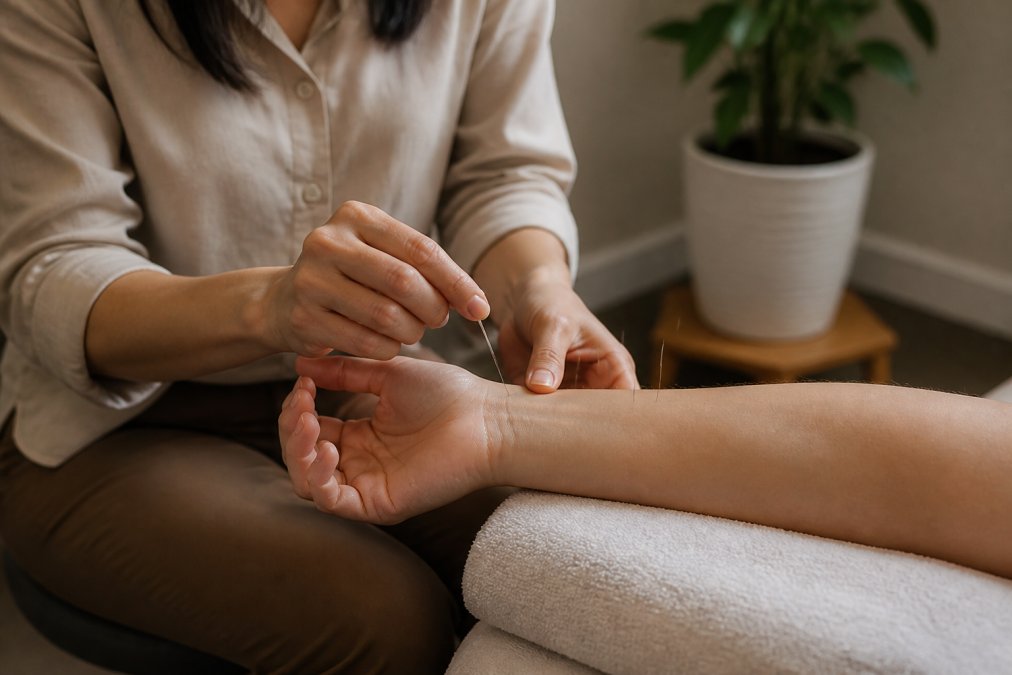
Heart 6 (Yin Xi) sits on the inner forearm and calms the mind, reducing heat sensations and hot flash intensity.
Spleen 6 (San Yin Jiao), located on the inner leg above the ankle, is a major hub for hormone balance and sleep quality in traditional Chinese medicine.
Together, these points address physical heat sensations and underlying hormonal imbalance by reducing vasomotor symptom intensity, improving sleep regulation, and calming nervous system temperature response.
Self-Acupressure Protocols You Can Use at Home
Acupressure uses finger pressure instead of needles, giving you a tool to manage night sweats between professional treatments.
For Heart 6 self-acupressure:
- Locate the point on your inner forearm, about two finger widths below your wrist crease
- Use your thumb to apply steady, firm pressure
- Hold for 1-2 minutes while breathing slowly
- Repeat 2-3 times daily, especially before bed
For Spleen 6 self-acupressure:
- Find the point on your inner leg, about three finger widths above your ankle bone
- Apply firm thumb pressure for 1-2 minutes
- Use slow, deep breaths to enhance the effect
- Perform 2-3 times daily
Consistency matters more than intensity. Daily acupressure can be a helpful tool to manage night sweats between professional treatments.
How Long Does Acupuncture Take to Work for Night Sweats
Many individuals may notice improvements within a few weeks of regular acupuncture treatment, though timelines vary based on symptom severity, duration, and individual physiology.
Treatment Frequency and Timeline Expectations
Frequency matters significantly. Weekly treatments produce faster results than monthly ones because your body needs consistent stimulation to recalibrate your thermoregulation system. Here’s a realistic progression:
Weeks 1-4: Intensive Phase (1 session per week)
- Expected outcome: Initial responses may include reduced night sweat frequency or intensity
- Your nervous system begins responding to needle stimulation
- Sleep quality may improve even before sweating decreases noticeably
- Many people report feeling calmer and less stressed
Weeks 5-8: Consolidation Phase (1 session every 1-2 weeks)
- Expected outcome: Further improvement; noticeable reduction in soaking episodes
- You may wake up damp instead of soaked, or experience sweating only 2-3 nights per week instead of nightly
- Sleep duration often increases as night sweats become less disruptive
- Energy levels typically improve
Weeks 9-12: Maintenance Phase (1 session every 2-3 weeks)
- Expected outcome: Significant improvement; many individuals report substantial relief
- Night sweats may occur only occasionally or during high-stress periods
- Sleep quality stabilizes at a new, higher baseline
- Many practitioners transition to monthly maintenance sessions at this point
Months 4+: Maintenance (1 session monthly or as needed)
- Expected outcome: Sustained improvement with potential occasional flare-ups during stress or hormonal shifts
- Monthly sessions prevent symptom regression and address other menopausal symptoms
- Some people space sessions further apart once stable
Factors That Affect Your Timeline
Symptom Duration: Individuals with shorter symptom duration may respond differently than those with longer-standing symptoms.
Severity: The severity of night sweats can influence the timeline for improvement.
Age and Menopausal Stage: The stage of menopause may influence an individual’s response to treatment.
Concurrent Conditions: People managing high stress, poor sleep quality, or other chronic conditions may need longer treatment courses. Acupuncture addresses these underlying factors, but the process takes time.
Treatment Compliance: Missing sessions or spacing them too far apart significantly delays results. Consistency matters more than intensity. Consistent treatment is generally more effective than sporadic treatment. Maintaining a steady therapeutic rhythm alongside the selection of appropriate mattresses for hot sleepers creates an environment where the body can finally regulate its temperature throughout the night.
Measurable Milestones to Track
Instead of waiting for complete resolution, watch for these intermediate improvements:
- Week 2-3: Improved sleep quality, less fragmented sleep, waking more refreshed
- Week 4-5: Noticeable reduction in sweat volume (damp sheets instead of soaked)
- Week 6-8: Fewer nights per week with sweating; improved mood and mental clarity
- Week 8-12: Sweating occurs only during high-stress periods or not at all; sustained energy improvement
These milestones indicate that treatment is working, even if night sweats haven’t completely resolved.
When to Reassess Your Treatment Plan
If you’ve completed 8-10 sessions (typically 2 months of weekly treatment) with no noticeable improvement in any symptom, discuss adjustments with your practitioner. Changes might include:
- Modifying which acupuncture points are needled
- Adjusting needle depth or stimulation intensity
- Adding herbal medicine or dietary recommendations
- Evaluating whether other underlying conditions (thyroid dysfunction, sleep apnea, medication side effects) are contributing
Some people respond better to acupuncture combined with other approaches. Your practitioner should help you identify this early rather than continuing ineffective treatment indefinitely.
Cost-Benefit Perspective
A typical treatment course may involve several sessions over a few months. Pricing for sessions depends on various factors. Many insurance plans may cover acupuncture for menopausal symptoms; it is advisable to check with your provider.
Consider the potential benefits of acupuncture for improved sleep, energy, and overall well-being. The benefits may persist after treatment, potentially requiring occasional maintenance sessions.
Acupuncture for Menopause Symptoms Beyond Night Sweats
Night sweats are just one menopause symptom that acupuncture addresses. Many people find that treating one symptom often improves others. This is because acupuncture works on your whole body, not just isolated problems.
Common menopausal symptoms that improve with acupuncture include:
- Hot flashes and vasomotor symptoms
- Sleep disturbances and insomnia
- Mood changes and irritability
- Brain fog and memory issues
- Joint pain and muscle tension
- Digestive problems
- Hormone-related headaches
When you address the underlying hormonal fluctuations and nervous system imbalance, multiple symptoms often improve together.
This is why a comprehensive acupuncture approach works better than treating night sweats alone.
Clinical Evidence: What Research Shows
Acupuncture for night sweats has been studied in clinical trials. The evidence supports what practitioners have observed for centuries.
Randomized Controlled Trials and Patient Outcomes
Randomized controlled trials (RCTs) are the gold standard for medical research. These studies compare acupuncture to sham acupuncture or standard care. Many RCTs show that real acupuncture outperforms both sham treatment and no treatment for menopausal symptoms.
Acupuncture vs. Sham Acupuncture Studies
Sham acupuncture means needles are placed at non-therapeutic points or inserted superficially. Comparing real acupuncture to sham helps prove that acupuncture works through specific mechanisms, not just placebo effect.
Managing Sleep Disturbances and Lifestyle Integration
Night sweats disrupt sleep, and poor sleep makes everything worse. Managing sleep disturbances is crucial for recovery. Acupuncture helps, but lifestyle changes amplify the effect.
Sleep hygiene practices that work well with acupuncture:
- Keep your bedroom cool (around 65-68°F)
- Use breathable, moisture-wicking bedding
- Avoid caffeine after 2 PM
- Limit alcohol in the evening
- Exercise earlier in the day, not close to bedtime
- Establish a consistent sleep schedule
Frequently Asked Questions
How many acupuncture sessions are needed for night sweat relief?
Many individuals may notice initial improvements within a few sessions, though response varies. A treatment plan often involves consistent sessions over several weeks, with symptom relief potentially becoming more pronounced over time. Some individuals may experience relief sooner, while others may require longer treatment. Your practitioner will assess your progress and adjust frequency based on your response to acupuncture for night sweats.
What is the Chinese medicine view on night sweats?
Traditional Chinese Medicine (TCM) views night sweats as a sign of yin deficiency or imbalance in the body’s thermoregulation system. TCM practitioners assess whether sweating stems from hormonal fluctuations, stress, or underlying organ imbalances. Rather than treating the symptom alone, TCM diagnosis focuses on restoring overall balance through acupuncture stimulation of specific meridians and points, supporting the body’s natural ability to regulate temperature and hormonal function.
What naturally stops night sweats?
Several approaches address night sweats naturally: acupuncture stimulation, sleep hygiene improvements, stress reduction, adequate hydration, and lifestyle adjustments like keeping your bedroom cool. Acupuncture works by influencing the autonomic nervous system and supporting thermoregulation, while complementary habits like avoiding caffeine before bed and managing stress support long-term symptom relief. Combining acupuncture with these lifestyle changes typically yields the best results.
What are the signs that acupuncture is working for night sweats?
Early signs include reduced sweating intensity, fewer nights with drenching sweats, improved sleep quality, and better mood or energy levels. Some people notice changes in sleep cycle disruption patterns first, while others see reduced frequency of episodes. Subtle improvements in stress resilience and temperature regulation often appear before dramatic symptom relief. Tracking your sleep patterns and symptom frequency helps identify progress, as improvements may be gradual over several weeks of consistent treatment.