
Table of Contents
- Understanding Nervous System Dysregulation After Trauma
- Signs of Nervous System Dysregulation to Recognize
- Grounding Techniques for Immediate Nervous System Relief
- Deep Breathing and Diaphragmatic Techniques
- Somatic Exercises for Trauma Recovery
- Vagus Nerve Stimulation Exercises for Parasympathetic Activation
- How Long to Heal Your Nervous System After Trauma
- Professional Support and Integrative Approaches
Last Updated: August 11, 2026
Understanding Nervous System Dysregulation After Trauma
When your body experiences trauma, your nervous system becomes stuck in a heightened state of alert. This dysregulation, where your autonomic nervous system remains locked in survival mode long after the threat has passed, is one of the most common yet misunderstood consequences of traumatic experiences. At Source Acupuncture, we work with clients who recognize this pattern and want to learn how to reset nervous system after trauma through evidence-based techniques and integrative care.
What happens in your body during trauma
When you experience a traumatic event, your brain’s threat-detection system (the amygdala) becomes hyperactive, flooding your body with stress hormones like cortisol and adrenaline. Your muscles tense, your breathing becomes shallow, and your entire system prepares for fight, flight, or freeze. This response is adaptive in the moment, it keeps you alive.
The problem emerges when your nervous system doesn’t downshift once the danger passes. Instead of returning to baseline, your body remains in a state of hyperarousal, constantly scanning for threats that no longer exist. You might startle easily, sleep poorly, experience intrusive thoughts, or feel an unexplained sense of dread. Some people develop a freeze response or a fawn response (people-pleasing behaviors) as their nervous system’s way of managing perceived danger.
This isn’t weakness, it’s neurobiology. Your nervous system has learned to associate certain situations, sensations, or neutral cues with danger. Until you actively teach it otherwise, it will keep triggering the same protective responses.
The autonomic nervous system’s role
Your autonomic nervous system has two primary branches: the sympathetic nervous system (your accelerator) and the parasympathetic nervous system (your brake). Under normal conditions, these work in balance. Trauma disrupts this balance, leaving the sympathetic system chronically overactive and narrowing your window of tolerance, the zone where you can function optimally.
The vagal nerve, a key component of the parasympathetic nervous system, plays a central role in regulating this response. This nerve acts as a direct communication line between your brain and your body. When activated properly, it signals safety to your entire system, allowing your body to downshift from survival mode to rest-and-recover mode. Learning to stimulate your vagus nerve is one of the most powerful ways to reset nervous system function after trauma.

Signs of Nervous System Dysregulation to Recognize
Nervous system dysregulation shows up differently in different people, but certain patterns are consistent. You might experience hyperarousal symptoms: racing heart, rapid breathing, muscle tension, hypervigilance, or an inability to relax even when you’re objectively safe. You might have difficulty concentrating, intrusive memories, or emotional numbness. Some people alternate between hyperarousal and hypoarousal (shutdown, dissociation, fatigue, or disconnection from your body).
Physical symptoms are equally common: chronic pain, digestive issues, headaches, or unexplained fatigue. You might hold tension in specific areas, shoulders, jaw, chest, or stomach. Your sleep suffers, and your immune system becomes compromised.
Emotionally, you might feel irritable, anxious, depressed, or emotionally reactive. Small frustrations escalate quickly, and you struggle to feel safe even in objectively safe situations. The key insight is this: these aren’t character flaws or signs of weakness. They’re signs that your nervous system needs recalibration. Recognition is the first step toward healing.
Grounding Techniques for Immediate Nervous System Relief
When your nervous system is dysregulated, you need tools that work quickly to bring you back to the present moment and signal safety to your body. Grounding techniques interrupt the stress response cycle by anchoring your attention to the here-and-now.
The 5-4-3-2-1 sensory technique
This technique works by engaging your five senses in a specific sequence, which naturally pulls your attention away from internal threat signals and into present-moment awareness.
Step 1: Identify 5 things you can see. Look around and name five specific things: the texture of a wall, the color of a chair, a shadow on the floor.
Step 2: Identify 4 things you can touch. Notice four textures or sensations: the fabric of your clothing, the chair beneath you, the ground under your feet, your hair.
Step 3: Identify 3 things you can hear. Listen for three distinct sounds: traffic outside, the hum of a refrigerator, birds, or your own breathing.
Step 4: Identify 2 things you can smell. Notice two scents in your environment: coffee, soap, fresh air, or a candle.
Step 5: Identify 1 thing you can taste. Notice one taste: the residue of your last meal or a mint you can chew.
This technique typically takes 3-5 minutes and works because it requires your prefrontal cortex (your thinking brain) to engage in a structured task, which naturally downregulates your amygdala (your threat-detection system). Many people find their heart rate slows and their breathing deepens just from the practice.
Earthing and physical grounding
Earthing, the practice of direct physical contact with the earth, has been used for centuries in traditional healing practices and is now supported by modern research on nervous system regulation. When your bare feet or skin contact grass, soil, or sand, you absorb electrons that have a calming effect on your nervous system.
Spend 10-15 minutes barefoot on grass, soil, or sand. If outdoor earthing isn’t possible, press your feet firmly into the floor, feeling the solidity beneath you. Notice the weight of your body being supported. This physical sensation signals safety to your nervous system.
Deep Breathing and Diaphragmatic Techniques
Your breath is one of the few autonomic functions you can consciously control, making it a direct pathway to nervous system regulation. Most people who’ve experienced trauma breathe shallowly, using their chest rather than their diaphragm. This shallow breathing keeps your nervous system in a state of mild alert.
Diaphragmatic breathing activates your parasympathetic nervous system and signals safety to your entire body:
Find a comfortable position. Sit or lie down where you feel supported. Place one hand on your chest and one on your belly.
Inhale slowly through your nose for a count of 4. Your belly should expand while your chest hand stays relatively still.
Hold the breath for a count of 4.
Exhale slowly through your mouth for a count of 6. The extended exhale activates your parasympathetic nervous system more powerfully than the inhale.
Repeat for 5-10 minutes. Practice this technique daily, especially when you notice dysregulation symptoms beginning.
The extended exhale is the secret ingredient. A longer exhale than inhale directly signals your vagus nerve to activate the calming response.
Somatic Exercises for Trauma Recovery
Somatic work recognizes that trauma is stored not just in your mind but in your body. Your muscles, tissues, and nervous system hold the memory of threat. Somatic exercises help you process and release this stored activation.
Shaking and tremoring for release
One of the most powerful somatic techniques is intentional shaking or tremoring. This mimics the natural shaking response animals use after escaping danger, a mechanism that helps discharge the activation from their nervous system.
Stand with your feet hip-width apart. Let your knees soften slightly.
Begin to gently bounce, allowing your legs to shake. Start slowly and let the movement build naturally.
Let the shaking spread through your hips, spine, and arms. Your whole body might begin to tremble.
Continue for 2-5 minutes. Some people cry, laugh, or feel sudden releases of tension. This is normal and healthy.
Slow down gradually. When you’re ready, slow the shaking and come to stillness. Notice how your body feels.
This technique works because it allows your nervous system to complete the protective response that was interrupted during the original trauma.
Progressive muscle relaxation
Progressive muscle relaxation teaches your body the difference between tension and relaxation, helping you recognize and consciously release unnecessary tension.
Start with your feet. Tense the muscles by curling your toes and pressing your sole into the floor for 5 seconds. Then release completely and notice the sensation of relaxation for 10 seconds.
Move upward through your body. Systematically tense and release each muscle group: calves, thighs, glutes, abdomen, chest, hands, arms, shoulders, neck, and face. Spend 5 seconds tensing, 10 seconds noticing the release.
Complete a full cycle. A complete session takes 15-20 minutes and leaves most people feeling significantly more relaxed and in control of their body’s responses.
Vagus Nerve Stimulation Exercises for Parasympathetic Activation
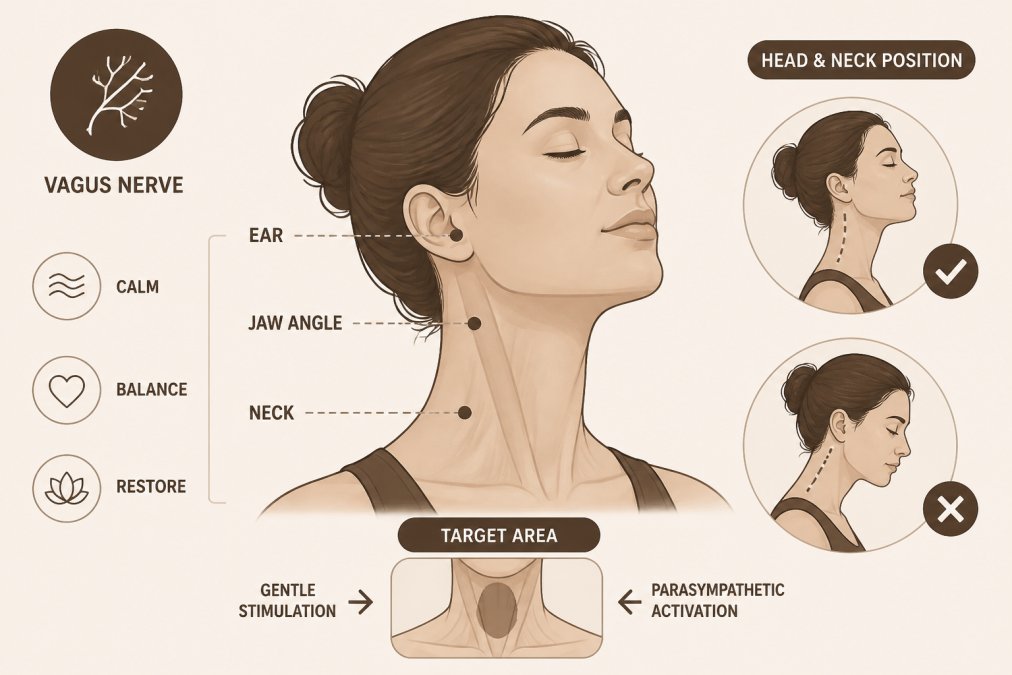
Your vagus nerve is the longest cranial nerve in your body, running from your brainstem down through your neck, chest, and abdomen. It’s the primary nerve of your parasympathetic nervous system. Stimulating your vagus nerve directly signals safety to your nervous system and can rapidly shift you from dysregulation back toward equilibrium.
Humming and vocalization. Your vagus nerve passes through your vocal cords. Humming, singing, chanting, or gargling activates this nerve. Spend 2-3 minutes humming at whatever pitch feels natural.
Cold water exposure. Splashing cold water on your face or immersing your face briefly in cold water activates the vagal response. This dive response naturally slows your heart rate and shifts toward parasympathetic activation. Start with 30 seconds of cold water on your face.
Neck and shoulder massage. Gently massage the sides of your neck where your vagus nerve runs. Use slow, deliberate strokes from your jaw down toward your collarbone.
Slow, deep breathing with extended exhales. The extended exhale is a powerful vagal activator. The longer you exhale relative to your inhale, the more you stimulate parasympathetic activation.
Yoga and stretching. Certain yoga poses, particularly forward folds and gentle twists, naturally stimulate the vagus nerve and signal safety to your system.
Consistency matters more than intensity. Daily practice, even for just 5-10 minutes, creates lasting changes in how your nervous system responds to stress.
How Long to Heal Your Nervous System After Trauma
The timeline for nervous system healing varies significantly based on the nature and severity of the trauma, your current support system, your baseline nervous system sensitivity, and how consistently you practice regulation techniques. Some people notice shifts within days or weeks of beginning these practices. Others need months of consistent practice before they notice significant changes.
What research and clinical experience show is that consistency matters far more than intensity. Fifteen minutes of daily practice produces better results than two hours once a week. Your nervous system learns through repetition. Each time you practice a grounding technique or vagal activation exercise, you’re creating new neural pathways, literally rewiring how your brain and body respond to stress.
Most people who commit to daily nervous system regulation practices see meaningful improvement within 6-12 weeks. Deeper healing typically takes several months to a year or more, but the trajectory is usually noticeable fairly quickly.
Professional support accelerates this process. Working with a trauma-informed practitioner who understands nervous system dysregulation can help you identify your specific patterns and tailor practices to your needs. Source Acupuncture offers personalized care for nervous system regulation, combining traditional healing practices with modern understanding of trauma and the autonomic nervous system to help you reset nervous system function more effectively.
Professional Support and Integrative Approaches
While self-directed practices are valuable, professional support creates significant advantages. A trauma-informed practitioner can assess your specific nervous system pattern, identify which techniques will be most effective for you, and help you navigate the emotional and physiological responses that arise during healing.
Several evidence-based approaches have strong track records for helping people reset nervous system after trauma:
Trauma-informed therapy. Approaches like Somatic Experiencing, Sensorimotor Psychotherapy, and Trauma-Focused Cognitive Behavioral Therapy specifically address how trauma is stored in the nervous system and body.
Acupuncture and traditional medicine. Acupuncture works directly with your nervous system, helping to restore balance between sympathetic and parasympathetic activation. Many people find that regular acupuncture sessions significantly reduce hyperarousal symptoms and support deeper relaxation.
Somatic practitioners. Specialists in somatic work guide you through body-based practices designed to release stored trauma activation.
Integrative wellness programs. Combining multiple modalities, acupuncture, somatic work, breathwork, movement practices, and lifestyle adjustments, often produces better results than any single approach alone.
The most important factor is finding practitioners who understand trauma and nervous system dysregulation specifically.
Healing from trauma requires patience, consistency, and often professional guidance. Your nervous system learned to stay in protection mode for good reason, it was keeping you safe. Teaching it that you’re safe now is a gradual process that happens through repeated practice and supportive care. Source Acupuncture specializes in personalized nervous system regulation through acupuncture, cupping, and integrative techniques designed to help you reset nervous system function and restore your sense of safety and equilibrium. Book a session today to begin your journey toward nervous system healing and long-term recovery.
Frequently Asked Questions
How long does it take to reset your nervous system after trauma?
Recovery timelines vary widely depending on trauma severity, individual physiology, and consistency of practice. Some people notice shifts in their stress response within days of starting grounding and breathing work. Deeper nervous system recalibration typically takes weeks to months of regular practice. Working with a trauma-informed practitioner can accelerate the process by identifying your specific dysregulation patterns and tailoring techniques to your window of tolerance.
What are the physical symptoms of a dysregulated nervous system?
Physical signs include chronic muscle tension, digestive issues, sleep disturbances, heart palpitations, and difficulty concentrating. You might experience hyperarousal (feeling constantly on edge, easily startled) or hypoarousal (numbness, fatigue, disconnection). Some people alternate between these states. Recognizing these symptoms as nervous system dysregulation rather than character flaws is the first step toward healing and self-compassion.
Can you permanently heal a dysregulated nervous system?
Your nervous system has neuroplasticity, meaning it can rewire and develop new patterns. With consistent practice of grounding, somatic, and breathing techniques, you can significantly improve your stress response and expand your window of tolerance. While you may always carry your history, you can change how your body responds to triggers. Professional support through trauma-informed therapy or acupuncture can support this rewiring process.
What somatic exercises work best for trauma recovery?
Somatic exercises like shaking, progressive muscle relaxation, and gentle movement help discharge stored trauma from your body. Shaking or tremoring mimics your body's natural release mechanism; progressive muscle relaxation helps you recognize and release held tension. These practices work because trauma is stored not just in memory but in your nervous system and muscles. Starting slowly and respecting your body's signals is essential for safe, effective trauma recovery.
This article was written using GrandRanker