Last Updated: November 7, 2026
Quick Summary
Your first acupuncture appointment starts with a conversation about your health history, medications and goals, followed by a physical assessment. Bring a medication list, your ID and insurance card, and written notes about your concern. Wear loose clothing that allows access to the treatment area.
- Your first visit includes a health history conversation before any needles are placed.
- Bring a written list of all medications, supplements and herbs, with doses.
- Confirm with your insurer whether acupuncture is covered and whether a referral is needed.
- Wear loose clothing that gives access to the area being treated.
- Plan for a first visit of around 60 to 90 minutes, including paperwork.
Table of Contents
- What Happens at Your First Acupuncture Appointment
- What to Bring to Your Acupuncture Appointment
- What to Wear to Acupuncture Appointment Sessions
- What Not to Do Before Acupuncture
- How Long an Acupuncture Appointment Takes
- How to Verify Practitioner Qualifications and Safety Practices
- Booking Your First Session at Source Acupuncture
- Frequently Asked Questions
What Happens at Your First Acupuncture Appointment
Most first acupuncture appointment visits feel less intimidating once you know the steps. The first session is built to understand your health before any needles go in. Many people arrive nervous, but the opening conversation is a large part of the visit. Knowing what comes next makes it easier to relax.
A typical first appointment follows a clear order. The practitioner talks with you, asks questions, examines you, and then explains a plan. Treatment often starts the same visit, but only after you have agreed to it.
The initial consultation and health history
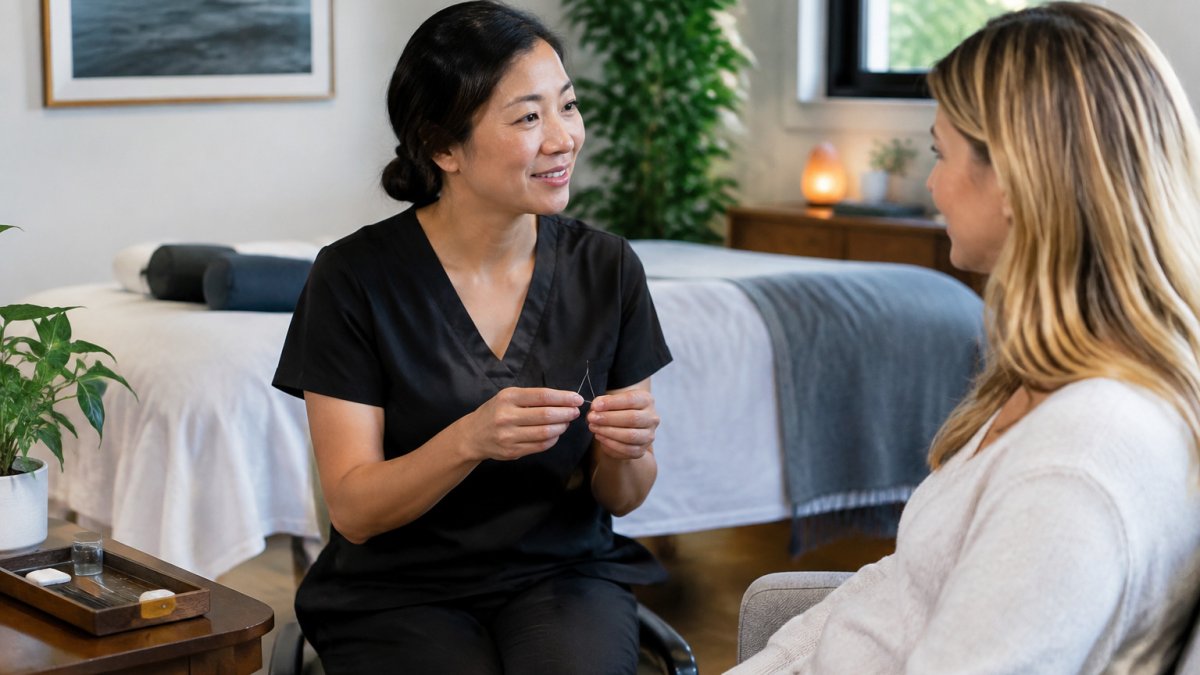
The first part of your visit is a conversation. Your acupuncturist will ask about your current concerns, your symptoms, and your goals for treatment. They will also ask about your medical history, medications, supplements, and daily habits like sleep, stress, and diet.
Answer honestly, even if a detail feels unimportant. Small details help the practitioner see patterns. If you have seen other providers or tried other treatments, mention those too. Bring a short list of your medications if you have one.
Physical examination and treatment plan
Next, the practitioner usually assesses your body. This can include checking your pulse, looking at your tongue, and touching or pressing on the area that bothers you. The exam is meant to guide the plan, not to diagnose you.
Once the assessment is done, the practitioner should explain what they recommend and why. You should feel free to ask questions before agreeing to anything. A good treatment plan lists how many sessions may help, how often you might come in, and what you can expect to feel along the way.
What to Bring to Your Acupuncture Appointment
Most first-visit guides hand you a short packing list and stop there. The items below are the ones that actually prevent delays at check-in and give your practitioner the information they need to plan safely.

Paperwork and identification
- A photo ID and your insurance card, if you plan to use insurance benefits. Check with your insurer before your visit to confirm whether acupuncture is covered under your plan; many plans require a referral or preauthorization, and verifying this ahead of time avoids surprise bills.
- Any intake forms the clinic sent you. Many practices now send new-patient paperwork by email or patient portal. Completing it at home gives you time to recall dates, medication names, and dosages accurately instead of rushing in the waiting room.
- A method of payment. Ask about the cancellation and no-show policy when you book, and confirm the cost of the first visit before your appointment.
Health information
- A written list of every medication you take, including over-the-counter drugs, supplements, and herbal products. Include the dose and how often you take each one. This matters because some herbs and supplements can interact with treatment or affect bleeding, and your practitioner needs the full picture.
- A list of allergies, especially to adhesives, latex, metals, or skin products.
- Notes about your main concern: when it started, what makes it better or worse, how it affects sleep or work, and what you have already tried. If work stress is part of the picture, see how to explain burnout to your employer to help frame the conversation. A few sentences written down in advance is more useful than trying to reconstruct the timeline from memory.
- Recent test results or imaging reports related to your concern, if you have them. You do not need to bring every record you own, but relevant labs or imaging can help the practitioner understand your situation and coordinate with your other providers.
Comfort items
- A water bottle. Staying hydrated before and after treatment helps you feel steady, and many clinics do not provide water in the treatment room.
- A light layer or sweater. Treatment rooms are often kept cool, and you may be lying still for 20 to 30 minutes.
- Your questions, written down. First visits move quickly, and a short list helps you remember what to ask about cost, treatment frequency, and what to expect afterward.
Watch out: If you take a blood thinner such as warfarin, clopidogrel, or a direct oral anticoagulant, tell your practitioner before any needles are placed and check with the prescriber if you are unsure whether treatment is appropriate.
If you are unsure whether to bring something, call the clinic. A two-minute phone call before your visit is easier than rescheduling because a form or referral was missing.
Before your visit, the article suggests gathering these items so check-in goes smoothly and your practitioner has what they need.
| Item | Why it matters | Note |
|---|---|---|
| Photo ID and insurance card | Needed for check-in and any insurance benefits | Confirm acupuncture coverage with your insurer first |
| List of medications and supplements | Some herbs and supplements can interact with treatment | Include dose and how often you take each |
| Allergy list | Flags adhesives, latex, metals or skin products | Mention all known allergies |
| Written notes on your concern | Gives a clear timeline without relying on memory | Note when it started and what you have tried |
| Recent test or imaging results | Helps the practitioner understand your situation | Bring only what is relevant |
| Water bottle | Keeps you hydrated before and after treatment | Clinics often do not provide water in the room |
| Light layer or sweater | Treatment rooms can be cool | You may lie still for 20 to 30 minutes |
What to Wear to Acupuncture Appointment Sessions
Clothing advice for acupuncture is usually reduced to “wear something comfortable,” which is not specific enough to be useful.
Match clothing to the treatment area
Needle placement follows the area being treated, so ask when you book which body regions the practitioner is likely to access. Common patterns:
- Lower back, hips, or legs: loose pants or shorts that can be rolled up or pulled down slightly at the waistband. Avoid stiff jeans and belts.
- Shoulders, neck, or arms: a short-sleeved or sleeveless top, or a loose shirt that can be pulled up to the shoulder. Avoid turtlenecks and tight sleeves.
- Abdomen: a two-piece outfit rather than a dress or jumpsuit, so the top can be lifted without undressing fully.
- Full-body or multiple areas: loose, lightweight layers are easiest to adjust. You can ask in advance whether a gown or drape is available.
You do not need to expose an area ahead of time. If you are uncomfortable undressing, say so when you book; most practitioners can work around clothing or offer a gown. (Source: the National Center for Complementary and Integrative Health (NCCIH))
Plan for lying still
Needles are retained for a period while you rest, and your practitioner can tell you the timing for your visit.
Accessibility and accommodations
If changing clothes is difficult, lying flat is painful, or you need extra time, tell the clinic when you schedule.
Watch out: Do not assume you must fully undress for treatment. If a practitioner asks you to remove more clothing than the treatment area requires without explaining why or offering a drape, ask questions before continuing.
If you are unsure what to wear, call the clinic and describe the area being treated. The front desk can tell you what most patients wear for that type of visit.
What Not to Do Before Acupuncture
A few habits can make your session less comfortable. Avoiding them helps you get the most from the visit.
- Do not eat a heavy meal right before your visit. A light snack is usually fine and can help you feel steady.
- Limit caffeine and alcohol on the day of your appointment, since both can make you jittery or dehydrated.
- Do not skip the restroom. Going before you start keeps you relaxed during treatment.
- Avoid intense exercise right before your session if you can, since it may leave you sore or overheated.
- Do not hide symptoms or medications. Disclosing everything, even things that seem unrelated, helps the practitioner plan safely.
If you feel unwell, sick, or have a fever on the day of your visit, call the clinic to ask whether to reschedule.
How Long an Acupuncture Appointment Takes
Plan for a longer visit than you might expect. If you are wondering how long treatment takes to show results for back pain, see how long acupuncture takes to work for back pain. The first appointment usually takes more time than follow-up sessions because the intake and assessment take time.
A first visit often runs around 60 to 90 minutes, including paperwork and consultation. Follow-up sessions are frequently shorter. The needles themselves are typically left in place for a set period while you rest. Your practitioner can tell you the exact timing for your visit.
Build in extra time for parking, check-in, and travel. Arriving a few minutes early lets you settle in and complete any forms without rushing.
How to Verify Practitioner Qualifications and Safety Practices
Before you book, it helps to confirm that your practitioner is properly trained and licensed. Many people skip this step, but it is one of the most useful things you can do.
Ask about the practitioner’s license, training, and the clinic’s sterilization practices. If you are unsure whether your symptoms point to burnout or something else, compare burnout and depression before choosing a provider. You can also check your state’s licensing board to confirm that the practitioner’s credentials are current.
If you have a health condition, take medication, or are pregnant, talk with your primary care provider before starting treatment. Acupuncture can be part of a broader care plan, but it should complement, not replace, medical advice.
Booking Your First Session at Source Acupuncture
Ready to take the next step? Source Acupuncture offers personalized care, with licensed practitioners who build a plan around your goals. Book an acupuncture session in Pacific Beach to get started.
For current pricing on your first visit, check our website or contact the clinic directly. See what acupuncture costs before you book so you know what to expect. Pricing depends on your needs, so the team can give you a quote.
Book your first visit at Source Acupuncture, and bring your questions. Our practitioners can walk you through the process before you decide on a treatment plan.
Frequently Asked Questions
What should I not do before an acupuncture appointment?
Avoid a heavy meal right before your visit, and skip alcohol on the same day. Limit caffeine if it makes you jittery, and do not arrive exhausted from a hard workout. Tell your practitioner about any medications, supplements, or blood-thinning drugs you take, since these can matter for treatment planning. If you feel unwell, ill, or have a fever, call ahead to reschedule. Arriving hydrated and reasonably rested helps you relax during the session.
What should I wear to an acupuncture appointment?
Wear loose, comfortable clothing that lets you roll up sleeves or pant legs above the knee and elbow. Two-piece outfits work well because the practitioner can access the treatment area without fully undressing. Avoid tight jeans, restrictive tops, or heavy layers that are hard to remove. Bring a light layer, since many people feel cool during treatment. Dress for comfort rather than style.
How long does a first acupuncture appointment take?
A first acupuncture appointment usually takes longer than follow-up visits because it includes the intake consultation, health history review, and physical assessment before any needles are placed. Plan to set aside extra time, and confirm the expected length when you book. Needle sessions themselves are typically shorter, and the total visit length depends on the clinic and your individual assessment. Arriving a few minutes early helps you complete paperwork without rushing.
What should I bring to my first acupuncture appointment?
Bring a photo ID, your insurance information if you plan to use it, and a list of current medications, supplements, and any recent test results or imaging. Write down your main concerns, symptoms, and goals so you can explain them clearly during the consultation. Bring a water bottle and any paperwork the clinic sent you. Having these items ready makes the intake process smoother and helps your practitioner build an accurate treatment plan.