
Table of Contents
- Dry Needling vs. Acupuncture: Quick Comparison
- What Is Dry Needling?
- What Is Acupuncture?
- Acupuncture for Chronic Pain Relief
- Training, Certification, and Professional Standards
- What to Expect During an Acupuncture Session
- Insurance Coverage and Practical Considerations
- Choosing the Right Treatment for Your Needs
- Frequently Asked Questions
Last Updated: September 30, 2026
Dry Needling vs. Acupuncture: Quick Comparison
When comparing dry needling vs acupuncture, both are needle-based therapies operating on fundamentally different principles. Understanding the distinction is essential for choosing the right treatment for your needs.
Dry needling is a Western, evidence-based technique targeting myofascial trigger points, taut bands of muscle tissue causing localized pain. The needle insertion triggers a twitch response that promotes blood flow, releases tension, and is typically shallow and localized.
Acupuncture draws from traditional Chinese medicine, operating on the concept of chi (life energy) flowing through meridians. Rather than targeting a single muscle, it aims to restore systemic balance. Needles penetrate deeper and remain in place longer than in dry needling.
The following comparison table summarizes the key differences:
| Aspect | Dry Needling | Acupuncture |
|---|---|---|
| Theoretical Basis | Neurophysiological/anatomical | Traditional Chinese medicine/energy flow |
| Primary Target | Myofascial trigger points | Meridians and systemic balance |
| Needle Depth | Shallow to moderate | Deeper penetration |
| Treatment Duration | 5-15 minutes | 20-40 minutes |
| Session Frequency | Varies by condition | Often 1-2 times per week |
| Approach | Localized, site-specific | Holistic, whole-body |
| Best For | Acute/chronic muscle pain | Chronic pain, systemic conditions |
What Is Dry Needling?
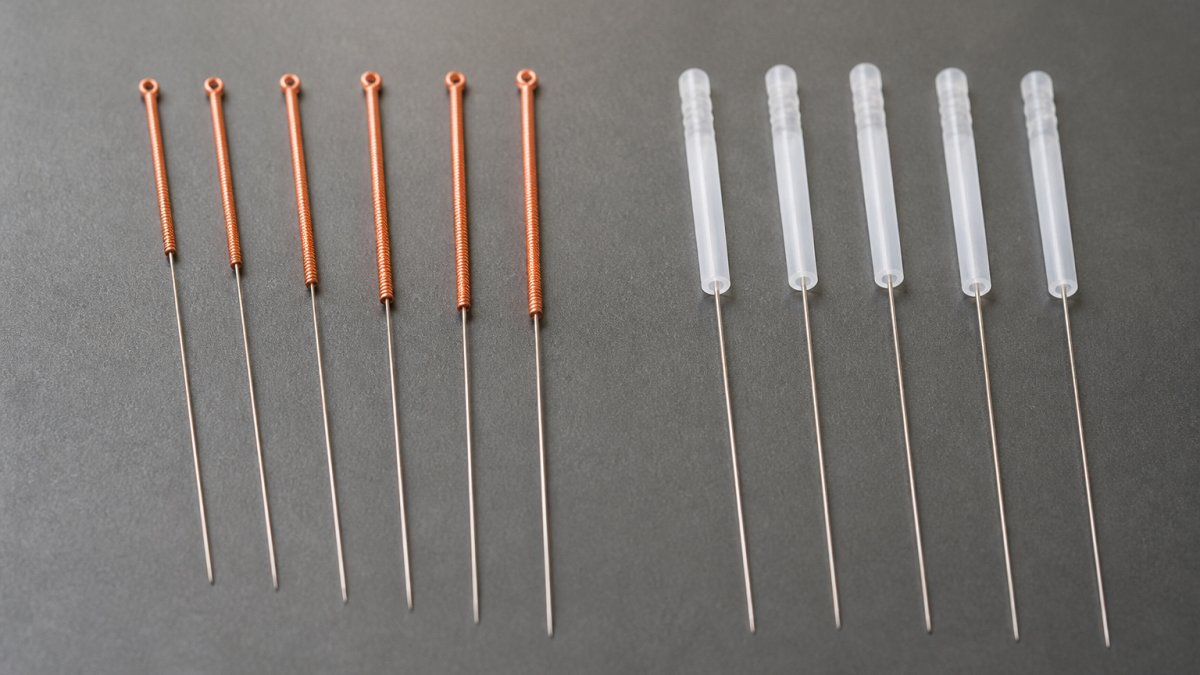
Dry needling uses a thin filiform needle to treat musculoskeletal pain and dysfunction. The term “dry” refers to the absence of medication; the needle itself is the therapeutic agent.
The technique targets myofascial trigger points, tight muscle fibers restricting movement and generating pain. A needle reaching a trigger point elicits a local twitch response that releases tension, increases blood flow, reduces inflammation, and interrupts pain signals.
Dry needling is grounded in Western anatomical and neurophysiological science. Practitioners identify the exact muscle causing dysfunction and insert the needle directly into the trigger point.
Common conditions treated with dry needling include neck pain, shoulder tightness, lower back pain, plantar fasciitis, and tennis elbow. Many patients report improvement within one or two sessions.
Sessions typically last 5-15 minutes. Most patients experience mild soreness for 24-48 hours after treatment, similar to post-workout soreness.
A common mistake is expecting dry needling to work like a painkiller. It doesn’t mask pain, it addresses the underlying muscle dysfunction causing it. That’s why results often stick around, even after treatment ends.
What Is Acupuncture?
Acupuncture is a healing practice rooted in traditional Chinese medicine dating back over 2,500 years. It operates on the principle that chi (vital life energy) flows through meridians. When chi becomes blocked, illness and pain result. Acupuncture restores chi flow, promoting healing and balance.
A licensed practitioner inserts thin filiform needles at specific meridian points to influence chi flow and activate the body’s natural healing response. Unlike dry needling, acupuncture takes a holistic approach, addressing multiple body systems simultaneously.
Needles remain in place for 20-40 minutes. Many patients report de qi, a subtle tingling, heaviness, or warmth, which practitioners consider a sign of proper healing energy movement. The experience is deeply relaxing; many fall asleep.
Acupuncture addresses chronic pain, hormonal imbalances, digestive issues, sleep disturbances, anxiety, and immune support. Its systemic approach makes it effective for complex, multi-system health challenges.
Research increasingly supports acupuncture’s clinical efficacy for pain management and other conditions. The National Institutes of Health consensus statement acknowledges acupuncture’s effectiveness for certain types of pain, and many insurance plans now cover acupuncture treatment when recommended by a healthcare provider.
The key distinction: dry needling fixes a specific muscle problem. Acupuncture rebalances your entire system. Both work, they just work differently and for different goals.
Acupuncture for Chronic Pain Relief
Acupuncture has emerged as a powerful tool for managing chronic pain conditions that don’t respond well to conventional treatment. Unlike medications that mask symptoms, acupuncture addresses the underlying imbalances contributing to persistent pain.
Chronic pain involves multiple systems: muscle tension, inflammation, nerve sensitization, hormonal dysregulation, and stress. Acupuncture’s holistic approach reduces inflammation, improves circulation, and calms the nervous system, factors perpetuating chronic pain.
Acupuncture is especially helpful for fibromyalgia, arthritis, migraines, and lower back pain resistant to conventional medicine.
Acupuncture’s systemic approach assesses your entire health picture for patterns of imbalance contributing to pain, uncovering root causes that isolated treatment might miss.
Source Acupuncture’s practitioners take this comprehensive approach, offering personalized care that addresses not just your pain but the underlying factors driving it. The wellness membership program makes consistent treatment accessible, which is crucial for chronic conditions that benefit from regular, ongoing support. Integrating these holistic strategies often proves more effective than relying on massage alone, as the targeted stimulation provided by acupuncture for pain relief works to restore systemic balance throughout the body.
Training, Certification, and Professional Standards
The training and credentialing requirements for dry needling and acupuncture differ significantly, reflecting their different theoretical foundations and scopes of practice.
Dry Needling Practitioners are typically licensed physical therapists, occupational therapists, or athletic trainers who complete specialized training in dry needling techniques. Most states require practitioners to hold a current PT or OT license before pursuing dry needling certification. Continuing education courses range from 100 to 300 hours, covering anatomy, trigger point identification, needle insertion technique, and safety protocols. Certification comes from organizations like the American Physical Therapy Association or specialized dry needling academies.
Acupuncturists complete substantially more training. Most states require acupuncturists to earn a Master’s degree or diploma from an accredited acupuncture school, typically 2,000-3,500 hours of classroom and clinical training. Coursework includes traditional Chinese medicine theory, meridian anatomy, point location, needle technique, herbal medicine, and patient assessment. After graduation, practitioners must pass the National Certification Commission for Acupuncture and Oriental Medicine (NCCAOM) exam to become licensed.
The difference reflects the scope of practice: dry needling is a focused technique addressing specific muscle problems, while acupuncture is a comprehensive healing system requiring deep knowledge of traditional Chinese medicine principles.
Licensing requirements vary by state. Some states allow physical therapists to perform dry needling under their existing license; others require separate certification. Acupuncture licensing is more standardized across states, with most requiring NCCAOM certification or equivalent credentials.
When choosing a practitioner, verify their credentials. Licensed acupuncturists display their license number and NCCAOM certification. Physical therapists performing dry needling should hold current PT licensure plus documented dry needling training.
What to Expect During an Acupuncture Session
An acupuncture session begins with a comprehensive intake assessment. Your practitioner asks detailed questions about your health history, current symptoms, lifestyle, stress levels, digestion, sleep, and emotional state. This thorough evaluation helps them understand your unique pattern of imbalance and design a treatment plan tailored to your specific needs.
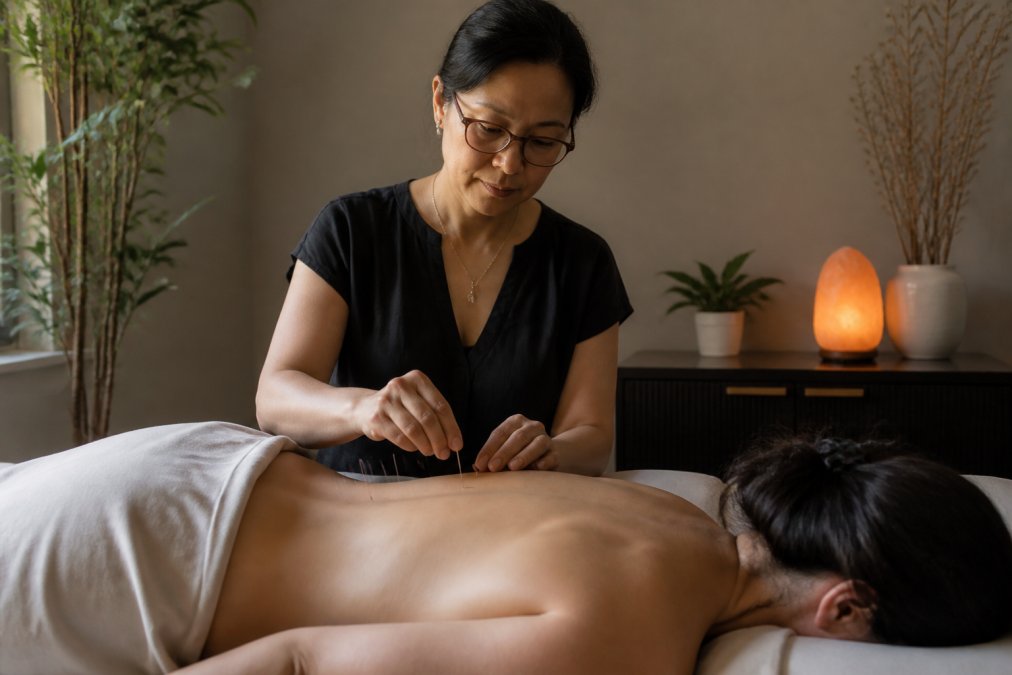
After assessment, you lie on a comfortable treatment table, fully clothed or with minimal clothing depending on which body areas require treatment. Your practitioner locates specific acupuncture points using anatomical landmarks and palpation. They then insert thin filiform needles, so fine they’re barely perceptible, at these points.
Once needles are in place, you rest for 20-40 minutes while the needles remain seated. This is deeply relaxing; many patients fall asleep. Some practitioners apply heat lamps, play calming music, or use other modalities to enhance the healing environment.
You may feel a subtle sensation called de qi at the needle site: a gentle tingling, heaviness, warmth, or mild ache that signals proper needle placement and energy movement. This sensation typically feels pleasant and therapeutic, not painful.
After the resting period, your practitioner removes the needles and may offer additional therapies like cupping, gua sha, or herbal recommendations. Most people feel calm and relaxed immediately after treatment. Some experience mild soreness or bruising at needle sites, which resolves within a day or two.
If you’re taking blood thinners or have a bleeding disorder, inform your practitioner before treatment. Acupuncture can cause minor bruising, and certain conditions require modified needle technique or avoidance of specific points.
Insurance Coverage and Practical Considerations
Insurance coverage for acupuncture has expanded significantly in recent years. Many major insurance plans now cover acupuncture for chronic pain when prescribed by a healthcare provider. Coverage varies by plan, so check your policy for specific details.
Out-of-pocket costs vary by region and practitioner. Some practices, like Source Acupuncture, offer membership programs that provide deep discounts on services, a practical solution for patients requiring ongoing treatment.
When evaluating cost, consider the long-term value. A course of acupuncture or dry needling that resolves chronic pain or reduces medication dependence often pays for itself through improved function and reduced healthcare expenses. For active individuals and athletes, regular maintenance acupuncture prevents injuries and accelerates recovery from training.
Consistency matters more than frequency. A patient who commits to one session weekly for eight weeks typically sees better results than someone who receives sporadic treatment. The membership model at Source Acupuncture removes financial barriers to consistency, making it easier to prioritize the regular care that produces lasting results.
Choosing the Right Treatment for Your Needs
The choice between dry needling vs acupuncture depends on your specific condition, health goals, and philosophy of care.
Choose dry needling if you have localized musculoskeletal pain, a tight muscle, trigger point, or specific injury causing dysfunction.
Frequently Asked Questions
Is dry needling considered a form of acupuncture?
No. While both use thin filiform needles, acupuncture follows traditional Chinese medicine theory, working with meridians and energy flow to address systemic health. The needle insertion depth, duration, and treatment philosophy differ significantly from other needle-based therapies.
What are the primary differences in training between acupuncturists and physical therapists who perform dry needling?
Acupuncturists typically complete 2,000-3,500 hours of formal training in traditional Chinese medicine, meridian anatomy, point location, needle technique, herbal medicine, and patient assessment. Acupuncturists are licensed by state boards and must pass the NCCAOM exam.
Which treatment is more effective for chronic muscle pain?
Effectiveness depends on the pain source. Acupuncture addresses chronic pain through a broader, systemic approach, stimulating nerve pathways, reducing inflammation, and regulating the nervous system. Many patients with chronic pain benefit from acupuncture’s holistic mechanism. A qualified practitioner can assess your condition and recommend the best approach.
Does acupuncture work for conditions beyond pain, such as hormonal imbalances or digestive issues?
Yes. Traditional Chinese medicine views acupuncture as a holistic healing system that addresses systemic imbalances affecting digestion, hormone regulation, stress response, and immune function, not just musculoskeletal pain. Acupuncture stimulates physiological responses through nerve pathways and can influence neurotransmitter production and autonomic nervous system balance. While research on specific conditions is ongoing, many patients report improvements in energy, digestion, and hormonal symptoms. Consult with a licensed acupuncturist to discuss whether acupuncture is appropriate for your specific health concerns.