

Table of Contents
- How Acupuncture May Support Thyroid Health
- Understanding Thyroid Function and Thyroid Hormones
- Acupuncture for Hypothyroidism: What the Evidence Shows
- Acupuncture for Hyperthyroidism: Potential Benefits and Limitations
- Acupuncture for Hashimoto’s Thyroiditis and Autoimmune Thyroid Conditions
- Thyroid Acupuncture Research: Current Evidence and Study Limitations
- Coordinating Acupuncture with Standard Thyroid Care and Medical Monitoring
- Safety, Practitioner Selection, and When to Seek Medical Attention
- Frequently Asked Questions
Last Updated: October 11, 2026
How Acupuncture May Support Thyroid Health
Acupuncture thyroid health and regulation is a complementary approach many practitioners integrate with conventional thyroid care.
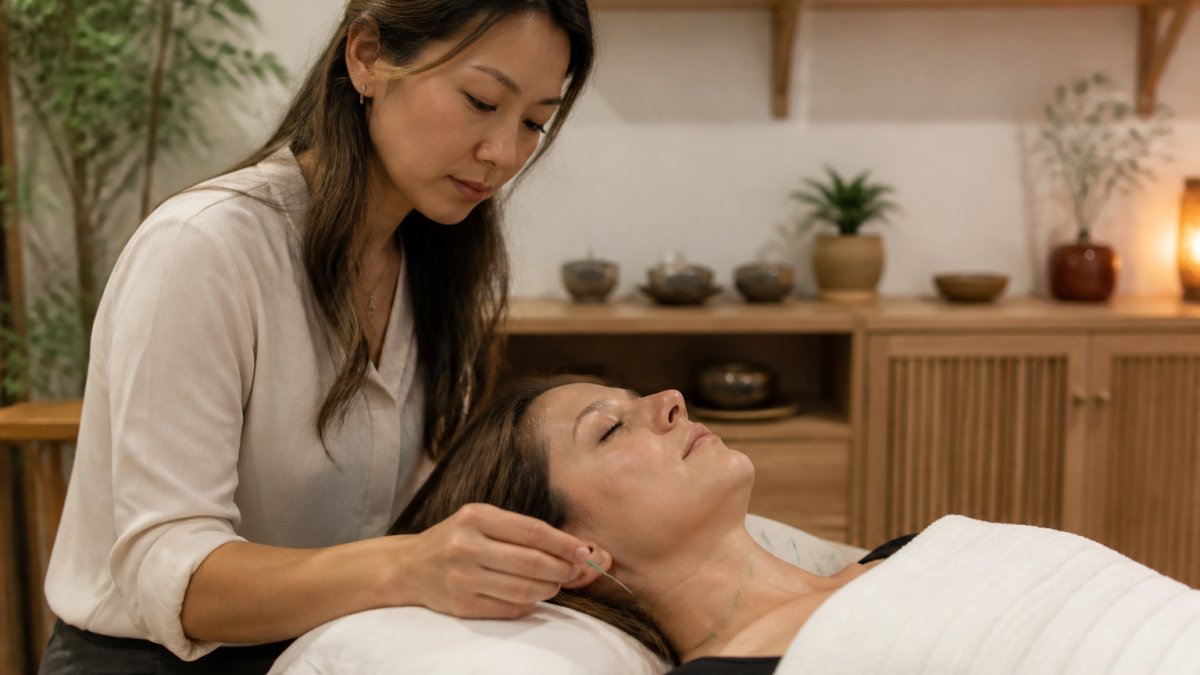
Traditional Chinese medicine proposes acupuncture channels (meridians) that practitioners believe connect to thyroid regulation.
At Source Acupuncture, we approach thyroid support as part of a comprehensive wellness strategy, assessing how stress, immune function, and energy balance relate to thyroid symptoms.
Acupuncture works best for thyroid health when combined with medical monitoring. Your doctor’s thyroid tests (TSH, Free T4, Free T3) remain essential for tracking hormone levels and medication effectiveness.
Understanding Thyroid Function and Thyroid Hormones
Thyroid hormones are regulatory chemicals produced by the thyroid gland that control metabolism, heart rate, body temperature, and energy levels.
The thyroid produces two main hormones: T4 (thyroxine), the inactive storage form, and T3 (triiodothyronine), the active form cells use.
Understanding thyroid hormone levels requires specific blood tests: TSH first, followed by Free T4 and sometimes Free T3. Many people with thyroid imbalance report fatigue, weight changes, mood shifts, and temperature regulation issues before diagnosis.
Thyroid regulation depends on a complex feedback loop involving the brain, pituitary gland, and thyroid itself. Disruption at any point can create hormone imbalance that affects energy, metabolism, and overall health.
Acupuncture for Hypothyroidism: What the Evidence Shows
Hypothyroidism occurs when the thyroid gland fails to produce adequate hormones, slowing metabolism and causing widespread symptoms. The most common cause in developed countries is Hashimoto’s thyroiditis, an autoimmune condition (Hashimoto’s Thyroiditis).
Acupuncture for hypothyroidism is studied primarily for symptom relief rather than hormone replacement. Some research suggests it may reduce fatigue, improve sleep quality, and support stress response, but it cannot replace thyroid hormone medication, only complement it.
Evidence for acupuncture in hypothyroidism is limited by small study sizes and variable protocols.
If you have hypothyroidism, acupuncture may help manage fatigue and stress-related symptoms while medication stabilizes hormone levels. Coordinating with your endocrinologist ensures your dose remains appropriate as your overall health improves.
Acupuncture for Hyperthyroidism: Potential Benefits and Limitations
Hyperthyroidism develops when the thyroid produces excessive hormones, accelerating metabolism and causing restlessness, heart palpitations, and anxiety. Graves’ disease and thyroiditis are common causes.
Acupuncture for hyperthyroidism focuses on symptom management rather than hormone reduction, targeting points believed to calm the nervous system.
The limitation is significant: acupuncture cannot lower thyroid hormone levels directly. If hyperthyroidism is severe or caused by Graves’ disease, medical intervention remains essential.
Before pursuing acupuncture, ensure your hyperthyroidism is medically managed and stable, uncontrolled hyperthyroidism poses cardiac risk that acupuncture cannot mitigate.
Acupuncture for Hashimoto’s Thyroiditis and Autoimmune Thyroid Conditions
Hashimoto thyroiditis is an autoimmune condition where the immune system attacks the thyroid gland, progressively destroying tissue and causing hypothyroidism (Hashimoto’s Disease).
Acupuncture for Hashimoto’s thyroiditis is explored as an immune-modulating therapy; traditional Chinese medicine views autoimmune thyroid disease as disrupted immune balance.
Many people with Hashimoto’s benefit from comprehensive care addressing thyroid hormone dosing, stress management, sleep quality, nutrient sufficiency, and immune support.
Do not delay medical diagnosis or treatment of autoimmune thyroid disease in favor of acupuncture alone. Hashimoto’s requires thyroid hormone replacement to prevent progressive gland destruction and serious health complications.
::: Integrating supportive lifestyle modifications remains a vital component of treating autoimmune disease naturally while maintaining the necessary clinical oversight for hormone management.
Thyroid Acupuncture Research: Current Evidence and Study Limitations
Most articles on acupuncture thyroid health lump all thyroid conditions into one evidence bucket. That is a mistake: evidence strength differs for hypothyroidism, hyperthyroidism, and Hashimoto thyroiditis, and conflating them leads to overstated conclusions.
Three tiers of evidence, and why the distinction matters
When you read that “acupuncture may help thyroid conditions,” ask which tier of evidence that claim rests on:
- Study protocol or trial design. This is a published plan describing how a study will be run, who will be enrolled, which acupuncture points will be used, how many sessions, and what will be measured. A protocol is not a result. It tells you a question is being asked, not what the answer is. Many search results cite protocols as if they were findings.
- Observational findings. These come from case reports, case series, and cohort studies where patients are followed without a control group. They can show that some patients reported less fatigue or better sleep, but they cannot separate acupuncture from the placebo effect, regression to the mean, or the natural fluctuation of thyroid symptoms. Observational findings generate hypotheses; they do not confirm them.
- Controlled clinical evidence. This tier can support a causal claim: randomized controlled trials with a sham-acupuncture or waitlist comparison, blinded outcome assessment, and enough participants to detect a real difference. For thyroid disease specifically, this tier remains thin, and existing trials are small with inconsistent point selections and schedules.
A common pattern: hypothyroidism has somewhat more published research than hyperthyroidism, and autoimmune conditions such as Hashimoto thyroiditis have the least rigorous controlled evidence of the three. Confidence in a claim depends on which condition and tier you are looking at.
What the evidence does and does not support
The current research reasonably supports that some people with thyroid conditions report improvement in general symptoms, fatigue, anxiety, sleep disruption, during a course of acupuncture. The evidence does not support claims that acupuncture normalizes thyroid hormone levels, reverses autoimmune destruction of the gland, or substitutes for levothyroxine, antithyroid drugs, beta-blockers, or radioactive iodine.
Before accepting any claim about acupuncture and thyroid health, ask three questions: Which thyroid condition? Which tier of evidence, protocol, observational, or controlled? And which outcome, symptoms or measured hormone levels? A study that shows improved fatigue scores is not evidence of improved thyroid function.
Why the research is hard to compare
Even setting tier aside, thyroid acupuncture studies are difficult to pool because they vary on nearly every axis: points chosen, number and frequency of sessions, electroacupuncture versus manual needling, moxibustion, and follow-up length.
A further complication: many published studies originate from regions where traditional Chinese medicine is integrated into standard hospital care, which can affect patient recruitment, outcome recording, and control group handling. Read effect sizes cautiously rather than treating any single positive trial as settled science.
Separating direct and indirect effects
One of the hardest questions is whether any observed benefit comes from a direct effect on the thyroid or an indirect effect through the nervous system. Acupuncture is well studied for stress, anxiety, and sleep in non-thyroid populations, and those symptoms are common in thyroid disease. It is plausible that symptom relief reflects better stress regulation and sleep rather than any change in hormone production.
National Center for Complementary and Integrative Health overview of acupuncture
Coordinating Acupuncture with Standard Thyroid Care and Medical Monitoring
If you’re considering acupuncture for thyroid support, coordinating with your primary care doctor or endocrinologist is essential.
Inform your acupuncturist about your thyroid diagnosis, current medications, and other treatments.
Thyroid testing should continue on your doctor’s recommended schedule, typically every 6-12 weeks after medication changes, then annually once stable.
Many people find that addressing stress, sleep quality, and overall wellness through acupuncture and other complementary approaches makes their thyroid condition easier to manage.
Safety, Practitioner Selection, and When to Seek Medical Attention
Acupuncture is generally safe when performed by a trained, licensed practitioner using single-use sterile needles; serious adverse events are rare. Commonly reported side effects are minor and short-lived: small bruises or soreness at needle sites, mild bleeding, and occasional lightheadedness. The larger risks in thyroid care come from two avoidable mistakes, choosing an unqualified practitioner, and letting acupuncture delay or replace necessary medical treatment.
What to look for in a qualified practitioner
Licensing for acupuncturists is handled at the state level, and requirements vary. In most states, practicing legally requires completing a formal acupuncture program, commonly a master’s-level degree of roughly three to four years, accumulating several hundred supervised clinical hours, and passing a standardized national examination. Many practitioners hold the Licensed Acupuncturist (LAc) credential, and some states also require or recognize certification from the National Certification Commission for Acupuncture and Oriental Medicine (NCCAOM).
Before booking, verify the following:
- Current state license. Ask for the license number and confirm it with your state’s licensing board or health department. A certificate from a weekend course is not a license.
- Sterile, single-use needles. Reputable practitioners open needles from sealed, individually wrapped sterile packs in front of you and dispose of them in a sharps container. Never accept reused needles.
- Clean-needle technique and hygiene. Hand washing, clean field setup, and proper disposal are baseline expectations, not extras.
- Experience with your condition. Ask how many patients they have treated with hypothyroidism, hyperthyroidism, or Hashimoto thyroiditis, and whether they routinely coordinate with physicians.
- Willingness to stay in scope. A good practitioner will tell you plainly that acupuncture is complementary and will not discourage you from taking prescribed thyroid medication or keeping your lab appointments. If a practitioner suggests you can reduce or stop levothyroxine, antithyroid drugs, or beta-blockers, treat that as a serious red flag and seek a second opinion from your physician.
Contraindications and precautions to disclose
Certain conditions and situations require modified treatment or a different point selection, and your acupuncturist can only account for them if you tell them. Disclose the following before treatment:
- Pregnancy or possible pregnancy. Some acupuncture points are avoided or used cautiously during pregnancy.
- Bleeding disorders or use of blood thinners. Anticoagulants such as warfarin, apixaban, or rivaroxaban, and antiplatelet drugs, increase the risk of bruising and bleeding at needle sites.
- Compromised immune function or recent surgery. These may warrant delaying treatment or adjusting technique.
- Lymphedema or a history of lymph node removal. Needling in the affected arm or area may be inadvisable.
- Pacemakers or implanted electrical devices. This matters specifically if electroacupuncture is being considered.
- Skin infections, lesions, or severe dermatitis at the intended treatment site.
When acupuncture is not the answer
Thyroid disease can produce emergencies requiring immediate medical evaluation, not a treatment session. Seek urgent care, call 911 or go to an emergency department, for chest pain, a racing or irregular heartbeat that will not settle, severe shortness of breath, fainting or loss of consciousness, sudden severe weakness, or high fever with agitation and confusion (which can signal thyroid storm).
Beyond emergencies, contact your physician promptly if thyroid symptoms worsen, if you develop new palpitations, tremor, or unexplained weight change, or if you become pregnant while being treated for thyroid disease, since medication needs often change.
Acupuncture should never be used to delay diagnosis or to replace prescribed thyroid medication or recommended procedures such as radioactive iodine therapy or surgery. If a practitioner frames acupuncture as an alternative to those treatments, end the relationship and speak with your endocrinologist.
A reasonable safety plan is simple: keep your acupuncturist informed of your diagnosis and full medication list, keep your physician informed that you are receiving acupuncture, and keep every scheduled lab appointment. That three-way communication makes complementary care genuinely safe.
Frequently Asked Questions
Can acupuncture help regulate thyroid function?
Acupuncture may support thyroid regulation through traditional Chinese medicine meridian pathways and nervous system effects, though research remains limited. Some observational studies suggest acupuncture can influence thyroid hormone levels and reduce thyroid-related symptoms like fatigue and sleep disturbance. However, clinical evidence does not support acupuncture as a replacement for standard thyroid medication. It works best as a complementary treatment alongside medical monitoring and prescribed levothyroxine or other thyroid medications.
How many acupuncture sessions might be needed for thyroid-related symptoms?
Treatment timelines vary significantly depending on the condition, severity, and individual response. Consistency matters more than frequency, regular sessions tend to produce better outcomes than sporadic treatment.
Is acupuncture safe for people with Hashimoto’s thyroiditis?
Acupuncture is generally considered safe for Hashimoto’s thyroiditis when performed by a licensed practitioner. However, safety depends on proper needle technique, sterile equipment, and your practitioner’s understanding of autoimmune conditions. Inform your acupuncturist about your Hashimoto’s diagnosis and any medications you take, as certain acupuncture points and techniques may need adjustment. Avoid aggressive or overstimulating treatments if you’re experiencing acute inflammation. Always coordinate with your endocrinologist to ensure acupuncture complements rather than interferes with your standard thyroid care.
Can acupuncture replace thyroid medication?
No. Acupuncture should never replace prescribed thyroid medication such as levothyroxine. Thyroid hormone replacement is essential medical treatment for hypothyroidism, and stopping medication can lead to serious health complications. Acupuncture may serve as a complementary therapy to help manage symptoms like fatigue, anxiety, and sleep disturbance alongside your medication. Always consult your endocrinologist before making any changes to your thyroid treatment plan, and maintain regular thyroid hormone testing to monitor your condition.