
Table of Contents
- How Acupuncture Addresses Hormonal Imbalance
- Common Hormonal Conditions Treated with Acupuncture
- How Many Acupuncture Sessions for Hormone Balance
- Acupuncture for PCOS and Hormone Regulation
- Acupuncture and Stress-Related Hormonal Shifts
- What to Expect During Your First Treatment Session
- Integrating Acupuncture with Conventional Medical Care
- At-Home Acupressure and Lifestyle Support
Last Updated: August 30, 2026
Acupuncture for Hormonal Imbalance: A How-To Guide
Hormonal imbalances affect millions of people, disrupting sleep, mood, metabolism, and reproductive health. Many individuals are discovering that acupuncture for hormonal imbalance relief provides a complementary approach alongside conventional care. At Source Acupuncture, we’ve worked with clients managing everything from irregular menstrual cycles to perimenopause symptoms. This guide walks you through how acupuncture addresses hormonal imbalance, which conditions respond best to treatment, how often you need sessions, and how to integrate acupuncture with your existing medical care.
How Acupuncture Addresses Hormonal Imbalance
The endocrine system is a network of glands, pituitary, thyroid, ovaries, adrenal glands, that communicate through hormonal signals. When stress, poor sleep, or inflammation disrupts this signaling, the whole system falls out of balance.
Acupuncture for hormonal imbalance works by stimulating specific points on the body that correspond to these regulatory systems. Needle placement triggers local and systemic responses: increased blood flow, reduced inflammation, and nervous system rebalancing. Research suggests that needle stimulation activates the parasympathetic nervous system, your body’s "rest and recovery" mode, while downregulating the stress response (peer-reviewed research).
The Endocrine System and Acupuncture
Your endocrine system operates through feedback loops. The hypothalamus signals the pituitary gland, which then signals other glands to produce specific hormones. In women, the hypothalamic-pituitary-ovarian axis controls the menstrual cycle and estrogen-progesterone balance. Chronic stress causes the adrenal glands to pump out excess cortisol, which suppresses other hormonal functions.
Acupuncture targets these pathways directly. Practitioners select points based on traditional meridian theory, but the modern explanation involves nerve stimulation. Needles placed at certain locations activate afferent nerves that send signals to the brain, triggering the release of endorphins and other neurotransmitters. This biochemical cascade helps restore homeostasis: your body’s natural state of hormonal equilibrium. Studies of acupuncture for menstrual health show that regular treatment can normalize cycle length and reduce pain, suggesting that needle stimulation genuinely influences ovarian function and hormone production.
Needle Stimulation and Biochemical Response
When an acupuncture needle enters tissue, the practitioner often rotates or manipulates it, a technique called "de qi", to create a therapeutic response. This stimulation triggers several biochemical events: endorphin release increases, reducing pain and improving mood; serotonin production rises, affecting mental health and reproductive hormones; cortisol levels drop, signaling your body that the stress response can stand down; and inflammatory markers decrease, which is especially important because chronic inflammation is a root cause of many hormonal conditions.
For acupuncture hormonal imbalance relief to work effectively, consistency matters. Regular treatment, typically weekly or biweekly, allows these biochemical changes to compound, creating lasting shifts in how your endocrine system functions.
Common Hormonal Conditions Treated with Acupuncture
Not every hormonal condition responds equally to acupuncture. Some show dramatic improvement within weeks. Others require months of consistent treatment. Understanding which conditions are most responsive helps set realistic expectations.
PCOS, Dysmenorrhea, and Ovarian Function
Polycystic ovary syndrome (PCOS) involves insulin resistance, irregular ovulation, and elevated androgens. Dysmenorrhea, severe menstrual cramping, often stems from poor circulation and excess prostaglandins. Both conditions involve ovarian dysfunction and hormonal imbalance.
Acupuncture for PCOS and hormone regulation addresses the root mechanisms by improving blood flow to the ovaries and reducing inflammation, which helps normalize ovulation. For dysmenorrhea, needle stimulation provides direct pain relief through endorphin release and reduced muscle tension.
Perimenopause and Menopause Symptoms
The transition into menopause involves a steep decline in estrogen and progesterone, triggering hot flashes, night sweats, mood swings, insomnia, and joint pain. Acupuncture can’t restore estrogen to premenopausal levels, but it helps your nervous system adapt to the transition.
During perimenopause and menopause, the parasympathetic nervous system becomes hyperactive in response to hormonal fluctuation. Acupuncture dampens this overactive response, reducing the intensity and frequency of hot flashes. Acupuncture stimulates serotonin and GABA production, neurotransmitters that regulate mood and sleep quality. Once sleep improves, the cascade of benefits follows: better stress resilience, reduced hot flash triggers, and improved temperature regulation.
How Many Acupuncture Sessions for Hormone Balance
Most people notice initial improvements, better sleep, reduced anxiety, less pain, within 3-5 sessions. True hormonal rebalancing typically requires 8-12 weeks of consistent treatment, with sessions spaced 1-2 weeks apart.
For acute conditions like dysmenorrhea, you might see meaningful improvement in 4-6 sessions. For chronic issues like PCOS or long-standing hormonal imbalance, expect 12-16 sessions over 3-4 months before you see stable results. Perimenopause often falls in the middle: 8-10 sessions over 2-3 months provides noticeable symptom relief.
The frequency matters more than the total number. Weekly sessions outperform biweekly ones, especially in the first month. Once you’ve achieved improvement, you can often maintain results with monthly maintenance sessions.
Track your symptoms week by week. Keep a simple log of sleep quality, energy, cycle regularity, or hot flash frequency. By week 4-6, you’ll have data showing whether acupuncture is working for you specifically.
Acupuncture for PCOS and Hormone Regulation
PCOS is one of the most common hormonal disorders, affecting roughly 1 in 10 women of reproductive age (the CDC). The condition involves insulin resistance, elevated androgens, and ovarian cysts that prevent normal ovulation.
Acupuncture for PCOS and hormone regulation works on multiple fronts. First, it improves insulin sensitivity by reducing inflammation and enhancing glucose metabolism. Lower insulin levels reduce androgen production, which can help normalize cycle regularity and reduce unwanted hair growth. Second, acupuncture improves blood flow to the ovaries, delivering more oxygen and nutrients to ovarian tissue and supporting healthier follicle development. Third, acupuncture reduces the stress response by activating the parasympathetic nervous system, breaking the stress-hormone cycle that amplifies PCOS symptoms.
PCOS responds best to acupuncture when combined with dietary changes and stress management. Acupuncture alone is powerful, but pairing it with lower-glycemic eating and consistent movement creates synergistic improvements in insulin sensitivity and hormonal balance.
Acupuncture and Stress-Related Hormonal Shifts
Stress and hormones form a vicious cycle. Chronic stress elevates cortisol, which suppresses progesterone and disrupts the menstrual cycle. Irregular cycles create more stress, which further elevates cortisol. Breaking this cycle requires direct intervention in the nervous system.
Acupuncture directly activates the parasympathetic nervous system, your body’s brake pedal. Within minutes of needle insertion, your heart rate drops, your breathing deepens, and your fight-or-flight response downshifts.
Cortisol Regulation and Nervous System Balance
Cortisol follows a natural rhythm: high in the morning to wake you up, low at night to allow sleep. Chronic stress flattens this rhythm, keeping cortisol elevated all day and suppressing melatonin at night. Acupuncture resets this rhythm by signaling to your body that the threat has passed. Regular treatment restores the natural cortisol curve: higher in the morning, lower at night. This improvement in circadian rhythm often manifests as better sleep within 2-3 weeks of starting treatment.
Acupuncture strengthens your parasympathetic response, creating better balance. A 30-minute session can lower cortisol for 24-48 hours, giving your body time to recover. Over weeks, this repeated recovery allows your baseline cortisol to normalize, cascading into improvements across all hormonal systems.
What to Expect During Your First Treatment Session
Walking into an acupuncture clinic for the first time often triggers anxiety. Understanding the actual process reduces anxiety and helps you relax, which improves treatment outcomes.
Your first session begins with a consultation. The practitioner asks detailed questions about your medical history, current symptoms, sleep quality, digestion, stress levels, and reproductive health. Next comes the physical exam. The practitioner checks your pulse at your wrist, examining the quality and rhythm, and examines your tongue, looking at color, coating, and shape.
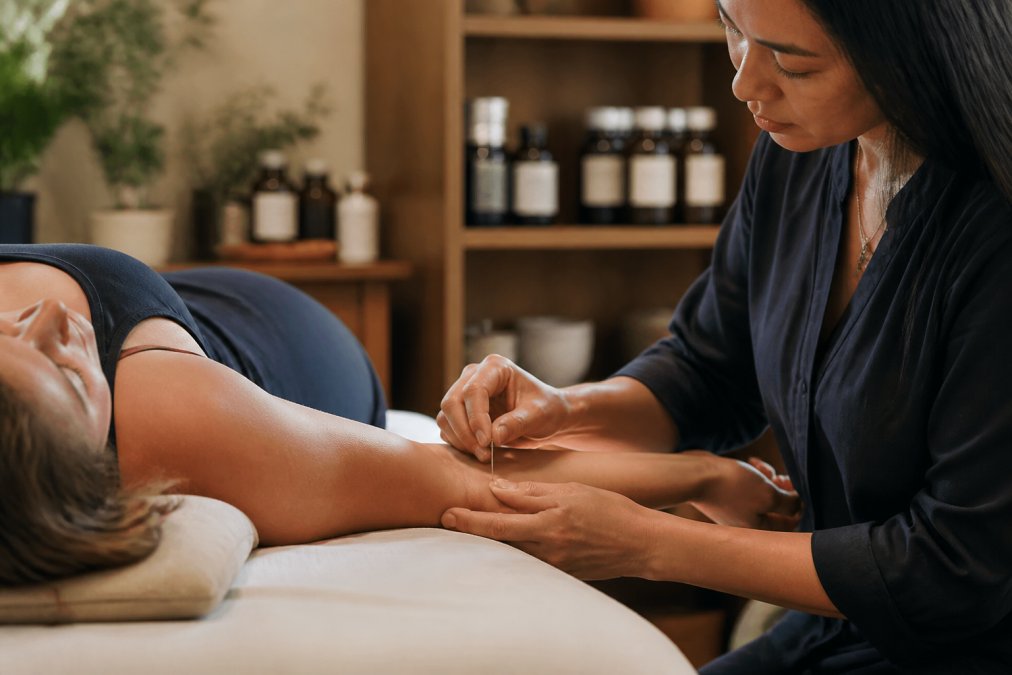
Based on this assessment, the practitioner explains their diagnosis in both traditional and modern terms, then inserts hair-thin needles at specific points on your arms, legs, abdomen, or back. Insertion is usually painless or causes only a brief pinch. Once needles are in place, you rest for 20-30 minutes. Your body shifts into parasympathetic mode. Many people fall asleep. The practitioner may return midway to manipulate needles, enhancing the therapeutic effect. Needle removal is quick and painless. Most people feel calm and slightly energized afterward.
Avoid strenuous exercise, cold showers, or large meals immediately after acupuncture. Your body is in a parasympathetic state and needs time to integrate the treatment. Rest, warm fluids, and light meals support the healing process.
Integrating Acupuncture with Conventional Medical Care
The biggest misconception about acupuncture is that it’s either-or: you choose acupuncture or you choose conventional medicine. In reality, the most effective approach integrates both.
If you’re taking hormonal birth control, thyroid medication, or fertility drugs, acupuncture complements these treatments. It doesn’t interfere with medication efficacy. Many people find that acupuncture improves medication tolerance and reduces side effects. If you’re working with a fertility specialist, acupuncture is particularly valuable. Multiple studies show that acupuncture improves egg quality, increases uterine blood flow, and enhances implantation rates when combined with IVF or other fertility treatments.
Tell your doctor you’re pursuing acupuncture and share your acupuncture practitioner’s notes with your medical doctor. This transparency ensures that all your providers understand your full treatment plan and can coordinate care effectively. Acupuncture also works well alongside dietary changes and supplements. The combination of needle stimulation, nutritional support, and lifestyle changes creates synergistic improvements that no single approach delivers alone.
At-Home Acupressure and Lifestyle Support
Acupuncture sessions happen once or twice weekly, but your hormonal system works 24/7. You can amplify acupuncture’s effects with at-home acupressure, dietary choices, and stress management.
Acupressure uses finger pressure instead of needles to stimulate the same points. One key point lies on the inner forearm, about two finger-widths below the wrist crease. Apply steady pressure with your thumb for 1-2 minutes daily. This point, called Pericardium 8, calms anxiety and supports hormonal regulation. Another point sits on the lower leg, about four finger-widths above the inner ankle bone. Pressing this point, Spleen 6, for 1-2 minutes daily supports reproductive health and menstrual regularity.

Beyond acupressure, lifestyle factors compound acupuncture’s benefits. Sleep quality directly affects hormonal balance. Prioritize 7-9 hours nightly, keep your bedroom cool and dark, and establish a consistent bedtime routine. Stress management is equally critical. Combine acupuncture with daily practices: 10-20 minutes of meditation, yoga, or slow breathing.
Dietary choices matter too. Inflammation worsens hormonal imbalance, so prioritize whole foods: vegetables, fruits, quality proteins, and healthy fats. Reduce processed foods, refined sugars, and excessive caffeine. If you have PCOS, emphasize lower-glycemic foods and adequate protein to support insulin sensitivity. Moderate exercise, walking, swimming, gentle yoga, improves circulation and reduces cortisol while allowing adequate recovery.
| Element | Frequency | Impact on Hormonal Balance |
|---|---|---|
| Acupuncture sessions | Weekly or biweekly | Nervous system reset, endorphin release, hormonal rebalancing |
| At-home acupressure | Daily (1-2 minutes per point) | Sustained stimulation between sessions, anxiety reduction |
| Quality sleep | 7-9 hours nightly | Cortisol regulation, progesterone support, circadian rhythm restoration |
| Stress management practice | 10-20 minutes daily | Parasympathetic activation, cortisol reduction, nervous system stability |
| Whole-food diet | Consistent daily intake | Reduced inflammation, improved insulin sensitivity, nutrient support |
| Moderate movement | 30 minutes, 4-5 days weekly | Improved circulation, stress reduction, metabolic health |
Hormonal imbalance doesn’t resolve overnight, and it rarely responds to a single intervention. But when you combine acupuncture’s direct nervous system effects with consistent lifestyle support and conventional medical care when needed, meaningful change becomes achievable. Source Acupuncture specializes in personalized hormonal care, combining needle stimulation with lifestyle guidance and integration with your existing medical providers. Our practitioners perform detailed assessments to identify the root cause of your hormonal imbalance, not just treat symptoms. If you’re ready to restore hormonal equilibrium through a comprehensive, evidence-informed approach, book a session with our team and start your path toward lasting balance.
Frequently Asked Questions
Q: How long does it take for acupuncture to balance hormones?
A: Most people notice initial shifts in energy, sleep, or stress levels within 2-4 weeks of consistent treatment. Hormonal balance, reflected in cycle regularity, mood stability, or reduced hot flashes, typically develops over 8-12 weeks with regular sessions. The timeline depends on how long the imbalance has existed, the severity of symptoms, and how closely you follow dietary and lifestyle recommendations alongside treatment.
Q: How many acupuncture sessions for hormone balance do I typically need?
A: A standard protocol involves 1-2 sessions per week for 8-12 weeks, followed by maintenance visits every 2-4 weeks. Many practitioners recommend starting with an initial course of 10-12 sessions to assess response, then adjusting frequency based on your results. Consistency matters more than the exact number, regular treatment allows your practitioner to track hormonal patterns and refine the approach.
Q: Can acupuncture work alongside my regular doctor's care for hormonal imbalance?
A: Yes. Acupuncture integrates well with conventional medical treatment. Inform both your doctor and acupuncturist about all medications and diagnoses so they can coordinate safely. Many patients use acupuncture to reduce medication side effects, support fertility alongside medical protocols, or manage symptoms when conventional treatments alone are insufficient. This collaborative approach often produces better outcomes than either method alone.
Q: Is acupuncture safe for hormonal imbalance, and are there any risks?
A: Acupuncture is generally considered safe when performed by a licensed practitioner using sterile needles. Minor side effects, mild bruising, temporary soreness, or brief fatigue, are normal. Serious risks are rare. However, certain conditions (pregnancy complications, uncontrolled bleeding disorders) require modified treatment. Discuss your full medical history with your practitioner before starting. Always verify your practitioner holds proper state licensure.
This article was written using GrandRanker