
Table of Contents
- How Acupuncture Works for Sciatic Nerve Pain
- Scientific Evidence: What Research Shows About Acupuncture for Sciatica
- Specific Acupuncture Points for Sciatica Relief
- How Many Acupuncture Sessions for Sciatica Recovery
- Acupuncture vs. Physical Therapy for Sciatica: Which Works Best
- Safety, Side Effects, and Contraindications
- Home-Based Acupressure: Self-Care Between Professional Sessions
- Cost, Insurance, and Long-Term Value of Acupuncture Treatment
Acupuncture for Sciatic Nerve Pain: A Patient’s Guide
Last Updated: July 27, 2026
Sciatic nerve pain affects millions of Americans each year, often forcing people to choose between prescription medications with side effects and invasive surgical interventions. Acupuncture for sciatic nerve pain has emerged as a compelling alternative that many patients explore before committing to more aggressive treatments. At Source Acupuncture, we’ve worked with numerous patients seeking relief from this debilitating condition. Below, we’ll show you exactly how acupuncture addresses the root causes of sciatica, what the research actually shows, and how to determine if this approach makes sense for your situation.
How Acupuncture Works for Sciatic Nerve Pain
Acupuncture for sciatic nerve pain operates on two fundamental principles: interrupting pain signals and reducing inflammation that compresses the nerve.
Nerve Compression and Pain Signal Interruption
When the sciatic nerve becomes compressed by a herniated disc, tight piriformis muscle, or bone spur, it sends constant pain signals to your brain. Acupuncture needles inserted at specific points stimulate nerve fibers that "close the gate" on these signals through the gate control theory of pain: your nervous system can only process a limited number of signals simultaneously, and acupuncture stimulation competes with pain messages for attention.
Needle insertion triggers your body to release endorphins, natural pain-relieving chemicals. Within moments of placement, many patients report heaviness or dull ache, indicating the treatment is engaging the nervous system effectively.
The “Ashi points” or “ah-yes points” are tender spots directly over areas of pain or muscle tension. Skilled practitioners locate these through palpation and needle them first, which often provides immediate relief before moving to traditional meridian points.
Blood Circulation and Inflammation Reduction
Acupuncture increases blood flow to the affected area, delivering oxygen and nutrients to compressed nerve tissue while flushing out inflammatory mediators that perpetuate swelling. Research from the National Institutes of Health’s acupuncture studies indicates that needle stimulation increases microcirculation in treated tissues. For sciatic nerve compression, this means swollen tissues around the nerve gradually reduce in size, giving the nerve more space. Muscle tension also relaxes as circulation improves, creating a compounding benefit.
Most practitioners recommend a series of treatments rather than expecting complete relief after a single session, as inflammation doesn’t vanish overnight but gradually shifts the tissue environment from inflammatory to healing.
Scientific Evidence: What Research Shows About Acupuncture for Sciatica
Systematic reviews examining acupuncture for lumbar radiculopathy (the clinical term for sciatic nerve pain) show that acupuncture outperforms sham acupuncture and performs comparably to standard physical therapy for pain reduction and functional improvement. When acupuncture demonstrates equivalent outcomes to physical therapy, it suggests the mechanism isn’t purely psychological.
Treatment duration in these studies typically spans 4-8 weeks with sessions twice weekly. Pain reduction becomes measurable within the first 2-3 weeks for most participants, with continued improvement over the full course. Long-term follow-up data shows that benefits persist 6-12 months after treatment concludes.
The strongest evidence supports acupuncture as a legitimate first-line treatment for acute and chronic sciatic nerve pain, particularly when integrated [with physical therapy](/acupuncture-vs-physical-therapy-recovery/) and lifestyle modifications.
Acupuncture vs. Sham Acupuncture Studies
Sham acupuncture studies, where needles are placed at non-therapeutic points or don’t penetrate the skin, help separate real effects from placebo. True acupuncture at correct points produces faster pain relief and better functional outcomes than sham treatments, with differences becoming more pronounced over multiple sessions, suggesting genuine tissue-level changes are occurring.
For sciatic nerve pain specifically, the distinction matters because the pain is often severe enough that placebo effects alone rarely provide complete relief.
Specific Acupuncture Points for Sciatica Relief
Effective acupuncture for sciatic nerve pain requires precision in point selection.
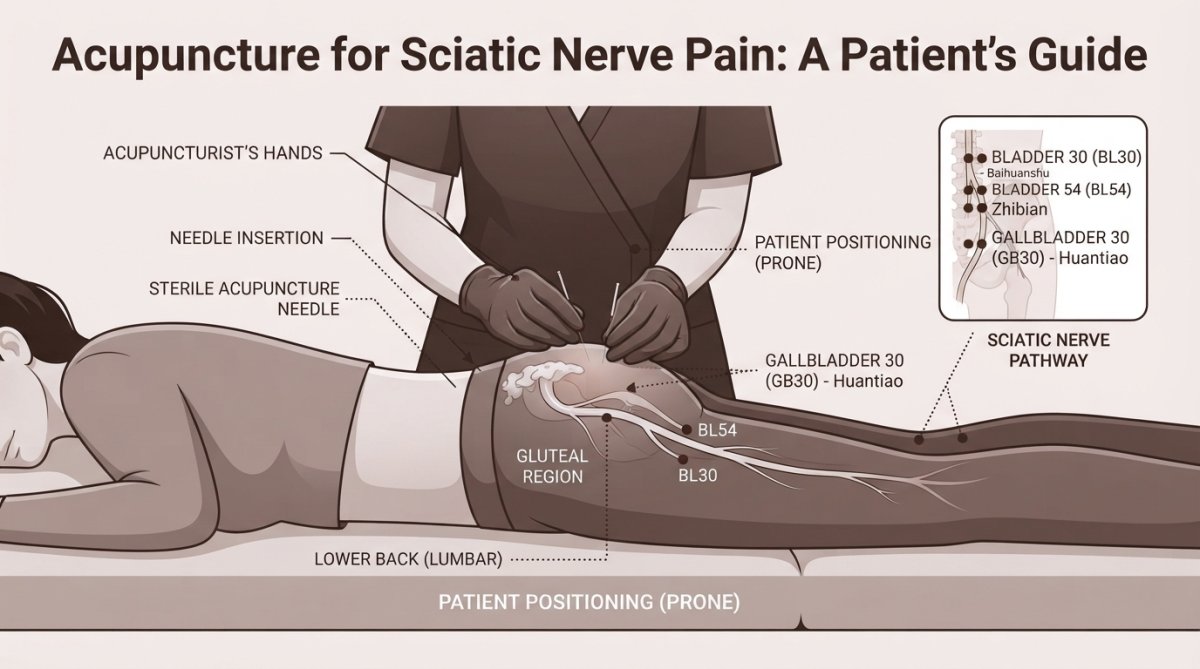
Key Meridian Points and Needle Insertion Locations
The Ling Gu point (located on the lower leg between the tibia and fibula) is a primary point for treating sciatic nerve pain and has been used in traditional Chinese medicine for centuries. Huantiao (at the hip, where the sciatic nerve exits the pelvis) addresses pain at the source. Yinmen and Weizhong (on the back of the thigh) treat the nerve along its course, particularly for pain radiating down the back of the leg. Zusanli (below the knee on the front of the leg) strengthens overall leg function and supports nerve health through enhanced circulation.
Your acupuncturist will also needle local points directly in the lower back region where nerve compression occurs, typically along the bladder meridian in the lumbar area.
Customized Treatment Protocols
A skilled practitioner assesses whether your sciatica stems from muscle tension, disc herniation, piriformis syndrome, or spinal stenosis, as each requires slightly different point emphasis. They also consider whether your pain is acute or chronic, since acute pain often responds faster to fewer needles, while chronic pain may require more extensive treatment.
Treatment typically involves 8-12 needles placed for 20-30 minutes. Some practitioners use electrical stimulation (electroacupuncture) to enhance the effect, particularly for chronic cases, or apply heat (moxibustion) to warm the area and improve blood circulation.
How Many Acupuncture Sessions for Sciatica Recovery
The number of sessions needed depends on whether you’re treating acute or chronic pain and how aggressively you want to address the underlying issue.
Acute vs. Chronic Sciatic Pain: Treatment Frequency
Acute sciatica (pain that started within the last 2-4 weeks) often responds quickly to acupuncture. Many patients experience meaningful relief within 3-5 sessions, with sessions spaced 2-3 days apart. A typical acute protocol involves 6-10 sessions over 2-3 weeks.
Chronic sciatica (pain persisting beyond 6-12 weeks) requires more sustained treatment. Initial treatment might involve twice-weekly sessions for 4-6 weeks, then gradual reduction to once weekly as improvement occurs. Total treatment may span 12-20 sessions over 2-3 months.
Spacing sessions more than 5-7 days apart reduces effectiveness, while spacing closer than 2-3 days may not allow adequate healing response. Most practitioners recommend 2-3 sessions per week for the first month, then reassess.
If you don’t notice any improvement after 6-8 sessions, acupuncture may not be the right approach for your particular condition. Continuing indefinitely without progress wastes time and resources.
What to Expect in Your First Session
Your first session will likely take 60 minutes, with 20-30 minutes of actual needle time. The practitioner begins by taking a detailed history and palpating your lower back and leg, looking for tender points and muscle tension.
Once needles are placed, you’ll rest quietly. Many patients experience a warming sensation, heaviness in the leg, or a reduction in sharp pain almost immediately. After needle removal, the practitioner may apply heat or massage the treated areas. Plan to rest for a few hours after your first session, as some people feel energized while others feel slightly fatigued, both responses indicate your body is engaging in the healing process.
Acupuncture vs. Physical Therapy for Sciatica: Which Works Best
The research is clear: combining acupuncture with physical therapy outperforms either approach alone.
Physical therapy addresses biomechanical and muscular factors contributing to sciatic nerve compression through stretching, strengthening, and postural correction. Acupuncture excels at reducing acute inflammation and pain signals, allowing fuller participation in physical therapy.
Combining Both Approaches for Optimal Results
The ideal protocol starts with acupuncture to rapidly reduce pain, then introduces physical therapy once pain is manageable enough to tolerate exercise. Many patients can begin gentle stretching and strengthening exercises within 2-3 weeks of starting acupuncture.
The timeline typically looks like this: Weeks 1-2 focus on pain reduction through acupuncture. Weeks 3-6 combine acupuncture (1-2 times weekly) with progressive physical therapy. Weeks 7-12 shift emphasis to physical therapy while acupuncture becomes maintenance (once weekly or less). By week 12, many patients manage with physical therapy alone, with occasional acupuncture sessions during flare-ups.
Safety, Side Effects, and Contraindications
Acupuncture is remarkably safe when performed by a licensed, trained practitioner. Serious adverse events are rare, but understanding potential side effects and contraindications helps you make an informed decision.
Common Side Effects and Red Flags
The most frequent side effect is mild soreness at needle insertion sites, similar to a small bruise, which typically resolves within 24-48 hours. Some patients experience temporary increased pain for 24-48 hours after treatment, often followed by significant improvement.
Dizziness or lightheadedness occasionally occurs, particularly in anxious patients or those who haven’t eaten before treatment, and resolves quickly with rest. Bruising at needle sites is common and harmless.
Red flags requiring immediate medical attention: Severe pain during treatment, numbness that worsens after acupuncture, signs of infection at needle sites, or chest pain or difficulty breathing.
When Acupuncture May Not Be Appropriate
Pregnancy requires modified acupuncture protocols, but a practitioner experienced in prenatal acupuncture can provide safe, effective treatment. Bleeding disorders or anticoagulant medications increase bruising and bleeding risk. Severe spinal instability or cauda equina syndrome (a medical emergency) requires surgical intervention, not acupuncture. Immunocompromised patients require sterile needle technique and may need to avoid acupuncture during periods of severe immunosuppression.
Home-Based Acupressure: Self-Care Between Professional Sessions
Acupressure, applying pressure to acupuncture points using your fingers, extends treatment benefits and gives you active control over pain management between professional sessions.
Acupressure Techniques You Can Perform Yourself
The Ling Gu point on the outer lower leg (about one-third of the distance from your knee to your ankle, in the groove between the tibia and fibula) can be self-treated with firm, sustained thumb pressure for 1-2 minutes. Huantiao (at the hip) can be accessed while lying on your side using your elbow to apply deep pressure for 1-2 minutes. Zusanli (below the kneecap, about one finger-width to the outside of the tibia) responds to circular pressure or sustained compression for 2-3 minutes.
For lower back points, lie on a tennis ball placed under tight, tender areas and apply gentle rocking or sustained pressure for 2-3 minutes.
Frequency and Expectations for Self-Treatment
Self-acupressure works best when performed daily, ideally at the same time each day. Each session should last 10-15 minutes total, treating 3-4 points. Don’t expect the dramatic relief of professional acupuncture; self-treatment is more about maintenance and preventing pain escalation. However, consistent self-acupressure can reduce the frequency of professional sessions needed.
Use a smartphone timer for self-acupressure sessions to ensure you’re applying pressure long enough. Most people underestimate how long 2-3 minutes actually is and release pressure too early.
Cost, Insurance, and Long-Term Value of Acupuncture Treatment
Insurance coverage for acupuncture varies dramatically by state and plan. Before starting treatment, contact your insurance company and ask specifically whether acupuncture for sciatic nerve pain is covered, whether a referral is required, how many sessions are covered annually, and what your copay or coinsurance is.
Many people find that even with insurance, the out-of-pocket cost is manageable when spread over multiple sessions. If insurance doesn’t cover acupuncture, discuss pricing directly with your practitioner. Many offer package discounts for committing to a full treatment course upfront or sliding scale fees based on income.
Wellness Memberships: Affordable Consistent Care
Source Acupuncture offers flexible wellness membership programs designed specifically for patients needing consistent, ongoing care. Membership typically includes discounted rates per session compared to pay-per-visit pricing, priority scheduling, and access to complementary therapies like cupping or red light therapy that enhance acupuncture benefits.
For sciatica treatment specifically, a membership makes financial sense if you’re committing to 8-12 sessions over 2-3 months, and you maintain the option to continue with maintenance sessions at reduced rates.
| Treatment Approach | Time to Initial Relief | Total Sessions Needed | Best For |
|---|---|---|---|
| Acupuncture alone | 2-3 weeks | 8-12 sessions | Acute pain, inflammation-driven sciatica |
| Physical therapy alone | 3-4 weeks | 12-20 sessions | Chronic pain, movement dysfunction |
| Acupuncture + physical therapy | 1-2 weeks | 12-16 combined sessions | Severe or persistent sciatica |
| Home acupressure | Variable | Daily practice | Maintenance between professional sessions |
Sciatic nerve pain doesn’t have to force you into a choice between medication side effects and surgery. Acupuncture for sciatic nerve pain addresses the actual mechanisms driving your pain, inflammation, nerve compression, and pain signal amplification, while your body simultaneously heals. The research supports its effectiveness, and most patients experience meaningful relief within weeks of starting treatment. Source Acupuncture specializes in personalized acupuncture protocols tailored to your specific condition, combined with complementary therapies like cupping and red light therapy that accelerate recovery. Whether you’re dealing with acute pain or chronic sciatica that’s persisted for months, consistent acupuncture treatment offers a path forward. Schedule your first session and begin the process of reclaiming pain-free movement.
Frequently Asked Questions
Does acupuncture really work for sciatic nerve pain?
Acupuncture for sciatic nerve pain operates by interrupting pain signals and reducing inflammation around the compressed nerve. Research shows it can provide relief, though results vary by individual. Clinical evidence supports its effectiveness as part of a comprehensive pain management strategy, particularly when combined with physical therapy. Success depends on treatment consistency, practitioner skill, and the underlying cause of your sciatic nerve compression.
How many acupuncture sessions for sciatica do I typically need?
Acute sciatic pain often improves within 4-6 sessions, while chronic pain may require 8-12 sessions or more for meaningful relief. Most practitioners recommend starting with weekly sessions, then spacing them out as symptoms improve. Your individual response depends on pain severity, how long you've had symptoms, and whether you're integrating other treatments like physical therapy. A licensed practitioner can assess your condition and recommend a personalized treatment protocol.
What are the main acupuncture points for sciatica treatment?
Common meridian points used for sciatica include points along the bladder and gallbladder meridians in the lower back and leg. The Ling Gu point is frequently targeted for nerve function improvement. Practitioners may also use points that address muscle tension, blood circulation, and overall musculoskeletal balance. Treatment is customized based on your specific symptoms and the location of nerve entrapment, so point selection varies between patients.
Is acupuncture better than physical therapy for sciatica?
Rather than choosing one over the other, combining acupuncture with physical therapy often produces the best outcomes. Acupuncture reduces pain and inflammation while improving nerve conduction, while physical therapy addresses muscle weakness and postural issues causing nerve compression. Many patients find that acupuncture makes physical therapy more tolerable by reducing acute pain, allowing them to participate more fully in therapeutic exercises. Your practitioner can help determine the best integration for your specific case.
This article was written using GrandRanker