Table of Contents
- Is Cupping Therapy Painful? What the Research Shows
- Types of Cupping Therapy and Their Pain Profiles
- How the Cupping Process Works and Where Discomfort Occurs
- Pain Management Techniques During Your Cupping Session
- Cupping Therapy Side Effects and Post-Treatment Discomfort
- How Long Do Cupping Marks Last and When Does Pain Subside
- Cupping Therapy for Beginners: What to Expect Pain-Wise
- Who Should Avoid Cupping and Specific Pain Contraindications
Is Cupping Therapy Painful? A Complete Guide
Last Updated: July 16, 2026
Many people wonder: is cupping therapy painful? The honest answer depends on your pain threshold, the type of cupping used, and how your practitioner adjusts the suction. At Source Acupuncture in Pacific Beach, San Diego, we’ve worked with thousands of clients to help them understand what to expect. Understanding the difference between therapeutic sensation and actual pain can completely change how you experience the treatment.
Is Cupping Therapy Painful? What the Research Shows
Cupping therapy should not be acutely painful during the session, though you’ll feel significant pressure and tightness. What many people mistake for pain is actually therapeutic sensation, the feeling of deep muscle engagement and fascia release.
Pain implies tissue damage or harm. Therapeutic discomfort is the sensation of tight muscles being stretched and mobilized. Your licensed practitioner controls intensity through suction level. A beginner might start at 40-50% suction, while experienced clients tolerate 70-80% without issue. The key is communication, if something feels genuinely painful rather than intensely tight, you speak up and the practitioner adjusts immediately.
Most first-time clients report that the anticipation of pain is worse than the actual experience. Once you feel the initial cup placement and realize it’s deep pressure rather than sharp pain, anxiety drops significantly.
Understanding Pain Perception During Cupping
Pain perception during cupping is heavily influenced by psychological factors, past experiences, and what your brain expects to happen. Anxiety amplifies perceived pain. If you arrive expecting cupping to hurt, your nervous system remains in fight-or-flight mode. Conversely, clients who arrive relaxed and informed often report that the sensation is far less intense than they imagined.
Research consistently shows that expectation and emotional state directly influence pain perception. A practitioner who explains what’s happening reduces perceived discomfort by 20-30% compared to silent treatment. Reframing the sensation as "My muscles are being mobilized" rather than "This is damaging my tissue" changes your actual pain experience.
Types of Cupping Therapy and Their Pain Profiles
Different cupping methods create different sensations.
Dry cupping uses suction alone. Most people find it moderately uncomfortable but not painful, the sensation of deep muscle engagement without any cutting or bleeding.
Wet cupping involves small superficial cuts followed by cupping to draw out blood. Pain during wet cupping is usually minimal during the cutting phase and moderate during the suction phase.
Fire cupping uses flame to create suction inside glass or bamboo cups. Once the cup adheres to your skin, the sensation is identical to silicone cupping, intense suction and pressure.
Silicone cups allow the practitioner to adjust suction with a hand pump, giving precise control over intensity. Many clients prefer silicone cups because the practitioner can immediately reduce pressure if discomfort spikes.
Silicone cups offer the most control over pain intensity because your practitioner can adjust suction in real-time. If pain management is your priority, request silicone cups during booking.
Dry Cupping vs. Wet Cupping: A Comparative Pain Scale
| Cupping Type | Pain During Application | Pain During Session | Post-Treatment Soreness | Best For |
|---|---|---|---|---|
| Dry Cupping (Silicone) | 3-4 | 4-5 | 2-3 | Muscle tension, circulation |
| Dry Cupping (Fire) | 4-5 | 4-5 | 2-3 | Deep tissue release, pain |
| Wet Cupping | 2-3 (cutting) | 4-6 (suction) | 3-4 | Detoxification, blood stagnation |
| Moving Cupping (Massage Oil) | 3-4 | 3-4 | 1-2 | Muscle tightness, relaxation |
These ratings assume moderate suction levels. Aggressive suction pushes every type toward the higher end; gentle suction drops everything 1-2 points.
How the Cupping Process Works and Where Discomfort Occurs
When a cup is placed on your skin and suction is created, the negative pressure pulls your skin, fascia, and muscle tissue upward into the cup. Most discomfort occurs during the initial 30-60 seconds after cup placement. Your nervous system registers the sudden pressure change and stretch. After this initial phase, most clients report that the sensation becomes more tolerable as their nervous system adjusts.
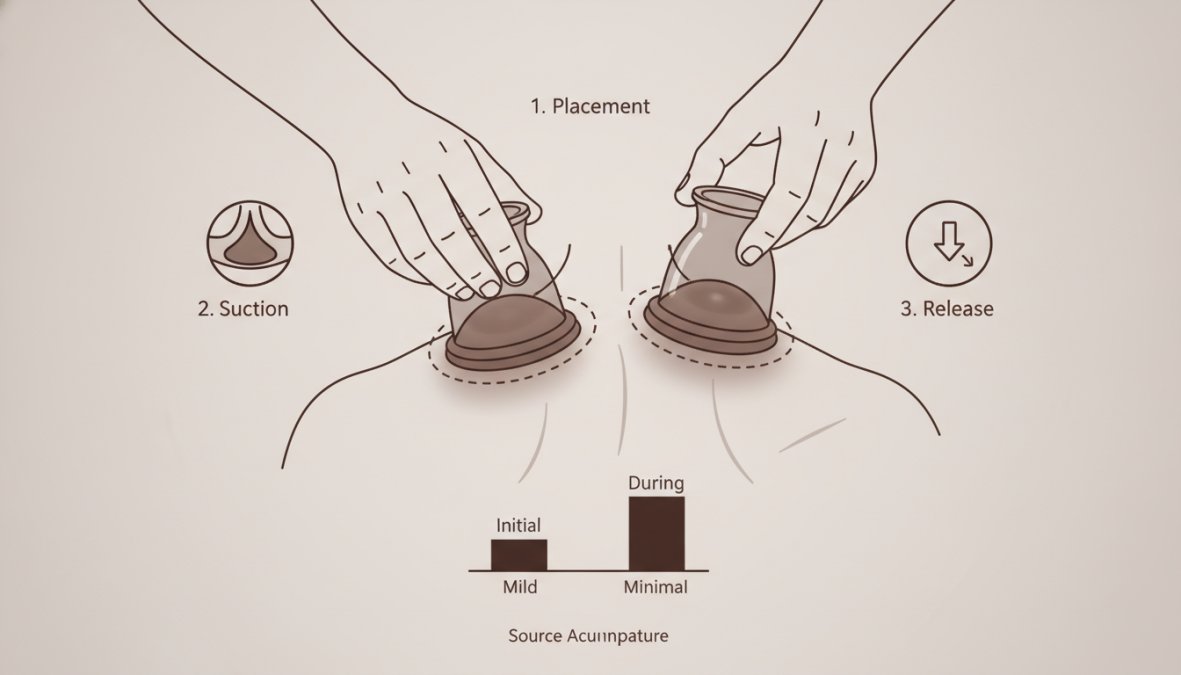
The suction also increases blood flow dramatically. Capillaries dilate. Red blood cells rush to the area. This is why cupping leaves marks, the capillaries are bringing blood to the surface, not because the tissue is damaged.
Muscle Tension Release and Therapeutic Sensations
As the suction continues, you often feel your muscle tension release. This sensation is sometimes described as "good pain" or "therapeutic discomfort", the feeling of tight muscles being stretched and mobilized. Cupping’s sustained suction forces a prolonged stretch without you having to actively work for it. The fascia beneath your muscles also releases as the suction creates traction, encouraging it to lengthen.
Some clients experience muscle soreness the next day, similar to post-workout soreness. This is normal and typically resolves within 24-48 hours.
If you feel sharp, localized pain during cupping (not just pressure or tightness), tell your practitioner immediately. Sharp pain indicates the cup may be placed over a nerve or bony prominence. The practitioner will reposition the cup, and the sharp sensation should resolve instantly.
Pain Management Techniques During Your Cupping Session
You’re not passive during cupping. Communication is your primary tool, tell your practitioner immediately if something feels genuinely painful rather than intensely uncomfortable. A good practitioner will adjust suction, reposition the cup, or reduce session duration without hesitation.
Breathing directly reduces perceived pain. Before cup placement, take 3-4 deep breaths to activate your parasympathetic nervous system. During cup placement, exhale slowly as the suction is created. Deep breathing lowers your nervous system’s threat detection and makes discomfort feel 20-30% less intense.
Relaxation of the target area reduces pain. Consciously relax the muscles being cupped. This mental technique significantly reduces discomfort. Distraction also works, some clients prefer conversation during cupping; others prefer silence and music. Fixating on the sensation amplifies discomfort; redirecting your attention reduces it.
Breathing and Relaxation Strategies
Box breathing is particularly effective. Inhale for 4 counts, hold for 4 counts, exhale for 4 counts, hold for 4 counts. Repeat this pattern 5-10 times before cup placement and during the session. This activates your parasympathetic nervous system, which directly reduces pain perception.
Progressive muscle relaxation also helps. Before cupping, tense each muscle group for 5 seconds, then release. Visualization reduces pain significantly, imagine the suction mobilizing stagnant blood and tension out of your muscles. These mental images activate your parasympathetic nervous system and reduce pain signaling.
Adjusting Suction Levels and Cup Placement
Suction intensity is the primary variable controlling cupping therapy pain. Lower suction equals less discomfort; higher suction equals more intense sensation but often more therapeutic effect. A beginner might start at 40-50% maximum suction. As you become accustomed to the sensation, you can tolerate 70-80%.
Cup placement also matters, cups placed over muscle belly feel less intense than cups placed near bone or nerve tissue. Avoid cupping directly over the spine, collarbone, or other bony prominences. The number of cups affects overall discomfort, and session duration impacts pain tolerance. A 20-minute session feels more manageable than a 45-minute session, especially for beginners.
Cupping Therapy Side Effects and Post-Treatment Discomfort
Bruising (ecchymosis) is the most visible side effect. Cupping brings old blood to the surface, creating dark purple or red marks on your skin. These marks are not damage; they’re evidence that circulation has improved. Bruising typically appears within 24 hours and peaks at 3-5 days. Bruising is not painful, it’s a visual mark, not a tender wound.
Skin tightness is common the day after cupping. Your skin feels slightly tight or sore, similar to mild sunburn. This resolves within 24-48 hours.
Muscle soreness similar to post-workout soreness occurs in 10-20% of clients. This indicates that the muscles were effectively mobilized and resolves within 2-3 days.
Headaches, Nausea, and Dizziness After Treatment
Some clients experience mild headaches, nausea, or dizziness after cupping. These are detoxification symptoms, not side effects of the cupping itself. When cupping mobilizes stagnant blood and lymphatic fluid, your body begins clearing metabolic waste. These symptoms are temporary and typically resolve within 24 hours.
Dizziness after cupping is usually related to dehydration or standing too quickly after lying down during treatment. Drink water before and after your session. Stand slowly when getting off the treatment table.
Post-treatment side effects like bruising and mild soreness are normal and indicate effective treatment. Severe or persistent symptoms warrant a conversation with your practitioner about adjusting future session intensity.
How Long Do Cupping Marks Last and When Does Pain Subside
Cupping marks typically last 7-14 days. Light marks fade within 5-7 days. Dark marks can persist 10-14 days. The soreness or tenderness associated with cupping marks typically resolves within 48-72 hours. After that, the marks are purely visual.
Factors that extend bruising duration:
- Aggressive suction levels
- Poor baseline circulation
- Bleeding disorders or anticoagulant medications
- Older age
- Dehydration
Factors that speed bruising recovery:
- Hydration (drink water before and after)
- Light movement (gentle walking, stretching)
- Healthy circulation
- Good baseline nutrition
Managing Discomfort During the Recovery Period
Hydration is the single most important recovery tool. Drink extra water for 24-48 hours after treatment. This helps your body clear mobilized metabolic waste and speeds bruising recovery.
Light movement helps. Gentle walking, easy stretching, or light yoga keeps circulation moving and prevents stiffness. Avoid intense exercise for 24-48 hours after cupping. Heat feels good, a warm bath or heating pad can soothe muscle soreness. Avoid ice, which reduces circulation and slows recovery. Loose clothing prevents irritation on bruised areas.
Cupping Therapy for Beginners: What to Expect Pain-Wise
Your first cupping experience sets expectations for all future sessions. Most beginners describe the initial cup placement as "surprising" rather than painful. The suction feels like intense pressure and tightness. After 30-60 seconds, your body adjusts and the sensation becomes more tolerable.
Beginners typically tolerate 40-60% suction comfortably. This is enough to create therapeutic effect without overwhelming your nervous system. As you return for additional sessions, you’ll naturally tolerate higher suction levels. Your nervous system now knows what to expect. Session two typically feels 20-30% less intense than session one, even with identical suction levels. This is pure neurological adaptation, your brain has learned that cupping is not a threat.
Building Tolerance and Improving Circulation Over Time
Your tolerance for cupping increases with each session. This isn’t because you’re becoming "tougher", it’s because your nervous system learns that cupping is safe and therapeutic.
Session one: 40-50% suction feels intense
Session two: 50-60% suction feels similar to session one’s intensity
Session three: 60-70% suction feels manageable
Session four and beyond: 70-80%+ suction becomes comfortable
Circulation improves over multiple sessions. Your baseline circulation gets better. Blood vessels become more responsive. Stagnant blood clears faster. By your fourth or fifth session, your body mobilizes fluid more efficiently, which means faster recovery and less post-treatment soreness.
Who Should Avoid Cupping and Specific Pain Contraindications
Some people should avoid cupping therapy entirely. Others should avoid specific types or intensities.
Absolute contraindications (avoid cupping entirely):
- Active skin infections or open wounds in the treatment area
- Severe burns or sunburns
- Varicose veins in the treatment area
- Pregnancy (especially on the abdomen or lower back)
- Severe bleeding disorders or anticoagulant medications
- Extreme dehydration
Relative contraindications (proceed with caution or avoid):
- Thin or fragile skin
- Severe anxiety or PTSD
- Recent surgery in the treatment area
- Active inflammation or acute injury
- Certain medications that increase bruising risk
Pain Sensitivity Conditions and When to Skip Cupping
Certain conditions make cupping therapy problematic because they amplify pain perception or create safety concerns.
Fibromyalgia: People with fibromyalgia often experience pain amplification. The suction sensation can trigger widespread pain. Most practitioners recommend avoiding cupping if you have active fibromyalgia.
Complex Regional Pain Syndrome (CRPS): CRPS involves abnormal pain processing. The suction stimulus can trigger disproportionate pain response. Cupping is generally contraindicated.
Ehlers-Danlos Syndrome (EDS): People with EDS have fragile connective tissue. The traction created by cupping can damage fascia and skin. Cupping should be avoided.
Severe anxiety or panic disorder: If the sensation of suction triggers anxiety or panic, cupping is not appropriate.
Bleeding disorders: People on warfarin, apixaban, or other anticoagulants bruise excessively. Cupping creates significant bruising, which can be dangerous for these clients.
If you have any of these conditions, discuss with your healthcare provider before trying cupping.
Medication Interactions and Inflammation Concerns
Certain medications interact with cupping therapy by increasing bruising risk or affecting how your body processes the treatment.
Blood thinners (warfarin, apixaban, dabigatran) increase bruising dramatically. If you’re on anticoagulants, inform your practitioner. Cupping may still be possible at very gentle suction levels, but bruising will be significant.
NSAIDs (ibuprofen, naproxen) taken regularly can increase bruising. Corticosteroids (prednisone, dexamethasone) thin skin and increase bruising risk.
Cupping is designed to mobilize stagnant blood and reduce inflammation. However, if you have acute inflammation (fresh injury, infection, or active inflammatory condition), cupping can amplify inflammation temporarily. Wait 48-72 hours after acute injury before cupping. Chronic inflammation (arthritis, autoimmune conditions) usually responds well to cupping.
Discuss any medications or inflammatory conditions with your practitioner before your first session.
Understanding whether cupping therapy is painful requires moving beyond a simple yes-or-no answer. The reality is nuanced: cupping creates intense sensation that most people experience as therapeutic discomfort rather than pain. Your pain threshold, mental preparation, and practitioner skill all influence how much discomfort you experience.
The good news is that cupping’s discomfort is manageable and temporary. Post-treatment side effects like bruising resolve within 1-2 weeks. Your tolerance improves with each session. The therapeutic benefits, improved circulation, reduced muscle tension, better recovery, make the temporary discomfort worthwhile for most clients.
At Source Acupuncture in Pacific Beach, San Diego, our licensed practitioners specialize in adjusting cupping intensity to match your pain tolerance and goals. We use silicone cups for precise suction control, communicate throughout your session, and tailor treatment to your specific needs. Book your session with Source Acupuncture today and experience personalized cupping therapy designed for your wellness goals.
Frequently Asked Questions
What does cupping therapy feel like, and is it supposed to hurt?
Cupping therapy typically feels like a pulling or tugging sensation rather than sharp pain. Most people experience skin tightness and mild discomfort as the suction creates negative pressure on the fascia and muscles. The sensation intensifies briefly when cups are first applied, then often becomes more tolerable as your body adjusts. Pain levels vary based on your pain threshold, the type of cupping (dry vs. wet), and cup placement. Communication with your licensed practitioner helps manage expectations and adjust suction intensity.
How long do cupping marks last, and do they hurt after treatment?
Cupping marks, or ecchymosis, typically fade within 5-7 days but can persist for up to two weeks depending on suction intensity and your skin sensitivity. The marks themselves don't usually hurt; rather, the surrounding area may feel tender or sensitive to touch during the first 24-48 hours post-treatment. Bruising is a normal part of the healing process and indicates increased blood flow and circulation to the treated area. Avoiding direct pressure on marked areas and staying hydrated can support faster recovery.
Is dry cupping or wet cupping more painful?
Dry cupping typically causes more discomfort during the session due to sustained suction pulling on the skin and fascia, though it's generally painless. Wet cupping, which involves small incisions and bloodletting, may feel sharper during the incision phase but often provides faster relief for inflammation. Silicone cups and fire cupping offer different sensation profiles, silicone cups allow easier pressure adjustment, while fire cupping creates intense initial heat. Your licensed practitioner can recommend the best type based on your pain sensitivity and therapeutic goals.
What pain management techniques can I use during a cupping session?
Effective pain management during cupping includes: communicating openly with your licensed practitioner about discomfort levels, using controlled breathing to relax muscles and reduce perceived pain, and requesting suction adjustments or cup repositioning. Psychological preparation, understanding that sensations are therapeutic rather than harmful, significantly reduces pain perception. Relaxation techniques like visualization and progressive muscle relaxation also help. Starting with lower suction intensity on your first session and gradually building tolerance improves comfort over time.
This article was written using GrandRanker