Last Updated: October 30, 2026
Quick Summary
Lavender, Roman chamomile, bergamot and sweet orange are the oils most often paired with stress-focused care, matched to how your stress shows up. Use one familiar oil in small amounts, and tell your practitioner first. Essential oils acupuncture pairing works best when scent stays light and avoids needle sites.
- Lavender and Roman chamomile are gentle, common choices when stress shows up as tension.
- Bergamot or sweet orange suit restlessness or a racing mind, used briefly.
- Use one drop of a familiar oil on a tissue before a session, then put it away.
- Avoid applying oil directly over needle sites, especially if there is redness or tenderness.
- Tell your acupuncturist which oils you use and ask about fragrance policies at intake.
Table of Contents
- Essential Oils for Stress: The Calming Oils Most People Start With
- How Acupuncture Addresses Stress and Where Oils Fit In
- Essential Oils Before Acupuncture: Choosing Scents That Support, Not Distract
- How to Use Essential Oils Safely
- Evidence Quality: What Research Does and Doesn’t Yet Show
- Booking Your First Session at Source Acupuncture
- Frequently Asked Questions
Stress has a way of settling into the body long before most people notice it, and many people turn to essential oils acupuncture combinations to ease it. Tight shoulders, a jaw that stays clenched through the workday, sleep that never quite restores you. Many people who come to acupuncture for stress also ask a practical follow-up question: can essential oils support the treatment, and which ones make sense?
This guide walks through the oils most often used for stress, how they fit alongside acupuncture, and the safety points to keep in mind. It is general information, not medical advice, so bring any specific concerns to a qualified practitioner.
Essential Oils for Stress: The Calming Oils Most People Start With
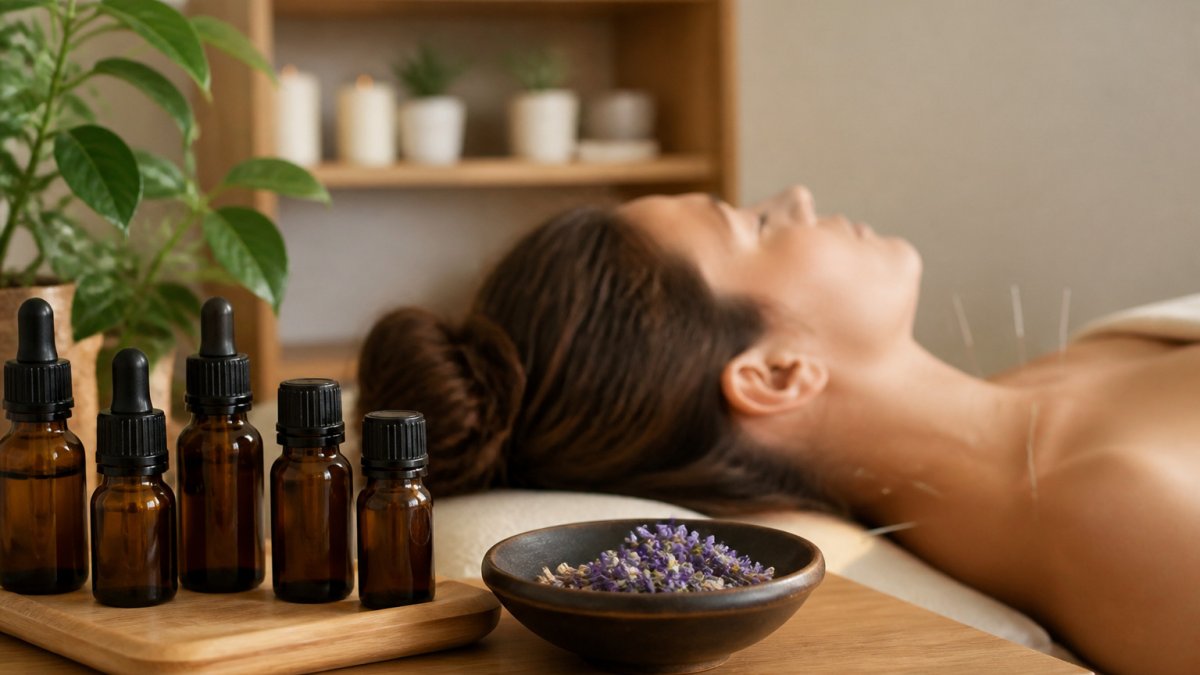
Essential oils are concentrated plant extracts, and a short list of them shows up again and again in stress-relief discussions. Most of the popular choices are floral, citrus or woody scents that people generally find relaxing. The starting point for most people is a few familiar options rather than a long, complicated blend.
Lavender and Chamomile
Lavender is the oil people reach for first. Its soft floral scent is widely associated with relaxation, and it is the most common entry point for anyone new to aromatherapy. Roman chamomile, with its apple-like sweetness, is another familiar choice for winding down in the evening.
Neither oil is a substitute for treatment, but both are commonly regarded as gentle and easy to find.
Citrus Oils: Sweet Orange and Bergamot
Citrus oils tend to feel brighter and more uplifting than floral ones. Sweet orange and bergamot are the two most often recommended, and many people prefer them when stress feels more like restlessness than exhaustion.
Citrus oils can be photosensitizing in some applications, so check labels carefully before using them on the skin. Scent is only one option, and you can also explore somatic exercises for chronic stress that work directly with the body.
Ylang Ylang, Jasmine and Sandalwood
For a deeper, richer scent profile, ylang ylang, jasmine and sandalwood are common choices. They are heavier and more intense, which is exactly why they can feel grounding for some people and overwhelming for others. Start with a small amount and notice how your body responds.
How Acupuncture Addresses Stress and Where Oils Fit In
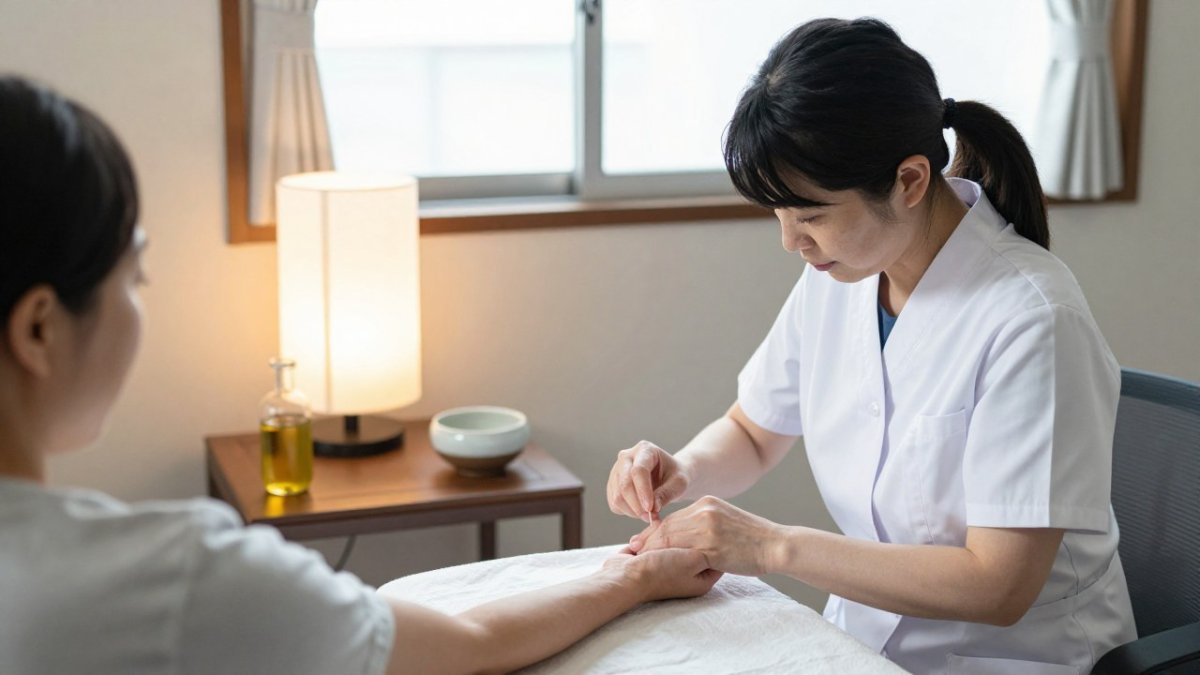
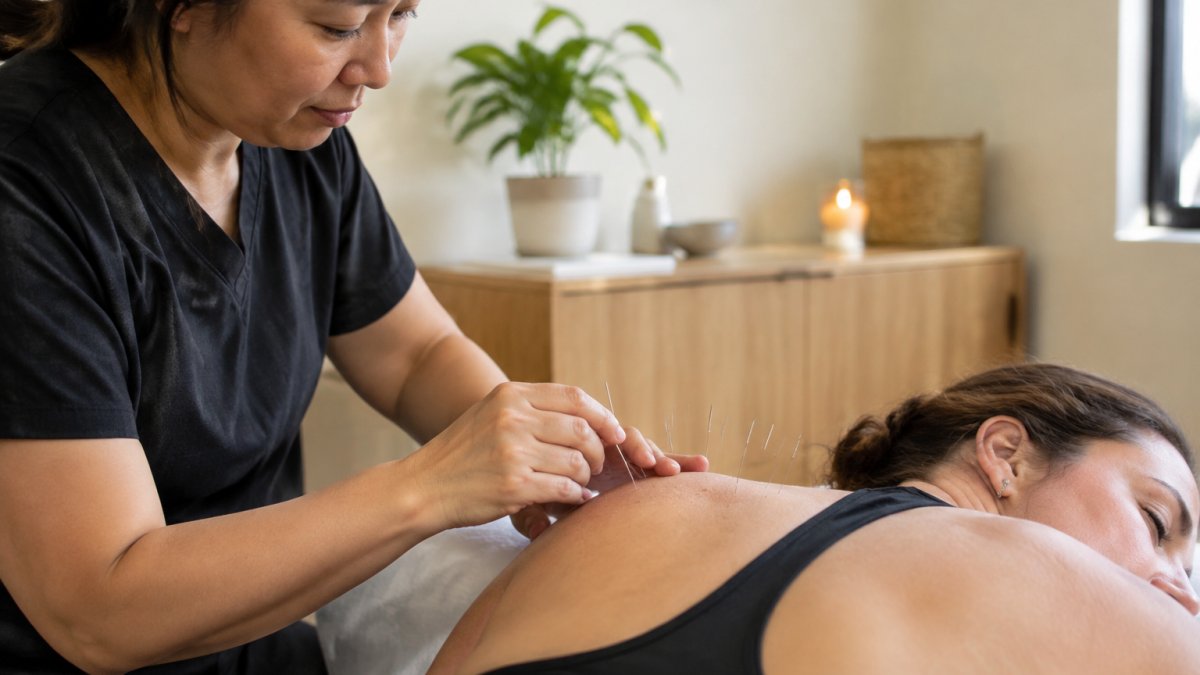
Acupuncture works by inserting thin needles at specific points on the body. In traditional Chinese medicine, these points are thought to help restore the flow of energy. Modern practitioners often describe the effect in terms of the nervous system, noting that many people report feeling calmer and more relaxed during and after a session.
Essential oils do not replace this process. Some people choose to use a scent as part of the environment they create around their care, though the effect of any oil on the body is not established.
Essential Oils Before Acupuncture: Choosing Scents That Support, Not Distract
Most articles about oils and acupuncture stop at listing calming scents. The more useful question is timing and coordination: when should you use an oil, how much, and how do you keep it from interfering with the treatment itself? A few practical rules cover most situations.
Before, During, or After a Session
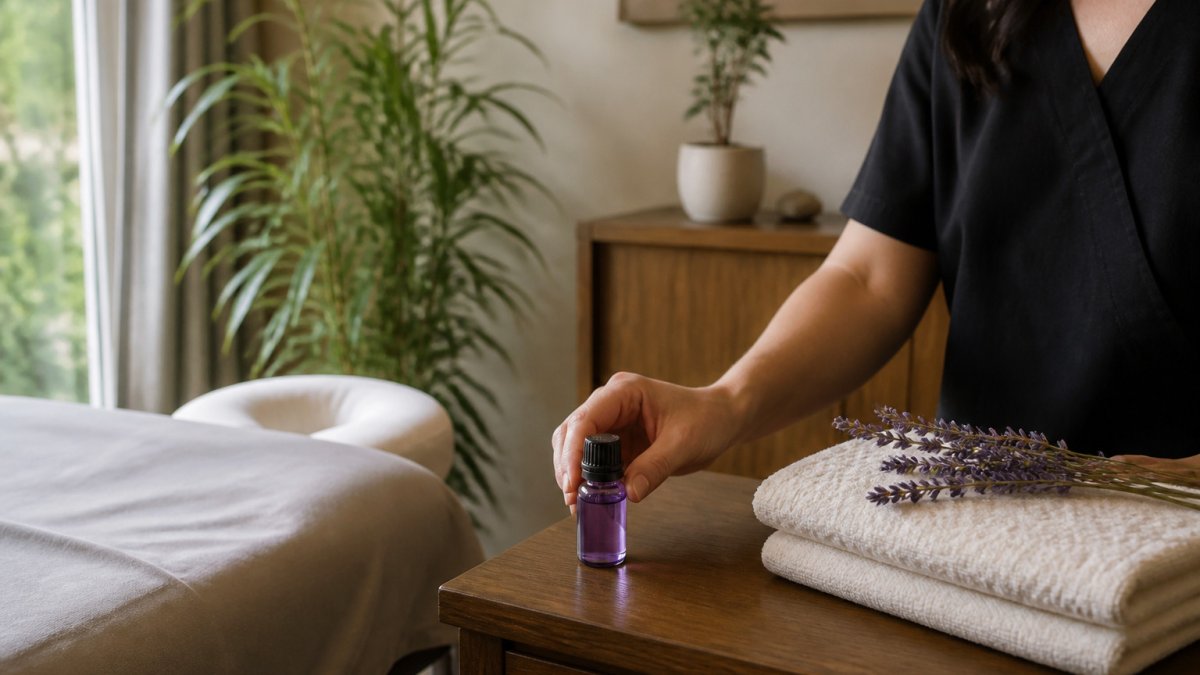
Many people find it helpful to keep scent light before a session and save stronger aromatic use for after. Before treatment, the goal is to arrive settled rather than saturated.
During a session, a neutral room is often preferred so that scent does not compete with the treatment environment. If you want scent during treatment, ask your practitioner first, as policies vary.
After a session, a light inhalation or a diluted topical application can support the wind-down. This is often the safest window for a slightly richer oil such as sandalwood or ylang ylang, because you are no longer in a shared treatment space.
Talking to Your Acupuncturist First
Bring the question up at intake. Tell your practitioner which oils you use, how you apply them, and whether you are sensitive to scent. Ask whether there is a policy on fragrance in the treatment room. A short, specific conversation, “I use lavender on a tissue before appointments; is that fine?”, is more useful than a general question about aromatherapy. If you are also feeling burned out while still working, read about recovering from burnout while still working before you book.
If you are seeing a practitioner for a specific concern and also using oils at home, mention both. Your practitioner can flag anything that needs attention, such as a skin sensitivity or a preference to avoid oil near needle sites.
Personalizing by Scent Tolerance and Stress Response
There is no universal best oil. A scent that feels grounding to one person can feel cloying to another, and stress responses differ: some people need something bright and uplifting, while others need something warm and heavy. A simple way to choose is to match the oil to how your stress shows up. Identifying the specific physical manifestations of tension allows for a more targeted approach to aromatherapy for stress that complements the subtle shifts initiated during your acupuncture session.
- If stress feels like restlessness or a racing mind, a light citrus such as bergamot or sweet orange, inhaled briefly, is a common starting point.
- If stress feels like tension and a clenched jaw, lavender or Roman chamomile tends to be the gentler choice.
- If stress feels like exhaustion or feeling ungrounded, a small amount of sandalwood or ylang ylang, used sparingly, is often preferred.
Start with one oil, keep the amount small, and notice how you feel over a few sessions before adding anything else. Layering several strong oils on the same day is the most common way people overwhelm themselves.
A simple pre-session routine: one drop of a familiar oil on a tissue, two or three slow breaths, then put the tissue away. Keep the scent subtle so the treatment room stays comfortable for you and anyone else in it.
The article suggests matching the oil to how your stress shows up, so here is a quick guide to that choice.
| Stress feels like | Oil to start with | Why |
|---|---|---|
| Restlessness or a racing mind | Bergamot or sweet orange | Brighter citrus, inhaled briefly |
| Tension and a clenched jaw | Lavender or Roman chamomile | Gentler, softer scents |
| Exhaustion or feeling ungrounded | Sandalwood or ylang ylang | Richer scents, used sparingly |
How to Use Essential Oils Safely
Safety matters more than any particular oil choice, and it matters more when needles are involved. Essential oils are potent, and a few basic habits prevent most common problems.
Dilution, Inhalation and Topical Use
Essential oils should almost always be diluted before applying them to skin. A common approach is a small amount of oil mixed into a carrier oil such as fractionated coconut oil or jojoba. Inhalation is usually the gentler option: a few drops on a cotton ball or tissue, or a diffuser used for short periods in a ventilated room.
Never apply undiluted oil directly to the skin, and do a patch test on a small area first to check for irritation. Keep oils away from the eyes, and do not take them by mouth unless a qualified professional directs you to.
Keeping Oil Away from Needle Sites
This is the precaution most general aromatherapy articles skip. After a session, it is generally advisable to avoid applying oil directly over needle sites, especially if there is any redness or tenderness. If you want a topical oil after treatment, ask your practitioner which areas are suitable and keep it diluted.
Tell your acupuncturist which oils you plan to use and where. Practitioners may prefer clients avoid strong scents on the day of a session, and they can advise you on what suits your situation.
Pregnancy, Respiratory Sensitivity and Allergies
People who are pregnant, breastfeeding, or managing asthma or other respiratory conditions should be especially careful with essential oils and should check with a qualified professional before regular use. Strong scents can trigger symptoms in people with respiratory sensitivity, and some oils are not recommended during pregnancy. If you have known allergies to plants or fragrances, patch test first and keep the first use brief.
A Note on Evidence
It is worth being clear about what the research supports. Much of what is said about essential oils and stress comes from small studies, traditional use, or anecdotal reports. Research on acupuncture for stress has grown, but results vary, and research on combining the two specifically is limited. Treat any claim of guaranteed results with caution, and let your own experience and your practitioner’s guidance shape your decisions.
Do not apply essential oil directly over needle sites after a session. Keep topical use diluted and away from treated points, and ask your acupuncturist before using any oil in the treatment room.
Evidence Quality: What Research Does and Doesn’t Yet Show
It is worth being clear about the evidence. Much of what is said about essential oils and stress comes from small studies, traditional use, or anecdotal reports. Research on acupuncture for stress has grown, but results vary, and the research on combining the two specifically is limited.
For a sense of how the broader evidence is evaluated, the National Center for Complementary and Integrative Health offers plain-language summaries of research on both acupuncture and aromatherapy. Treat any claim of guaranteed results with caution, and let your own experience and your practitioner’s guidance shape your decisions.
Booking Your First Session at Source Acupuncture
If you are considering acupuncture for stress, the most useful first step is a conversation about your goals, your history and your preferences, including any scents you do or do not enjoy. Our team at Source Acupuncture can talk through how treatment fits your routine and whether a single session or a longer plan makes sense.
To learn more about the services we offer and how sessions are structured, visit our site and book a session when you are ready. Current pricing and availability are best confirmed directly with our team.
Frequently Asked Questions
What oils help with stress?
Lavender, Roman chamomile, sweet orange and bergamot are the calming oils most often used for stress. Their scents are generally described as relaxing, and they are commonly used in aromatherapy. Research on their effects is limited and mostly small in size, so treat them as a way to make a session more comfortable rather than a treatment for a medical condition. If stress is persistent or affects sleep, mood or daily function, speak with a qualified health professional.
Can essential oils expire?
Yes. Essential oils do not spoil in the way food does, but they oxidize over time, which can change their scent and may increase the chance of skin irritation. Store oils in dark glass bottles with tight caps, away from heat and direct sunlight. Many manufacturers suggest replacing citrus oils sooner than woody or resinous oils, and any oil that smells rancid or has changed color should be discarded.
Are essential oils safe to use during an acupuncture session?
Scent exposure during a session is generally low-risk for most people, but safety depends on the oil, how it is applied and your personal sensitivities. Never apply undiluted oil to the skin, and avoid placing oil near needle sites or on broken skin. Tell your acupuncturist about any oils you plan to use, any allergies and any medications you take, so the practitioner can decide whether the combination is appropriate for you.
What should I tell my acupuncturist before using essential oils?
Tell your practitioner which oils you use or plan to use, how you apply them, and whether you have asthma, allergies, skin sensitivities, a pregnancy or any health condition. Mention medications and supplements as well. A practitioner can then advise on timing, whether to use oils before or after treatment, and whether certain scents might distract from the session. Honest information helps them tailor care to your needs.