Last Updated: October 27, 2026
Quick Summary
Home acupressure tools are devices like mats, massage balls, handheld rollers, and point clips that apply firm pressure to points linked to head, neck, and shoulder tension. They can be a low-cost option for tension-type headaches, though their benefit is not guaranteed and frequent or severe headaches still need medical evaluation.
- Acupressure applies firm pressure instead of needles and can be self-applied at home.
- Match the tool to your pain: mats suit upper back and shoulders, rollers suit scalp and temples.
- Press each point for about 1 to 3 minutes, keeping pressure firm but comfortable.
- Stop immediately if you feel dizzy, nauseated, or lightheaded, or if pain increases.
- Seek emergency care for a sudden, severe headache or one with fever, confusion, or weakness.
Table of Contents
- Acupuncture and Acupressure: What Each Term Means for Headaches
- How Acupressure Points May Help Headaches
- Choosing an At-Home Tool by Headache Type and Body Area
- Step-by-Step Routine: Locating and Pressing LI4 and Other Points
- Using an Acupressure Mat for a Headache Session
- Self-Acupressure for Migraines and Tension-Type Headaches
- Safety, Warning Signs, and When to Book a Consultation
- Frequently Asked Questions
Headaches that keep coming back can wear you down, and many people look for ways to ease them at home between visits or when a visit is out of reach. This guide explains what these tools do, how to choose one for your headache type, and how to use it safely. (Source: National Center for Complementary and Integrative Health overview of acupuncture)
National Center for Complementary and Integrative Health overview of acupuncture
Acupuncture and Acupressure: What Each Term Means for Headaches
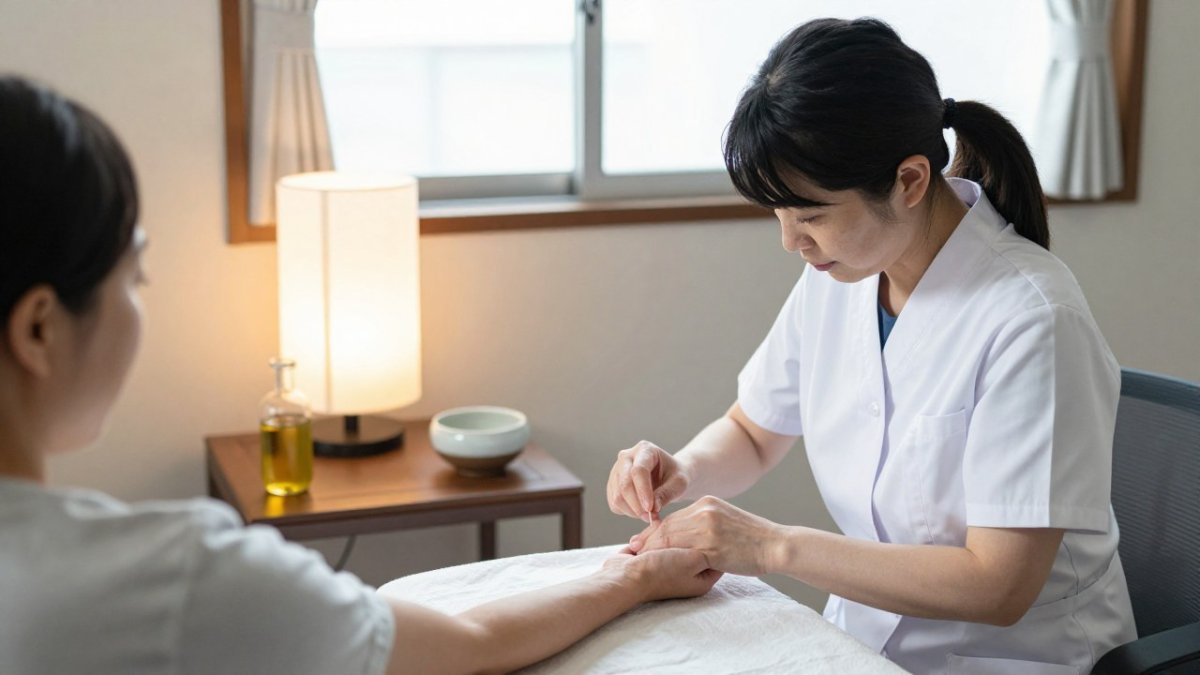
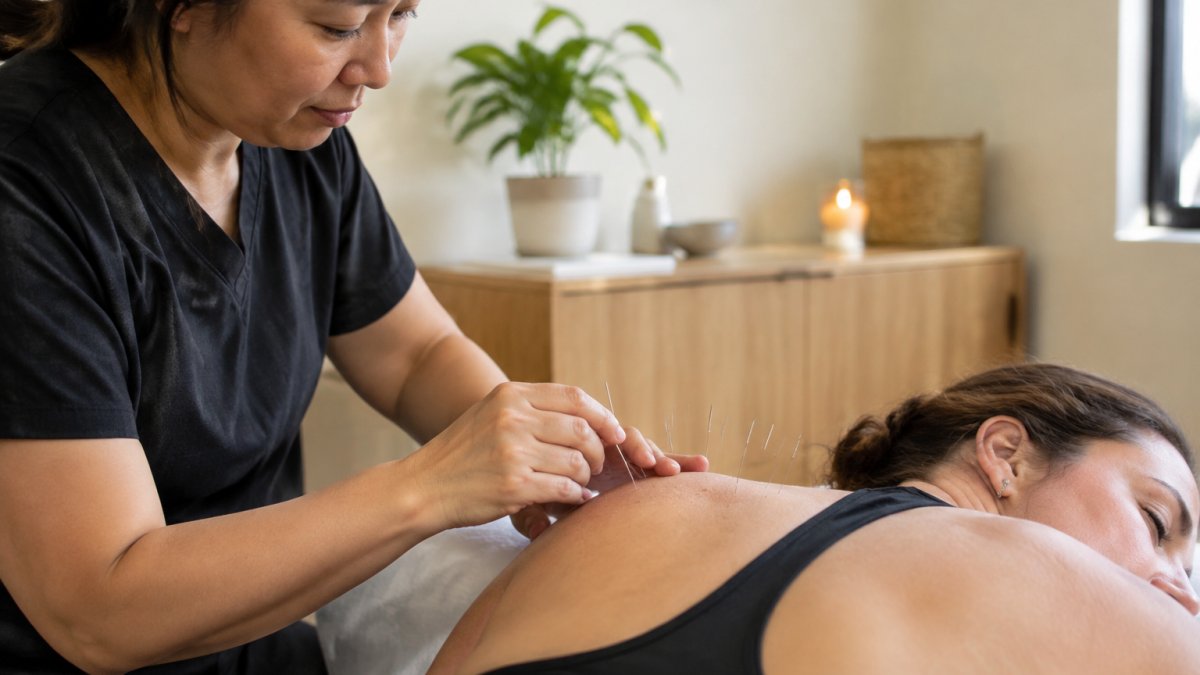
Acupuncture is a practice where a trained practitioner inserts thin, sterile needles into specific points on the body. Acupressure uses firm pressure from fingers, hands, or tools on those same points instead of needles.
For headaches, the difference matters. Acupuncture is performed by a practitioner. Acupressure can be done at home, which is why people look at home acupressure tools.
Here is the simple breakdown:
- Acupuncture: needles, professional setting, guided by a licensed practitioner
- Acupressure: pressure only, self-applied, can use a mat or roller
- Both: target the same general points linked to head, neck, and shoulder tension
Acupressure is generally gentle, but it is not a replacement for a medical evaluation of frequent or severe headaches.
How Acupressure Points May Help Headaches
Many people report that steady pressure on certain points eases tension in the neck, scalp, and jaw. Some researchers think the pressure may relax muscles and change how the body handles pain signals, though the evidence is still developing.
Common areas people press include:
- The web of the hand between the thumb and index finger (LI4)
- The base of the skull along the neck muscles
- The shoulders and upper trapezius muscles
- The temples and forehead for tension-type pain
A common approach is to hold pressure for about 1 to 3 minutes per point and breathe slowly during the session. Results vary from person to person, so track what happens over several weeks.
Choosing an At-Home Tool by Headache Type and Body Area
No single tool fits every headache. Match the tool to where your tension sits, how often your headaches come, and how much control you want over pressure. The table below is a starting point, not a prescription, tools do not diagnose or treat the underlying cause of headaches.
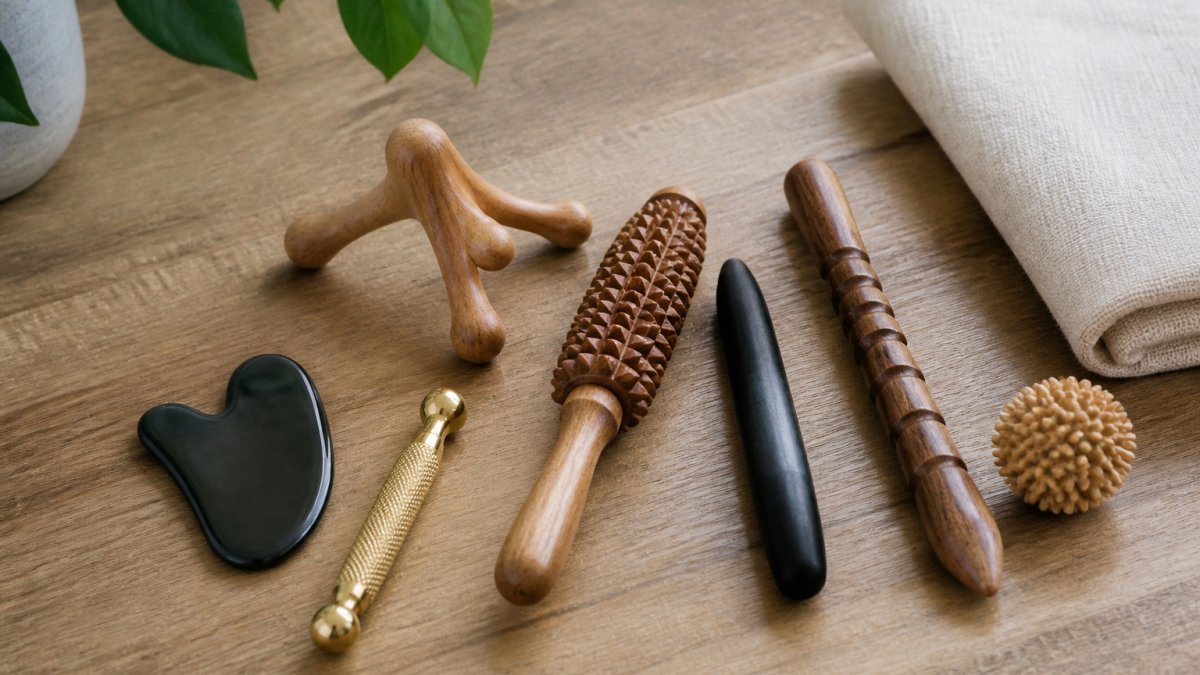
| Tool | Best for | Pressure control | Portability | Cleaning | Typical price range (USD) |
|---|---|---|---|---|---|
| Hands and fingers | LI4, temples, base of skull | High, you feel every change | None needed | Wash hands | $0 |
| Massage ball (tennis or lacrosse) | LI4, shoulders, upper back | Medium, body weight sets it | High | Wipe with damp cloth | $3-$15 |
| Handheld roller or point tool | Scalp, temples, back of head | High, hand-driven | High | Wipe or wash per label | $10-$40 |
| Acupressure mat with pillow | Upper back, neck, shoulders | Low, you cannot easily adjust mid-session | Low | Removable washable cover | $25-$90 |
| Point clips or spring devices | Single points such as LI4 | Low to medium, fixed pressure | High | Wipe; check for skin irritation | $8-$25 |
Matching the tool to the headache pattern
- Tension-type headaches (band-like pressure, neck stiffness): an acupressure mat or a massage ball against a wall for the upper back and shoulders. The mat covers more area; the ball lets you dial pressure up or down.
- Head and temple pain: a handheld roller with small nubs reaches the scalp and temples without tangling in hair. Fingers work nearly as well and cost nothing.
- Hand and wrist points (LI4): a small ball or a point clip targets the web of the hand. A clip holds steady pressure so your other hand stays free, but it is the easiest tool to over-tighten, start loose.
- Shoulder and upper back tightness: a larger mat or a roller covers more surface. A massage ball pressed between your back and a wall gives more focused pressure on one knot.
What to check before you buy
- Pressure control: can you ease off in one second? Tools you lie on or clip on are harder to adjust than tools you hold.
- Skin contact: removable, washable covers matter for mats; wipeable surfaces matter for rollers and balls.
- Reach: can the shape get to the base of your skull and the top of your shoulders without straining your neck?
- Spike or nub height: start lower than you think you need. A mat that feels intense in the store will feel more intense after 10 minutes.
Try the free option first. Spend a week using only your hands and a household massage ball on the points in the routine below. If that helps, you will know a tool is worth buying, and you will have a baseline to compare it against.
::: Establishing this physical routine creates a calm environment that pairs well with the soothing scents of natural candles for migraines to further reduce sensory triggers.
Step-by-Step Routine: Locating and Pressing LI4 and Other Points
This routine takes about 10 minutes. Sit in a quiet place and keep your breathing slow.
- Find LI4. On the back of your hand, locate the web between your thumb and index finger. Press the point with the thumb of your other hand.
- Press and hold. Apply firm but comfortable pressure for 1 to 2 minutes. Breathe slowly through the pressure.
- Release and switch. Let go, then repeat on the other hand.
- Work the neck. Use your fingers to press gently along the base of the skull, about one inch out from the spine, for 1 minute.
- Finish with the shoulders. Press the top of each shoulder for 1 minute to ease tension.
- Rest. Sit quietly for 2 to 3 minutes and note how your head feels.
Using an Acupressure Mat for a Headache Session
A mat can be a calm way to end a stressful day. Here is a simple way to use one.
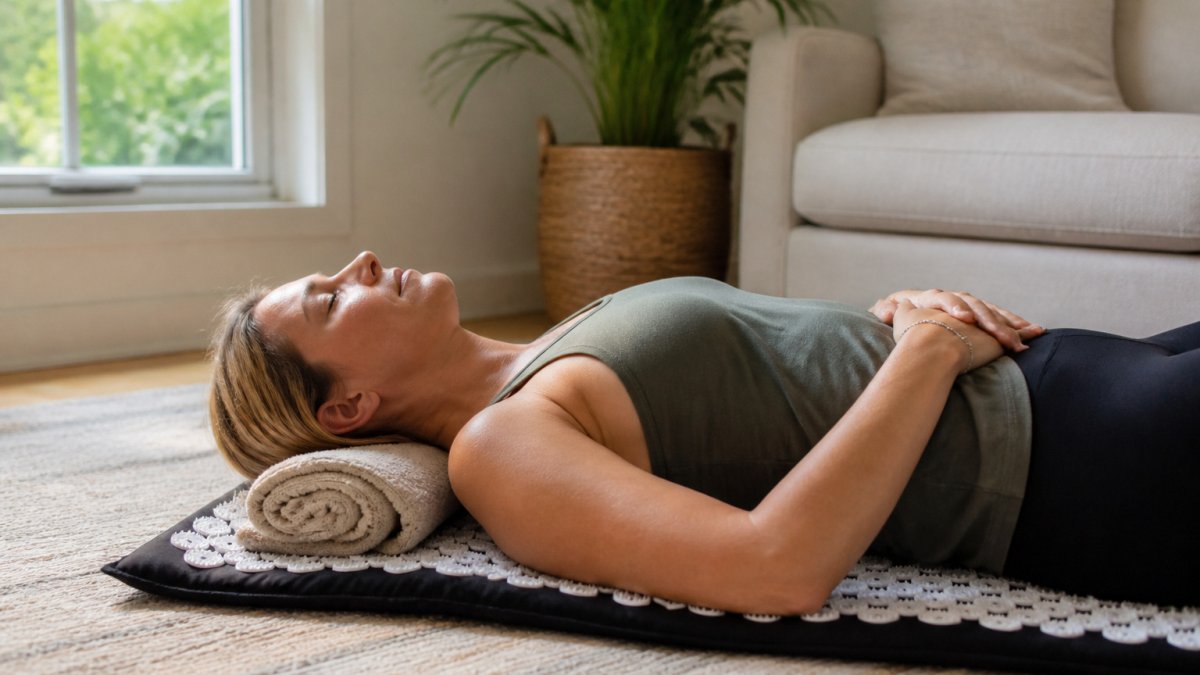
- Place the mat on a firm floor, such as carpet or a rug.
- Sit on the edge, then slowly lie back so the spikes press into your upper back and shoulders.
- Place a pillow attachment under your neck if your mat has one.
- Stay for 10 to 15 minutes at first. Breathe deeply and let your muscles soften.
- Sit up slowly when finished. Stand up gradually to avoid dizziness.
Most people find the first few sessions feel intense. The discomfort should ease within a few minutes. If it does not, stop.
Self-Acupressure for Migraines and Tension-Type Headaches
Tension-type headaches often respond well to neck and shoulder pressure. Migraines are more complex, and some people find that cool compresses and quiet rest help more than pressure alone.
A practical approach:
- Use gentle pressure on hand and neck points during the early stage of tension headaches
- Pause pressure work during a severe migraine attack, when touch may increase discomfort
- Keep a simple log of headache timing, triggers, and what helped
Many people use acupressure as one part of a broader plan that includes sleep, hydration, and stress management. Discuss your overall plan with your own health professional.
Safety, Warning Signs, and When to Book a Consultation
Acupressure is low-risk for most adults, but “low-risk” is not “no rules.” The guidance below covers how hard to press, how long to go, what to do if your skin reacts, and when to stop and get medical care.
Pressure and duration rules
- Pressure: firm but comfortable, a 4 or 5 on a 0-to-10 scale, never sharp or numbing. If you hold your breath or tense your jaw, ease off.
- Duration per point: about 1 to 3 minutes, then release. A common pattern is to work two to four points per session rather than every point you know.
- Total session: 10 to 15 minutes at first, including rest time. Longer is not better.
- Frequency: once or twice a day is typical for self-care. If you find yourself pressing for hours, that is a sign to check in with a clinician.
Skin care and tool hygiene
- Wash your hands before and after, and clean rollers, balls, and clips per the manufacturer’s instructions.
- Wash or rotate mat covers regularly; spikes trap sweat and oils.
- Check your skin after each session. Faint redness that fades within an hour is common; lasting marks, bruising, or broken skin are not.
- Do not press on moles, rashes, cuts, bruises, varicose veins, or swollen areas.
When to avoid a tool or check with a clinician first
- Pregnancy, some points are traditionally avoided, and a clinician can advise on what is safe for you.
- Bleeding disorders or blood-thinning medication, bruising is more likely.
- Diabetes with reduced sensation in the hands or feet, you may not feel too much pressure.
- Skin conditions, active infections, or recent surgery in the area.
Red flags that need urgent care
Seek emergency care for a headache that is sudden and severe (often described as a thunderclap), or a headache with any of the following:
- Fever with a stiff neck
- Confusion, fainting, or trouble speaking
- Weakness, numbness, or vision changes
- A headache after a head injury
- New headache during pregnancy or after childbirth
Book a routine appointment if headaches wake you from sleep, worsen steadily over weeks, change pattern, or stop responding to what used to help.
What the evidence does and does not say
Research on acupuncture for headache prevention is more established than research on self-applied acupressure tools. Reviews of acupuncture for tension-type headache and migraine have generally found benefit, but the evidence for consumer devices and self-acupressure is thinner and more mixed.
Tools are self-care, not diagnosis. If your headaches are frequent, severe, or changing, get evaluated before you spend more time, or money, on devices.
If your headaches keep returning despite home care, consider consulting a qualified health professional. American Migraine Foundation information on headache types
To learn more about what acupuncture involves and how to find a qualified practitioner, read our acupuncture for migraines and tension relief guide. When you are ready to stop self-treating and get professional help, you can book an acupuncture session with Source Acupuncture. If you are curious about specific pressure points for stress, our seven acupressure points for stress relief at home guide walks through them in more detail.
Frequently Asked Questions
Can acupressure help relieve headaches?
Some people report that pressing certain points helps ease tension-type headaches and neck tightness, and small studies have looked at acupressure for headache symptoms. Evidence is limited and results vary, so treat self-acupressure as a complement to, not a replacement for, medical care. Press gently with steady pressure for about 30 seconds per point, stop if pain increases, and talk with your doctor if headaches are frequent, severe, or new.
How do you use an acupressure tool for a headache?
Start by sitting or lying in a calm place. Use a thumb or the tool to apply firm, steady pressure to a point such as LI4, which sits on the fleshy area between the thumb and index finger. Hold for about 30 seconds, then release and repeat on the other hand. Keep pressure firm but never painful, breathe slowly, and limit sessions to a few minutes. Acupressure mats work best when used lying down for 15 to 20 minutes with the back and neck supported.
When should you avoid acupressure or seek medical care for a headache?
Avoid acupressure during pregnancy, and do not press over injuries, rashes, or broken skin. Seek medical care right away for a sudden severe headache, headache with fever, stiff neck, confusion, weakness, vision changes, or headache after a head injury. Frequent or worsening headaches also deserve a professional evaluation before you rely on home tools.
What should I know before using an acupressure mat at home?
Choose a mat with a moderate number of spikes and build up tolerance slowly, since first sessions can feel intense. Use it on a clean surface over clothing or a thin layer, avoid using it right after eating or while sleepy, and stop if you feel dizziness or numbness. Mats are a practical at-home option for self-care, but they are not a diagnostic tool and do not replace an assessment for ongoing headaches.