Table of Contents
- How Sleep Quality Impacts Athletic Performance
- How Much Sleep Do Athletes Need
- Sleep and Muscle Recovery: The Connection
- Sleep Deprivation and Athletic Performance
- Sleep Hygiene for Athletes: Practical Strategies
- Measuring Sleep Quality and Tracking Progress
- Sleep, Travel, and Competition Schedules
- Conclusion
- Frequently Asked Questions
Last Updated: October 17, 2026
How Sleep Quality Impacts Athletic Performance
Sleep quality is one of the most underrated factors in athletic performance. Many athletes focus on training and nutrition while overlooking recovery.
At Source Acupuncture, we work with active individuals who know peak performance requires more than hard work. Sleep is where your body repairs itself, builds strength, and prepares for the next challenge.
This guide breaks down exactly how sleep quality impacts athletic performance and what you can do to optimize your rest for better results.
How Much Sleep Do Athletes Need
Most athletes need 7-9 hours of sleep per night, though needs vary by training intensity and sport. Some elite athletes report needing 9-10 hours to recover from demanding loads.
The key isn’t just hitting a number on the clock. Consistent sleep timing and quality matter more.
Here’s what matters most:
- Sleep consistency beats occasional long nights
- Timing matters, your body performs better with a regular schedule
- Individual needs vary, some athletes thrive on 8 hours, others need 9
- Training load increases sleep demand, harder weeks require more rest
Young athletes often need more sleep than adults because their bodies are still developing. If you’re training hard, adding 30-60 minutes can make a measurable difference in how you feel and perform.
Sleep and Muscle Recovery: The Connection
Your muscles don’t grow during training. They grow during sleep. Workouts create tiny tears in muscle fibers, and sleep is when your body repairs them and builds them back stronger.
Deep sleep is where most of this happens. During deep sleep, your body increases blood flow to muscles, boosts protein synthesis, and releases growth hormone. Without adequate deep sleep, muscles recover slower and soreness lingers.
Sleep quality directly affects:
- Muscle repair speed, damaged fibers heal faster with quality rest
- Strength gains, more deep sleep means more muscle growth
- Soreness recovery, athletes with poor sleep stay sore longer
- Endurance capacity, muscles rebuild energy stores during sleep
Many athletes miss this connection. They train hard, eat well, then stay up late on their phones. The result is incomplete recovery. You can’t out-train poor sleep.
Sleep Deprivation and Athletic Performance
Sleep deprivation is not a single condition. How much performance drops depends on whether you lost a few hours for one night, accumulated sleep debt over a week, or have been running short for months. The distinction matters because the mechanisms, effect size, and recovery timeline differ in each case.
Acute total deprivation: the one-night experiment
When athletes are kept awake for a full night, the clearest declines show up in sustained attention and fast decisions. Controlled studies commonly find slower reaction time, more lapses, and lower accuracy on vigilance tasks (Sleep deprivation: Impact on cognitive performance). Short maximal efforts (a single sprint, a one-rep max) are often preserved, but the ability to repeat effort and pace correctly degrades. You may still be strong for one rep but misjudge the second half of a game.
Partial sleep restriction: the more realistic problem
The more common scenario is losing 1-2 hours per night for several nights. Research on partial restriction generally finds that:
- Reaction time and vigilance decline first, often before athletes report feeling tired.
- Time to exhaustion on endurance tasks shortens, partly because perceived exertion rises at the same workload.
- Skill accuracy and decision-making under fatigue worsen, especially in open-skill sports where athletes must read and react to opponents.
- Glucose metabolism and appetite regulation shift, which can affect fueling and body composition over a season.
A useful rule of thumb: the performance cost of partial restriction accumulates roughly in proportion to sleep debt and does not fully reverse after one recovery night. Two or three normal nights are often needed to restore baseline reaction time and perceived exertion.
The mechanisms behind the decline
Sleep loss affects performance through several converging pathways:
- Central nervous system fatigue. Reduced arousal and attention lead to slower information processing and more errors on complex tasks.
- Altered perceived exertion. Sleep-deprived athletes rate the same workload as harder, which changes pacing and effort allocation.
- Metabolic disruption. Short sleep is associated with lower insulin sensitivity and shifts in hunger hormones (ghrelin and leptin), which can impair fueling and recovery.
- Neuromuscular and proprioceptive changes. Balance, joint position sense, and stabilizer muscle activation can degrade, which is one reason injury risk rises.
- Immune and inflammatory effects. Chronic short sleep is linked with higher inflammatory markers and greater susceptibility to illness, which indirectly erodes training availability.
Injury risk: the connection athletes underestimate
The injury link is one of the most consistent findings in the sports-sleep literature. When coordination and reaction time decline, athletes are less able to protect joints and absorb unexpected loads, and fatigue changes landing mechanics and trunk control. Sleep loss doesn’t directly tear tissue; it removes the margin of safety that lets you recover from a misstep.
Do not treat a single bad night as a reason to cancel training. The bigger risk is the pattern: repeated 5-6 hour nights across a training block, where performance erodes gradually and injury risk climbs without an obvious warning sign.
What actually helps
The evidence supports a few priorities:
- Protect a consistent sleep window rather than chasing occasional long nights.
- Prioritize sleep after the hardest sessions, when recovery demand is highest.
- Use short naps (20-30 minutes) strategically when nighttime sleep is unavoidably short, but avoid long or late naps that push bedtime later.
- Treat sleep as part of the training plan, scheduled and defended like a workout.
Sleep deprivation is not a mood or willpower problem. It is a measurable physiological load that changes how the body produces force, processes information, and repairs itself.
Sleep Hygiene for Athletes: Practical Strategies
Sleep hygiene means the habits and environment that support quality rest. Small changes here create big improvements in sleep and recovery.
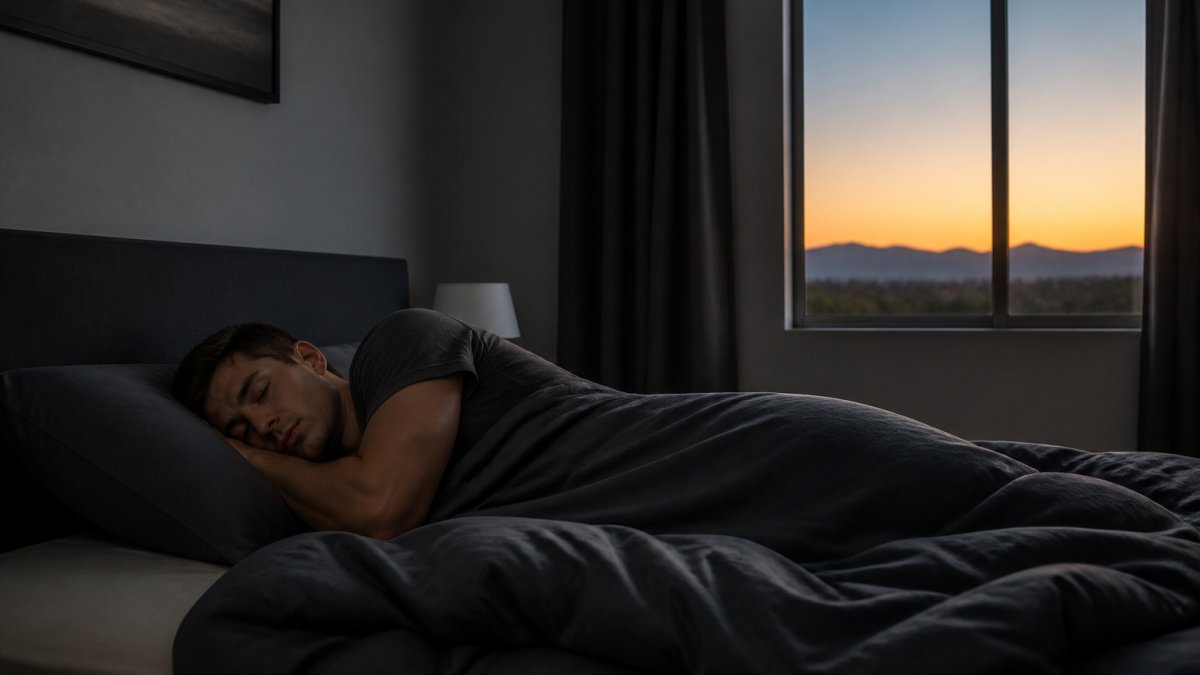
Start with your bedroom: dark, cool, and quiet. Darkness triggers melatonin production, helping you fall asleep faster and sleep deeper.
Next, adjust your evening routine. Stop using screens 30-60 minutes before bed, since blue light suppresses melatonin and keeps your brain alert. Instead, read, stretch, or do light meditation.
Practical strategies that work:
- Keep a consistent sleep schedule, same bedtime and wake time, even weekends
- Avoid caffeine after 2 PM, it stays in your system for 8+ hours
- Limit alcohol, it fragments sleep and reduces deep sleep stages
- Exercise earlier in the day, late workouts can keep you wired
- Keep your bedroom cool and dark, this supports melatonin production
Many athletes also benefit from recovery techniques that calm the nervous system. Massage, stretching, and acupuncture reduce muscle tension and prepare your body for better sleep.
Measuring Sleep Quality and Tracking Progress
Most athletes track training load, heart rate, and body weight but have no reliable picture of their sleep. This section covers the indicators worth tracking, how to interpret them, and the limits of consumer technology.
Start with subjective measures
Subjective sleep quality is not a soft metric. It correlates reasonably well with performance outcomes and is free to collect. Track these each morning:
- Sleep duration (estimated time asleep, not just time in bed).
- Sleep latency (how long it took to fall asleep).
- Number of awakenings and whether you had trouble falling back asleep.
- Perceived restfulness on a simple 1-5 scale.
- Daytime alertness in the first hour after waking and mid-afternoon.
A two-week log of these five items often reveals more actionable patterns than a month of wearable data, because it captures how you actually feel and function.
Objective measures and what they mean
If you use a wearable or sleep app, focus on a small set of metrics rather than every number the device reports:
- Total sleep time (TST). The core metric. Aim for a consistent 7-9 hours, with individual variation.
- Sleep efficiency. The percentage of time in bed actually spent asleep. Values in the mid-80s to low-90s are generally considered good for adults; consistently lower values suggest fragmentation or difficulty initiating sleep.
- Wake after sleep onset (WASO). Total minutes awake after initially falling asleep. Fewer is generally better.
- Sleep consistency. The day-to-day variability in bedtime and wake time. Consistency is often more predictive of how athletes feel than a single night’s duration.
The limits of wearables
Consumer devices estimate sleep stages from movement and heart rate patterns, not brain activity. Validation studies find they estimate total sleep time reasonably well but classify stages less accurately, with accuracy varying by device and individual. Treat stage percentages as directional, not diagnostic: a device reporting 12% deep sleep is a pattern to watch over time, not a medical measurement.
Use your wearable to detect trends, not to judge single nights. A one-night dip in ‘deep sleep’ is noise. A two-week downward trend in sleep efficiency alongside rising perceived exertion is a signal worth acting on.
A simple tracking routine
- Log subjective items daily (under two minutes).
- Review wearable data weekly, not nightly, to avoid anxiety about individual scores.
- Pair sleep data with training data. Look for patterns: do hard sessions or late competitions consistently precede worse sleep?
- Change one variable at a time (caffeine cutoff, screen time, bedroom temperature) and observe for two weeks before drawing conclusions.
When the data suggests a problem
Tracking is useful for spotting patterns, but it is not a diagnosis. If you consistently show low sleep efficiency, frequent awakenings, or daytime sleepiness despite adequate time in bed, consult a qualified clinician rather than buying another gadget. Sleep disorders such as insomnia, sleep apnea, and restless legs syndrome are common and treatable, and they will not resolve through sleep hygiene alone.
The goal of measurement is not a perfect sleep score. It is a clearer picture of how your sleep behaves across a training block, so you can adjust before performance and recovery suffer.
Sleep, Travel, and Competition Schedules
Travel disrupts sleep. Time zone changes, unfamiliar beds, and new environments interfere with quality rest, a real challenge for athletes competing away from home.
Start adjusting your sleep schedule 3-4 days before travel. Flying east, go to bed slightly earlier each night; flying west, slightly later. This gradual shift helps your body adapt faster.
When you arrive, get outside in daylight.
Practical travel sleep tips:
- Adjust sleep schedule before you travel, start 3-4 days early
- Get sunlight immediately upon arrival, resets your internal clock
- Keep your sleep routine consistent, same bedtime and wake time even in a new place
- Avoid napping, even if you’re tired, stay awake until local bedtime
- Stay hydrated, dehydration makes jet lag worse
Competition schedules also disrupt sleep, and pre-competition nerves keep many athletes awake. Don’t force sleep; focus on relaxation.
Conclusion
Sleep quality directly determines how well you perform. Better sleep means faster recovery, stronger muscles, sharper decision-making, and lower injury risk. Yet most athletes treat sleep as an afterthought.
The path forward is clear: prioritize sleep like training. Build consistent habits, optimize your environment, and track your progress. When sleep quality improves, everything else improves with it.
At Source Acupuncture, we support athletic recovery through personalized care that addresses the tension, stress, and nervous system dysregulation that interferes with quality sleep. Our practitioners use acupuncture, cupping, and other techniques to help your body shift into deep recovery mode.
Frequently Asked Questions
How does poor sleep affect athletic performance?
Poor sleep degrades reaction time, coordination, and decision-making, all critical for sport-specific demands. Athletes with sleep deprivation show reduced strength output, slower movement speed, and impaired agility. Recovery also suffers because muscle repair happens primarily during deep sleep and REM sleep. Chronic sleep loss increases injury risk and weakens immune health, leaving athletes vulnerable to illness during training cycles.
How much sleep do athletes need each night?
Most athletes benefit from 7-9 hours of sleep per night, though individual needs vary by sport and training load. Endurance athletes and those in heavy training phases may need 8-10 hours. Young athletes often require 8-10 hours for growth and recovery. Consistency matters as much as duration: maintaining a regular sleep schedule supports circadian rhythm alignment and improves both physical and mental performance.
Can better sleep improve athletic recovery?
Yes. Sleep is when the body repairs muscle damage from training, consolidates strength gains, and restores energy levels. Deep sleep triggers growth hormone release, essential for muscle growth and tissue repair. REM sleep supports mental recovery and mood regulation. Improving sleep quality through consistent schedules, proper sleep hygiene, and managing sleep disturbances directly accelerates recovery time and reduces muscle soreness.
What should I do if I travel for competitions and struggle with jet lag?
Adjust your sleep schedule gradually 2-3 days before travel to match the destination’s circadian rhythm. Stay hydrated, expose yourself to natural light at appropriate times, and avoid caffeine near bedtime. Maintain consistent sleep and wake times even when traveling. If jet lag persists, consider consulting a sleep specialist or sports medicine professional who can provide personalized strategies for your competition schedule and recovery needs.