Table of Contents
- What Delayed Onset Muscle Soreness Actually Is
- How Acupuncture for Sports Recovery Works
- What the Clinical Research Says About Acupuncture and DOMS
- Acupuncture vs Massage for Muscle Soreness
- How to Treat DOMS After Lifting: A Practical Approach
- Safety, Contraindications, and Who Should Skip It
- Frequently Asked Questions
Last Updated: September 28, 2026
What Delayed Onset Muscle Soreness Actually Is
If you have ever wondered does acupuncture help with delayed onset muscle soreness, start with what the condition is: the muscle pain and stiffness that develops 24 to 72 hours after unfamiliar or intense exercise, peaking around the 48-hour mark before fading. It is driven by microscopic damage to muscle fibers, not by lactic acid, which clears within hours of a workout. (Source: a systematic review and meta-analysis published in the Journal of Alternative and Complementary Medicine)
That distinction matters because it shapes every treatment decision that follows.
Why the 72-Hour Recovery Window Matters
The 72-hour recovery window is the period when muscle function, pain threshold, and joint mobility are most compromised after training. Scheduling hard sessions inside that window stacks damage on damaged tissue, which slows adaptation rather than building it.
How Acupuncture for Sports Recovery Works
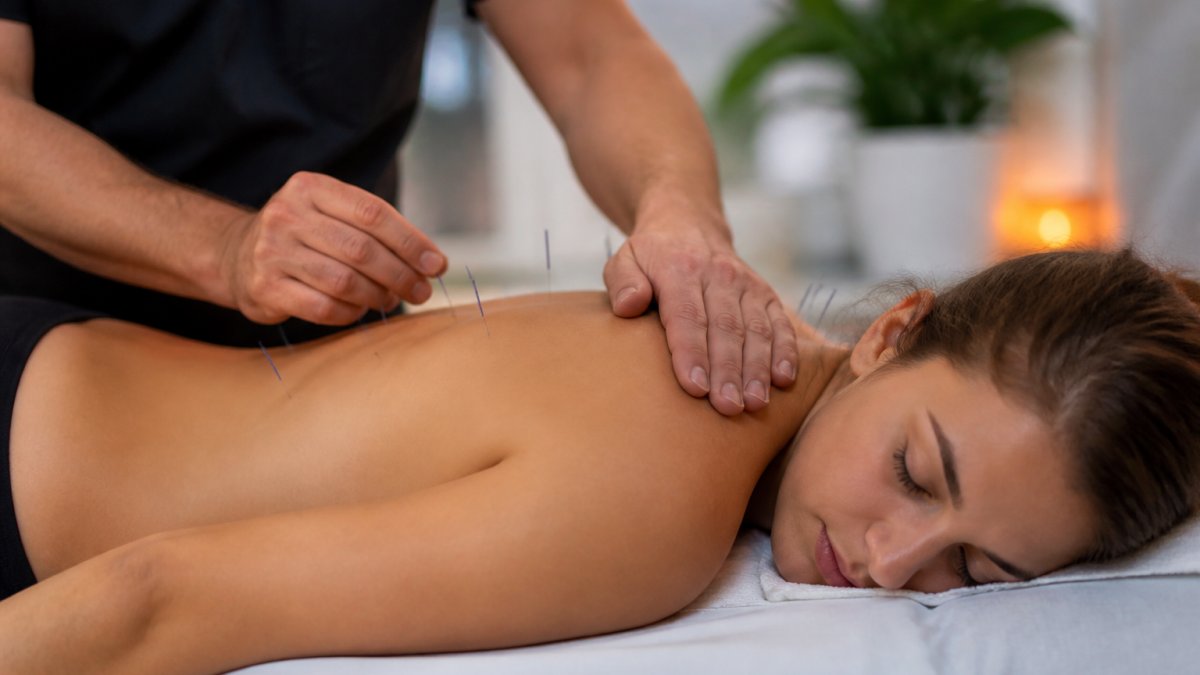
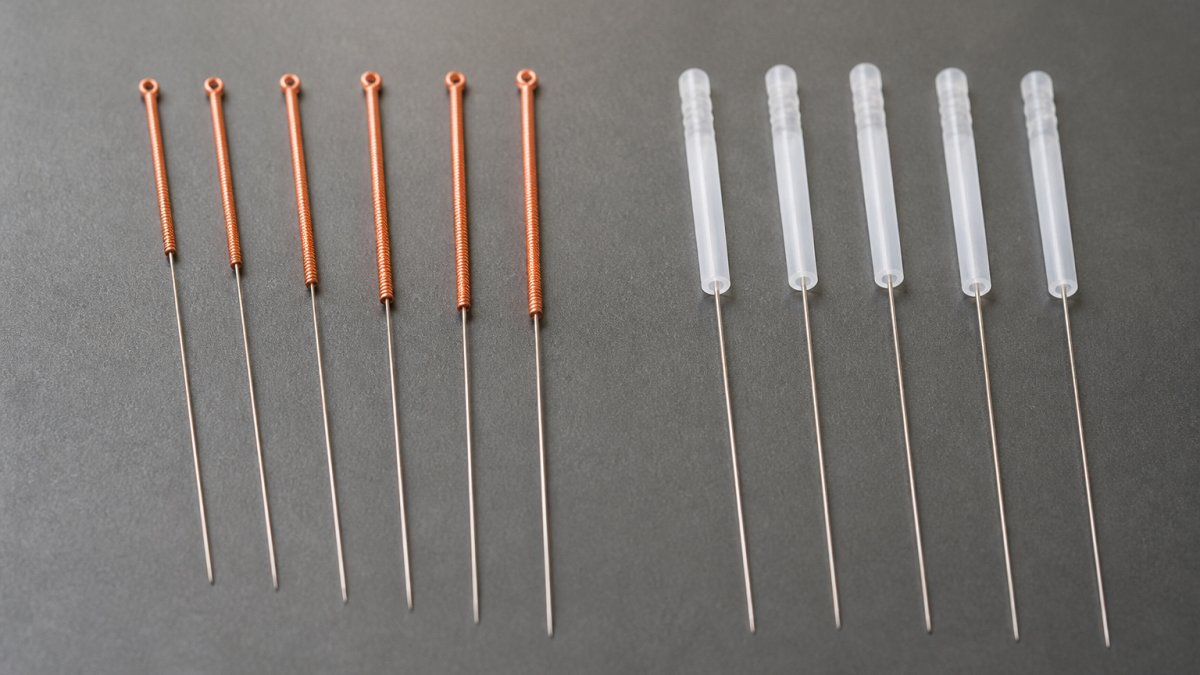
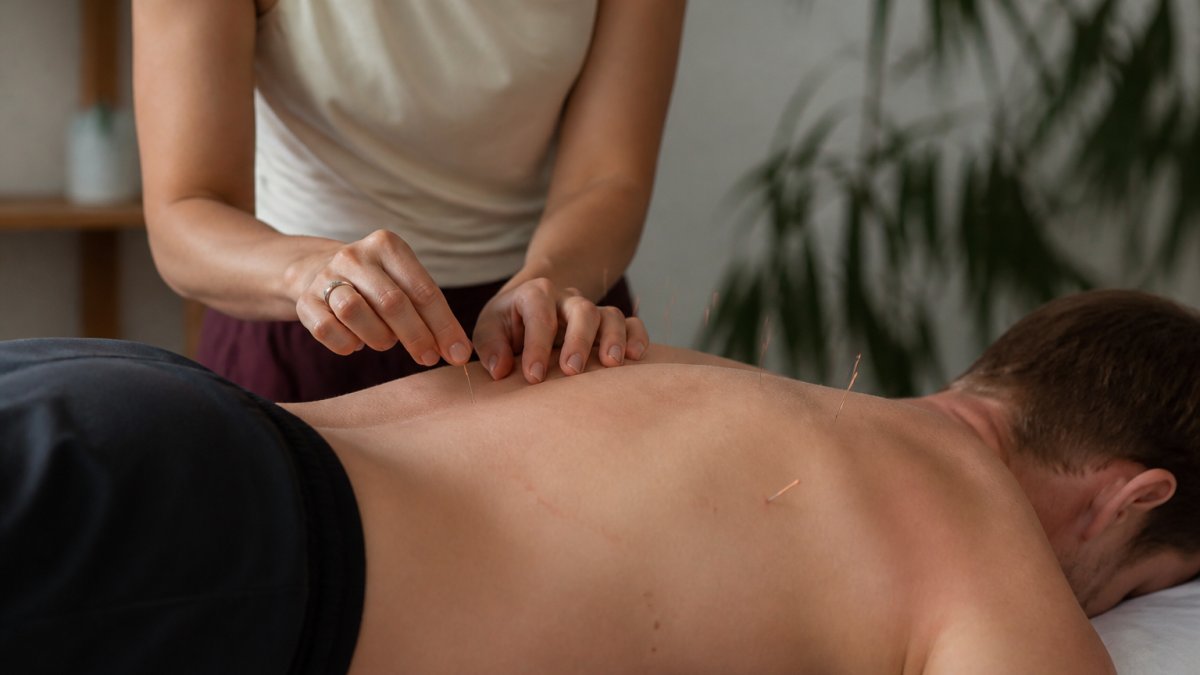
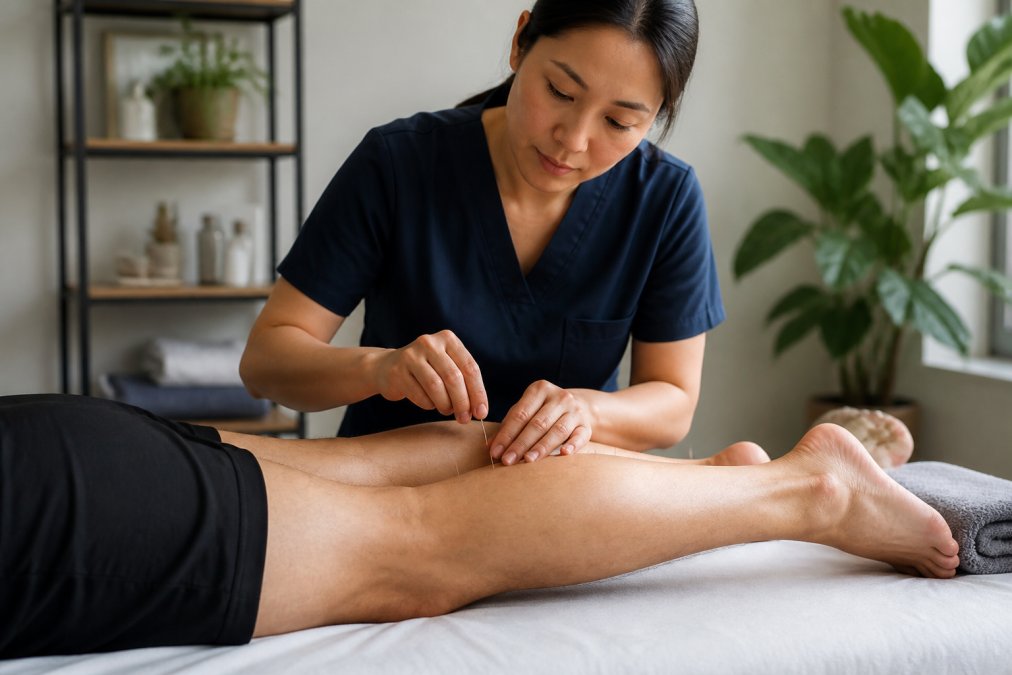
Acupuncture for sports recovery uses fine needles placed at specific acupoints to stimulate blood flow, calm overactive pain signaling, and support the body’s own repair processes. It does not erase muscle damage; it aims to improve the conditions under which that damage heals.
Blood Flow, Lymphatic Drainage, and Metabolic Waste Clearance
Needle insertion triggers a local vasodilation response, which increases cellular circulation in the treated area. Better circulation supports lymphatic drainage, the process that clears fluid and byproducts from damaged tissue.
The most common mistake is booking a session immediately after a brutal workout. Waiting 24 to 48 hours, when soreness peaks, tends to produce a more noticeable response.
What the Clinical Research Says About Acupuncture and DOMS
The question of does acupuncture help with delayed onset muscle soreness has evidence that is promising but not settled. A number of small trials report reduced muscle pain and improved recovery markers after treatment, while others find effects similar to sham treatment. The honest summary is that acupuncture appears helpful for some people, but the research base is thin enough that no one should treat it as a guaranteed fix.
Sham Treatment, Systematic Reviews, and the Evidence Gap
Sham treatment uses retractable or misplaced needles to test whether real needling does anything beyond the placebo response. Several systematic reviews of acupuncture for muscle soreness have found that real and sham groups often report similar pain relief, which suggests part of the benefit comes from expectation, relaxation, and the treatment context itself.
What the Trials Actually Measure
Most DOMS trials use a small set of outcome measures, and knowing them tells you what acupuncture can and cannot claim:
- Pain ratings: Visual analog scale (VAS) or numeric rating scale scores taken at 24, 48, and 72 hours post-exercise. This is where the strongest signals show up.
- Pressure pain threshold: A handheld algometer measures how much force a muscle tolerates before it hurts. Higher thresholds after treatment suggest reduced sensitization.
- Creatine kinase (CK): A blood marker of muscle fiber damage. CK often rises after eccentric exercise, and some trials report it peaks lower or clears faster with treatment.
- Range of motion and strength: Goniometer-measured joint angles and isometric or isokinetic strength tests track functional recovery, not just how sore you feel.
- Lactate and inflammatory markers: Less consistent across studies, and often the weakest part of the evidence base.
Why the Evidence Base Is Thin
DOMS trials share a set of limitations that explain the mixed results:
- Small samples. Many studies enroll a few dozen participants, which makes it hard to detect modest effects.
- Different protocols. Needling depth, retention time, number of sessions, and acupoint selection vary widely between studies, so results are not directly comparable.
- Timing variance. Some trials treat immediately post-exercise, others at 24 or 48 hours, which changes what is being measured.
- Sham design problems. Retractable needles still touch the skin and can trigger some of the same sensory response, which may shrink the apparent gap between real and sham groups.
- Population differences. Trained athletes and untrained volunteers respond differently to both exercise and treatment.
Where the Signal Is Stronger
Treat acupuncture as a supporting tool, not a standalone cure. The best-supported use case is reducing perceived soreness and restoring comfortable range of motion in the 24-to-72-hour window, not accelerating muscle repair on a cellular level.
If you want to read primary research yourself, search PubMed for terms like “acupuncture delayed onset muscle soreness,” “acupuncture eccentric exercise,” and “acupuncture creatine kinase” to see how the study designs differ before drawing conclusions from any single paper.
Acupuncture vs Massage for Muscle Soreness
Acupuncture and massage both target muscle recovery, but they work differently. Massage applies direct mechanical pressure to soft tissue, which makes it effective for myofascial release and immediate tightness. Acupuncture works through needling at acupoints to influence circulation and pain signaling, which some athletes find more effective for deeper, longer-lasting soreness.
| Factor | Acupuncture | Massage |
|---|---|---|
| Primary action | Needling at acupoints | Mechanical tissue pressure |
| Best for | Deep, persistent soreness | Surface tightness, knots |
| Typical session | 20-40 minutes | 30-60 minutes |
| Sensation | Heavy, dull, relaxing | Firm pressure, sometimes tender |
| Frequency for recovery | 1-2 sessions per week | 1-2 sessions per week |
How Acupuncture Compares to the Other Recovery Tools You Are Already Using
Most recovery decisions are not acupuncture versus massage. They are acupuncture versus whatever is already in your gym bag. Here is how it stacks up against the four modalities athletes most commonly reach for.
A Practical Stacking Order
If you are building a recovery routine rather than choosing one tool, a common pattern looks like this:
- Immediately post-training: Cool down, hydrate, and use a foam roller or compression boots if you have them.
- First few hours: Cold plunge or ice if you are managing acute inflammation, not if you are trying to maximize hypertrophy.
- 24 to 48 hours: Acupuncture or massage, when soreness peaks and circulation-focused treatment has the most to work with.
- Throughout: Sleep, protein intake, and light movement do more for recovery than any single modality on this list.
The athletes who get the most from acupuncture are not replacing their other tools with it. They are slotting it into the window where the other tools are least effective, the 24-to-72-hour soreness peak.
Cost and Access Considerations
Massage, foam rolling, and compression are largely self-administered and cost nothing beyond the initial purchase. Acupuncture requires a licensed practitioner, a scheduled appointment, and typically a per-session fee, though many plans include some coverage for acupuncture when it is billed for pain management. That cost difference is the real reason most athletes treat acupuncture as a periodic intervention rather than a daily habit, and why timing it to the soreness peak matters more than doing it often.
How to Treat DOMS After Lifting: A Practical Approach
Treating DOMS after lifting works best as a stacked routine, not a single intervention. The athletes who recover fastest generally combine light movement, hydration, sleep, and one or two targeted therapies rather than chasing a miracle fix.
A practical weekly structure looks like this:
- Day 0 (training day): Cool down, hydrate, and eat protein within a couple of hours.
- Day 1: Light walking or easy cycling for 10-20 minutes to stimulate blood flow without adding load.
- Day 2 (peak soreness): Book acupuncture or massage if soreness is limiting movement.
- Day 3: Reassess. If pain is fading, resume light training. If it is not, extend recovery.
- Day 4+: Return to normal training load once joint mobility and pain threshold are back to baseline.
Timing Your Session Around Training
The best time for acupuncture is 24 to 48 hours after intense exercise, when soreness peaks and the tissue is most receptive to circulation-focused treatment. Booking a session immediately before a heavy lift offers little recovery benefit and may leave you feeling relaxed rather than primed.
Skip acupuncture on an area with an active infection, open wound, or recent injury that has not been evaluated. Needling near damaged tissue can worsen inflammation rather than help it.
Safety, Contraindications, and Who Should Skip It
Acupuncture is generally well tolerated when performed by a licensed practitioner using sterile, single-use needles. Common side effects are minor: small bruises, brief soreness at needle sites, and occasional lightheadedness during treatment.
- Anyone taking blood-thinning medication
- People with a bleeding disorder
- Pregnant individuals, particularly in the first trimester
- Anyone with a pacemaker, for certain electroacupuncture protocols
- People with active skin infections at the intended needle site
Frequently Asked Questions
How do I get rid of delayed onset muscle soreness?
Most DOMS resolves on its own within 72 hours. In the meantime, light movement, hydration, sleep, and gentle massage can ease symptoms. Acupuncture is one option that some athletes use to manage pain during that window. A small body of research suggests it may reduce soreness markers and support blood flow to tired muscles, though results vary. If soreness lasts beyond a week or comes with swelling or dark urine, see a physician.
Is acupuncture or massage better for tight muscles?
They work differently. Massage applies direct mechanical pressure to muscle tissue, which many people find immediately relaxing. Acupuncture uses fine needles at specific points to influence blood flow, pain signaling, and the nervous system. For general tightness, massage is often the faster feel-good option. For recurring soreness tied to training loads, acupuncture for soreness may address the underlying pattern over several sessions. Some athletes combine both.
When is acupuncture not recommended for muscle recovery?
Avoid acupuncture if you have an active infection, a bleeding disorder, or are on blood-thinning medication without your doctor’s clearance. Skip it over broken skin, bruises, or suspected muscle tears. If you are pregnant, have a pacemaker, or are receiving cancer treatment, talk to your physician first. A licensed practitioner will screen for these before treatment. Always disclose your full health history and medications.
Can acupuncture be used as a preventative measure for muscle soreness?
Some athletes schedule sessions before intense training blocks or competition to support recovery capacity. The idea is to keep circulation and nervous system regulation steady rather than waiting for soreness to peak. Research on prevention specifically is limited. If you want to try it, book a session 24 to 48 hours before a heavy training day and track how you feel over the following week.