Table of Contents
- What Are Somatic Exercises and How They Work for Chronic Stress
- 1. Diaphragmatic Breathing: Foundation for Nervous System Regulation
- 2. Progressive Muscle Relaxation for Deep Tension Release
- 3. Body Scanning and Interoception Awareness
- Somatic Exercises for Anxiety: Grounding and Sensory Techniques
- Vagus Nerve Stimulation Exercises for Stress Management
- Getting Started: Common Mistakes to Avoid and Building Your Practice
- How Professional Support Enhances Your Somatic Practice
- Frequently Asked Questions
Last Updated: September 18, 2026
What Are Somatic Exercises and How They Work for Chronic Stress
Somatic exercises are mind-body practices that use conscious movement, breathwork, and body awareness to regulate your nervous system and release chronic tension. Unlike traditional exercise, which focuses on fitness outcomes, somatic exercises target the connection between your mind and body to calm the fight-or-flight response and activate parasympathetic activation, your body’s natural relaxation state.
Chronic stress keeps your nervous system in a heightened state. Your muscles tighten, your breathing becomes shallow, and your body stays locked in survival mode. Somatic exercises interrupt this cycle by teaching you to notice what tension feels like and consciously release it. The practice rewires how your body responds to stress, not just in the moment but over time.
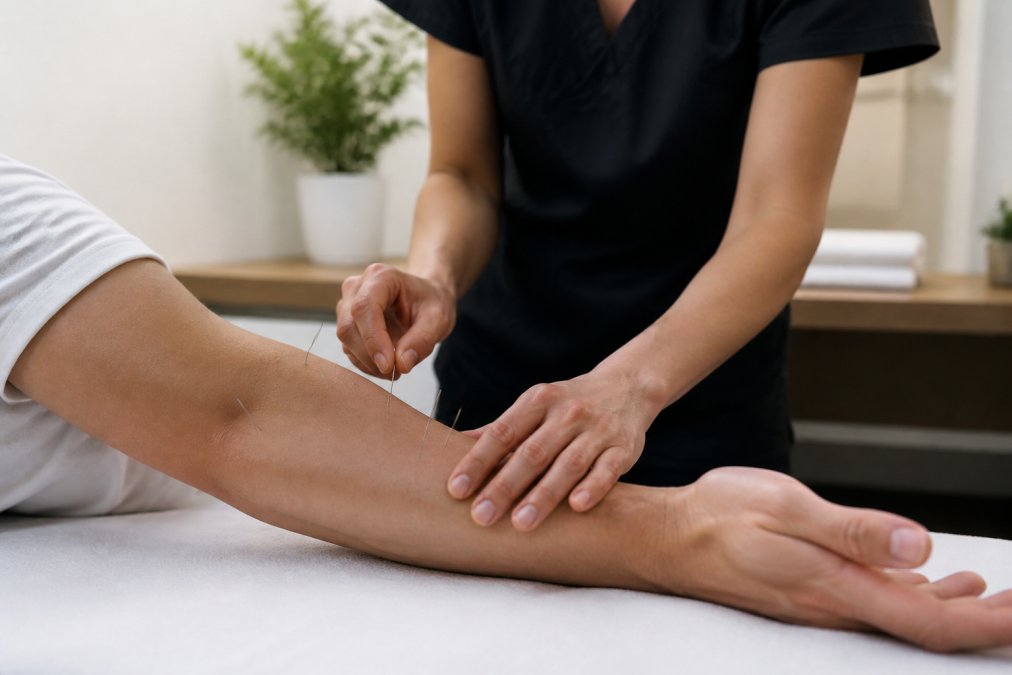
At Source Acupuncture, we’ve seen firsthand how somatic awareness transforms stress management. When combined with acupuncture and other therapeutic modalities, these exercises accelerate nervous system regulation and help clients break free from the grip of chronic tension. Research from the American Psychological Association on somatic therapies confirms that body-based interventions significantly reduce cortisol levels and improve overall stress resilience.
The 5 best somatic exercises for chronic stress work because they address root causes rather than symptoms. They teach interoception, the ability to sense what’s happening inside your body, and give you practical tools to use anytime stress rises.
1. Diaphragmatic Breathing: Foundation for Nervous System Regulation
Diaphragmatic breathing is the single most accessible somatic exercise. It’s the foundation because it directly activates your parasympathetic nervous system, the branch responsible for rest and recovery. When you breathe deeply into your diaphragm, your vagus nerve signals your body that it’s safe to relax.
Most people breathe shallowly into their chest, especially under stress. This shallow breathing keeps your nervous system activated. Diaphragmatic breathing reverses that pattern. You breathe slowly and deeply, allowing your belly to expand rather than your chest. This simple shift sends a powerful signal: threat has passed.

How to practice diaphragmatic breathing:
- Sit or lie down in a comfortable position
- Place one hand on your chest and one on your belly
- Inhale slowly through your nose for a count of 4, letting your belly expand (not your chest)
- Hold the breath for a count of 4
- Exhale slowly through your mouth for a count of 4
- Pause for a count of 4 before the next inhale
- Repeat for 5-10 minutes
This 4-4-4-4 pattern is called box breathing. It’s simple enough to use anywhere, at your desk, in your car, before a difficult conversation. Many people notice a shift in their stress level within minutes.
The key is letting your belly move, not your chest. Place your hands there to feel the difference. If only your chest moves, you’re still in shallow breathing mode. Adjust until your belly expands on the inhale.
2. Progressive Muscle Relaxation for Deep Tension Release
Progressive muscle relaxation (PMR) teaches your body the difference between tension and relaxation. You systematically tense and then release different muscle groups, building awareness of where you hold stress and training your muscles to let go.
Chronic stress lives in your muscles.
How to practice progressive muscle relaxation:
- Start with your feet. Tense the muscles in your feet for 5 seconds, then release
- Move to your calves. Tense for 5 seconds, release
- Continue upward through your thighs, glutes, lower back, abdomen, chest, hands, arms, shoulders, neck, jaw, and face
- With each muscle group, notice the difference between tension and relaxation
- After releasing, pause for 10-15 seconds before moving to the next group
- Complete the full sequence in 15-20 minutes
Avoid PMR if you have muscle injuries or conditions like fibromyalgia where tensing muscles increases pain. In those cases, focus on gentle body scanning instead.
3. Body Scanning and Interoception Awareness
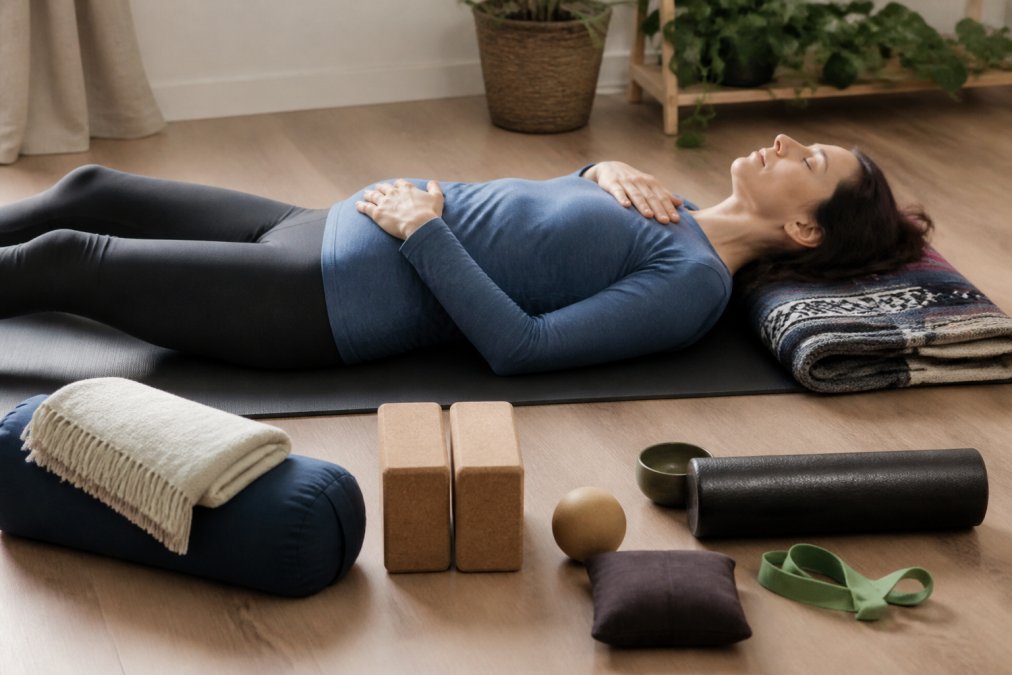
Body scanning is a foundational somatic awareness practice. You move your attention through your body systematically, noticing sensations without trying to change them. This builds interoception, your ability to sense internal states, which is essential for nervous system regulation.
How to practice body scanning:
- Lie down in a quiet space with minimal distractions
- Close your eyes and bring attention to your toes
- Notice any sensations: tingling, warmth, coolness, tension, numbness, or nothing at all
- Slowly move your attention up through your feet, ankles, calves, knees, thighs, hips
- Continue through your lower back, abdomen, chest, upper back, shoulders, arms, hands
- Finish with your neck, jaw, face, and head
- Take 15-20 minutes for the full scan
Somatic Exercises for Anxiety: Grounding and Sensory Techniques
Anxiety activates your fight-or-flight response and disconnects you from your body. Grounding techniques bring you back to the present moment by engaging your senses. They’re portable, fast-acting, and work anywhere.
How to use 5-4-3-2-1 grounding:
- Name 5 things you can see (a lamp, a tree, your hand, a wall color, a picture)
- Touch 4 things and notice their texture (your shirt, the ground, a wall, your hair)
- Listen for 3 sounds (traffic, wind, your breathing, a hum)
- Notice 2 things you can smell (coffee, air, lotion, grass)
- Identify 1 thing you can taste (gum, your mouth, food residue)
Grounding techniques are your emergency toolkit for acute anxiety. They don’t solve underlying stress, but they interrupt the panic cycle and give you space to think clearly.
Vagus Nerve Stimulation Exercises for Stress Management
Your vagus nerve is the primary pathway for parasympathetic activation. It runs from your brain down through your body, controlling heart rate, digestion, and stress response. Vagus nerve stimulation exercises activate this nerve directly, triggering relaxation.
Vagus nerve stimulation techniques:
- Humming or singing: Hum for 30 seconds, rest, repeat 3-5 times. The vibration activates your vagus nerve directly.
- Gargling: Gargle vigorously for 30 seconds. This engages the muscles controlled by your vagus nerve.
- Cold water on your face: Splash cold water on your face or hold an ice cube against your cheek for 30 seconds. This triggers the mammalian dive response.
- Gentle neck massage: Massage the area where your neck meets your collarbone for 30 seconds on each side.
- Chanting or toning: Extend your exhales with an “om” sound, which stimulates your vagus nerve through vibration.
Getting Started: Common Mistakes to Avoid and Building Your Practice
The biggest mistake people make with somatic exercises is expecting instant transformation. These practices work, but they work through consistency. Your nervous system didn’t become dysregulated overnight, and it won’t recalibrate overnight either. Expect 4-8 weeks of regular practice before you notice significant shifts in how you respond to stress.
Common pitfalls to avoid:
- Starting with advanced techniques before mastering basics (master diaphragmatic breathing first)
- Practicing only when you’re in crisis (build the habit during calm moments)
- Expecting permanent results from one session (consistency matters more than intensity)
- Practicing in distracting environments (find a quiet space, at least initially)
- Comparing your practice to others (your nervous system is unique to you)
Building a sustainable practice:
Track your stress level on a scale of 1-10 before and after practice. This gives you concrete feedback that the practice is working, which builds motivation to continue.
How Professional Support Enhances Your Somatic Practice
While somatic exercises are self-directed, working with a qualified practitioner accelerates your progress. A therapist, acupuncturist, or somatic practitioner can assess your nervous system state, identify where you hold tension, and customize exercises for your specific needs.
| Technique | Duration | Best For | Frequency |
|---|---|---|---|
| Diaphragmatic Breathing | 5-10 minutes | Immediate stress relief | Daily or as needed |
| Progressive Muscle Relaxation | 15-20 minutes | Deep muscle tension | 3-4 times per week |
| Body Scanning | 15-20 minutes | Building interoception | 3-4 times per week |
| 5-4-3-2-1 Grounding | 2-3 minutes | Acute anxiety | As needed |
| Vagus Nerve Stimulation | 30 seconds-2 minutes | Quick regulation | Multiple times daily |
The path forward:
Frequently Asked Questions
What is the somatic response to stress and how do somatic exercises help?
When you experience chronic stress, your nervous system becomes stuck in a fight-or-flight state, creating physical tension and hypervigilance. Somatic exercises work by bringing conscious awareness to your body and releasing trapped tension through deliberate movement, breathing, and sensory focus. This activates your parasympathetic nervous system, which signals safety to your body and reduces cortisol levels. Unlike talk therapy alone, somatic exercises address the physical manifestations of stress directly, helping your nervous system return to a state of calm and regulation.
How do you reset your nervous system using somatic practices?
Resetting your nervous system involves three key steps: first, notice where you hold tension in your body through body scanning; second, use grounding techniques like the 5-4-3-2-1 sensory method to anchor yourself in the present moment; third, practice diaphragmatic breathing or gentle movement to signal safety to your vagus nerve. Consistency matters more than intensity. Even 5-10 minutes daily of these practices can shift your baseline stress response. Many people find that combining somatic exercises with professional support, such as acupuncture or somatic therapy, accelerates nervous system regulation.
Can somatic shaking help with anxiety, and how does it work?
Yes, somatic shaking (also called tremoring) is an effective technique for anxiety relief. Your nervous system naturally uses shaking to release stress after a threat passes. By intentionally allowing your body to shake or vibrate, you mimic this natural discharge process, helping to clear accumulated tension from your muscles and nervous system. This activates the parasympathetic response and reduces anxiety symptoms. Start gently with small movements and progress as comfort increases. This technique is particularly useful for people who hold anxiety in their shoulders, legs, or core.
How do somatic exercises for anxiety differ from traditional exercise like running or weight training?
Traditional exercise builds cardiovascular fitness and strength, but somatic exercises for anxiety focus specifically on interoception and nervous system regulation. While running elevates your heart rate, somatic work teaches you to notice subtle body sensations and consciously shift from sympathetic (stress) to parasympathetic (calm) activation. Somatic practices are slower, more mindful, and require internal focus rather than external performance. You don’t need equipment or fitness level; they work for anyone. Many people benefit from combining both: somatic exercises calm the nervous system, while regular cardio supports overall resilience.