Table of Contents
- What Is Vagus Nerve Stimulation (VNS) and How Does It Work?
- How VNS Affects the Nervous System and Anxiety
- Clinical Evidence: Does Vagus Nerve Stimulation Work for Anxiety?
- Vagus Nerve Exercises for Anxiety You Can Do at Home
- How to Regulate Your Nervous System with Acupuncture
- Acupuncture for Nervous System Regulation: What to Expect
- Safety, Side Effects, and Who Should Avoid VNS
- Conclusion: Is VNS Worth Trying for Anxiety?
- Frequently Asked Questions
Last Updated: September 15, 2026
What Is Vagus Nerve Stimulation (VNS) and How Does It Work?
Vagus nerve stimulation is a neuromodulation technique that delivers electrical pulses to the vagus nerve, a major cranial nerve connecting the brain to organs in the chest and abdomen. The vagus nerve carries signals between the central nervous system and the autonomic nervous system, which controls heart rate, digestion, and the body’s stress response.
VNS is used clinically for epilepsy and treatment-resistant depression. Researchers have spent years studying whether it can also reduce anxiety symptoms by influencing the same circuits that govern fear and arousal.
The vagus nerve is the longest of the twelve cranial nerves, running from the brainstem down through the neck and into the chest and abdomen. It is a two-way channel: roughly 80 percent of its fibers carry information upward from the body to the brain, a pathway known as the vagal afferents. That upward flow is what makes the nerve such an appealing target for anxiety research. Stimulating it may nudge the brain toward parasympathetic nervous system activity, the branch responsible for rest, digestion, and recovery.
You do not need to understand the neuroanatomy to evaluate VNS. You need to know what the evidence supports, what is still experimental, and where at-home techniques fit.
Cleveland Clinic overview of vagus nerve stimulation
Invasive VNS vs. Non-Invasive VNS: What’s the Difference?
The two approaches differ in how the electrical signal reaches the nerve, and that difference shapes everything from risk profile to cost.
Invasive VNS requires surgery to implant a device, called an implantable pulse generator, under the skin near the collarbone. A lead wire wraps around the cervical vagus nerve in the neck. An otolaryngologist or neurosurgeon performs the procedure, and a neurologist or psychiatrist programs the device afterward. Because it is implanted, stimulation happens continuously or on a set schedule.
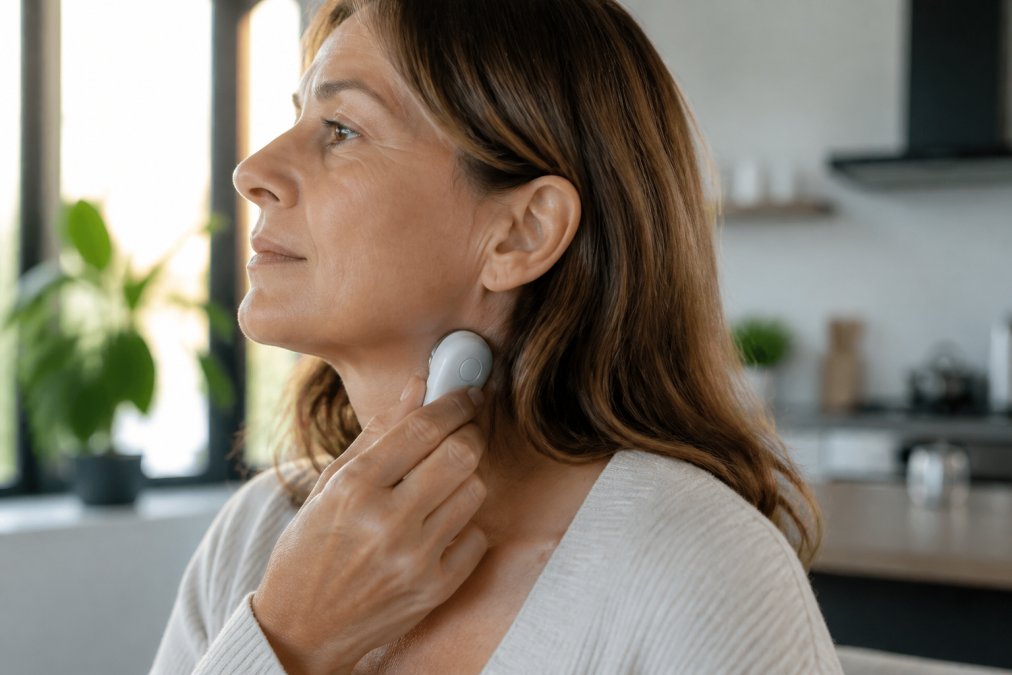
Non-invasive VNS, often called transcutaneous vagus nerve stimulation, delivers electrical pulses through the skin. The two most common placements are the auricular branch at the ear and the cervical branch at the neck. No surgery, no implanted hardware, and the user controls when stimulation happens.
| Feature | Invasive VNS | Non-Invasive VNS |
|---|---|---|
| Delivery method | Surgical implant | Skin surface electrodes |
| Who administers it | Surgeon implants, clinician programs | Self-administered or in-clinic |
| Reversibility | Requires removal surgery | Stop anytime |
| Regulatory clearance | FDA-approved for epilepsy, depression | Varies by device and indication |
| Typical use | Treatment-resistant cases | Wellness and adjunctive support |
That last row matters more than most guides admit. A device cleared for one purpose is not automatically cleared for anxiety, and marketing language often blurs that line. The FDA maintains a public database of cleared and approved devices, and it is worth checking before you buy anything marketed as “clinically proven.” FDA device classification and approval database
How VNS Affects the Nervous System and Anxiety
The autonomic nervous system runs two competing branches. The sympathetic branch drives arousal, the fight-or-flight state that produces a racing heart, shallow breathing, and a churning stomach. The parasympathetic branch, anchored by the vagus nerve, does the opposite: it slows the heart, supports digestion, and pulls the body back toward homeostasis.
Anxiety disorders are, in part, a problem of imbalance. The sympathetic branch fires too readily and the parasympathetic branch does not pull back fast enough or hard enough. Vagal tone, a measure of how well the parasympathetic system is working, tends to run lower in people with chronic anxiety. Clinicians estimate it indirectly through heart rate variability, the slight variation in time between heartbeats. Higher variability generally signals better vagal tone and stronger physiological regulation.
This is the mechanism argument for VNS in anxiety: stimulate the nerve, raise vagal tone, shift the balance back toward parasympathetic activity.
Fear Extinction and the Stress Response
The most compelling research angle concerns fear extinction, the process by which the brain learns that a once-threatening cue is now safe.
Exposure-based therapy for anxiety depends on fear extinction working properly. The brain has to encode a new, safe association and let the old fear memory fade. In some people, particularly those with treatment-resistant anxiety, that process is sluggish. The fear memory persists or returns. Emerging protocols suggest that targeted frequency therapy might help stabilize these neural pathways to facilitate more effective extinction learning.
Preclinical work has examined whether vagus nerve stimulation can strengthen fear extinction, potentially by pairing stimulation with exposure to a feared cue. The proposed mechanism involves neuroplasticity: stimulation may prime the brain to form new associations more readily, and it may influence serotonin modulation and cortisol regulation, both of which play roles in mood and stress.
Here is where caution is warranted. Much of this work is early-stage, and animal findings do not always translate to humans. The honest summary is that the mechanism is plausible and actively studied, not that it is settled. If a wellness influencer tells you VNS “rewires” your fear response, that is a hypothesis dressed up as a fact.
A common mistake is treating a plausible mechanism as proven efficacy. “It affects the nervous system” and “it treats anxiety” are different claims. The first is well established; the second is still under investigation for most non-invasive devices.
Clinical Evidence: Does Vagus Nerve Stimulation Work for Anxiety?
The honest answer is that the evidence is strongest for conditions other than anxiety, and mixed for anxiety itself.
For treatment-resistant depression, invasive VNS has FDA approval and a body of clinical trial data behind it. For epilepsy, it has been an established option for decades. Those are the two indications with the deepest evidence base.
For anxiety, the picture is more fragmented. Some studies of invasive VNS in depression have reported secondary improvements in anxiety symptoms, which is encouraging but not the same as a dedicated anxiety trial. Research into non-invasive VNS for anxiety, stress, and physiological regulation is ongoing, with small sample sizes and varied protocols. Results are suggestive rather than definitive.
The clinical literature also covers postpartum depression, where VNS has been studied as a therapeutic intervention. Again, the findings are preliminary.
What does this mean in practice? If you have severe, treatment-resistant depression, invasive VNS is a legitimate conversation to have with a psychiatrist. If you have anxiety and are considering a consumer ear-stimulation device, you are in the territory of early evidence and reasonable experimentation, not established treatment. National Center for Complementary and Integrative Health on mind-body therapies
Invasive VNS has the strongest clinical evidence, but for depression and epilepsy, not anxiety. Non-invasive VNS for anxiety is promising but unproven. Match your expectations to the evidence tier, not the marketing.
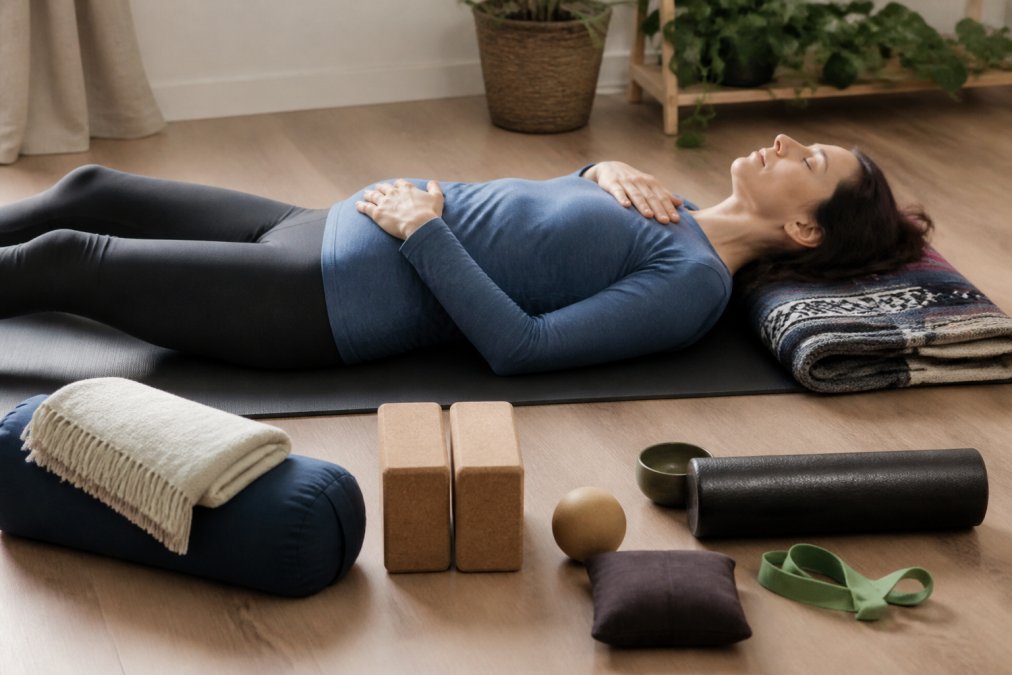
Vagus Nerve Exercises for Anxiety You Can Do at Home
You do not need a device to influence vagal tone. Several evidence-informed techniques work through the same pathway by engaging slow, controlled breathing and cold exposure.
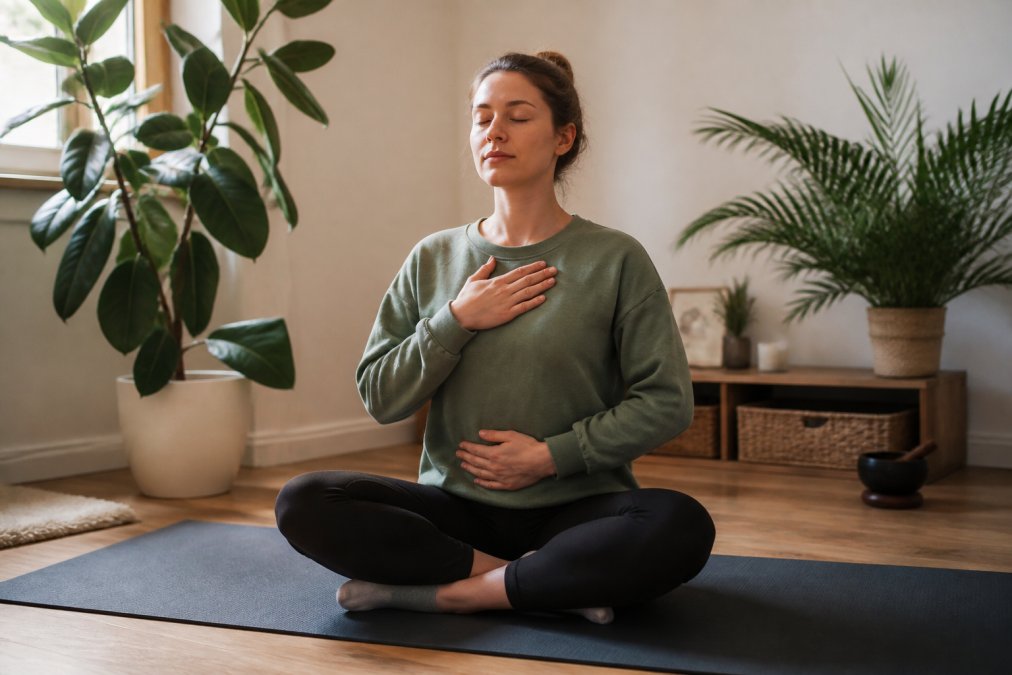
The most accessible is diaphragmatic breathing. Slow, deep breaths that expand the belly rather than the chest, with exhalations longer than inhalations, tend to shift the autonomic balance toward parasympathetic activity. A common starting point is a four-second inhale, a six-second exhale, repeated for several minutes. The extended exhale is the active ingredient; it is what most reliably slows the heart.
Cold exposure is the other main lever. Splashing cold water on the face or holding a cold pack against the cheeks triggers the mammalian dive reflex, which slows heart rate and can interrupt a spike of sympathetic arousal. This is why the technique shows up in anxiety toolkits, though the effect is short-lived and best used as a circuit breaker rather than a cure.
Humming and singing engage the muscles around the vocal cords, which are innervated by branches of the vagus nerve. It is a low-effort technique with a plausible mechanism and essentially no downside.
Biofeedback takes a different route. By watching your own heart rate variability in real time, you learn to influence it deliberately.
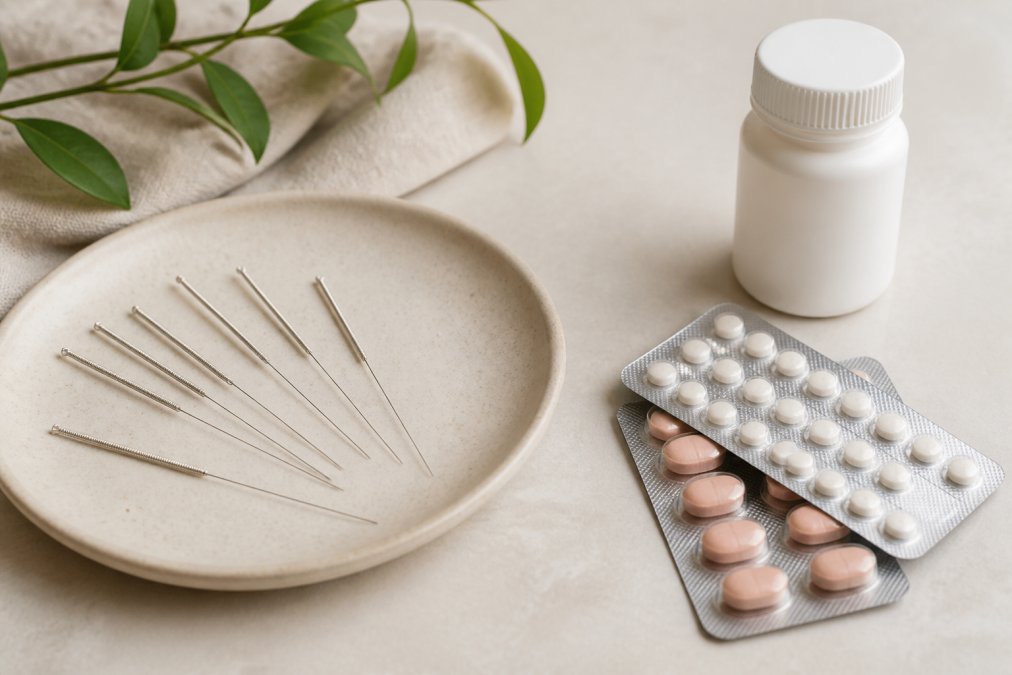
How to Regulate Your Nervous System with Acupuncture
National Institutes of Health on acupuncture research
The most common mistake with acupuncture is judging it after one session. Nervous system changes tend to accumulate. A short series of treatments, spaced consistently, gives a far clearer signal than a single appointment.
Acupuncture for Nervous System Regulation: What to Expect
Safety, Side Effects, and Who Should Avoid VNS
Conclusion: Is VNS Worth Trying for Anxiety?
Frequently Asked Questions
How do you stimulate the vagus nerve for anxiety?
You can stimulate the vagus nerve non-invasively through slow diaphragmatic breathing, cold exposure (like splashing cold water on your face), humming, or using a transcutaneous vagus nerve stimulation (tVNS) device. These methods aim to increase vagal tone and activate the parasympathetic nervous system, which can help reduce sympathetic arousal and anxiety symptoms. For a structured approach, try vagus nerve exercises for anxiety such as 5 minutes of box breathing followed by cold water exposure. Always consult a healthcare provider before starting new treatments.
How do I know if my vagus nerve is causing my anxiety?
There is no simple test to confirm that the vagus nerve is the sole cause of anxiety, but signs of low vagal tone may include poor heart rate variability (HRV), difficulty recovering from stress, and symptoms like dizziness or digestive issues. Anxiety is complex and often involves multiple factors. A healthcare professional can assess your symptoms and HRV to help determine if vagus nerve stimulation might be beneficial as part of a broader treatment plan.
Is vagus nerve stimulation FDA-approved for anxiety?
The FDA has approved invasive vagus nerve stimulation for treatment-resistant depression and epilepsy, but not specifically for anxiety. Non-invasive VNS devices are cleared for other conditions like headache and are sometimes used off-label for anxiety. Clinical trials are ongoing to evaluate VNS for anxiety. Always discuss with your doctor whether VNS is appropriate for your situation.
What are the common symptoms of vagus nerve dysfunction?
Symptoms of vagus nerve dysfunction can include anxiety, depression, digestive problems, heart rate abnormalities, and difficulty swallowing. However, these symptoms can have many causes. If you experience them, see a healthcare provider for a proper evaluation. Vagus nerve stimulation may help some people with these symptoms by improving autonomic nervous system balance.