Table of Contents
- Understanding Your Maintenance Timeline After Facial Acupuncture
- Facial Acupuncture Frequency: How Often to Schedule Professional Sessions
- Cosmetic Acupuncture Aftercare: The First 48 Hours
- Daily Skincare Routine to Support Collagen Production and Skin Elasticity
- Facial Gua Sha for Skin Tightening Between Professional Treatments
- Lifestyle and Diet Choices That Preserve Your Results
- Troubleshooting Maintenance Plateaus and Adjusting Your At-Home Protocol
- Conclusion
Last Updated: August 18, 2026
Understanding Your Maintenance Timeline After Facial Acupuncture
Facial acupuncture results require consistent maintenance to persist. The real work begins at home, where daily choices determine whether your skin maintains its vibrant complexion or gradually reverts to its pre-treatment state.
Most people experience visible improvements during their initial treatment series, but those gains require active preservation. Think of it like physical fitness: you stay strong through consistent effort between sessions. The same principle applies to maintaining facial acupuncture results at home.
The timeline breaks into two distinct phases. The first 48 hours after treatment is critical, your skin is in heightened cellular activity, and what you do directly impacts how well your skin responds. After that window closes, you enter the maintenance phase, where daily routines and lifestyle choices sustain the collagen production and skin elasticity gains from professional treatments.
At Source Acupuncture, we emphasize that maintenance isn’t optional if you want lasting results. Your practitioner stimulates collagen production through micro-trauma and dermal stimulation, but your at-home protocol determines whether that collagen persists.
Facial Acupuncture Frequency: How Often to Schedule Professional Sessions
Professional facial acupuncture sessions should typically be scheduled every 4 to 6 weeks during the maintenance phase, though frequency depends on your skin’s response and goals. This interval allows your skin to complete its cellular turnover cycle while maintaining momentum from previous treatments.
The initial treatment series usually involves weekly or biweekly sessions for 6 to 10 weeks. Once you’ve completed the series and seen desired results, you transition into maintenance mode with the 4 to 6-week schedule.
Your skin’s natural cellular turnover cycle runs approximately 28 to 40 days. Spacing treatments within this window reinforces collagen production before the skin fully stabilizes. If you wait longer than 8 weeks between sessions, results fade noticeably. If you go shorter than 3 weeks, your skin lacks adequate recovery time.
Some practitioners recommend monthly sessions as a middle ground for clients wanting visible results without the 4-week commitment. This works well for maintenance, though results progress more slowly.
Listen to your practitioner’s recommendations, they’ve assessed your specific skin condition and can advise on the frequency that best supports your goals. Consistency matters most; missing sessions randomly or going months without treatment undermines your at-home efforts.
Cosmetic Acupuncture Aftercare: The First 48 Hours
The first 48 hours after facial acupuncture are when your skin is most responsive and vulnerable. This window determines how effectively your skin heals and builds collagen in response to treatment.
Immediately after treatment, your skin will likely appear slightly flushed or show minor redness, this indicates increased circulation and your body’s recognition of the stimulus. Avoid touching your face unnecessarily during the first few hours, as your skin has tiny needle marks that are technically open channels.
For the first 24 hours, skip makeup entirely if possible. If you must wear makeup, use only clean brushes and products your skin tolerates well. Many practitioners recommend waiting at least 12 hours before applying anything to your face.
Avoid hot water, saunas, steam rooms, and intense exercise for at least 48 hours. Heat increases blood flow and can intensify inflammation beyond what’s helpful. Stick to lukewarm water for cleansing and keep workouts light, walking or gentle yoga, not high-intensity training.
Don’t apply vitamin C serums, retinoids, or other active ingredients for at least 48 hours. Your skin is already stimulated; potent actives can cause irritation. Stick to gentle, hydrating products: a simple cleanser, hydrating toner, and lightweight moisturizer.
Hydration is critical. Drink plenty of water and apply hydrating products to support your skin’s healing response.
Daily Skincare Routine to Support Collagen Production and Skin Elasticity
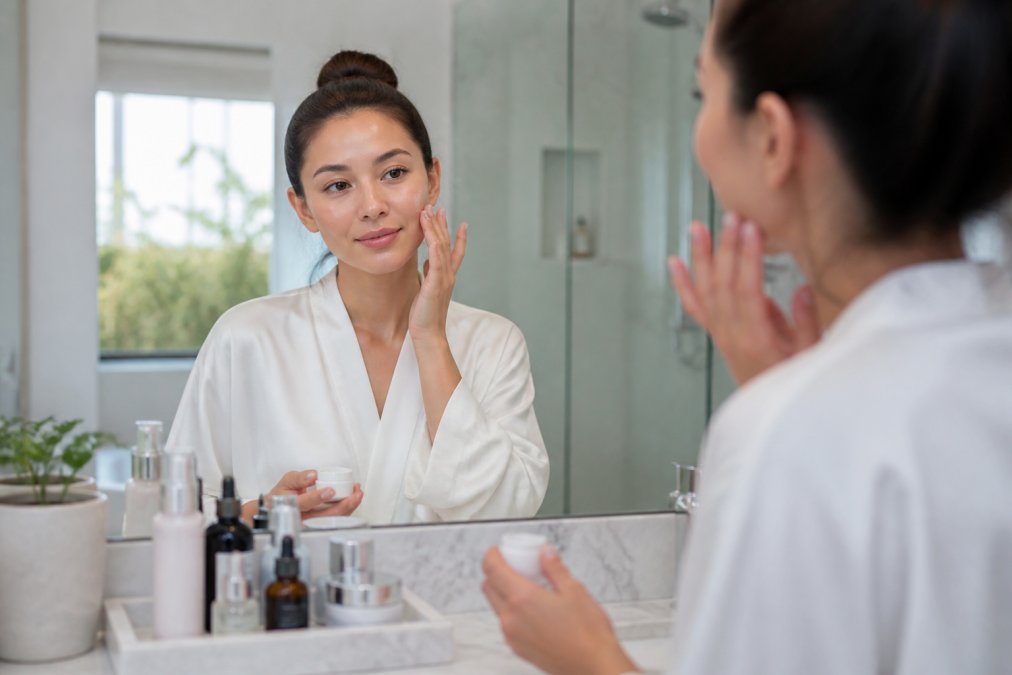
Your daily skincare routine is where maintenance happens. This isn’t about expensive products, it’s about consistency and choosing ingredients that support skin barrier health and collagen production.
Start with a gentle cleanser morning and night. Skip harsh foaming cleansers that strip your skin’s natural oils. Use lukewarm water and a cleanser that removes dirt without leaving your skin feeling tight.
After cleansing, apply a hydrating toner or essence. Look for ingredients like hyaluronic acid, glycerin, or peptides to support skin hydration and cellular function.
Next, apply a serum that supports collagen production. Vitamin C supports collagen synthesis and provides antioxidant protection. Peptide serums are another strong option, peptides signal your skin to produce more collagen. Apply while your skin is still slightly damp to maximize absorption.
Follow with a moisturizer appropriate for your skin type. Moisturizing maintains skin hydration, which is essential for skin elasticity and dermal health.
In the evening, consider adding a retinol or retinoid product if your skin is acclimated. Retinoids increase cellular turnover and support collagen remodeling. Start with a low concentration (0.3% retinol or equivalent) and use 2-3 times per week initially to prevent irritation.
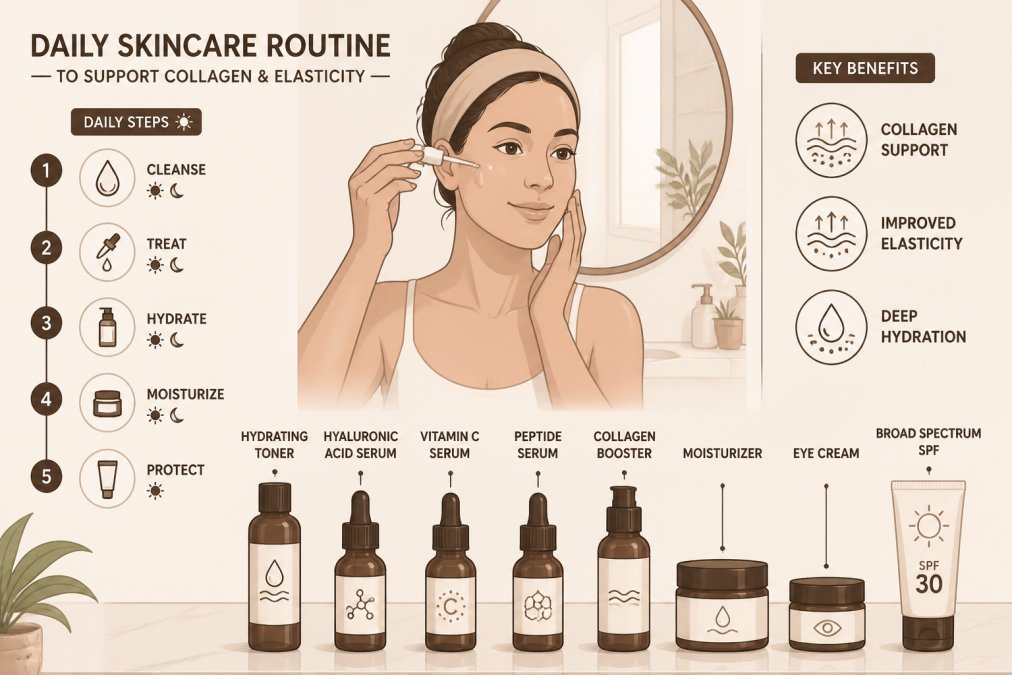
Sun protection is non-negotiable. Use a non-toxic sunscreen with SPF 30 or higher every single day, even on cloudy days. Sun exposure breaks down collagen and creates free radicals that damage skin. This single step preserves your facial acupuncture results more effectively than almost anything else you do.
| Skincare Step | Purpose | Frequency |
|---|---|---|
| Gentle cleanser | Remove impurities without stripping skin | Twice daily |
| Hydrating toner | Prepare skin for product absorption | Twice daily |
| Collagen-supporting serum | Boost collagen synthesis | Daily |
| Moisturizer | Maintain skin barrier and hydration | Twice daily |
| Retinoid (optional) | Support cellular turnover and collagen remodeling | 2-3x per week |
| Non-toxic sunscreen | Prevent collagen breakdown from UV damage | Daily |
Facial Gua Sha for Skin Tightening Between Professional Treatments
Facial gua sha is a simple, effective tool for maintaining skin tightness and supporting lymphatic drainage between professional acupuncture sessions. This ancient technique uses a smooth stone to apply gentle pressure and massage, stimulating circulation and promoting skin firmness.
Gua sha creates mild micro-trauma to the skin, similar to acupuncture but less intense. This stimulus encourages your body to increase blood flow and collagen production in response.
Use a jade or rose quartz gua sha tool. Start with a clean face and apply a light facial oil or hydrating serum to allow smooth gliding without tugging.
Begin on your neck, moving upward in gentle strokes. Use light to medium pressure. Move from the center of your neck outward and upward, performing 5-10 strokes on each side.
Move to your jawline next, gliding the tool along your jaw from center outward. This area accumulates tension and fluid, making gua sha here particularly effective for skin tightening and jawline definition.
Work on your cheeks by moving the tool from center outward toward your ears, following cheekbone contours. This supports lymphatic drainage and reduces puffiness while promoting skin elasticity.
Finish with your forehead, moving the tool from center outward and upward to release tension and support skin around frown lines.
Perform gua sha 3-5 times per week for best results. It takes about 5 minutes per session. Consistency matters more than intensity, regular, gentle gua sha is more effective than occasional aggressive sessions.
Lifestyle and Diet Choices That Preserve Your Results
Your skin doesn’t exist in isolation. Sleep, stress levels, diet, and movement patterns all directly influence collagen production, skin elasticity, and how well your facial acupuncture results hold up.
Prioritize sleep. During deep sleep, your body increases blood flow to your skin and rebuilds collagen. Aim for 7-9 hours nightly. Poor sleep increases cortisol, which breaks down collagen and impairs skin healing.
Manage stress through consistent practices. High stress elevates cortisol, triggering inflammation and accelerating collagen breakdown. Meditation, yoga, walking, or any calming practice supports your skin’s ability to maintain results.
Hydrate consistently throughout the day. Skin hydration starts from the inside. Drink water regularly and aim for at least 2-3 liters daily, adjusting for activity level and climate.
Include collagen-supporting foods in your diet. Vitamin C supports collagen synthesis, eat citrus, berries, bell peppers, and leafy greens. Protein provides amino acids for collagen building, include fish, poultry, eggs, legumes, and dairy. Omega-3 fatty acids reduce inflammation and support skin barrier health, eat fatty fish, walnuts, and flaxseeds.
Limit inflammatory foods and habits. Excessive sugar and refined carbohydrates accelerate skin aging through glycation, which damages collagen. Alcohol dehydrates skin and impairs sleep. Smoking breaks down collagen and reduces blood flow to your skin.
Consider movement as medicine. Regular exercise increases blood flow, supports lymphatic drainage, and reduces stress. Consistent moderate activity like walking, swimming, or yoga is sufficient.
Troubleshooting Maintenance Plateaus and Adjusting Your At-Home Protocol
Sometimes, despite following your maintenance routine diligently, you hit a plateau. Your skin stops improving or appears to regress slightly. This usually means your current protocol needs adjustment.
The most common cause is inconsistency. If you’re spacing professional sessions further apart than recommended or skipping days of your at-home routine, your skin isn’t receiving enough stimulus to maintain collagen production. Return to your original schedule and consistency.
If you’re consistent and still plateauing, your skin may have adapted to your current routine. Vary your approach slightly. If you’ve been using the same serum for months, switch to a different collagen-supporting ingredient. If you’ve been doing gua sha the same way, try adding a stone roller for variation.
Some people plateau because they’re not addressing underlying factors. If your sleep is poor, your diet is inflammatory, or your stress is high, no skincare will overcome these obstacles. Often, the breakthrough comes from improving sleep or reducing stress, not from adding another product.
Consider whether your skin barrier is compromised. If you’re experiencing sensitivity, dryness, or irritation, simplify your routine temporarily, cleanser, moisturizer, sunscreen only, until your skin stabilizes. Then gradually reintroduce active ingredients.
Talk to your practitioner about adjusting your professional treatment frequency. If you’ve plateaued on a 6-week schedule, moving to 4-week sessions might provide the additional stimulus your skin needs.
| Problem | Likely Cause | Adjustment |
|---|---|---|
| Results fading despite routine | Inconsistent professional sessions | Return to recommended 4-6 week schedule |
| Plateau after months of progress | Skin adapted to routine | Vary serums, tools, or techniques |
| Sensitivity or irritation | Compromised skin barrier | Simplify routine; repair barrier first |
| Minimal visible improvement | Lifestyle factors undermining results | Prioritize sleep, stress management, hydration |
| Results declining over time | Insufficient stimulus between sessions | Move to more frequent professional treatments |
Maintaining facial acupuncture results at home is entirely within your control. Your professional treatments provide the initial stimulus, but your daily choices, the products you use, consistency of your gua sha practice, sleep, diet, and stress management, determine whether those results compound or fade. At Source Acupuncture, we see the biggest transformations in clients who understand this partnership between professional care and personal responsibility. You don’t need expensive products or complicated routines. You need consistency, the right fundamentals, and the willingness to adjust when something isn’t working. The American Academy of Dermatology emphasizes that sustainable skin health comes from daily habits, not occasional treatments. Start with the basics, gentle cleansing, hydration, sun protection, and regular professional sessions, and build from there. Your skin will thank you with results that last.
Frequently Asked Questions
How often should you have facial acupuncture to maintain results?
Most practitioners recommend maintenance sessions every 4-6 weeks to sustain the benefits of your initial treatment series. The exact frequency depends on your skin goals, how your skin responds, and your lifestyle factors. During your initial consultation, your practitioner can create a personalized maintenance schedule. Consistency matters more than intensity, regular spacing helps your skin maintain improved elasticity and collagen production between sessions.
What daily habits help maintain the effects of cosmetic acupuncture?
Support your results with a consistent skincare routine using hydrating serums and non-toxic sunscreen, stay hydrated by drinking adequate water, manage stress through sleep and relaxation, and incorporate facial massage or gua sha 2-3 times weekly. Avoid excessive sun exposure, smoking, and inflammatory foods. These habits work synergistically with your professional treatments to extend the longevity of improved skin texture, reduced frown lines, and a more vibrant complexion.
Can facial massage or gua sha replace professional acupuncture sessions?
Facial massage and gua sha are excellent complementary tools for at-home maintenance, but they cannot fully replace professional cosmetic acupuncture. Professional treatments provide deeper dermal stimulation and precise acupuncture point activation that at-home techniques cannot replicate. Think of gua sha and massage as bridges between sessions, they support lymphatic drainage, skin moisture retention, and circulation, but professional sessions are needed to maintain the collagen production and cellular turnover that drive lasting anti-aging results.
How long do facial acupuncture results typically last without maintenance?
Without ongoing maintenance, initial improvements in skin elasticity and texture typically begin to fade within 4-8 weeks as your skin returns to its baseline state. The initial treatment series stimulates collagen production, but that process naturally slows without continued micro-trauma stimulation from professional sessions. Regular maintenance appointments combined with a strong at-home skincare protocol significantly extend your results and prevent regression, helping you achieve long-lasting effects rather than temporary improvements.
This article was written using GrandRanker