Table of Contents
- How TCM Approaches Bloating and Digestive Discomfort
- Acupuncture for Bloating: Mechanism and Benefits
- How Long Does Acupuncture Take to Work for Bloating
- Herbal Medicine for Bloating: Formulas and Approach
- Safety of Herbal Supplements for Gut Health
- Acupuncture vs Herbal Medicine: Which Is Right for You
- Lifestyle Adjustments to Support Your Treatment
- Conclusion
Last Updated: August 16, 2026
How TCM Approaches Bloating and Digestive Discomfort
Traditional Chinese Medicine views bloating through a fundamentally different lens than Western medicine. Rather than treating bloating as an isolated symptom, TCM practitioners assess the entire digestive system’s balance, looking at how qi (energy) flows through the gastrointestinal tract. The concept of qi stagnation, where energy becomes blocked or sluggish, sits at the center of most digestive complaints in TCM diagnosis.
When you experience abdominal fullness or chronic bloat, a TCM practitioner investigates root causes that Western medicine might overlook: weak digestive enzymes, poor gut motility, inflammation, or emotional stress affecting the parasympathetic nervous system. The Triple Burner (San Jiao) governs the movement of fluids and qi throughout the body, and when it’s out of balance, digestion suffers directly.
At Source Acupuncture, our approach combines this traditional diagnostic framework with modern understanding of how the nervous system controls digestion. We assess whether your bloating stems from weak metabolic function, stagnant qi, inflammation, or a combination of factors, then tailor treatment accordingly. This personalized approach, identifying the specific imbalance rather than applying a one-size-fits-all remedy, is what makes TCM effective for chronic digestive issues.
NIH research on Traditional Chinese Medicine mechanisms
Acupuncture for Bloating: Mechanism and Benefits
Acupuncture addresses bloating by stimulating specific points that regulate digestive function and restore healthy gut motility. The mechanism works through several pathways: acupuncture needles activate nerve fibers that signal the digestive system to increase peristalsis (wave-like contractions that move food through the intestines), reduce inflammation in the gastrointestinal tract, and restore parasympathetic nervous system dominance, the state your body needs to digest properly.

When your nervous system is stuck in sympathetic mode (fight-or-flight), digestion shuts down. Acupuncture interrupts this pattern by activating the vagus nerve, which controls parasympathetic function. This shift alone often produces noticeable improvement in bloating, gas, and indigestion within a few sessions. The blood flow enhancement that acupuncture produces also matters: better circulation means improved nutrient absorption and faster clearance of inflammatory compounds from the digestive tract.
Acupuncture Points for Stomach Bloating and Gut Motility
Specific acupuncture points for stomach bloating have been used in TCM for centuries. The most relevant points include ST36 (Zusanli), located below the knee, which strengthens digestive function and boosts metabolism. LI4 (Hegu), in the webbing between thumb and forefinger, regulates qi flow and reduces abdominal discomfort. REN12 (Zhongwan), on the midline of the abdomen, directly addresses stomach weakness and poor digestion.
A skilled practitioner combines these points into a protocol tailored to your specific presentation. Someone with qi stagnation might receive needles at different points than someone with inflammatory bloating. Additional points include CV6 (Qihai), which supports overall qi circulation, and ST25 (Tianshu), which directly regulates large intestine function.
How Acupuncture Regulates Digestion
Acupuncture regulates digestion through direct nervous system signaling and indirect effects on inflammation and blood flow. The needles activate mechanoreceptors in the skin and muscle, sending signals to the central nervous system that trigger release of neurotransmitters like serotonin and endorphins. These chemicals calm the nervous system and enhance digestive enzyme secretion.
Research shows that acupuncture increases vagal tone, the strength of parasympathetic signaling, which directly improves digestive secretions and motility. A stronger vagal response means your stomach produces more acid at the right times, your pancreas secretes digestive enzymes more reliably, and your intestines contract in coordinated waves that move food efficiently. By reducing inflammatory markers in the gastrointestinal tract, acupuncture creates conditions where the gut lining can heal and digestive function can normalize.
How Long Does Acupuncture Take to Work for Bloating
Most patients notice initial improvement in bloating within 3-5 sessions, though the timeline varies based on how long you’ve had the problem and how severe it is. Acute bloating can improve dramatically after a single session, while chronic bloating that’s persisted for months or years typically requires 8-12 sessions before you see substantial, lasting relief.
Consistency is key. Acupuncture works best when sessions are regular, typically once or twice weekly during the initial treatment phase. After the initial phase, many patients transition to maintenance sessions every 2-4 weeks to sustain improvement and prevent relapse.
Herbal Medicine for Bloating: Formulas and Approach
Herbal medicine for bloating works differently than acupuncture. Where acupuncture stimulates the nervous system and improves circulation, herbal formulas address digestive function through direct chemical action. Specific herbs warm the digestive tract, stimulate digestive enzyme production, reduce inflammation, and promote healthy gut motility.
The herbal approach requires accurate TCM diagnosis. A formula for qi stagnation looks completely different from a formula for spleen qi deficiency or damp heat accumulation. Consulting with a qualified herbal medicine practitioner, rather than self-treating with over-the-counter supplements, produces better results.
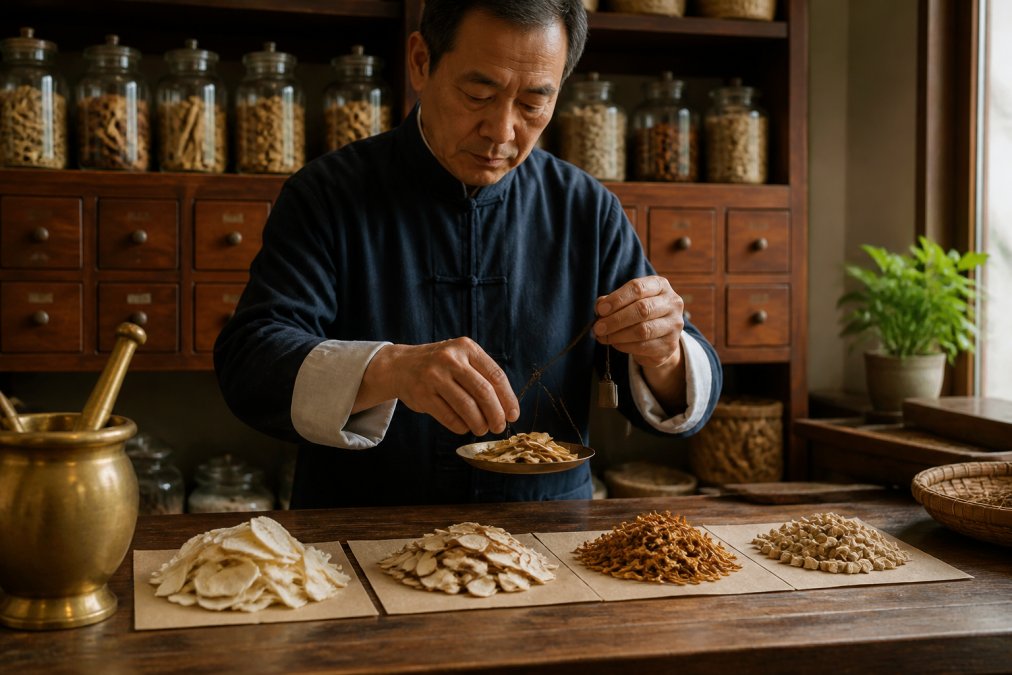
Herbal formulas typically come as decoctions (concentrated teas you brew and drink), powders, or pills. Decoctions are strongest but require daily preparation. Powders and pills are more convenient but slightly less potent. Most practitioners recommend starting with whatever form you’ll actually use consistently.
Common Herbal Formulas for Abdominal Fullness
Shun Qi Wan (Qi Flowing Pill) is commonly prescribed for qi stagnation-type bloating. It combines herbs that move qi, reduce abdominal distension, and support healthy digestive motility. This formula works best for bloating accompanied by belching, gas, or a sensation of fullness after eating small amounts.
Bao He Wan (Preserve Harmony Pill) targets food stagnation, bloating that follows overeating or consumption of hard-to-digest foods. It contains ingredients like hawthorn and radish seed that promote digestive enzyme activity.
For bloating accompanied by weakness and fatigue (suggesting spleen qi deficiency), Liu Jun Zi Tang (Six Gentlemen Decoction) is appropriate. Xiang Sha Liu Jun Zi Tang (Aucklandia and Amomum Six Gentlemen Decoction) adds additional qi-moving herbs for patients who have both qi deficiency and qi stagnation simultaneously.
These formulas typically require 4-8 weeks of consistent use before producing noticeable improvement.
Safety of Herbal Supplements for Gut Health
Herbal supplements for digestive health are generally well-tolerated when prescribed by a qualified TCM practitioner. However, safety depends on quality, dosage, and whether the herbs interact with medications you’re taking. A licensed herbal practitioner screens for contraindications, sources herbs from reputable suppliers who test for contaminants, and verifies potency.
Some herbs used for digestive support can affect medication absorption or blood clotting. Ginger can increase bleeding risk if you’re taking anticoagulants. Licorice root can affect blood pressure and interact with diuretics. These aren’t reasons to avoid herbal medicine; they’re reasons to work with a qualified practitioner rather than self-prescribing.
Pregnant individuals and those with severe liver or kidney disease should consult a healthcare provider before starting herbal treatment. Children require adjusted dosages. The safety profile of professionally-prescribed herbal formulas is excellent; problems arise almost exclusively when people self-treat with random supplements or ignore contraindications.
Acupuncture vs Herbal Medicine: Which Is Right for You?
Choosing between acupuncture and herbal medicine depends on your specific presentation, lifestyle, and what you’re hoping to achieve. Neither approach is universally superior; they excel in different contexts.
Choose acupuncture if: You have acute bloating or recent-onset digestive discomfort, you prefer not to take supplements or herbs, you want faster initial results (acupuncture often produces noticeable change within 3-5 sessions), or you have a busy schedule that accommodates weekly appointments.
Choose herbal medicine if: You have chronic, long-standing bloating that requires sustained treatment, you prefer the convenience of daily herbs over weekly appointments, you want to address underlying digestive weakness rather than just manage symptoms temporarily, or you have a lifestyle that doesn’t accommodate regular clinic visits.
The most effective strategy combines acupuncture and herbal medicine. Acupuncture rapidly shifts your nervous system state and improves circulation. Herbal medicine rebuilds your baseline digestive strength. Using both simultaneously produces faster, more complete recovery than either alone.
Many practitioners recommend starting with acupuncture to achieve quick symptomatic relief while simultaneously beginning herbal medicine to address root causes. After 4-6 weeks, you’ll have noticeable improvement and a clearer sense of whether you need ongoing treatment.
Cost and Commitment Comparison
Acupuncture typically requires weekly visits during the initial 8-12 week treatment phase, then transitions to maintenance sessions every 2-4 weeks. This means ongoing appointments and ongoing expense. Herbal medicine requires daily preparation or pill-taking but no ongoing appointments after the initial consultation. Once your practitioner establishes your formula, you can often refill it without returning for a full visit.
Rather than guessing at costs, contact practitioners in your area for specific pricing. What matters is finding a qualified, licensed acupuncturist or herbalist.
Combining Both Approaches for Optimal Results
A typical combined protocol might look like this: start with acupuncture twice weekly and herbal medicine daily for 4-6 weeks. After this initial phase, reduce acupuncture to weekly while continuing herbs. After another 4-6 weeks, transition acupuncture to every other week while evaluating whether you still need herbal medicine. By month 4-5, most people can maintain improvement with monthly acupuncture and no herbs, or herbs alone without acupuncture.
Lifestyle Adjustments to Support Your Treatment
No TCM treatment works optimally if your lifestyle continues to trigger bloating. Stress management, eating patterns, and sleep quality directly affect digestive function and determine how quickly you recover.
Stress reduction is non-negotiable. Chronic stress keeps your nervous system in sympathetic mode, which suppresses digestion. Identify what’s driving your stress and develop a realistic plan to reduce it through meditation, exercise, schedule changes, or therapy.
Eating patterns matter enormously. Eating slowly, chewing thoroughly, and stopping when 70% full prevents the overeating that triggers bloating. Eating at regular times trains your digestive system to expect food and prepare accordingly. Avoiding very cold foods and drinks supports the warming action of herbal medicine and acupuncture.
Sleep quality directly affects digestive function. Poor sleep dysregulates your nervous system and weakens digestive strength. Aim for consistent sleep timing, adequate duration (7-9 hours), and a good sleep environment.
Movement supports digestion through multiple mechanisms. Gentle exercise, walking, yoga, and tai chi activate your parasympathetic nervous system and encourage healthy gut motility. Time your workouts thoughtfully, as intense exercise immediately after eating can impair digestion.
Continuing to eat foods that trigger your bloating while receiving treatment is like trying to bail out a boat without plugging the leak. Identify which foods consistently cause problems, common culprits include dairy, wheat, raw vegetables, and high-fat foods, and minimize them during treatment. You may be able to reintroduce them later once your digestive strength improves.
Choosing between acupuncture and herbal medicine for bloating relief requires understanding how each works and what your lifestyle can support. Acupuncture produces rapid nervous system shifts that reduce bloating quickly, while herbal medicine addresses underlying digestive weakness. Most people benefit most from combining both approaches during initial treatment, then determining whether maintenance acupuncture, maintenance herbs, or neither is needed long-term.
At Source Acupuncture, we perform thorough TCM diagnosis to determine whether your bloating stems from qi stagnation, digestive weakness, inflammation, or a combination, then recommend the acupuncture, herbal, or combined protocol most likely to produce lasting relief. NIH consensus on acupuncture for gastrointestinal health supports the evidence base for both modalities.
Book a session with our licensed practitioners to assess your specific situation and create a treatment plan tailored to your bloating pattern, lifestyle, and goals. The right approach can produce dramatic improvement in weeks.
| Approach | Treatment Duration | Session Frequency | Best For | Requires Appointments |
|---|---|---|---|---|
| Acupuncture | 8-12 weeks initial | 1-2x weekly | Acute bloating, quick relief | Yes, ongoing |
| Herbal Medicine | 4-8 weeks initial | Daily (self-administered) | Chronic bloating, digestive weakness | Initial consultation only |
| Combined | 4-6 weeks initial | Acupuncture 2x weekly + herbs daily | Most chronic cases | Yes, but reduces over time |
Frequently Asked Questions
How long does acupuncture take to work for bloating relief?
Most patients begin noticing improvements in gut motility and abdominal fullness within 3-6 sessions, though some experience relief after the first treatment. Chronic bloating typically requires 8-12 sessions over 4-6 weeks for sustained results. Frequency matters: consistent weekly or bi-weekly acupuncture is more effective than sporadic visits. Your practitioner will assess your specific digestive issues and recommend a treatment timeline tailored to your condition.
Can acupuncture and herbal medicine be combined for better bloating relief?
Yes, combining acupuncture with herbal formulas often produces superior results. Acupuncture enhances gut motility and parasympathetic nervous system activation, while herbal medicine like Shun Qi Wan directly addresses qi stagnation and inflammation. Many TCM practitioners recommend this integrated approach for chronic bloating because each modality reinforces the other's effects on the gastrointestinal tract and digestive wellness.
Is herbal medicine safe for treating bloating and digestive issues?
Herbal supplements for gut health are generally safe when prescribed by a qualified TCM practitioner, but quality and sourcing matter. Look for practitioners who use standardized formulas and source herbs from reputable suppliers. Potential interactions exist with certain medications, so disclose all prescriptions to your practitioner before starting herbal treatment. Pregnant women, those on blood thinners, and people with specific allergies should consult a healthcare provider before beginning herbal therapy.
Which approach is faster: acupuncture or herbal medicine for bloating?
Herbal medicine often produces faster symptom relief, with some patients experiencing improvement within days of starting a formula. Acupuncture typically requires more sessions to show results but addresses underlying causes like qi stagnation and blood flow enhancement. For acute bloating, herbal supplements work quickly; for chronic digestive issues, acupuncture combined with herbs provides deeper, longer-lasting relief by restoring proper digestive system function.
What acupuncture points help with stomach bloating?
Key acupuncture points for bloating include Stomach 36 (Zusanli), which enhances digestive function and gut motility; Conception Vessel 12 (Zhongwan), which regulates the gastrointestinal tract; and Liver 3 (Taichong), which promotes qi flow and reduces abdominal discomfort. The Triple Burner (San Jiao) meridian is also targeted to restore proper digestive balance. Your practitioner selects specific points based on your TCM diagnosis and the root cause of your bloating.
This article was written using GrandRanker