Table of Contents
- Understanding Nervous System Dysregulation
- Deep Breathing and Breathwork to Regulate Nervous System
- Vagus Nerve Stimulation Techniques
- Nervous System Regulation Exercises and Movement
- Grounding Techniques for Immediate Regulation
- Nutrition, Hydration, and Sleep for Nervous System Health
- Building Consistency Into Your Regulation Practice
- When to Seek Professional Support
Last Updated: August 7, 2026
Understanding Nervous System Dysregulation
Your nervous system constantly evaluates threats, triggering protective responses to perceived danger, real or imagined. Modern life sends false alarms constantly: traffic, deadlines, financial stress, social conflict. Your nervous system treats these like predators, even though they pose no physical threat.
When dysregulated, your nervous system stays locked in hypervigilance, unable to shift back to rest. At Source Acupuncture in Pacific Beach, we work with clients daily who struggle with this: athletes managing post-injury tension, professionals with chronic stress, and individuals with persistent pain. The good news is that regulation requires consistency, the right techniques, and often professional support.
What Happens When Your Nervous System Is Dysregulated
When dysregulation occurs, your autonomic nervous system loses its ability to shift between states. Your sympathetic nervous system (fight-or-flight) becomes dominant, flooding your body with cortisol and adrenaline. Your heart rate climbs, breathing becomes shallow, muscles tense, and blood flow redirects away from digestion toward your limbs.
Your parasympathetic nervous system, which triggers rest-and-digest responses, gets suppressed. This system is responsible for homeostasis, recovery, and calm. When offline, your body can’t access resources needed for healing, sleep, or genuine relaxation.
Over time, dysregulation compounds. Your stress threshold lowers, smaller triggers create bigger reactions, and sleep, digestion, immune function, and chronic pain all suffer. This is a nervous system trained through repeated activation to stay in protection mode.
Common Triggers in Daily Life
Dysregulation accumulates through repeated stressors your nervous system interprets as threats: intense training without recovery, relentless deadlines, chronic pain, sudden loud noises, social conflict, financial uncertainty, lack of sleep, caffeine overuse, and anticipation of stressful events. A well-regulated system recovers within minutes; a dysregulated one may stay activated for hours or days.
Consistency in regulation practices is critical, you’re retraining your nervous system’s default settings through repeated, deliberate practice.
Deep Breathing and Breathwork to Regulate Nervous System
Breathing is the only autonomic function you can consciously control, making it one of the most direct tools for nervous system regulation. When you slow your exhale relative to your inhale, you activate the parasympathetic nervous system directly. Most people breathe shallowly from the upper chest, which reinforces the stress response. Deep, slow breathing signals safety to your nervous system.
The Physiological Sigh Technique
The physiological sigh is one of the fastest ways to downregulate your nervous system. It involves a double inhale followed by an extended exhale. The double inhale resets lung oxygen levels, while the extended exhale directly activates your parasympathetic response.
Here’s how to perform it:
- Inhale through your nose for a count of 4, then take a second smaller inhale through your nose (without exhaling between them)
- Exhale slowly through your mouth for a count of 6-8
- Repeat for 3-5 cycles
Many people report feeling noticeably calmer within 2-3 minutes. This makes it ideal for acute stress, difficult conversations, bad news, or rising anxiety. Your vagus nerve, which runs from your brainstem through your body, is responsible for activating your rest-and-digest state. Extending your exhale directly stimulates this nerve.
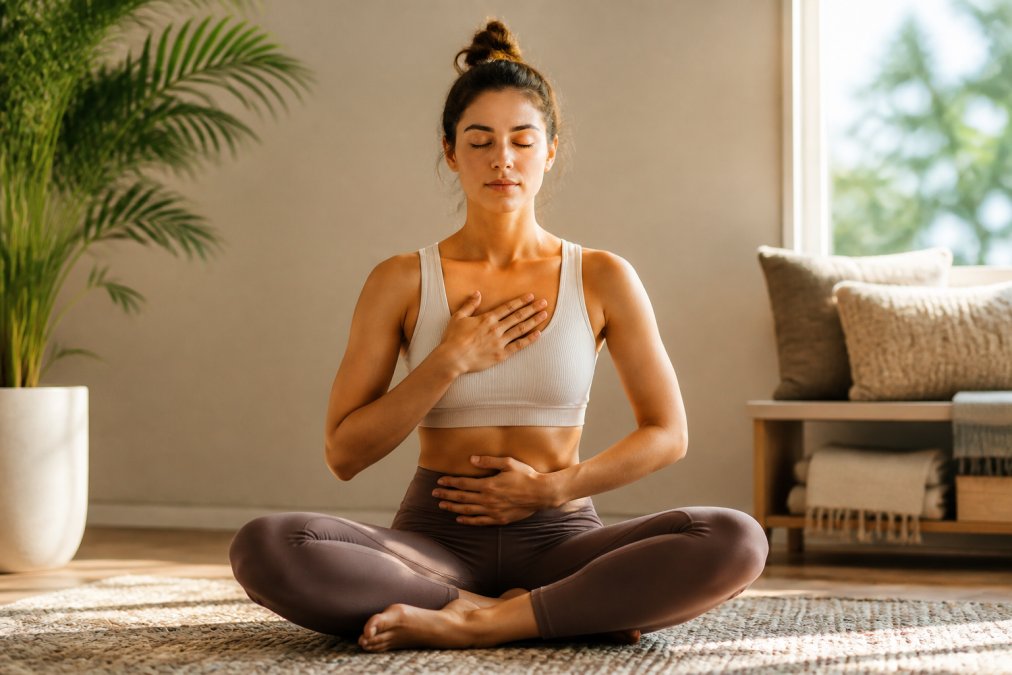
The physiological sigh works best when you feel acute stress. The double inhale is what makes it effective, don’t skip it.
Diaphragmatic Breathing for Vagal Activation
Diaphragmatic breathing, also called belly breathing, engages your diaphragm fully and is directly connected to vagal tone, your nervous system’s capacity to shift between activation and calm. Most people breathe from their chest, a shallow, stress-reinforcing pattern. Diaphragmatic breathing reverses this.
To practice diaphragmatic breathing:
- Sit or lie down comfortably
- Place one hand on your chest, one on your belly
- Inhale slowly through your nose, allowing your belly to expand (your chest hand should barely move)
- Exhale slowly through your mouth or nose
- Aim for a 4-count inhale and 6-count exhale
- Practice for 5-10 minutes daily
This technique is less dramatic than the physiological sigh but more sustainable for daily practice. You’re retraining your default breathing pattern. Over weeks of consistent practice, diaphragmatic breathing improves your baseline vagal tone, making your nervous system more resilient to stressors.
Vagus Nerve Stimulation Techniques
Your vagus nerve is the primary pathway your parasympathetic nervous system uses to calm your body. Stimulating this nerve directly shifts your nervous system toward rest and recovery. There are multiple ways to activate it, ranging from breathing techniques to cold exposure.
Cold Water Exposure and Gargling
Cold exposure is one of the most direct ways to activate your vagus nerve. When you expose yourself to cold, your body initiates a dive response, a parasympathetic reflex that slows your heart rate and redirects blood to your core, overriding sympathetic activation.
The simplest technique is the cold water plunge: immerse your face in cold water (ideally below 60°F) for 15-30 seconds. This triggers an immediate vagal response. Your heart rate will initially spike, then drop significantly. Regular practice increases your parasympathetic capacity.
For those who find full immersion too intense, cold water gargling offers a gentler alternative. Gargle with cold water for 20-30 seconds, focusing on the back of your throat where vagal nerve endings are dense. A practical approach is to end your morning shower with 30 seconds of cold water on your face and neck, then gargle with cold water. This takes 2-3 minutes total and creates powerful parasympathetic activation.
Cold exposure can be intense for people with certain heart conditions or high blood pressure. Start with shorter exposures and consult with a healthcare provider if you have cardiovascular concerns.
Humming and Vocal Techniques
Humming stimulates your vagus nerve through vibration. When you hum, you create vibrations in your throat and chest that activate vagal nerve endings. This is why singing, chanting, and humming all have calming effects.
The simplest technique is extended humming:
- Inhale through your nose
- Exhale slowly while humming, extending the sound for the full exhale
- Repeat for 5-10 cycles
The vibration directly activates your vagus nerve. You’ll often feel a tingling sensation in your throat or chest, indicating vagal activation. This technique is discrete and can be practiced anywhere, including at work or in social situations.
Nervous System Regulation Exercises and Movement
Physical movement is one of the most effective ways to process stress and reset your nervous system. When your sympathetic nervous system is activated, your body is prepared for action. If you don’t act, the activation gets stuck. Movement completes the stress cycle.
Progressive Muscle Relaxation
Progressive muscle relaxation teaches your nervous system the difference between tension and relaxation. You systematically tense and then release muscle groups, gradually moving through your entire body. This increases interoception, your ability to sense what’s happening in your body, which is foundational for nervous system regulation.
Here’s how to practice it:
- Start with your feet. Tense all muscles for 5 seconds, then release
- Move to your calves, thighs, glutes, abdomen, chest, hands, forearms, shoulders, neck, and face
- Take 20-30 minutes to move through your entire body slowly
The contrast between tension and relaxation makes the relaxation more noticeable. Your nervous system learns what relaxation actually feels like, making it easier to access that state when stressed. This practice is particularly useful before sleep and for managing chronic pain.

Somatic Practices and Body Awareness
Somatic practices focus on the mind-body connection through awareness and intentional movement. Yoga, tai chi, and qigong are all somatic practices combining slow, intentional movement with breath awareness, directly regulating your nervous system while building body awareness.
A simple somatic practice you can do daily is body scanning. Lie down comfortably and slowly move your attention through your body, noticing sensations without trying to change them. Notice where you hold tension and where you feel relaxed. This practice typically takes 10-15 minutes and creates powerful downregulation.
Somatic practices teach you to listen to your body. Over time, you become aware of early signs of dysregulation, tightness in your chest, shallow breathing, tension in your jaw, allowing you to intervene earlier.
Grounding Techniques for Immediate Regulation
Grounding techniques anchor you to the present moment, interrupting the stress response. When dysregulated, your nervous system is often caught in anticipation of future threat or rumination about past events. Grounding brings you back to now, where you’re actually safe.
The 5-4-3-2-1 technique is one of the most effective grounding methods. Identify:
- 5 things you can see
- 4 things you can touch
- 3 things you can hear
- 2 things you can smell
- 1 thing you can taste
This technique engages your sensory system, moving your attention out of your thoughts and into present-moment sensory experience. This shift alone often downregulates your nervous system.
Another powerful technique is barefoot contact with earth. Direct contact with grass, sand, or soil has been shown to reduce stress markers. Grounding works best for acute dysregulation, a quick 5-10 minute session can interrupt activation and restore your sense of safety.
Nutrition, Hydration, and Sleep for Nervous System Health
Your nervous system depends on proper nutrition, hydration, and sleep to function optimally. Dehydration alone impairs nervous system function and increases cortisol levels. Consistent hydration, aiming for half your body weight in ounces of water daily, is a simple foundation.
Sleep is non-negotiable for nervous system health. During sleep, your brain consolidates memories and clears metabolic waste, including stress hormones. Chronic sleep deprivation keeps your nervous system dysregulated. Aim for 7-9 hours nightly with consistent sleep timing.
Nutrition matters too. Your nervous system relies on specific nutrients: magnesium for relaxation, B vitamins for stress processing, omega-3 fatty acids for brain health. Focusing on whole foods, adequate protein, healthy fats, and colorful vegetables provides the micronutrient foundation your nervous system needs.
You cannot regulate your nervous system effectively while chronically sleep-deprived or dehydrated. These foundations are prerequisites for other techniques to work.
Building Consistency Into Your Regulation Practice
The single most important factor in nervous system regulation is consistency. A technique practiced daily for two weeks creates more change than the same technique practiced sporadically for two months. You’re retraining your nervous system’s default settings through repeated practice.
Start with one technique that resonates with you. Practice it daily for at least two weeks before adding another. Track your practice, a simple calendar marking off practice days reinforces your sense of agency and control.
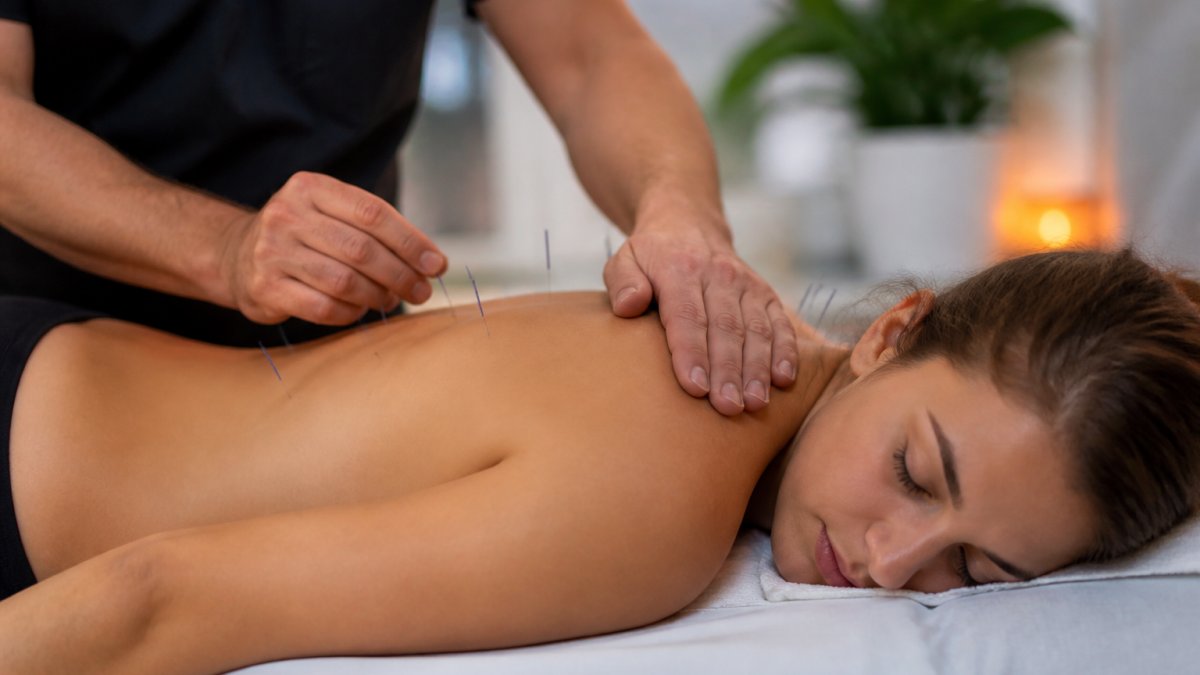
Expect 4-8 weeks before noticing significant changes in your baseline stress level. Your nervous system is remarkably adaptable, but that adaptability requires repetition. The most successful approach combines self-directed practice with professional support. Acupuncture directly influences vagal tone and parasympathetic activation, accelerating your progress when combined with daily regulation practice.
When to Seek Professional Support
Self-directed regulation techniques are powerful but aren’t a replacement for professional care when dysregulation is severe. If you’re experiencing persistent anxiety, panic attacks, chronic pain, or sleep disturbance that doesn’t improve with consistent practice over 4-6 weeks, professional support is warranted.
A licensed acupuncturist can assess your specific situation and recommend targeted treatment.
If you’re in the Pacific Beach or San Diego area, Source Acupuncture offers personalized nervous system regulation support. Their practitioners assess your specific dysregulation patterns and recommend treatment protocols tailored to your needs. Book a session to discuss how personalized treatment can accelerate your recovery.
Nervous system dysregulation is reversible. The techniques covered here, breathing, cold exposure, movement, grounding, and lifestyle foundations, are evidence-based tools that work when practiced consistently. If self-directed practice isn’t moving the needle after 6-8 weeks, or if your dysregulation is severe, Source Acupuncture provides professional support designed to restore your nervous system’s capacity to regulate.
| Technique | Duration | Best For | Frequency |
|---|---|---|---|
| Physiological Sigh | 2-3 minutes | Acute stress moments | As needed |
| Diaphragmatic Breathing | 5-10 minutes | Daily foundation building | Daily |
| Cold Water Exposure | 30 seconds | Rapid vagal activation | 3-5x weekly |
| Progressive Muscle Relaxation | 20-30 minutes | Sleep preparation, chronic tension | 3-5x weekly |
| Grounding (5-4-3-2-1) | 5-10 minutes | Anxiety interruption | As needed |
| Somatic Movement | 15-20 minutes | Body awareness and regulation | 3-5x weekly |
Busy professionals managing high-stress lifestyles who need accessible, consistent nervous system regulation. These techniques integrate into existing routines and require minimal equipment.
The most important external sources for understanding nervous system function come from the National Institutes of Health research on the autonomic nervous system, which documents how vagal stimulation affects parasympathetic activation. Additionally, peer-reviewed research from Stanford on the physiological sigh technique demonstrates measurable reductions in stress markers within minutes of practice. For those interested in the neurobiology of cold exposure and vagal response, research on the mammalian dive response explains the mechanism behind why cold water triggers parasympathetic activation.
Frequently Asked Questions
What are the main signs of a dysregulated nervous system?
A dysregulated nervous system shows up in both body and mind. You may experience persistent anxiety, difficulty concentrating, muscle tension, racing heartbeat, digestive issues, or sleep problems. Some people feel stuck in fight-or-flight mode, while others experience fatigue and emotional numbness. Physical symptoms include trembling, headaches, or sudden temperature changes. These signs indicate your autonomic nervous system is not returning to homeostasis after stress, and regulation techniques can help restore balance.
How long does it take to regulate your nervous system with these techniques?
You can feel immediate relief from techniques like deep breathing or cold exposure within minutes. However, lasting nervous system regulation requires consistency. Most people notice meaningful improvements in stress response and emotional regulation within 2-4 weeks of daily practice. Deeper changes in vagal tone and parasympathetic activation build over months. Think of it like building a muscle: single sessions help, but consistent practice rewires your nervous system's default stress response.
Can I use nervous system regulation techniques alongside other treatments?
Yes. Breathing, grounding, and movement work well alongside professional care like acupuncture, therapy, or medical treatment. These techniques activate your parasympathetic nervous system and support your body's natural healing capacity. However, if you have diagnosed anxiety, trauma, or neurological conditions, discuss any new practice with your healthcare provider first to ensure it complements your current care plan safely.
What's the difference between sympathetic and parasympathetic nervous system activation?
Your sympathetic nervous system triggers fight-or-flight: increased heart rate, muscle tension, and stress hormone release. Your parasympathetic nervous system activates rest-and-digest: slowed heart rate, relaxation, and digestion. Most people stuck in chronic stress live in sympathetic dominance. Regulation techniques shift you back to parasympathetic activation, lowering cortisol and allowing your body to recover. Vagus nerve stimulation directly activates the parasympathetic system, which is why techniques like deep breathing and cold exposure are so effective.
This article was written using GrandRanker