
Table of Contents
- How Acupuncture Boosts the Immune System
- Acupuncture Points for Immune System Health
- Acupuncture and Inflammation: Reducing Immune Overactivity
- Traditional Chinese Medicine Immune Support Framework
- Acupuncture Benefits for Immunity: Circulation and Lymphatic Function
- Scientific Evidence and Clinical Research on Acupuncture for Immune Support
- Contraindications, Safety, and Lifestyle Synergy
- Building Your Acupuncture for Immune System Support Plan
Acupuncture for Immune System Support: A Practical Guide
Last Updated: July 24, 2026
When your immune system weakens, you’re vulnerable to seasonal colds and chronic inflammation. Acupuncture for immune system support offers a time-tested approach that works by restoring balance to your body’s natural defense mechanisms rather than simply fighting harder. This guide explores how acupuncture strengthens immunity through proven mechanisms, which acupressure points matter most, and how to integrate this ancient practice into your modern wellness routine.
How Acupuncture Boosts the Immune System
Acupuncture strengthens immunity by triggering measurable changes in your body’s regulatory systems. When a practitioner places needles at specific points, they activate nerve pathways that communicate directly with your immune organs and stress response centers.
Immunomodulation and the Autonomic Nervous System
Acupuncture adjusts your immune response by shifting your autonomic nervous system toward parasympathetic dominance. Chronic stress locks you in sympathetic overdrive, which suppresses immune function and increases inflammation. Research from National Center for Biotechnology Information shows that acupuncture stimulates the vagus nerve, a major parasympathetic pathway that directly communicates with your immune organs, including the thymus gland and lymph nodes. When your parasympathetic system activates, your body produces fewer stress hormones and allocates more resources to immune surveillance and white blood cell production.
If you’re currently under high stress, acupuncture’s immune benefits compound over time. Consistent treatment over 8-12 weeks creates lasting shifts in your autonomic nervous system baseline.
Stress Reduction and Cortisol Balance
Chronic stress suppresses immunity by elevating cortisol, which downregulates white blood cell production and shifts toward pathological inflammation. Acupuncture interrupts this cycle. Specific points like LI4 (Large Intestine 4, located in the webbing between thumb and forefinger) and GB20 (Gallbladder 20, at the base of the skull) directly reduce cortisol production when needled. As your cortisol normalizes, your immune system reallocates energy from stress response to pathogen defense, making you less susceptible to colds and faster to recover from illness.
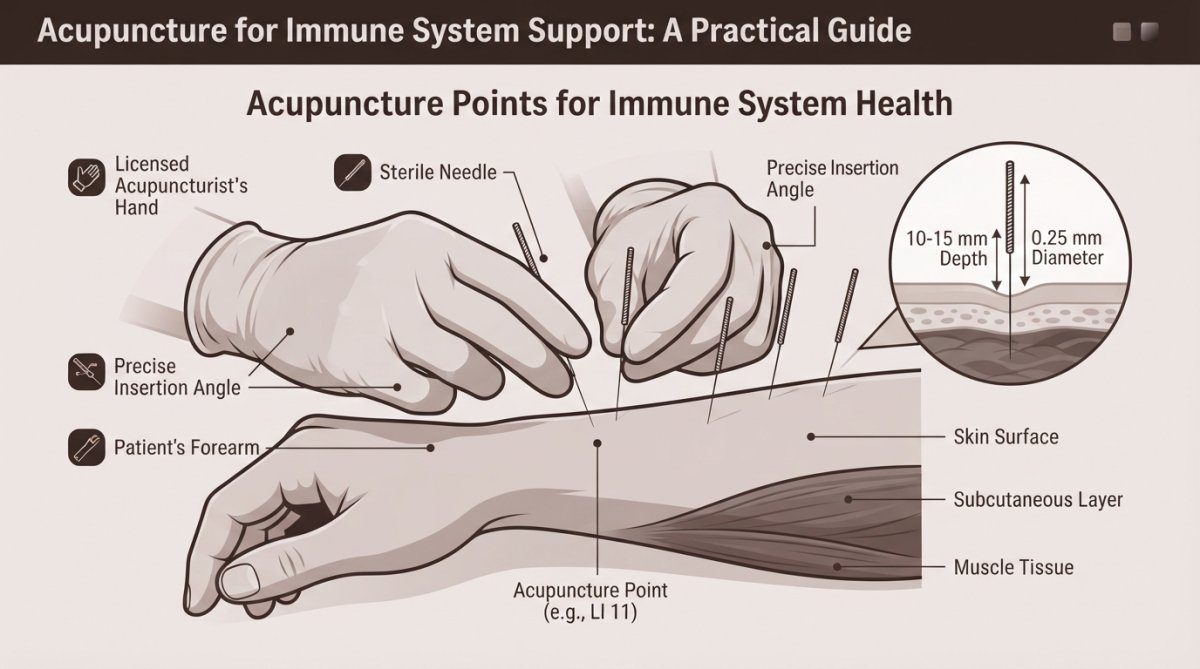
Acupuncture Points for Immune System Health
Traditional Chinese Medicine identified specific meridian points that directly activate your wei qi, your body’s defensive energy. Modern practitioners use these same points because they work.
Key Meridian Points and Their Functions
The four most important immune-supporting points are:
LI4 (Large Intestine 4) sits in the webbing between your thumb and index finger. This point regulates the entire immune response and reduces fever. Pressing it for 30 seconds when you feel illness coming on can sometimes prevent a cold from developing fully.
ST36 (Stomach 36) lies four finger-widths below the kneecap, toward the outer edge of the shin. This point strengthens digestive function and increases white blood cell production. In Traditional Chinese Medicine, a healthy digestive system is foundational to immunity.
LU7 (Lung 7) is located on your forearm, above the wrist crease on the thumb side. This point addresses respiratory immunity and helps prevent upper respiratory infections.
KI27 (Kidney 27) sits at the base of your collarbone, in the hollow just below where your collarbone meets your breastbone. This point activates the kidney meridian, which in TCM governs your foundational energy reserves.
These four points form the core of acupuncture for immune system support. Regular professional acupuncture targeting these meridian points will generate the most consistent immune benefits.
At-Home Acupressure vs. Professional Treatment
You can apply pressure to these points yourself using acupressure, firm thumb or finger pressure held for 30-60 seconds. Self-acupressure works best for maintenance and early symptom intervention. However, professional acupuncture delivers superior results because licensed acupuncturists use sterile, hair-thin needles that stimulate points more precisely and access deeper tissue layers.
At Source Acupuncture, practitioners combine acupuncture with complementary techniques like cupping and red light therapy to amplify immune benefits. Cupping increases blood circulation to remove stagnation, while red light therapy enhances cellular energy production. Expect 8-12 weekly sessions for noticeable immune improvement, then maintenance sessions every 2-4 weeks to sustain your gains.
Acupuncture and Inflammation: Reducing Immune Overactivity
Pathological inflammation, where your immune system attacks your own tissues, causes autoimmune disease, chronic pain, and accelerates aging. Acupuncture for immune system support includes the ability to calm overactive immune responses.
Anti-Inflammatory Mechanisms in TCM
Traditional Chinese Medicine views inflammation as stagnation and heat. When qi and blood don’t flow smoothly through your meridians, heat accumulates, triggering inflammatory cytokines. Acupuncture restores flow, dissipating heat and reducing inflammation at its source. Modern research confirms that acupuncture stimulates the production of anti-inflammatory neurotransmitters like endorphins and serotonin while simultaneously reducing pro-inflammatory markers like TNF-alpha and IL-6.
Cytokine Regulation and Pathological Conditions
Cytokines are chemical messengers that coordinate immune responses. When cytokine balance tips toward pro-inflammatory signals, you develop conditions like rheumatoid arthritis, inflammatory bowel disease, or chronic fatigue. Specific points like ST36 and LI4 shift cytokine profiles from inflammatory toward regulatory. This requires consistent treatment, but the shift is measurable in blood work within 6-8 weeks of regular acupuncture.
If you’re taking immunosuppressive medications for an autoimmune condition, consult your doctor before starting acupuncture. While acupuncture is generally safe alongside conventional treatment, your practitioner needs to know your medical history to avoid overstimulating an already-suppressed immune system.
Traditional Chinese Medicine Immune Support Framework
Western medicine views immunity as a system. Traditional Chinese Medicine views it as an expression of your overall energetic balance.
Qi, Meridians, and Wei Qi Defense Energy
In TCM, qi (pronounced "chee") is your body’s functional energy, the force that powers digestion, circulation, immune function, and every other physiological process. Wei qi is your defensive energy, the TCM equivalent of immunity. Wei qi circulates at the surface of your body, patrolling for pathogens and environmental threats. When wei qi is strong, you resist infection. Acupuncture strengthens wei qi by improving qi circulation overall, making your natural defenses more resilient.
Your Lung meridian governs respiratory immunity, your Spleen meridian controls white blood cell production and lymph circulation, and your Kidney meridian stores foundational energy that sustains all immune function. Acupuncture for immune system support works by optimizing flow through all these meridians.
Cold and Flu Season Prevention
Rather than waiting until you’re sick, TCM recommends preventative care during cold and flu season. Starting acupuncture treatments in September or October, before peak illness season, gives your immune system time to strengthen. A typical preventative protocol involves weekly acupuncture from October through March, targeting points that strengthen wei qi and reduce susceptibility. Many patients find that they avoid illness entirely during this period, or if they do catch something, symptoms are mild and recovery is fast.
Acupuncture Benefits for Immunity: Circulation and Lymphatic Function
Your immune system can’t work without movement. White blood cells need to circulate to patrol your body. Acupuncture enhances both blood circulation and lymphatic drainage. Studies using thermal imaging show that acupuncture increases skin temperature and blood flow in treated areas for hours after treatment. This enhanced circulation persists with repeated sessions, creating a baseline improvement in how efficiently your immune cells patrol your body. Additionally, improved blood flow delivers more oxygen and nutrients to immune organs like your thymus gland and lymph nodes, increasing immune cell production.
Scientific Evidence and Clinical Research on Acupuncture for Immune Support
Research from PubMed Central peer-reviewed studies demonstrates that acupuncture produces measurable immune changes. Studies show that acupuncture increases CD4+ T-cell counts, reduces inflammatory cytokines, and enhances natural killer cell activity. One consistent finding: acupuncture’s immune benefits require consistency. Eight to twelve weekly treatments generate lasting changes in immune function that persist for months even after treatment stops.
Acupuncture complements conventional medicine rather than replacing it. If you’re taking antibiotics or antivirals, acupuncture doesn’t interfere and may enhance recovery. If you have an autoimmune condition managed with medications, acupuncture can reduce inflammation and potentially allow medication dose reduction under your doctor’s supervision.
Contraindications, Safety, and Lifestyle Synergy
Acupuncture is remarkably safe, but it’s not appropriate for everyone, and results depend partly on what you do outside the clinic.
Who Should Avoid Acupuncture and When
Acupuncture is contraindicated if you’re taking blood thinners like warfarin or high-dose aspirin. If you have a bleeding disorder, inform your practitioner before treatment. Pregnant people should avoid certain points, though acupuncture is generally safe during pregnancy with a practitioner experienced in prenatal care. If you have an active fever above 103°F, postpone acupuncture. If you’re currently in an acute infection, acupuncture is safe but may be less effective than once you’ve stabilized.
Never stop prescribed medications because you’re starting acupuncture. Acupuncture and conventional treatment work together. Always inform your doctor and your acupuncturist about all medications and health conditions.
Dietary and Lifestyle Factors That Amplify Results
Acupuncture works better when your lifestyle supports immunity. Sleep is where your immune system does most of its work. Aim for 7-9 hours nightly. Stress management is non-negotiable; combine acupuncture with meditation or exercise. Nutrition directly fuels immune cell production. Eat adequate protein, vitamin C, and zinc. Reduce sugar and processed foods, which trigger inflammation and suppress immune function.
Building Your Acupuncture for Immune System Support Plan
For preventative care, aim for one session every 1-2 weeks for 8-12 weeks, then monthly maintenance sessions. For acute situations, weekly sessions accelerate healing. Consistency matters more than intensity. Source Acupuncture’s wellness membership program makes regular treatment affordable and removes the financial barrier to consistency.
Track what happens over your first 12 weeks. Most people notice improved energy and better sleep within 2-3 sessions. Reduced illness frequency typically appears by week 6-8.
What to Expect in Your First Session
Your first appointment will include a thorough intake about your health history, current symptoms, digestion, sleep, and stress levels. Your practitioner will examine your tongue and take your pulse. You’ll lie on a comfortable table while your practitioner locates points and inserts needles. You’ll feel a brief pinch, then nothing. The needles stay in place for 20-30 minutes while you relax. Many people fall asleep during treatment. After removal, you might feel slightly lightheaded for a few minutes, then deeply relaxed. Some mild bruising or soreness is normal and disappears quickly.
Building immunity isn’t about fighting harder, it’s about restoring balance to systems that have become dysregulated by stress, poor sleep, and inflammation. Acupuncture for immune system support addresses this at the root by calming your nervous system, enhancing circulation, and activating your body’s natural defense mechanisms. Source Acupuncture in Pacific Beach offers personalized acupuncture treatment combined with complementary therapies like cupping and red light therapy. Our practitioners conduct thorough assessments to understand your specific immune challenges and design treatment plans that deliver measurable results. Book your first session today and discover how consistent acupuncture can transform your health.
Frequently Asked Questions
How does acupuncture affect the immune system?
Acupuncture stimulates immunomodulation by activating the autonomic nervous system and reducing stress hormones like cortisol. This helps regulate white blood cells and cytokine production, strengthening your natural defense mechanisms. The therapeutic effect involves improving blood circulation and energy flow through meridians, which enhances the body's ability to respond to pathogens and maintain immune balance.
What acupuncture points are most effective for immune support?
Key acupuncture points for immunity include ST36 (Zusanli), which strengthens Wei Qi and digestive function; LI4 (Hegu), which boosts immune response; GB20 (Fengchi), which addresses wind-related pathogens; LU7 (Lieque), which supports respiratory immunity; and KI27 (Shufu), which enhances lung function. A licensed practitioner will select points based on your individual imbalances and health goals.
Can acupuncture help prevent colds and flu?
Yes, acupuncture can support cold and flu prevention through preventative care during high-risk seasons. Regular treatments strengthen Wei Qi, your body's protective energy, and improve circulation and lymphatic function. This holistic health approach enhances your natural defenses, though acupuncture works best alongside proper nutrition, sleep, and stress management for comprehensive immune support.
How often should I get acupuncture for immune system support?
For preventative care and immune wellness, most practitioners recommend weekly or bi-weekly sessions during cold and flu season, or monthly maintenance treatments year-round. Consistency matters more than frequency, regular treatment maintains steady immunomodulation and energy flow. Your specific needs depend on your health status, stress levels, and lifestyle. A professional assessment will help determine the best schedule for your goals.
This article was written using GrandRanker