Table of Contents
- Acupuncture vs Physical Therapy for Recovery: Key Differences
- What is Physical Therapy and Its Benefits for Recovery
- What is Acupuncture and How It Provides Pain Relief
- Dry Needling vs. Acupuncture in Physical Therapy Settings
- Integrative Pain Management: Combining Both Modalities
- Insurance, Costs, and Out-of-Pocket Considerations
- Condition-Specific Decision Framework for Recovery
- Choosing the Right Path: Acupuncture vs Physical Therapy
Acupuncture vs Physical Therapy for Recovery: A Complete Guide
Last Updated: July 20, 2026
When facing pain or injury, choosing between acupuncture and physical therapy often feels like choosing between two different worlds. Physical therapy operates from a biomechanical framework, fixing movement patterns and rebuilding strength through exercise. Acupuncture works through a different lens, targeting nervous system regulation and inflammation reduction. Both work and both have research backing them, but they work through fundamentally different mechanisms. Your choice depends on your specific condition, timeline, and recovery goals.
Acupuncture vs Physical Therapy for Recovery: Key Differences
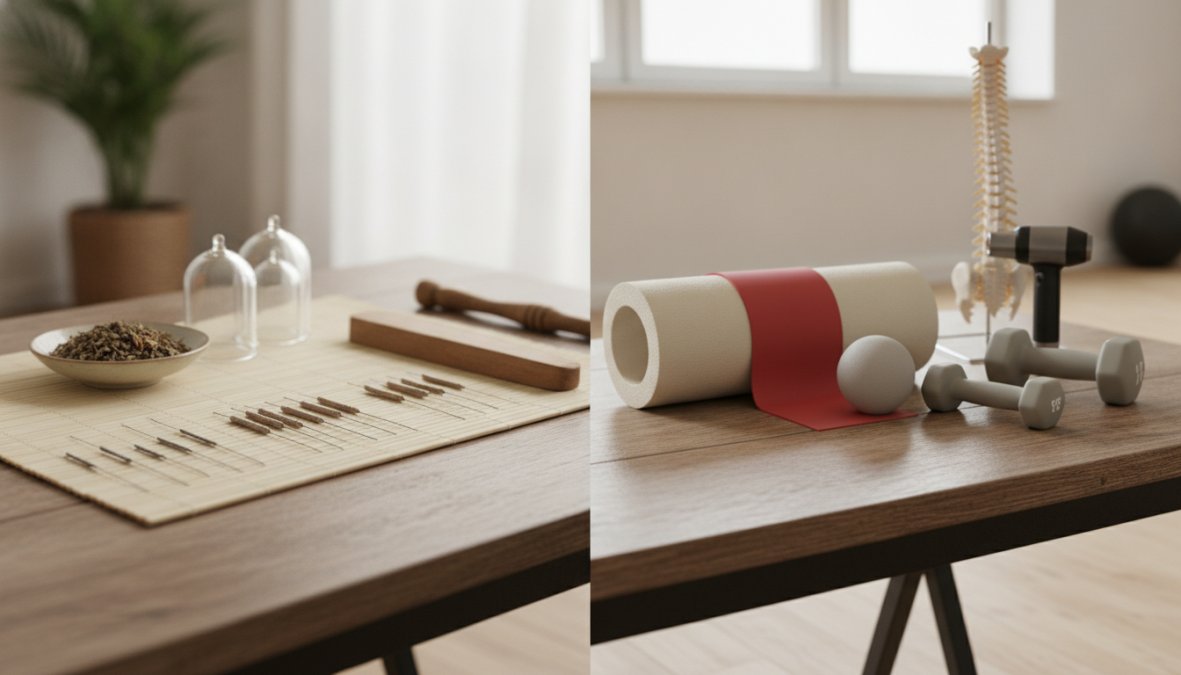
The core difference comes down to approach and mechanism. Physical therapy is active, you move, exercise, and rebuild function through repetition. Acupuncture is primarily passive, a practitioner places needles at specific points, and your body’s nervous system responds without you performing exercises.
Physical therapy addresses dysfunction at the biomechanical level. A therapist assesses movement patterns, identifies weakness or stiffness, and designs a program to correct these deficits through manual therapy and therapeutic exercise.
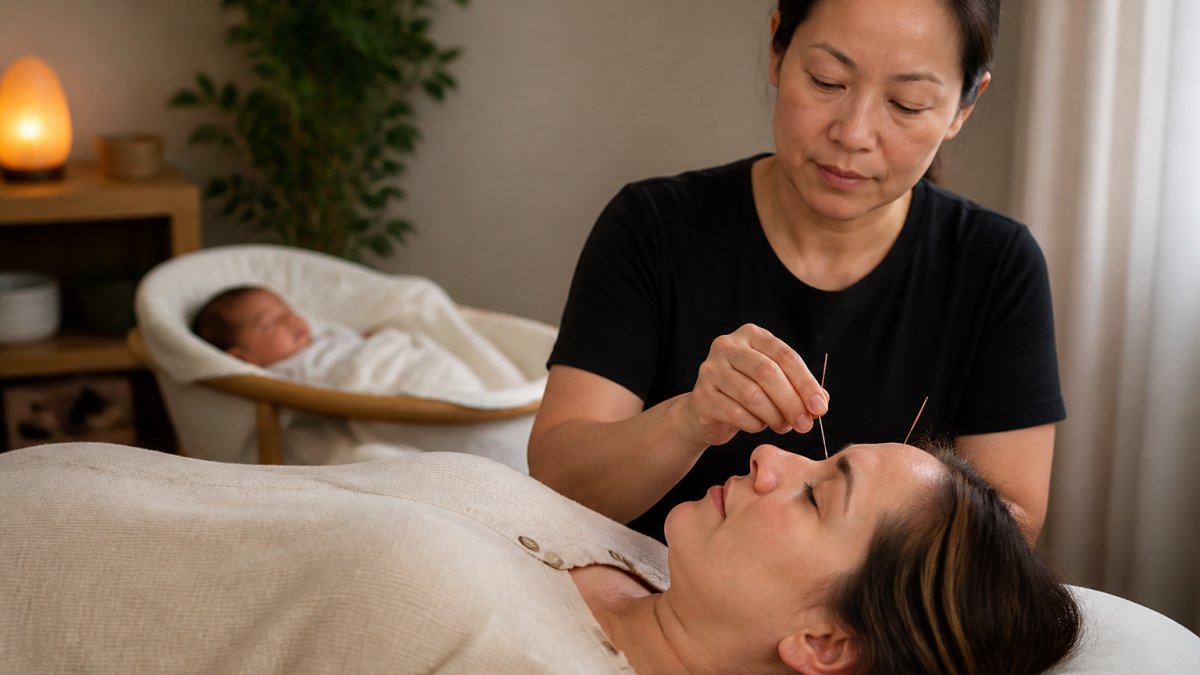
Acupuncture triggers nervous system responses that reduce inflammation, improve circulation, and modulate pain signaling. A licensed acupuncturist places thin needles at specific points, often leaving them for 15-30 minutes while your body responds.
The biggest mistake is assuming one modality works for all conditions. Acute injuries often respond faster to physical therapy’s active approach. Chronic pain frequently responds better to acupuncture’s nervous system regulation. Many conditions need both.
Biomechanical vs. Holistic Approaches
Physical therapy is rooted in Western biomechanics and orthopedic assessment. Your therapist evaluates posture, movement quality, strength, and joint mobility, then prescribes exercises to correct specific mechanical deficits. This is evidence-based practice: identify the problem, apply a targeted intervention, measure the outcome.
Acupuncture takes a holistic approach, considering your entire constitution, stress levels, sleep quality, digestion, hormonal balance, and emotional state. A shoulder pain complaint might be treated with needles placed nowhere near the shoulder, based on the practitioner’s assessment of root cause.
The practical implication: Physical therapy gives concrete, measurable progress markers. After four weeks, you should have better range of motion, increased strength, or improved movement quality. Acupuncture’s benefits often accumulate over time rather than showing up in a single session.
Treatment Duration and Frequency
Physical therapy typically requires 2-3 sessions per week for 4-8 weeks, depending on severity. Most acute injuries show progress within 1-2 weeks. Acupuncture frequency varies widely, from weekly sessions for chronic conditions to intensive protocols of 2-3 sessions per week for 4-6 weeks. Chronic pain might take 6-12 sessions before meaningful change appears.
What is Physical Therapy and Its Benefits for Recovery
Physical therapy is a clinical rehabilitation discipline using movement, exercise, and manual techniques to restore function, reduce pain, and prevent re-injury. Licensed physical therapists hold doctoral degrees and are trained in orthopedic assessment and evidence-based rehabilitation protocols.
Research shows physical therapy reduces pain, improves function, and prevents future injury more effectively than passive treatments alone. For post-operative recovery, ACL reconstruction, shoulder surgery, spinal fusion, physical therapy is the standard of care. Your surgeon fixes the mechanical problem; your PT rebuilds the strength and movement patterns that let you return to normal life.
Physical therapy is most effective for specific mechanical problems that exercise can fix: weakness, stiffness, poor movement patterns, or post-injury rehabilitation. It’s active, measurable, and you control the pace.
How Physical Therapy Supports Injury Rehabilitation
When you suffer an acute injury, physical therapy accelerates recovery by introducing controlled movement that promotes healing without re-injury. A physical therapist follows a progressive protocol: early exercises focus on gentle range of motion and isometric strengthening; as swelling decreases, the therapist adds dynamic movements and resistance; by week 3-4, you’re performing functional movements that mimic real-world activities.
The PT also addresses secondary problems injuries create. When you injure your ankle, stabilizing muscles atrophy and proprioception degrades. A good physical therapy program rebuilds all of this, not just the injured tissue.
Therapeutic Exercise and Neuromuscular Re-education
Therapeutic exercise is the core tool of physical therapy. These aren’t random gym movements, they’re carefully selected exercises addressing your specific deficits. Neuromuscular re-education retrains your nervous system to recruit muscles properly and move with correct biomechanics. Over weeks, your nervous system learns a new default movement pattern.
What is Acupuncture and How It Provides Pain Relief
Acupuncture is a traditional healing practice originating in China over 2,000 years ago that uses thin needles inserted at specific points on the body to stimulate healing responses and reduce pain. Licensed acupuncturists complete 2,000-3,000 hours of training in anatomy, physiology, and meridian systems.
From a traditional perspective, acupuncture works by unblocking qi (vital life force) flow through meridian pathways. From a modern scientific perspective, acupuncture triggers measurable nervous system changes. Needling activates sensory nerves that send signals to your brain and spinal cord, triggering endorphin release and other neurochemicals that reduce pain perception. Acupuncture also reduces inflammation by modulating immune responses and improving blood circulation.
Traditional Energy Meridians vs. Modern Nervous System Regulation
Traditional acupuncture describes 12 primary meridians and 8 extraordinary meridians, each associated with different organ systems and functions. Modern neuroscience explains how meridian-based treatment works through nervous system mechanisms. Needling an acupuncture point stimulates sensory nerves that send signals up your spinal cord to your brain, triggering endorphin release, immune modulation, blood flow changes, and nervous system rebalancing.
Whether you believe in qi or neuroscience, acupuncture produces measurable physiological changes.
Acupuncture won’t fix a mechanical problem. If your knee pain is caused by weak quadriceps, acupuncture reduces pain but won’t rebuild the muscle. You still need exercise. Acupuncture works best for pain driven by inflammation, nervous system sensitization, or stress.
Inflammation Reduction and Circulation Improvement
One of acupuncture’s primary mechanisms is inflammation reduction. Chronic pain often involves chronic inflammation, with your immune system remaining partially activated. Acupuncture downregulates this response. Studies show acupuncture reduces pro-inflammatory cytokines and increases anti-inflammatory markers.
Acupuncture also increases blood flow to treated areas and systemically. Better circulation means more oxygen and nutrients reaching damaged tissues, accelerating healing and removing metabolic waste products.
Dry Needling vs. Acupuncture in Physical Therapy Settings
Dry needling is a technique where a physical therapist inserts a thin needle directly into a trigger point, a tight, knotted area within a muscle, to release tension and reduce pain. The needle is "dry" because no medication is injected.
Dry needling and acupuncture use the same needles and similar insertion techniques, but they’re based on different theories. Dry needling is rooted in Western anatomy and trigger point theory. Both techniques appear to work, with dry needling producing immediate muscle relaxation and acupuncture producing more gradual systemic effects.
Integrative Pain Management: Combining Both Modalities
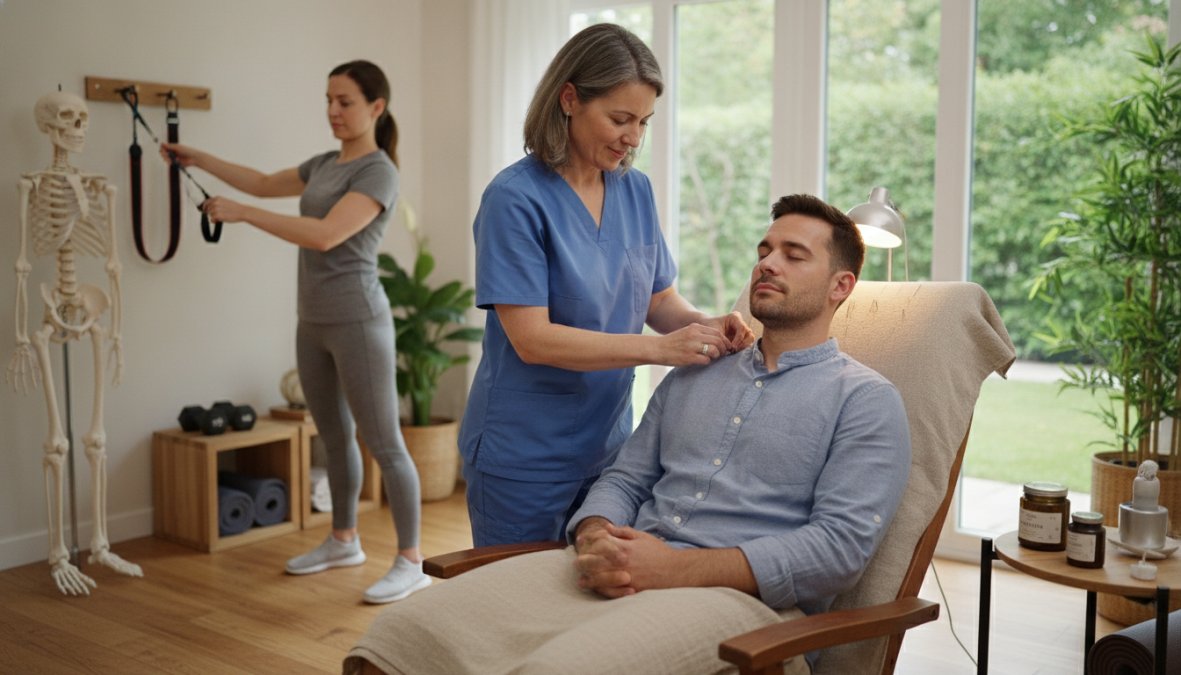
Acupuncture and physical therapy aren’t competing approaches, they’re complementary. A patient receiving both modalities often recovers faster and more completely than a patient using either alone.
Physical therapy addresses mechanical problems and rebuilds function. Acupuncture reduces pain, inflammation, and nervous system sensitization. A typical integrated protocol: a patient with chronic knee pain starts with acupuncture 1-2 times per week to reduce inflammation and pain, simultaneously beginning physical therapy 2 times per week to rebuild quadriceps strength and improve biomechanics. As pain decreases and function improves, acupuncture tapers to maintenance while physical therapy intensity increases.
When to Use Acupuncture and Physical Therapy Together
The ideal candidate for combined treatment has a chronic pain condition with both mechanical and inflammatory components. A patient with chronic shoulder pain might have weakness in rotator cuff muscles (mechanical) and joint inflammation (inflammatory). Physical therapy alone rebuilds strength but doesn’t address inflammation, so pain lingers. Acupuncture alone reduces pain but doesn’t rebuild strength, so pain returns when the patient uses the shoulder. Together, they solve both problems.
Combined treatment also works well for post-operative recovery and injury prevention in athletes.
Home Exercise Programs and Long-term Maintenance Strategies
Your physical therapist will prescribe a home exercise program, exercises you perform between sessions. A typical program includes 3-5 exercises targeting your specific deficits, performed 4-6 days per week. Consistency matters far more than intensity.
The home program evolves as you improve. By discharge, you should have a maintenance program you can do indefinitely to prevent recurrence. Once you’ve resolved acute symptoms through regular acupuncture treatment, shift to monthly or quarterly maintenance sessions. The best long-term strategy combines both: a maintenance exercise program 3-4 times per week indefinitely, plus occasional acupuncture (monthly or as-needed) for systemic support and injury prevention.
Insurance, Costs, and Out-of-Pocket Considerations
Most health insurance plans cover physical therapy when prescribed by a physician for a diagnosed condition. Your out-of-pocket cost is typically a copay per visit. Acupuncture coverage is more variable. Some plans cover it for specific conditions; others don’t cover it at all. When insurance doesn’t cover it, acupuncture is typically an out-of-pocket expense. Source Acupuncture offers a flexible wellness membership program designed to make consistent care more accessible.
Condition-Specific Decision Framework for Recovery
Your choice depends on your specific condition:
Acute injuries (ankle sprain, muscle strain, minor fracture): Start with physical therapy. These have clear mechanical problems that exercise fixes. Acupuncture can accelerate recovery and manage pain but is secondary.
Post-operative recovery: Physical therapy is mandatory. Acupuncture is optional but valuable for pain management and circulation improvement. Combined approach is ideal.
Chronic pain conditions (persistent pain lasting more than 3 months): Acupuncture is often the better starting point because chronic pain involves nervous system sensitization and inflammation. Physical therapy is valuable once pain is somewhat controlled.
Arthritis and degenerative conditions: Acupuncture is excellent for inflammation and pain management. Physical therapy is essential for maintaining range of motion and function. Both are needed.
Athletic performance and injury prevention: Acupuncture for recovery and systemic resilience. Physical therapy for strength, power, and movement optimization. Both are part of an elite athlete’s toolkit.
If your problem is mechanical (weak, stiff, poorly moving), physical therapy is primary. If your problem is inflammatory or nervous system-driven, acupuncture is primary. If it’s both, use both.
Chronic Pain, Acute Injury, and Post-operative Recovery
Chronic pain is fundamentally different from acute pain. Acute pain is your nervous system’s appropriate response to tissue damage. Chronic pain is often your nervous system’s overprotective response to a threat that no longer exists.
A patient with chronic shoulder pain has usually had imaging and assessment. Imaging might show minor arthritis or a small tear, but findings don’t explain the pain level. The real problem is nervous system sensitization. Acupuncture, which directly modulates nervous system sensitivity, is effective for chronic pain. Physical therapy is still important because you often lose strength and movement quality when protecting an area for months.
Post-operative recovery is different. In the immediate post-operative period, your goal is managing pain and protecting the repair. Acupuncture is valuable for pain management and inflammation reduction. Physical therapy begins conservatively with gentle range of motion and basic strengthening, then progresses as healing advances.
Choosing the Right Path: Acupuncture vs Physical Therapy
The decision comes down to three questions: What is your problem? How long has it persisted? What are your goals?
If your problem is a mechanical deficit, weakness, stiffness, poor movement, and it’s recent (less than 3 months), physical therapy is your answer. If your problem is pain, especially pain persisting for months despite previous treatments, acupuncture should be your starting point. If your problem is complex, chronic pain with mechanical deficits, slow post-operative recovery, or injury not responding to physical therapy alone, combine both.
Your timeline matters. Physical therapy produces faster mechanical changes. Acupuncture’s systemic benefits accumulate over weeks. Your preferences matter too. Your compliance depends partly on whether you enjoy the process.
Evidence-Based Practice and Recovery Outcomes
Both acupuncture and physical therapy have research supporting their effectiveness. Physical therapy has the strongest evidence base, with decades of research demonstrating that exercise-based rehabilitation improves outcomes for virtually every musculoskeletal condition. Acupuncture’s evidence base is growing, with research clearly showing effectiveness for chronic pain, migraines, and nausea.
The most important outcome metric is functional improvement, can you do the activities that matter to you? Recovery outcomes are best when treatment is tailored to the individual.
Choosing between acupuncture and physical therapy, or deciding whether to combine them, requires understanding what each modality does and where your specific problem lies. If you’re struggling with pain or injury that hasn’t responded to conventional treatment, the answer often isn’t "which one is better" but "how do I use both strategically." Source Acupuncture brings personalized assessment and a blend of traditional and modern techniques to create recovery plans tailored to your actual needs. With their flexible wellness membership program and licensed practitioners trained in both traditional and contemporary approaches, you can access consistent, integrated care designed for your long-term health. Book a session to discuss your specific situation and create a recovery strategy that actually works.
| Condition Type | Best Starting Point | Secondary Modality | Timeline |
|---|---|---|---|
| Acute injury (< 3 months) | Physical therapy | Acupuncture for pain | 4-8 weeks |
| Chronic pain (> 3 months) | Acupuncture | Physical therapy once pain controlled | 8-12 weeks |
| Post-operative recovery | Physical therapy | Acupuncture for pain and circulation | 6-12 weeks |
| Arthritis/degenerative | Acupuncture | Physical therapy for function | Ongoing |
| Athletic performance | Physical therapy | Acupuncture for recovery | Ongoing |
Frequently Asked Questions
What is the main difference between acupuncture and physical therapy for recovery?
Physical therapy uses therapeutic exercise, biomechanical assessment, and neuromuscular re-education to restore functional movement and strength after injury. Acupuncture works through nervous system regulation and inflammation reduction using fine needles at specific points. Physical therapy focuses on active rehabilitation and range of motion, while acupuncture emphasizes pain relief and circulation improvement. Many recovery programs benefit from combining both approaches for comprehensive care.
Can acupuncture and physical therapy be used together for recovery?
Yes, integrative pain management combining acupuncture and physical therapy is increasingly common and evidence-based. Acupuncture can reduce pain and inflammation before or alongside physical therapy sessions, making therapeutic exercise more tolerable. This combination supports faster recovery outcomes, especially for musculoskeletal injuries, post-operative recovery, and chronic pain conditions. A personalized care plan should integrate home exercise programs with regular acupuncture sessions for optimal results.
How does dry needling differ from acupuncture in physical therapy settings?
Dry needling, often performed by physical therapists, targets trigger points in muscles and soft tissue for immediate pain relief and improved range of motion. Traditional acupuncture uses energy meridian theory and nervous system regulation for broader pain management and holistic health. Both use fine needles but differ in technique, theory, and application. Some practitioners combine dry needling within physical therapy protocols, while others use traditional acupuncture separately for comprehensive integrative pain management.
Which approach is better for chronic pain, acupuncture or physical therapy?
Both have evidence-based benefits for chronic pain, but the best choice depends on your specific condition and pain threshold. Physical therapy builds strength and corrects biomechanical issues causing long-term pain, while acupuncture provides pain relief and reduces inflammation. For lasting results, many patients benefit from combining both: acupuncture for immediate symptom relief and nervous system regulation, paired with therapeutic exercise and home exercise programs for sustained functional improvement and quality of life.
How do I know which modality is right for my recovery needs?
Consider your condition type: acute injuries often benefit from immediate physical therapy to restore function, while chronic pain and post-operative recovery may start with acupuncture for inflammation reduction. An orthopedic assessment by a licensed practitioner helps identify whether your issue is biomechanical (favoring PT), pain-focused (favoring acupuncture), or both. Many practitioners recommend starting with a consultation to discuss your recovery goals, timeline, and insurance coverage before committing to either modality.
This article was written using GrandRanker