Table of Contents
- Why Natural Anti-Inflammatories Matter for Chronic Pain
- 1. Turmeric and Curcumin: The Gold Standard
- 2. Omega-3 Fatty Acids and Fish Oil
- 3. Ginger Root Extract for Joint and Muscle Pain
- 4. Boswellia Serrata: Traditional Support for Joints
- 5. Tart Cherry Extract and Antioxidant Support
- 6. Resveratrol for Oxidative Stress and Aging
- Foods That Reduce Inflammation and Pain
Last Updated: August 13, 2026
Why Natural Anti-Inflammatories Matter for Chronic Pain
Chronic pain often stems from systemic inflammation that persists long after initial injury. Conventional medications frequently cause gastrointestinal upset, dependency risks, and long-term complications. Natural anti-inflammatories target inflammation at the cellular level without these side effects, offering a more sustainable approach to pain management.
At Source Acupuncture, we’ve seen firsthand how combining natural anti-inflammatory remedies with acupuncture and red light therapy creates effective, whole-body pain management. This guide covers seven natural anti-inflammatories with specific mechanisms of action, dosage guidance, and practical implementation strategies, including bioavailability considerations and drug-supplement interactions most guides overlook.
1. Turmeric and Curcumin: The Gold Standard
Curcumin, turmeric’s active compound, inhibits TNF-alpha and IL-1, primary inflammatory cytokines. Unlike other anti-inflammatories, curcumin also functions as an antioxidant, protecting cells from oxidative stress accompanying chronic pain. For joint pain, arthritis, and muscle soreness, it addresses both inflammation and cellular damage.
The challenge is absorption. Curcumin has notoriously poor bioavailability, your body absorbs only 1-3% of standard formulations. Formulation matters enormously.
Dosage of Turmeric for Inflammation
A therapeutic dose ranges from 500-2,000 mg daily, divided into multiple doses. However, standard turmeric powder contains only 2-5% curcumin by weight. Life Extension Curcumin Elite ($24 for 30 capsules) uses enhanced bioavailability technology, delivering significantly more absorbable curcumin than standard supplements.
Start with 500-750 mg of curcumin daily with a fat-containing meal (curcumin is fat-soluble). If no changes appear within 4-6 weeks, increase to 1,000-1,500 mg daily, split between morning and evening.
Bioavailability and Absorption
Standard curcumin has roughly 1-3% bioavailability, if you take 500 mg, your body may absorb only 5-15 mg. Several strategies improve absorption:
- Combine with black pepper: Piperine increases curcumin bioavailability up to 2,000%. Many quality supplements include this.
- Use patented absorption technologies: Meriva (in Thorne Research Meriva-SF, $48 for 60 capsules) binds curcumin to lipids, dramatically improving absorption.
- Take with dietary fat: Consume supplements with olive oil, avocado, nuts, or fatty fish.
- Consider timing: Taking curcumin with meals rather than on an empty stomach increases absorption significantly.
Thorne Research Meriva-SF delivers 29 times better absorption than standard curcumin, making it valuable for those wanting results without excessive daily capsules.
Curcumin can thin blood and interact with anticoagulants like warfarin. If you’re on blood thinners, consult your healthcare provider before starting turmeric supplements. Turmeric may also interfere with diabetes medications by lowering blood sugar.
2. Omega-3 Fatty Acids and Fish Oil
EPA and DHA, the active omega-3s in fish and algae, reduce inflammatory molecules called eicosanoids, lowering systemic inflammation. Unlike turmeric’s enzyme inhibition, omega-3s work by shifting your body’s inflammatory balance, particularly effective for joint pain, rheumatoid arthritis, and muscle soreness.
A therapeutic dose is 2,000-3,000 mg of combined EPA and DHA daily. Nordic Naturals Ultimate Omega ($34.95 for 60 softgels) delivers 1,280 mg per two-softgel serving. For plant-based diets, Future Kind Vegan Omega-3 ($24.99 for 60 softgels) uses algae-derived EPA and DHA.
Expect 6-12 weeks of consistent use before noticing significant pain reduction, as omega-3s work by gradually rebalancing inflammatory state.
Omega-3s work synergistically with other natural anti-inflammatories. Combining fish oil with turmeric creates more comprehensive anti-inflammatory effects than either alone, particularly for joint pain and muscle recovery.
3. Ginger Root Extract for Joint and Muscle Pain
Ginger’s gingerols and shogaols inhibit inflammatory enzymes similarly to curcumin but with faster onset. Many report relief within days rather than weeks, making it valuable for acute flare-ups of chronic pain. Ginger is particularly effective for digestive inflammation and muscle soreness.
A therapeutic dose is 1,000-2,000 mg daily. NOW Supplements Ginger Root ($10.99 for 90 capsules at 250 mg each) is affordable but requires 4-8 capsules daily. Fresh ginger tea, steep 1-2 inches of root in hot water for 10 minutes, three times daily, is equally effective.
Ginger has minimal side effects and few drug interactions, making it safe to combine with other remedies. However, high doses have mild blood-thinning properties; discuss with your healthcare provider if you’re on anticoagulants.
4. Boswellia Serrata: Traditional Support for Joints
Boswellia serrata, used in Ayurvedic medicine for centuries, contains boswellic acids that inhibit cartilage-degrading enzymes. This makes it particularly valuable for osteoarthritis and degenerative joint conditions, targeting joint inflammation more directly than broad-spectrum anti-inflammatories.
A therapeutic dose is 300-500 mg of standardized extract (30-65% boswellic acids) two to three times daily. Gaia Herbs Boswellia ($39.99 for 60 Liquid Phyto-Caps) uses full-spectrum extract in liquid capsule form for easier absorption.
Expect 4-8 weeks of consistent use before noticing significant improvement. Boswellia has few side effects and minimal drug interactions, making it safe to combine with other remedies.
5. Tart Cherry Extract and Antioxidant Support
Tart cherry extract’s anthocyanins and flavanols reduce oxidative stress, a major driver of chronic inflammation. Unlike enzyme-inhibiting remedies, tart cherry neutralizes free radicals perpetuating inflammatory cycles. It’s particularly valuable for muscle soreness and recovery from overuse or repetitive strain.
A therapeutic dose is 1,000-1,500 mg daily. The Well Theory Tart Cherry Extract ($39.99 for 60 capsules at 1,500 mg each) delivers full therapeutic dose in a single capsule. Many notice improved recovery and reduced muscle soreness within 3-5 days.
Tart cherry has virtually no side effects and no known drug interactions, making it one of the safest options for long-term use.
6. Resveratrol for Oxidative Stress and Aging
Resveratrol, a polyphenol in grape skins and berries, functions as a potent antioxidant and activates cellular pathways associated with longevity. For chronic pain driven by aging and cellular degeneration, it addresses underlying oxidative damage perpetuating inflammation. It’s particularly relevant for those over 50 or with degenerative conditions like osteoarthritis.
A therapeutic dose is 150-500 mg of trans-resveratrol daily. Pure Encapsulations Resveratrol ($40.80 for 60 capsules) uses hypoallergenic formulation delivering trans-resveratrol, the most bioavailable form.
Expect 8-12 weeks of consistent use before noticing improvements in pain and mobility. Resveratrol has minimal side effects and few drug interactions, though very high doses may theoretically interfere with certain cancer treatments.
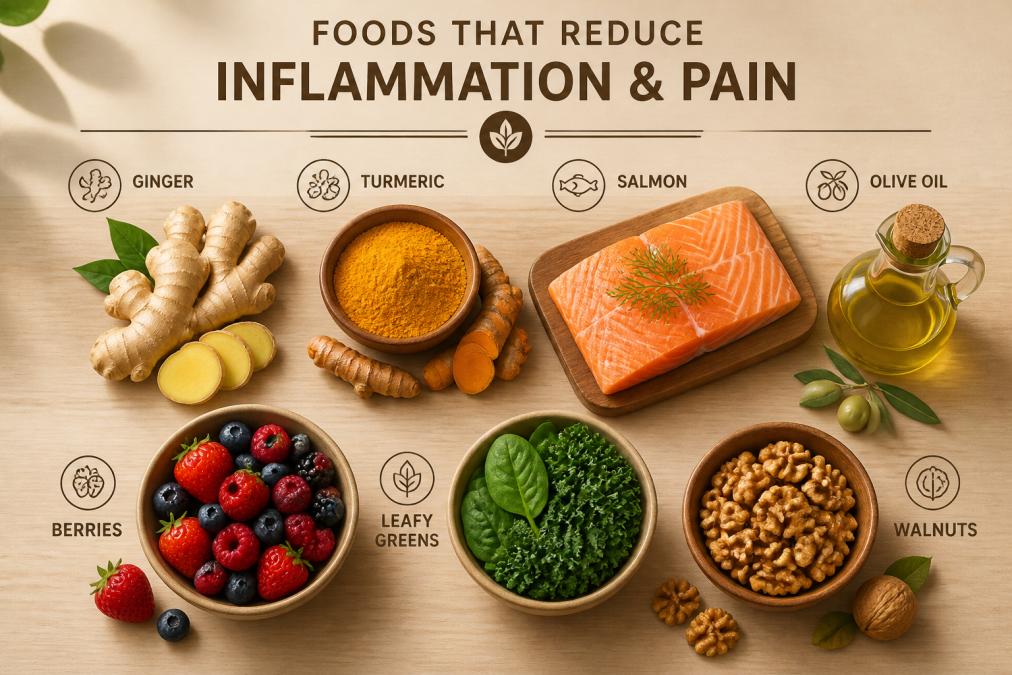
Foods That Reduce Inflammation and Pain
Whole foods deliver anti-inflammatory compounds in their natural context with supporting nutrients enhancing absorption. The most effective approach combines both supplements and food sources.
Fatty fish (salmon, mackerel, sardines), walnuts, flaxseeds, and chia seeds provide omega-3s, include 3-4 times weekly. Turmeric and ginger as culinary spices provide daily doses of curcumin and gingerols. Golden milk (turmeric, black pepper, and milk or coconut oil) is an effective delivery method.
Berries, particularly tart cherries, blueberries, and blackberries, are among the most antioxidant-rich foods. Include a serving daily. Leafy greens (spinach, kale, chard) contain vitamins K and A supporting joint health. Extra-virgin olive oil contains oleocanthal, with anti-inflammatory properties similar to NSAIDs. Nuts and seeds provide omega-3s, magnesium, and antioxidants, a small handful daily supports anti-inflammatory nutrition.
| Food Category | Key Anti-Inflammatory Compounds | Frequency | Best Sources |
|---|---|---|---|
| Fatty Fish | EPA, DHA (omega-3s) | 3-4x weekly | Salmon, mackerel, sardines |
| Spices | Curcumin, gingerols | Daily | Turmeric, ginger, black pepper |
| Berries | Anthocyanins, flavanols | Daily | Tart cherry, blueberry, blackberry |
| Leafy Greens | Vitamins K, A, antioxidants | Daily | Spinach, kale, chard |
| Nuts & Seeds | Omega-3s, magnesium | Daily | Walnuts, almonds, flax, pumpkin seeds |
| Healthy Oils | Oleocanthal, omega-3s | Daily | Extra-virgin olive oil, avocado oil |
Building a Sustainable Anti-Inflammatory Strategy
The most common mistake is treating natural anti-inflammatories as quick fixes. Chronic inflammation didn’t develop overnight and won’t resolve overnight either. A sustainable strategy requires consistency, combination, and complementary therapies.
Consistency means daily use for at least 4-8 weeks before evaluating effectiveness. Turmeric, boswellia, and resveratrol require extended timelines because they gradually rebalance inflammatory state. Set reminders, use pill organizers, make it automatic.
Combination means layering remedies with different mechanisms. Turmeric (enzyme inhibition) + omega-3s (membrane rebalancing) + tart cherry (antioxidant support) creates more comprehensive relief than any single remedy. Most people find 2-3 combined remedies produce better results than maximizing a single supplement’s dose.
Complementary therapies amplify anti-inflammatory effects. Acupuncture improves circulation and reduces pain signaling; red light therapy promotes cellular repair and reduces mitochondrial inflammation. Combined with natural anti-inflammatories, these accelerate recovery and create durable pain reduction.
Expect 12 weeks for full results. At four weeks, notice subtle improvements, slightly better morning stiffness, reduced post-activity pain. By eight weeks, most report noticeable improvements in daily function. At twelve weeks, full effects appear and you understand which remedies work for your situation.

Understanding Drug-Supplement Interactions
Natural anti-inflammatories are bioactive compounds that interact with your body’s chemistry and medications.
Turmeric and curcumin can thin blood and interact with anticoagulants (warfarin, apixaban, dabigatran). Curcumin may lower blood sugar in diabetics and interfere with iron absorption, separate supplementation by two hours if taking iron.
Omega-3 fatty acids have mild blood-thinning properties. At typical therapeutic doses (2,000-3,000 mg daily), this is rarely problematic, but inform your provider if on anticoagulants or antiplatelet medications. Monitor blood pressure if hypertensive.
Ginger has mild anticoagulant properties similar to omega-3s. High doses above 2,000 mg daily may increase bleeding risk with blood thinners.
Boswellia has minimal drug interactions but may theoretically interfere with immunosuppressant medications.
Tart cherry has virtually no drug interactions.
Resveratrol may theoretically interfere with certain cancer treatments and blood pressure medications.
If on chronic medications, particularly blood thinners, diabetes, or blood pressure medications, discuss your planned supplement regimen with your healthcare provider.
Evaluating Quality and Evidence
Supplement industry regulation is minimal, so quality varies dramatically. Third-party testing is the gold standard. Look for NSF Certified for Sport, USP Verified, or ConsumerLab.com testing. Life Extension, Nordic Naturals, Thorne Research, and Pure Encapsulations conduct third-party testing.
Standardized extracts guarantee minimum active compound percentages. For boswellia, look for 30-65% boswellic acids. For ginger, look for gingerol standardization. For turmeric, look for 95%+ curcuminoids.
Bioavailability technology is worth the premium for curcumin. Enhanced formulations deliver significantly better results at lower doses.
Cost per therapeutic dose matters more than price per bottle. A $48 bottle of Meriva-SF delivering highly absorbable curcumin may be better value than a $20 bottle requiring 10 daily capsules.
When to Seek Professional Support
Natural anti-inflammatories are powerful tools but not substitutes for professional assessment. Chronic pain often involves complex causes, structural issues, nerve involvement, or hormonal imbalances requiring professional diagnosis.
If pain persists beyond three months without improvement or worsens despite supplementation, seek evaluation from a healthcare provider, rheumatologist, physical therapist, or integrative practitioner. Source Acupuncture combines natural anti-inflammatory strategies with acupuncture and red light therapy to address pain’s root causes. For those in the Pacific Beach area, a consultation clarifies whether your current approach is working and whether complementary therapies might accelerate recovery.
Key Takeaways
- Turmeric and curcumin are most researched, but absorption matters. Enhanced formulations like Meriva deliver significantly better results.
- Omega-3 fatty acids shift inflammatory balance through cellular mechanisms. Results take 6-12 weeks but are durable.
- Ginger works quickly for acute flare-ups with minimal side effects.
- Boswellia targets joint inflammation specifically for osteoarthritis and degenerative conditions.
- Tart cherry supports muscle recovery faster than most remedies.
- Resveratrol addresses oxidative aging, particularly valuable for those over 50.
- Combination approaches work better than single remedies. Layering 2-3 anti-inflammatories with different mechanisms creates comprehensive relief.
- Consistency matters more than dose. Four to eight weeks of daily use is minimum before evaluating effectiveness.
- Food sources should be your foundation. Supplements enhance, not replace, dietary anti-inflammatory support.
- Drug interactions are real. Discuss supplementation with your healthcare provider if on chronic medications.
Chronic pain doesn’t have to be permanent. Turmeric, omega-3s, ginger, boswellia, tart cherry, and resveratrol have strong evidence supporting their effectiveness for reducing pain and improving function. The key is choosing remedies for your specific situation, using them consistently, and combining them with complementary approaches like acupuncture and lifestyle modifications. At Source Acupuncture, we help clients build personalized anti-inflammatory strategies addressing pain’s root causes. If you’re managing chronic pain and want professional guidance on integrating natural remedies with acupuncture and therapeutic techniques, book a session to discuss your specific needs with our licensed practitioners.
Frequently Asked Questions
What is the most powerful natural anti-inflammatory for chronic pain?
Curcumin from turmeric shows strong clinical evidence for reducing chronic pain and inflammation. However, effectiveness varies by individual and condition. Omega-3 fatty acids and boswellia also rank highly in research. The most effective approach combines multiple natural anti-inflammatories with lifestyle modifications like heat therapy, stress management, and targeted movement. Consult a healthcare provider to determine which remedy best suits your specific pain condition.
How long does it take for natural anti-inflammatories to work on chronic pain?
Most natural anti-inflammatories require consistent use for 2-4 weeks before noticeable effects appear. Curcumin and boswellia typically show measurable results within 4-8 weeks of daily use. Omega-3 fatty acids may take 6-12 weeks. Tart cherry and ginger can provide faster relief for some individuals, within days to weeks. Results depend on dosage, bioavailability, individual absorption rates, and the severity of your chronic pain. Consistency matters more than immediate results.
Are there risks to taking natural supplements for chronic pain?
Natural supplements carry risks including allergic reactions, digestive upset, and drug interactions. Curcumin can thin blood; ginger may increase bleeding risk; omega-3s can interact with blood thinners. Some supplements cause nausea, headaches, or stomach discomfort. Quality varies between brands. Always inform your doctor about supplements you're taking, especially if you use medications for chronic conditions, blood pressure, or blood clotting. Start with lower doses to assess tolerance, and purchase from reputable manufacturers.
What is the recommended dosage of turmeric for inflammation?
Standard curcumin dosages range from 500-2,000 mg daily, divided into multiple doses with meals to improve absorption. Clinical studies for chronic pain typically use 1,000-1,500 mg daily. However, plain turmeric powder contains only 2-5% curcumin, so you'd need large amounts. Standardized curcumin extracts or formulations with enhanced bioavailability (like those with black pepper or patented phytosome technology) require lower doses for equivalent effect. Always follow product label instructions and consult your healthcare provider about the right dose for your condition.
Can natural anti-inflammatories replace NSAIDs for chronic pain management?
Natural anti-inflammatories can complement or reduce reliance on NSAIDs for some individuals, but they don't work identically. NSAIDs act faster and more potently for acute flare-ups, while natural remedies work gradually and holistically over weeks. Many people use both strategically: natural supplements for daily inflammation control and NSAIDs for acute pain episodes. This combined approach may reduce overall NSAID dependence. However, chronic pain management is individual; work with your healthcare provider to develop a safe, personalized strategy that may include both options.
This article was written using GrandRanker