Table of Contents
- 7 Best Acupressure Points for Stress Relief at Home
- LI4 (Large Intestine 4): The Gateway Point for Immediate Calm
- HT7 (Heart 7) Acupressure Point for Stress and Emotional Balance
- PC6 (Pericardium 6): Targeting Anxiety and Mental Distress
- GV20 (Governing Vessel 20) and Yin Tang: Head and Mind Relief
- GB20 (Gallbladder 20): Releasing Neck and Shoulder Tension
- KI3 (Kidney 3) and LV3 (Liver 3): Grounding and Emotional Release
- How to Perform Self-Acupressure for Maximum Benefit
- Frequently Asked Questions
Last Updated: October 2, 2026
7 Best Acupressure Points for Stress Relief at Home
Stress builds in your shoulders, tightens your jaw, and makes sleep feel impossible. The good news: you don’t need an appointment to find relief. Acupressure points stress relief can calm your nervous system in minutes, right from your couch.
This guide covers seven evidence-backed acupressure points stress relief options you can use at home, with exact locations, proper technique, and which points work best for anxiety, tension headaches, or racing thoughts.
How This Guide Works
Each acupressure point in this guide includes its traditional name, exact anatomical location, and step-by-step instructions for self-application. We’ve prioritized points that are easy to reach on your own body and produce noticeable results within 1-3 minutes of consistent pressure.
You’ll also find a section on proper technique, frequency, and safety considerations. The goal is to give you a complete toolkit for managing stress at home, whether you’re new to acupressure or already familiar with these practices.
LI4 (Large Intestine 4): The Gateway Point for Immediate Calm
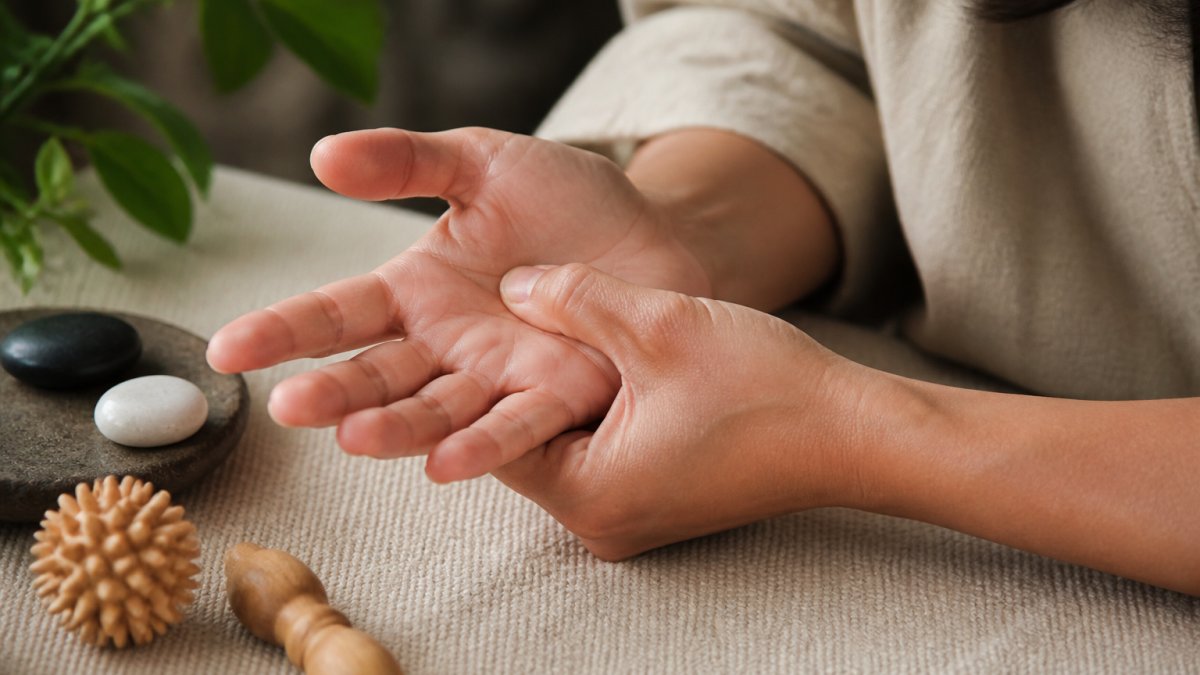
Large Intestine 4, known as “Union Valley,” is the most accessible and versatile acupressure point for stress relief.
Many people feel relief within 30 seconds. It’s particularly effective for anxiety with physical tension, racing thoughts, or feeling stuck.
How to find LI4:
Bring your thumb and index finger together.
How to apply pressure:
Use your opposite thumb to press directly into the point with moderate-to-firm pressure.
Why it works for stress:
LI4 regulates Qi flow through the large intestine meridian, which connects to emotional processing.
HT7 (Heart 7) Acupressure Point for Stress and Emotional Balance
Heart 7, called “Spirit Gate,” regulates emotional calm and mental clarity. Located on your wrist, it influences the heart meridian, which governs emotional resilience and sleep quality.
How to find HT7:
Flip your palm up and look at the wrist crease closest to your hand.
How to apply pressure:
Press with your thumb using gentle-to-moderate pressure. Unlike LI4, HT7 responds better to lighter touch. Apply steady pressure for 1-2 minutes.
Why it works for emotional balance:
The heart meridian carries “Shen,” your spirit or consciousness. When stress disrupts it, you experience emotional overwhelm, insomnia, and anxiety. HT7 restores balance. Apply 30-60 minutes before bed to calm racing thoughts.
Combine HT7 with mindfulness breathing. As you press the point, notice any emotions or sensations that arise without judgment. This pairing deepens the emotional release.
PC6 (Pericardium 6): Targeting Anxiety and Mental Distress
Pericardium 6, known as “Inner Gate,” targets anxiety and mental distress, particularly panic-like symptoms, chest tightness, and racing thoughts.
How to find PC6:
Flip your palm up. Measure two finger-widths down from your wrist crease toward your elbow.
How to apply pressure:
Use your thumb to apply moderate, steady pressure. Press straight into the point, not at an angle. Hold for 2-3 minutes while breathing slowly.
Why it works for anxiety:
The pericardium meridian protects the heart. When anxiety spikes, it tightens. PC6 releases that tension and signals safety to your nervous system. For acute anxiety, apply pressure for 2-3 minutes; most people notice their heart rate slowing within that time.
GV20 (Governing Vessel 20) and Yin Tang: Head and Mind Relief
These two points calm an overactive mind and relieve stress-related headaches.
How to find Yin Tang:
Sit comfortably and look straight ahead.
How to apply pressure:
For GV20, use your middle finger to apply gentle, circular pressure at the crown. Make small circles for 1-2 minutes.
Why they work for head and mind:
GV20 governs the central nervous system and mental clarity.
Head and mind relief happens fastest when you combine these two points in sequence: start with Yin Tang for 1 minute, then move to GV20 for 1 minute. The combined effect is more powerful than either point alone.
::: (Source: Mayo Clinic’s information on stress management)
GB20 (Gallbladder 20): Releasing Neck and Shoulder Tension
Gallbladder 20, called “Wind Pool,” sits at the base of your skull where stress physically settles.
How to find GB20:
Tilt your head forward slightly.
How to apply pressure:
Use both thumbs to apply firm, steady pressure into both GB20 points simultaneously.
Why it works for neck and shoulder tension:
The gallbladder meridian runs from your eye down your side body.
KI3 (Kidney 3) and LV3 (Liver 3): Grounding and Emotional Release
These two points ground your energy and release stored emotional tension.
How to find KI3:
Locate the inside of your ankle bone.
How to find LV3:
Look at the top of your foot.
How to apply pressure:
For KI3, use your thumb to apply moderate pressure into the depression for 1-2 minutes.
Why they work for grounding and release:
The kidney meridian governs your deepest energy reserves and sense of safety.
If you have a history of blood clots, varicose veins, or are pregnant, avoid deep pressure on LV3. Use gentle pressure instead, or skip this point and focus on KI3 alone.
How to Perform Self-Acupressure for Maximum Benefit
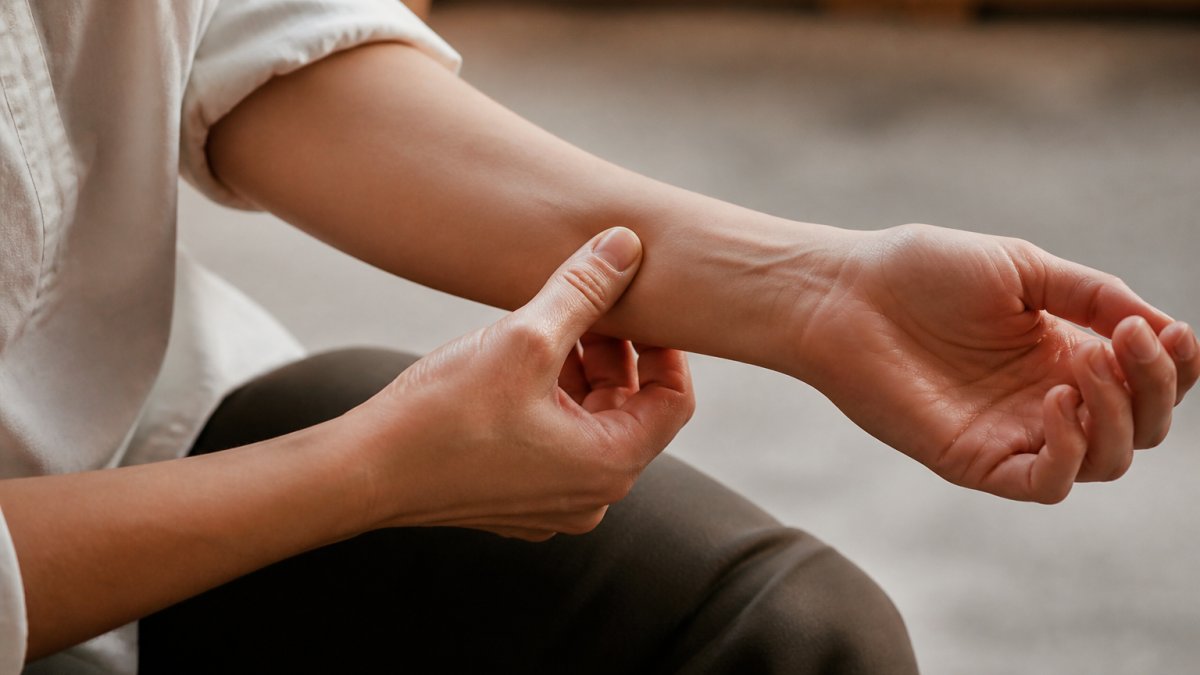
How you apply pressure matters as much as which points you choose. Incorrect technique reduces effectiveness and may cause bruising.
Finding the Points Accurately
The most common mistake is guessing at point locations. Acupressure points are small and precise. If you’re off by even a quarter-inch, you’ll stimulate surrounding tissue instead of the actual point.
Use anatomical landmarks to guide you. Every point in this guide is defined by its relationship to bones, tendons, or muscle attachments.
When you find a point correctly, you’ll feel a tender or slightly achy sensation. That tenderness is your confirmation that you’ve located the right spot.
Take your time with location. Spend 30 seconds exploring the area around where you think the point should be.
Applying Correct Pressure and Technique
Acupressure works through sustained, consistent pressure. Aim for pressure intensity of 6-7 on a scale of 1-10, firm enough to feel mild ache or tingling, but not sharp pain. Most points respond well to 1-2 minutes of continuous pressure. Technique options include static pressure, circular pressure, pulsing, or massage. Amplify the effect with slow, deep breathing: inhale for four, hold for two, exhale for four.
Frequency and Duration
For acute stress, apply acupressure as needed, even multiple times daily. For ongoing management, daily 5-10 minute practice produces better results than occasional longer sessions.
| Point | Best For | Duration | Frequency |
|---|---|---|---|
| LI4 | Immediate anxiety relief | 1-2 minutes | As needed |
| HT7 | Evening calm and sleep | 1-2 minutes | Daily evening |
| PC6 | Acute panic or racing heart | 2-3 minutes | As needed |
| GV20 + Yin Tang | Head tension and mental chatter | 1-2 minutes each | Daily |
| GB20 | Neck and shoulder tension | 1-2 minutes | Daily or as needed |
| KI3 + LV3 | Deep grounding | 1-2 minutes each | 2-3 times weekly |
Source Acupuncture combines these self-care techniques with professional treatments to create a complete stress-management plan.
The meridian system is interconnected.
If you’re new to acupressure or want to deepen your practice, consider booking a consultation at Source Acupuncture.
Frequently Asked Questions
How long should I hold acupressure points for stress relief?
Most acupressure points respond well to 1-3 minutes of steady pressure. Start with 60 seconds and gradually extend to 2-3 minutes as you become comfortable. Apply firm, consistent pressure using your thumb or finger, not jabbing or aggressive force. You can repeat the same point 2-3 times daily. Some people find shorter, more frequent sessions (30-60 seconds, several times a day) more manageable than longer single sessions. Listen to your body and adjust based on your comfort level and schedule.
Can at-home acupressure replace professional acupuncture treatments?
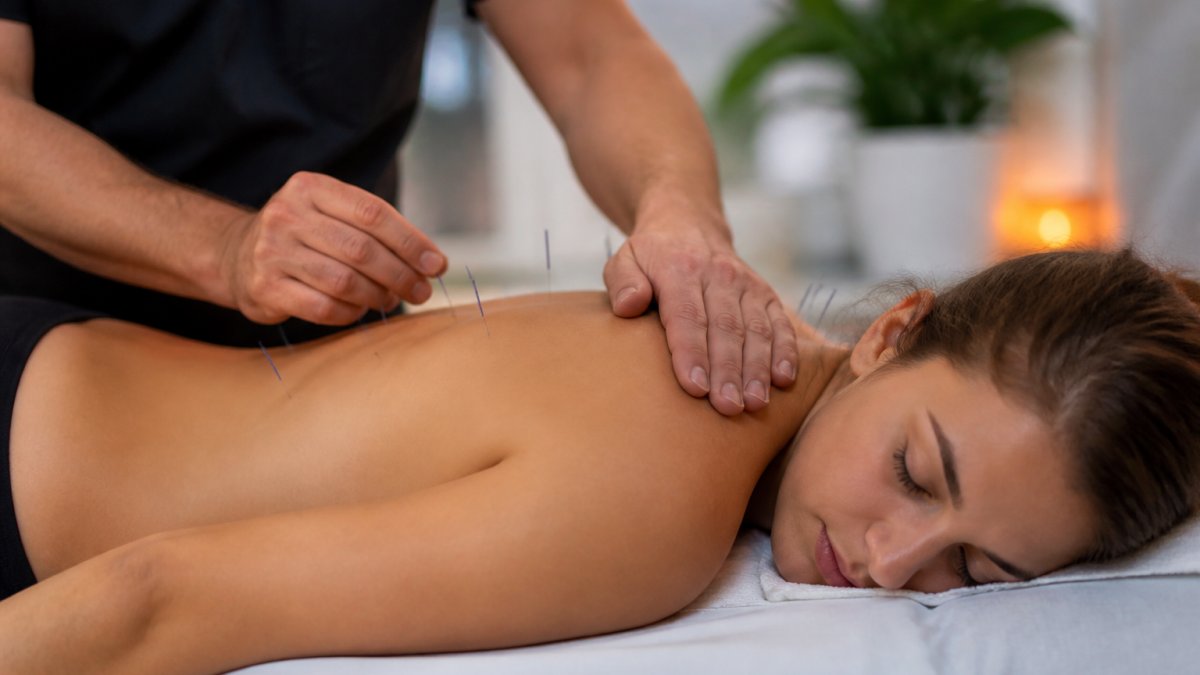
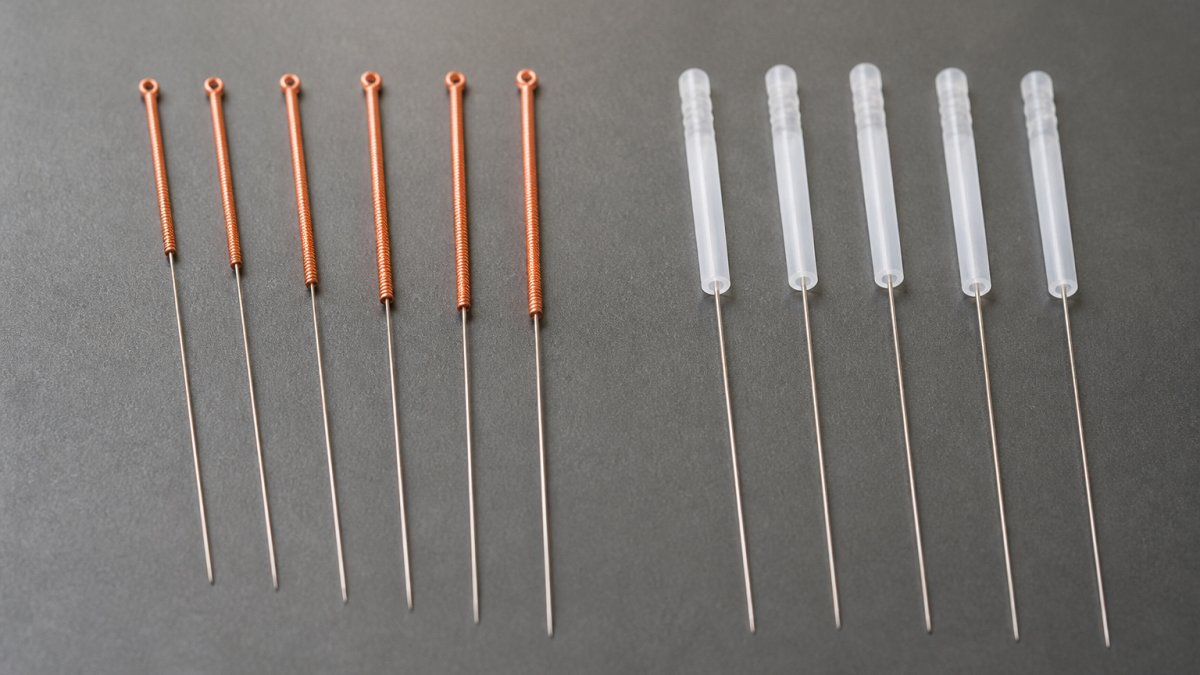
Self-acupressure is a valuable complementary tool for stress relief and nervous system support between professional treatments, but it has different applications than clinical acupuncture. Licensed acupuncturists use sterile needles to access points at precise depths and angles, creating effects that self-massage cannot fully replicate. Self-acupressure works best for maintenance, daily stress management, and symptom awareness. For complex conditions, hormonal imbalances, chronic pain, or when self-care hasn’t resolved your concerns, professional acupuncture offers a more comprehensive assessment and targeted treatment. Many people benefit most from combining both approaches.
Which acupressure points are best for immediate stress relief?
LI4 (Large Intestine 4) and PC6 (Pericardium 6) are the fastest-acting points for acute stress. LI4, located in the webbing between your thumb and index finger, typically produces a calming effect within 1-2 minutes of firm pressure. PC6, on the inner forearm about 2 inches below the wrist crease, targets anxiety and racing thoughts. Both points work with your nervous system to reduce the physical stress response. For headaches or jaw tension accompanying stress, GB20 (at the base of the skull) provides quick relief. These points can be stimulated discreetly at work, during travel, or whenever stress spikes.
What is the difference between acupuncture and acupressure for stress?
Acupuncture uses sterile needles inserted into specific meridian points to stimulate the nervous system and release endorphins, creating deep physiological changes. A licensed acupuncturist assesses your whole health picture and tailors needle depth, angle, and retention time to your condition. Acupressure applies manual pressure to the same meridian points without needles, making it accessible for self-care at home. Both work through the same meridian system and can reduce cortisol levels and calm the nervous system, but acupuncture typically produces more pronounced effects for complex or chronic conditions. Acupressure excels at daily maintenance, stress prevention, and between-session support.
Are there specific acupressure points for calming the nervous system?
Yes. HT7 (Heart 7) on the wrist crease directly regulates the nervous system and emotional calm, making it one of the most targeted points for anxiety. PC6 (Pericardium 6) on the inner forearm also directly influences nervous system regulation and reduces palpitations and mental distress. KI3 (Kidney 3) at the inner ankle supports deep relaxation and grounding. When combined with deep breathing and mindfulness-based stress reduction techniques, these points enhance parasympathetic activation, the ‘rest and digest’ response. Regular stimulation of these points, especially in the evening or during high-stress periods, helps retrain your nervous system toward baseline calm.
Before starting any new wellness practice, consult with a qualified healthcare provider, especially if you’re pregnant, have a bleeding disorder, take blood thinners, or have active infections or open wounds. Acupressure is generally safe for most people, but individual circumstances vary. A licensed acupuncturist or healthcare provider can assess whether these points are appropriate for your specific situation.