Table of Contents
- Microneedling vs Traditional Facials: Quick Comparison
- How Microneedling and Facials Work Differently
- Microneedling Benefits for Acne Scars and Texture
- Microneedling Recovery Time: What to Expect Day by Day
- Microneedling Aftercare Best Practices for Better Results
- Microneedling vs Facials: Long-Term Results and Maintenance
- Who Should Choose Microneedling and Who Should Stick With Facials
- Frequently Asked Questions
Last Updated: September 16, 2026
Microneedling vs Traditional Facials: Quick Comparison
Choosing between microneedling vs facials for skin rejuvenation comes down to one question: do you want to maintain the skin you have, or rebuild it? This guide from Source Acupuncture breaks down the real differences so you can pick the right treatment for your skin. (Source: controlled wound healing response, producing new collagen and elastin)
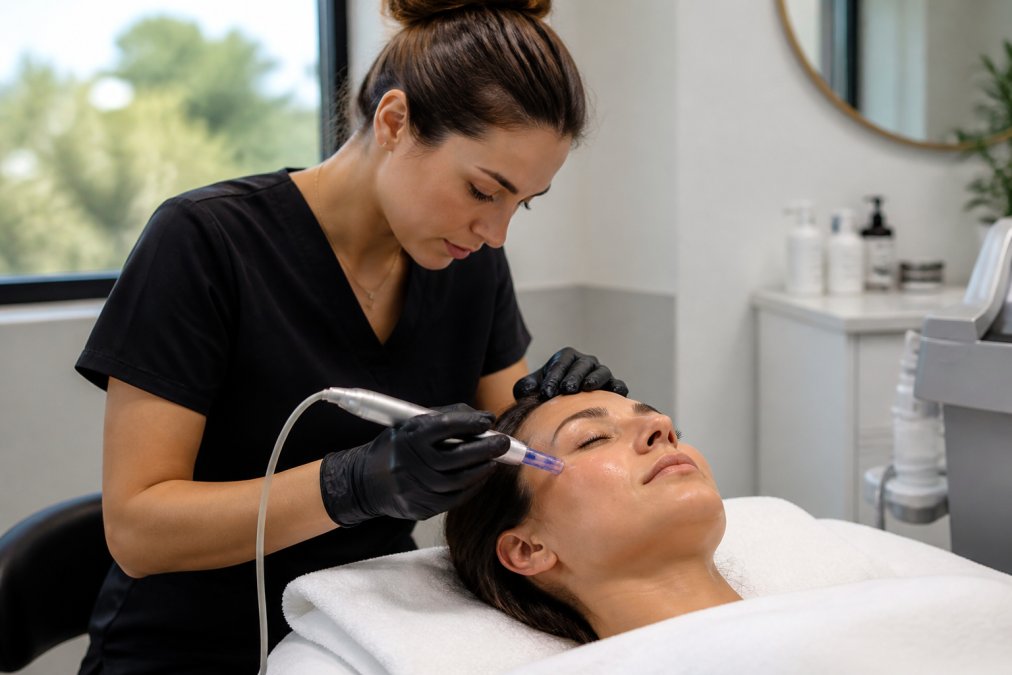
A traditional facial is a non-invasive treatment that cleanses, exfoliates, and hydrates the surface of your skin. Microneedling is a minimally invasive procedure that creates controlled micro-injuries in the skin to trigger a wound healing response and stimulate collagen production (pubmed.ncbi.nlm.nih.gov). One delivers a glow. The other changes skin structure over time.
Below, we’ll show you exactly how the two compare on results, recovery, and long-term maintenance, so you can decide with clear expectations instead of marketing claims.
Comparison Table: Results, Cost, Downtime
| Factor | Traditional Facial | Microneedling |
|---|---|---|
| Depth of treatment | Epidermis (surface) | Epidermis and dermis |
| Primary mechanism | Exfoliation and hydration | Collagen induction therapy |
| Results timeline | Immediate, temporary | Gradual, builds over weeks |
| Downtime | None | 1-3 days of redness |
| Best for | Maintenance and glow | Acne scars, texture, fine lines |
| Session frequency | Every 4-6 weeks | Series of 3-6, then maintenance |
Which Treatment Fits Your Goals?
If you want relaxation and an immediate glow before an event, a facial fits. If you want measurable improvement in acne scarring, skin texture, or fine lines, microneedling is the stronger option.
For most people, these treatments are not competitors. They serve different purposes at different stages of a skin plan.
How Microneedling and Facials Work Differently
The core difference is depth. A facial works on the epidermis, the outermost layer. Microneedling reaches the dermis, where collagen and elastin are produced.
That distinction explains why one produces a short-term glow and the other produces structural change over months.
What a Traditional Facial Does for Your Skin
A traditional facial focuses on cleansing, professional exfoliation, extraction, and hydration. Estheticians apply clinical-grade products and may use steam, masks, and massage to improve circulation and soften congestion.
The benefits are real but surface-level: smoother texture, better hydration, and visible brightness. None of it reaches the dermis, so it does not remodel collagen or change skin laxity.
How Microneedling Triggers Collagen Induction
Microneedling creates thousands of micro-channels in the skin using fine sterile needles.
The visible result of microneedling comes from your own collagen, not from the device. That is why results take weeks to appear and why a series of sessions works better than one.
Microneedling Benefits for Acne Scars and Texture
Microneedling benefits for acne scars are the main reason many people choose it over facials.
Microneedling Recovery Time: What to Expect Day by Day
Microneedling recovery time is shorter than most people expect.
Microneedling Aftercare Best Practices for Better Results
Skipping sunscreen after microneedling is the most common mistake. Freshly treated skin is more vulnerable to UV damage, and post-inflammatory hyperpigmentation can undo weeks of progress.
Microneedling vs Facials: Long-Term Results and Maintenance
Single-session comparisons miss the point.
A 12-Month Skin Health Roadmap
- Months 1-3: Microneedling series, typically 3 sessions spaced about 4-6 weeks apart. This is the collagen induction phase, and results are still building.
- Months 4-6: Results from the series continue maturing. Many people add a facial every 4-6 weeks for hydration and glow between microneedling sessions.
- Months 7-9: Maintenance microneedling, often one session every 8-12 weeks depending on how your skin responds.
- Months 10-12: Assess. If texture and scarring have improved enough, you may drop to maintenance microneedling two to three times a year with facials in between.
The Budget Reality
- Facials are a recurring, predictable expense. You pay per visit, and the cost is roughly flat over time.
- Microneedling front-loads cost. A series of 3-6 sessions costs more than a single facial, and the payoff arrives over months, not days.
- Maintenance microneedling after the initial series is less frequent than facials, which can narrow the annual cost gap more than the per-session price suggests.
What Each Treatment Actually Feels Like
The sensory experience is a real barrier to booking, and most articles skip it.
The Hybrid Approach Most People Land On
Track your results with photos taken in the same lighting at the same time of day. Collagen changes are gradual, and side-by-side images are the only reliable way to judge whether your maintenance schedule is working.
Facials are a recurring expense for a recurring glow. Microneedling is a front-loaded investment that compounds over months. The smartest plan usually uses both, with a maintenance schedule built around your budget and your goals.
Who Should Choose Microneedling and Who Should Stick With Facials
Candidacy is where most comparison articles get vague, so here is the honest version: microneedling is a wound-healing treatment, and anything that interferes with normal wound healing is a reason to pause or choose a facial instead.
Good Candidates for Microneedling
- Acne scarring, especially rolling and boxcar scars that sit in the dermis
- Uneven texture and enlarged pores that surface exfoliation has not improved
- Fine lines around the mouth, eyes, and forehead
- Early skin laxity where you want firmer skin without surgery
- Post-inflammatory hyperpigmentation in people who want to avoid the higher pigment risk of some laser treatments
- Most skin tones, including deeper Fitzpatrick types, when the practitioner adjusts needle depth and energy settings
Good Candidates for Facials Instead
- You have an event within a week and cannot risk redness
- Your main goals are hydration, relaxation, and a temporary glow
- You are not ready for a needle-based treatment, or you have a history of vasovagal reactions to needles
- You want a treatment you can repeat every 4-6 weeks with no recovery window
When NOT to Do Microneedling
- Active acne breakouts or open lesions, needling over active inflammation can spread bacteria and worsen scarring
- Active rosacea flares, the controlled injury can trigger a flare; wait until the skin is calm
- Eczema or psoriasis in the treatment area, needling disrupted skin can aggravate the condition and delay healing
- Compromised skin barrier, if your skin is stinging, peeling, or reacting to products, rebuild the barrier first
- Active cold sores or a history of herpes simplex in the area, many practitioners prescribe an antiviral before treatment
- Recent isotretinoin use, most practitioners wait a set period after the last dose before needling
- Blood thinners, anticoagulants, or bleeding disorders, higher risk of prolonged pinpoint bleeding and bruising
- Pregnancy and breastfeeding, often deferred out of caution, particularly when numbing creams or serums are used
- Active infection, fever, or a skin infection in the treatment area
- Keloid scarring tendency, discuss with your practitioner, since microneedling creates controlled wounds
- Recent fillers, Botox, or other injectables, timing matters; ask your practitioner for their spacing protocol
The At-Home Device Question
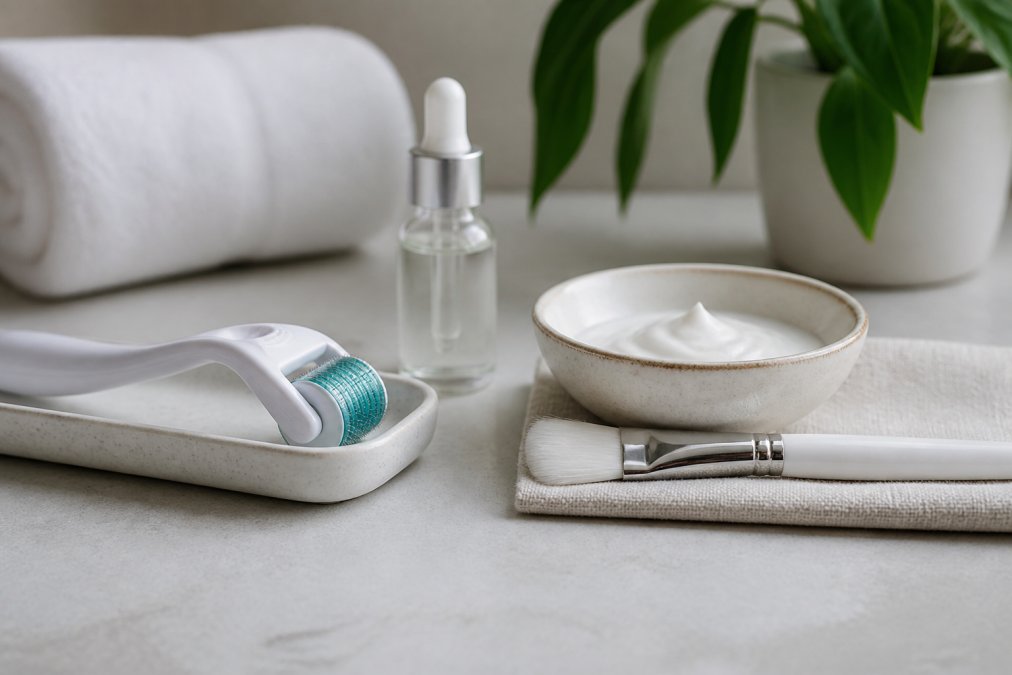
- At-home rollers are hard to sterilize properly, and dull or bent needles can drag and tear skin instead of creating clean micro-channels
- Reusing a roller past its recommended lifespan increases infection risk
- Going too deep at home can cause scarring, hyperpigmentation, or a prolonged reaction
- Sharing a device is a hygiene non-starter
If you are unsure whether a skin condition, medication, or recent treatment rules you out, that is a consultation question, not a Google question. A licensed practitioner can assess your skin barrier, review your history, and tell you whether to needle now, wait, or choose a facial instead.
Microneedling suits people with scarring, texture, and fine lines who can accept a few days of redness and have no active contraindications. Facials suit reactive skin, tight timelines, and anyone who wants zero downtime. When in doubt, calm the barrier first.
Frequently Asked Questions
Is microneedling better than a facial?
Neither is universally better. Microneedling creates controlled micro-injuries to trigger collagen production, addressing acne scars, fine lines, and skin laxity over multiple sessions. Facials focus on surface-level cleansing, exfoliation, and hydration with zero downtime. If you want structural skin changes, microneedling is more effective. For routine maintenance and relaxation, a facial suits better. Many people combine both.
What is the downside to microneedling?
Microneedling requires 1-3 days of downtime with redness and mild swelling. It carries a small risk of post-inflammatory hyperpigmentation, especially in darker skin tones if aftercare is poor. Multiple sessions are needed for visible results, and it is not suitable for active acne or compromised skin barriers. A consultation with a licensed practitioner helps determine if your skin is ready.
What are the primary differences in recovery time between microneedling and facials?
Traditional facials have zero downtime. You can return to normal activities immediately. Microneedling recovery time typically involves 1-3 days of redness (erythema) and mild sensitivity, with some people experiencing light flaking. Deeper treatments like RF microneedling may require 5-7 days. Planning around social events matters when choosing between the two.
Can microneedling be combined with other wellness treatments?
Yes, microneedling pairs well with red light therapy to support wound healing, and with acupuncture for overall stress reduction and circulation. Spacing treatments appropriately prevents overloading the skin barrier. A wellness center offering multiple modalities can design a schedule that supports recovery and skin rejuvenation without compromising results. Always discuss combinations with your practitioner first.
How do the long-term results of microneedling compare to regular facials?
Microneedling builds collagen over 3-6 months, with results lasting months after a series. Maintenance sessions every 4-6 weeks extend benefits. Facials provide immediate hydration and glow but do not create structural changes. For sustained skin rejuvenation, microneedling offers better long-term ROI, while facials maintain surface health between deeper treatments.
The hardest part is not choosing a treatment. It is committing to the schedule that makes either one work. Source Acupuncture offers personalized microneedling and facial treatments, licensed practitioners, and a flexible wellness membership with deep discounts on services. Book a session with Source Acupuncture and build a skin plan that actually compounds.