Table of Contents
- What Is Cupping Therapy?
- How Cupping Works and Its Benefits
- Fire Cupping vs Suction Cupping: Key Differences
- What to Expect During Your First Cupping Session
- How Long Do Cupping Marks Last and Aftercare
- Finding Acupuncture and Cupping Services in San Diego
- Common Conditions Treated with Cupping
- Conclusion
Last Updated: August 28, 2026
What Is Cupping Therapy?
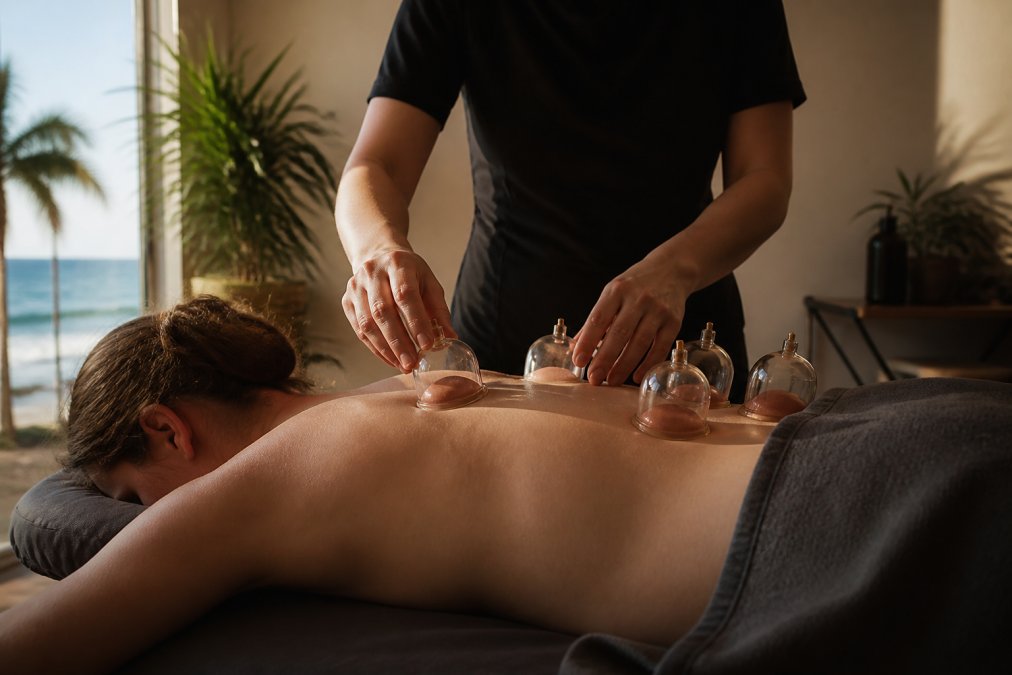
Cupping therapy is an ancient healing practice that uses cups, typically made of glass, bamboo, or silicone, to create suction on the skin. The practitioner places a cup on the skin and either uses heat or a mechanical pump to draw the skin and underlying tissue upward into the cup, creating negative pressure believed to promote blood circulation, reduce muscle tension, and support the body’s natural healing response.
The practice has roots in traditional Chinese medicine and has gained popularity in Western wellness centers, sports medicine clinics, and among athletes seeking recovery support. At Source Acupuncture in Pacific Beach, we integrate cupping into personalized treatment plans that address your specific health concerns, whether that’s chronic pain, sports recovery, or stress management.
Cupping works on the principle of myofascial release. The suction pulls fascia (the connective tissue surrounding muscles) away from deeper structures, helping break up adhesions and restore mobility. Unlike deep tissue massage, which applies downward pressure, cupping uses upward traction to decompress tissues and encourage blood flow to areas that need healing. The marks that appear afterward are a visible indicator that the treatment has drawn stagnant blood and lymphatic fluid to the surface, where the body can process and eliminate it.
How Cupping Works and Its Benefits
Cupping creates a pressure differential between the inside and outside of the cup. When suction is applied, the skin and fascia are pulled upward, stretching the tissue and increasing blood flow to that area. This triggers improved circulation, which delivers more oxygen and nutrients to tissues, reduces inflammation as the body’s natural healing mechanisms activate, and releases trigger points, those stubborn knots in muscle tissue.
Improved blood circulation supports lymphatic drainage, helping the body eliminate metabolic waste and reduce inflammation. This is particularly valuable for people dealing with chronic muscle tension or those recovering from intense physical activity. The increased tissue oxygenation also supports the body’s natural repair processes, making cupping especially popular among athletes in the Pacific Beach area who need faster recovery.
Cupping integrates well with other therapeutic approaches. When combined with acupuncture or manual therapy techniques, it becomes part of a comprehensive treatment plan. The negative pressure can also help prepare muscles for deeper work, making subsequent massage or physical therapy more effective.
Cupping isn’t typically painful during the session, though sensations vary. Some describe it as a gentle pulling or warming sensation, while others feel a deep release as tight muscles begin to relax. A skilled practitioner adjusts the pressure to your comfort level, which is why working with licensed practitioners matters.
Fire Cupping vs Suction Cupping: Key Differences
The two primary methods of creating suction differ in technique and sensation, though both achieve similar therapeutic outcomes.
Fire cupping uses a flame to heat the air inside the cup before it’s placed on the skin. As the air cools, it creates a vacuum that pulls the skin upward. This method produces a deeper, more intense suction and is often preferred by practitioners trained in traditional Chinese medicine. The warmth itself can feel soothing, and many people find the sensation more comfortable than mechanical suction, even though the pressure is stronger. Fire cupping requires skill to avoid burns, so it should only be performed by trained practitioners.
Suction cupping uses a mechanical pump or hand-operated valve to remove air from the cup after it’s placed on the skin. This method gives the practitioner more precise control over suction intensity, making it easier to adjust pressure based on your feedback. Silicone cups, which are squeezable and allow manual pressure adjustment, fall into this category. Suction cupping is often gentler and more predictable, making it a good choice for first-time clients or those with sensitive skin.
Both methods create the same fundamental effect: negative pressure that promotes blood circulation and myofascial release. The choice often comes down to personal preference and what your practitioner is trained in. At Source Acupuncture, our practitioners are skilled in both techniques and can recommend the approach that best suits your needs. Fire cupping leaves marks more readily because of the intensity, while suction cupping can be adjusted to produce lighter or deeper effects. If you have an event coming up and are concerned about visible marks, discussing your timeline with your practitioner allows them to tailor the treatment accordingly.
What to Expect During Your First Cupping Session
Your first session typically begins with a consultation where your practitioner asks about your health history, current pain or tension, and what you hope to achieve. Be honest about any injuries, skin conditions, or medications you’re taking, this information ensures safe, effective care.
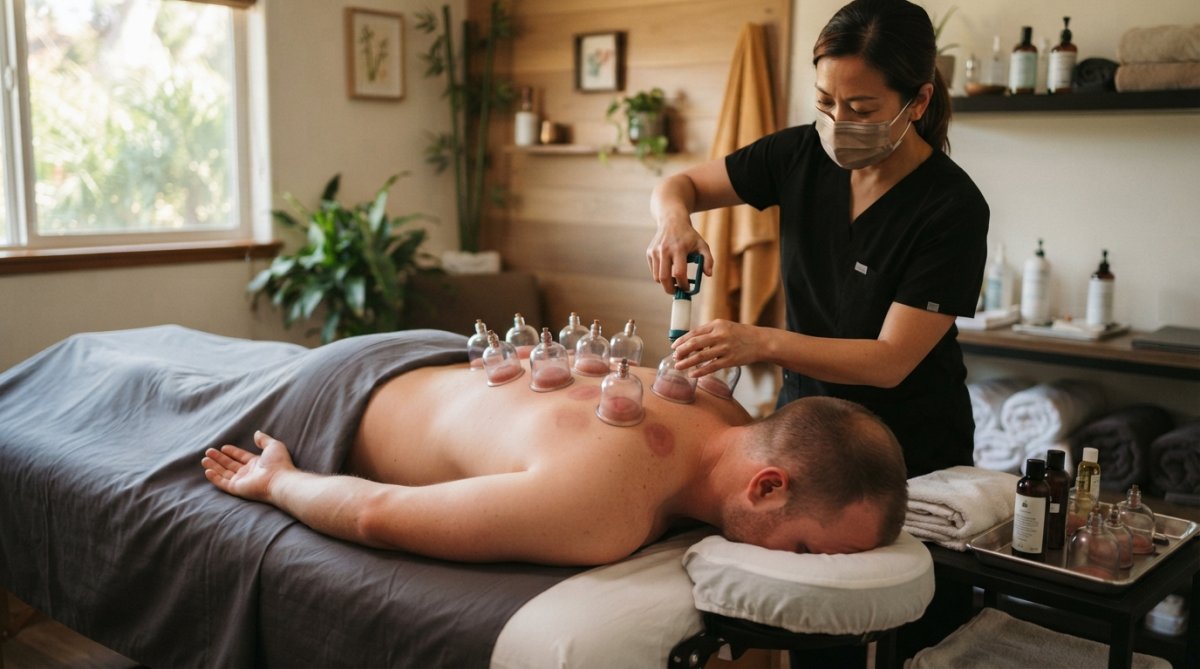
The actual treatment is straightforward. You’ll lie face-down on a comfortable table, typically shirtless or with clothing adjusted so the practitioner can access the areas being treated. Your skin will be cleaned, and often a light oil or lotion is applied to help the cups glide smoothly.
Once the cups are placed, you’ll feel a pulling sensation as suction is applied. Most people find this sensation pleasant, a deep, releasing feeling rather than pain. If the suction feels too strong, let your practitioner know immediately. A typical session lasts 5 to 15 minutes per area. During the session, you might feel warmth spreading through the area being treated, a sign that blood circulation is increasing. Some people experience a mild ache similar to a deep massage, which is normal. bio-frequency therapy.
After the cups are removed, your skin will be red or purple where the suction was applied. This is completely normal. Your practitioner will likely recommend rest for the remainder of the day and staying hydrated. Many people report feeling relaxed and loose immediately after treatment, with deeper benefits emerging over the next 24 to 48 hours.
How Long Do Cupping Marks Last and Aftercare
Cupping marks, the red, purple, or dark discoloration that appears on the skin, are not bruises in the traditional sense. They result from bringing stagnant blood and lymphatic fluid to the surface, where the body can process and eliminate it, a sign that the treatment is working.
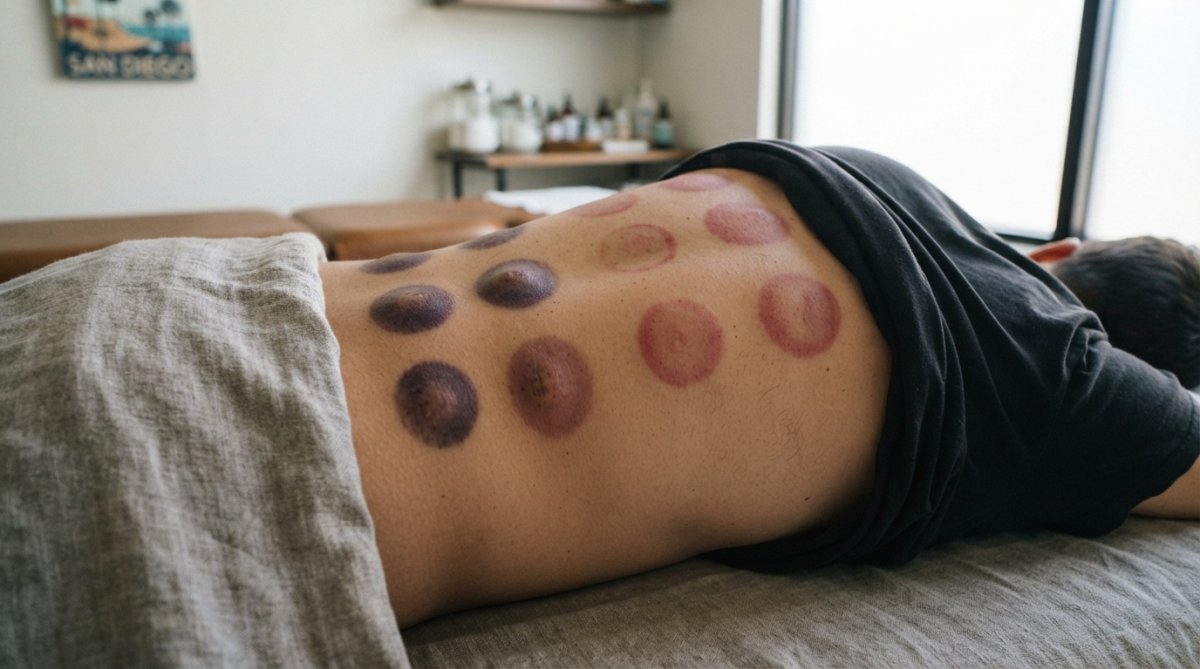
How long marks last depends on several factors: the intensity of the suction, your individual skin sensitivity, how much stagnation was present in the tissue, and your overall circulation. Light marks may fade within 3 to 5 days. Moderate marks typically last 1 to 2 weeks. Deeper discoloration can persist for 2 to 3 weeks (peer-reviewed research). If you have an important event and are concerned about visible marks, discuss timing with your practitioner. They can adjust suction intensity or focus on areas that won’t be visible, or you can schedule treatment well in advance.
For the first 24 hours after treatment, avoid hot showers or baths, intense exercise, and alcohol, these can increase inflammation and prolong marks. Rest and stay hydrated instead. Drinking water helps your lymphatic system process the fluid that’s been mobilized by cupping. Light activity like walking is fine and can actually support recovery.
If you experience soreness in the treated area, this typically fades within 24 to 48 hours. Ice packs can help if soreness is significant. Gentle stretching or light massage of the surrounding muscles can also help, but avoid aggressively manipulating the treated area for at least a few days. Each subsequent session typically produces lighter marks as underlying tissue tension decreases.
Finding Acupuncture and Cupping Services in San Diego
Licensed acupuncturists in California must complete extensive training, typically 3,000 or more hours of education, and pass state licensing exams (acupuncture.ca.gov). When evaluating practitioners, verify their license through the California Acupuncture Board. This ensures they’ve met rigorous standards for safety and competency.
Experience matters. A practitioner who works regularly with athletes will understand sports-related injuries and recovery timelines differently than someone who focuses primarily on general wellness. If you’re dealing with a specific condition, ask whether the practitioner has experience treating that condition.
Source Acupuncture, located in Pacific Beach, brings together traditional Chinese medicine principles with modern therapeutic techniques. Our practitioners combine cupping with acupuncture, red light therapy, and other modalities to address your underlying health concerns rather than just treating symptoms. When you call or visit, ask about the initial consultation process. A good practitioner takes time to understand your health history, listens to your concerns, and explains how they’ll approach your treatment.
Our flexible wellness membership program makes consistent care accessible. Rather than paying per session, you can commit to regular treatment at a discounted rate, which aligns with how cupping therapy actually works, consistent sessions tend to produce better results than sporadic ones.
Common Conditions Treated with Cupping
Cupping is used for many conditions, though it’s most effective when integrated into a broader treatment plan.
Muscle tension and pain is the most common reason people seek cupping. Whether from sports training, repetitive work, or poor posture, tight muscles respond well to the myofascial release that cupping provides.
Sports injuries and recovery benefit from cupping’s ability to increase blood circulation and reduce inflammation. Many professional athletes incorporate cupping into their recovery protocols, particularly for muscle strains, tendonitis, and delayed-onset muscle soreness (DOMS) (peer-reviewed research).
Chronic pain conditions like fibromyalgia or arthritis can improve with regular cupping, especially when combined with other therapies. Consistent treatment can reduce inflammation and improve tissue quality over time.
Respiratory conditions including asthma and chronic cough are treated with cupping on the upper back and between the shoulder blades, based on the principle that improving local circulation helps open airways and improve breathing.
Digestive issues respond to cupping on the abdomen and lower back, based on the principle that improving local circulation and reducing tension supports digestive function. This is often combined with acupuncture for better results.
Hormonal imbalances and menstrual irregularities are addressed through cupping on specific meridian points, integrated with acupuncture and lifestyle recommendations.
Headaches and migraines can improve with cupping on the neck, shoulders, and upper back, areas where tension often triggers headaches. Regular treatment may reduce frequency and severity over time.
Cupping works best as part of a comprehensive approach. Lasting results come from consistent treatment combined with other modalities, lifestyle changes, and addressing underlying causes.
Finding the right cupping therapy in San Diego means choosing a licensed, experienced practitioner who listens to your concerns and designs treatment around your specific needs. Source Acupuncture combines traditional cupping techniques with modern wellness practices, acupuncture, red light therapy, and personalized care plans to help you recover from sports injuries, manage chronic pain, and support your long-term health. Our wellness membership program makes consistent, transformative care accessible. Book your session today and experience how integrated cupping therapy can support your recovery and wellness goals.
Frequently Asked Questions
What is the difference between fire cupping and suction cupping?
Fire cupping uses heat to create negative pressure inside glass cups, while suction cupping relies on a hand pump or mechanical device to achieve the same effect. Both methods draw blood to the surface and promote myofascial release, but suction cupping offers more precise pressure control and is often preferred for sensitive skin. Fire cupping follows traditional Chinese medicine practices and may feel warmer during treatment. Your practitioner can recommend which approach suits your condition and comfort level.
How long do cupping marks last after treatment?
Cupping marks typically fade within 5 to 7 days, though darker marks may persist for 1 to 2 weeks depending on skin sensitivity and treatment intensity. The discoloration, called ecchymosis, is a normal response to the negative pressure and does not indicate pain or injury. Marks fade faster with proper aftercare, including staying hydrated, avoiding intense exercise for 24 hours, and protecting treated areas from direct sun exposure. If marks concern you before an important event, discuss timing with your practitioner.
Is cupping therapy effective for chronic muscle pain?
Cupping therapy can help relieve chronic muscle pain by improving blood circulation, reducing inflammation, and releasing trigger points and fascial adhesions. Many athletes and active individuals report reduced muscle tension and improved recovery when cupping is integrated into a broader treatment plan. Results vary based on the underlying cause of pain, frequency of sessions, and individual response. A consultation with a qualified practitioner can assess whether cupping is appropriate for your specific condition and how it might complement other therapies.
How should I prepare for my first cupping appointment?
Arrive hydrated and well-fed, as cupping can be intense on an empty stomach. Wear loose, comfortable clothing that allows easy access to the areas being treated. Avoid strenuous exercise, hot showers, and alcohol for 24 hours before your session to minimize stress on your body. Inform your practitioner about any medications, skin conditions, or injuries. During your consultation, discuss your health goals, previous treatments, and any concerns so your practitioner can tailor the session to your needs.
This article was written using GrandRanker