

Table of Contents
- What Determines Acupuncture Cost Per Session
- Acupuncture First Session Cost: What the Initial Visit Includes
- Acupuncture Cost With Insurance: Coverage, Deductibles, and Out-of-Pocket
- How Many Acupuncture Sessions Are Needed and What That Costs
- Add-On Services, Packages, and Additional Fees
- How to Compare Acupuncture Prices and Get the Most Value
- Frequently Asked Questions
Last Updated: October 6, 2026
What Determines Acupuncture Cost Per Session
Acupuncture cost per session in the United States depends far more on who treats you and where than on the needles themselves.
Most people assume acupuncture pricing is random. It isn’t. A handful of factors explain nearly all of the variation between clinics.
The biggest drivers are the practitioner’s experience, the length of your appointment, and the setting where you’re treated.
According to the National Center for Complementary and Integrative Health overview of acupuncture, acupuncture is a key part of traditional Chinese medicine now widely used for pain and stress.
Most price guides quote a single national average and ignore that the same treatment costs very different amounts depending on the clinic down the street.
Experience, Credentials, and Clinical Focus
A licensed acupuncturist with years of specialized training charges more than a newer practitioner, and that gap is usually justified. A clinician focused on hormonal imbalances or sports recovery brings extra assessment time to each visit.
In most states, an acupuncturist must hold a license, and many carry national board certification, years of training reflected in what a clinic charges.
Experience also changes the treatment plan itself. A seasoned practitioner often needs fewer sessions to reach the same result, which can offset a higher per-treatment rate.
Location, Setting, and Appointment Length
Regional pricing is real. Clinics in high-cost metro areas charge more than rural ones for the same service, mostly because rent and staffing cost more.
Setting matters too: a private, one-on-one room costs more than a shared community space, and a 30-minute session and a 90-minute initial consultation are priced very differently.
- Private room, one-on-one: highest per-session rate
- Shared community setting: lowest per-session rate
- Extended sessions with add-ons: higher total, more included
- Shorter maintenance visits: lower total, less hands-on time
The per-session price is only half the story. Two clinics can charge the same for a visit but deliver very different amounts of hands-on time, which changes the real value.
Acupuncture First Session Cost: What the Initial Visit Includes
The first visit almost always costs more than a follow-up because it includes a full intake and a personalized treatment plan on top of the actual acupuncture.
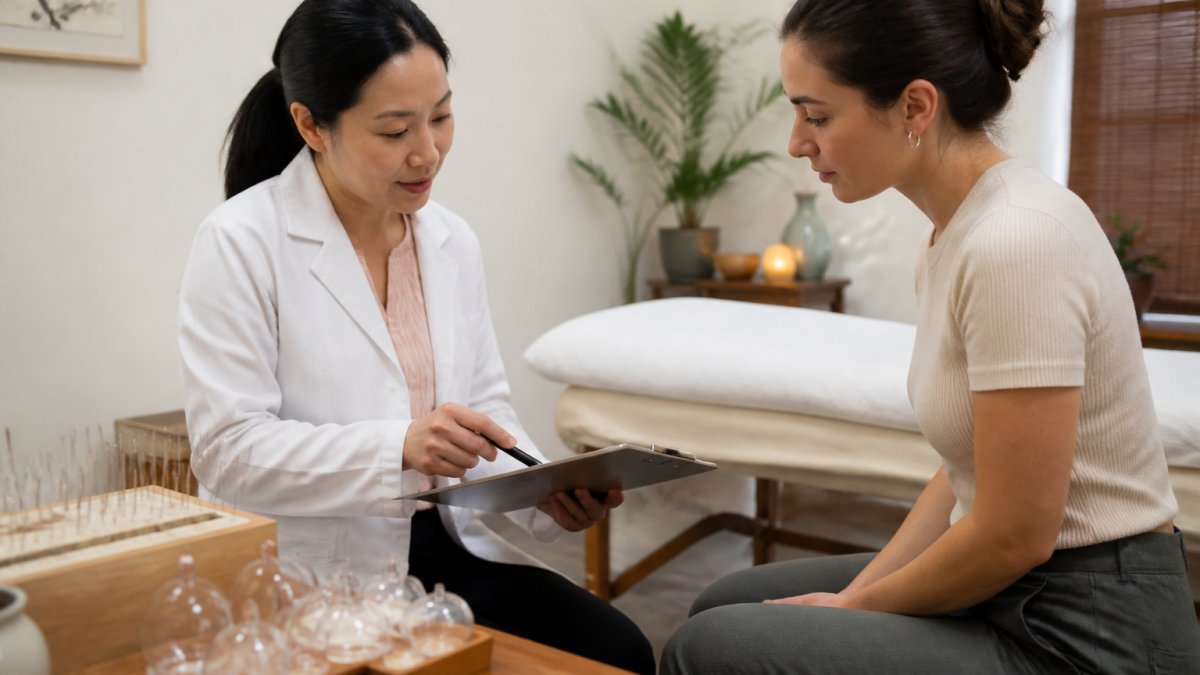
That longer first appointment isn’t padding. It’s where the practitioner reviews your health history, asks about your main concerns, and builds a plan.
A typical initial visit includes:
- A detailed health history and evaluation
- A discussion of your symptoms and goals
- Your first acupuncture treatment
- A recommended treatment plan and frequency
A common mistake is choosing a clinic on price alone and landing somewhere that rushes the intake. The consultation fee is where the value lives.
Acupuncture Cost With Insurance: Coverage, Deductibles, and Out-of-Pocket
Acupuncture cost with insurance depends on your plan, and the range is wide. Some plans cover a set number of visits per year, others cover none, and many apply it toward your deductible first. That means your out-of-pocket cost can swing from a small copay to the full self-pay rate.
Here’s the part most people miss: even when a plan covers acupuncture, you often pay the full negotiated rate until your deductible is met. So a “covered” visit can still cost you real money early in the year.
How a Deductible Turns a “Covered” Visit Into a Full-Price Visit
The deductible is what you pay before the plan starts sharing costs. Coinsurance is the percentage you pay after that.
A common pattern looks like this. Say your plan has a $1,500 deductible, 20% coinsurance, and a $40 copay for acupuncture after the deductible.
That single mechanic explains why two patients at the same clinic can pay very different amounts for the same session, and why the first few visits of the year are the most expensive.
How to Verify Coverage Before You Book
Call the member services number on the back of your card and ask these questions in order. Write down the answers and the representative’s name.
- Is acupuncture a covered benefit on my specific plan?
- Is it covered for my diagnosis, or only for certain conditions?
- How many visits per year are allowed, and do they reset on a calendar year or a plan year?
- What is my deductible, and how much of it have I already met this year?
- After the deductible, what is my copay or coinsurance for acupuncture?
- Do I need a referral or prior authorization?
- Is the acupuncturist I want in network?
In-network clinics bill your insurer directly and you pay only your share; out of network, you may pay the full amount up front and seek reimbursement.
In-Network vs. Out-of-Network: What Changes
In-network care is usually cheaper because the clinic has agreed to a negotiated rate. Out-of-network care often means higher rates, a separate deductible, and a reimbursement process you manage yourself.
If you see an out-of-network acupuncturist, ask for a superbill, an itemized receipt with the provider’s tax ID, license number, diagnosis codes, and procedure codes. Submit it to your insurer, and the plan reimburses you at its out-of-network rate, minus your deductible and coinsurance. Reimbursement can take weeks and is rarely the full price you paid.
Self-Pay, HSA, and FSA
If you are paying cash, ask every clinic for the self-pay rate, which is often lower than the billed rate. Payment, cancellation, and referral policies all affect your final cost.
Many people don’t realize they can often use HSA or FSA funds for acupuncture. If it’s a qualified medical expense under your plan, you may pay with pre-tax dollars, lowering your real cost.
Check with your plan administrator first. Rules vary, and you may need a letter of medical necessity from your practitioner.
Don’t assume your HSA or FSA will cover acupuncture without checking. Paying with the wrong account can create a tax problem later, and reimbursements can be denied after the fact.
The fastest way to estimate your real cost is to ask two numbers: how much of your deductible is left, and what your coinsurance or copay is after it. Multiply the negotiated rate by your share. That is your likely out-of-pocket cost per visit.
How Many Acupuncture Sessions Are Needed and What That Costs
How many acupuncture sessions are needed varies by condition, but a common approach is a short initial course followed by less frequent maintenance: a weekly series for several weeks, then spacing visits out as symptoms improve.
That’s where total cost of care comes in. A single session price tells you little. The real number is your per-session rate multiplied by the number of visits in your plan.
| Treatment Phase | Typical Frequency | Typical Duration | What It’s For |
|---|---|---|---|
| Initial course | Weekly | 4-8 weeks | Address the main concern |
| Transition | Every other week | 4-8 weeks | Lock in progress |
| Maintenance | Monthly or as needed | Ongoing | Prevent flare-ups |
How to Estimate Your Total Cost
Use this method with any per-session rate. Multiply the rate by the number of visits in each phase, then add the phases together.
- Short course (6 visits): 6 × your per-session rate
- Standard course (12 visits): 12 × your per-session rate
- Extended course (20 visits): 20 × your per-session rate
At $100 per session, a 6-visit course is about $600, a 12-visit course about $1,200, and a 20-visit course about $2,000. At $150, those totals become roughly $900, $1,800, and $3,000.
If you have insurance, replace the per-session rate with your out-of-pocket share after the deductible.
What Changes the Number of Visits
Acute issues often need fewer visits than chronic ones: a recent sports strain may need a short course, while chronic pain or hormonal concerns usually take longer. Other factors:
- How long you’ve had the problem: newer symptoms often respond faster.
- How consistent you are: weekly visits early on tend to shorten the course.
- Whether you add lifestyle changes: sleep, movement, and stress management can reduce the number of visits needed.
- How you respond: some people feel change after one or two sessions; others need several before a pattern emerges.
A reasonable plan is to commit to a short initial course, then reassess with your practitioner. If you see no progress by the end of that course, the plan should change, not just continue.
This is why we build a treatment plan up front at Source Acupuncture, so you know the likely number of visits and total cost before you commit. Consistency matters more than intensity, and a plan you can keep beats an aggressive one you abandon.
Ask your practitioner for a written estimate: number of visits, per-visit cost, and total. A clinic that will not put a plan in writing is a clinic you should price carefully.
Add-On Services, Packages, and Additional Fees
Add-on services change the total, so know what’s included versus what costs extra. Cupping, gua sha, and Chinese herbal supplements are common additions, each with its own fee.
Some clinics bundle these into a treatment package, which lowers the per-service rate. Others charge à la carte. Ask which model a clinic uses before you book.
Additional fees to watch for:
- Herbal therapy: often priced per formula or per consult
- Cupping or gua sha: usually a set add-on fee
- Home visit or travel fee: charged when the practitioner comes to you
- Late cancellation fee: common if you cancel inside the notice window
A treatment package can save money if you know you’ll complete the course. If you’re unsure, start with single sessions and upgrade later.
Community Acupuncture and Sliding-Scale Fees
Community acupuncture is the most affordable route for many people. In a shared room, one practitioner treats several patients, which lowers the per-session price.
Sliding-scale fees are the other option. Some clinics adjust the rate based on income, which makes consistent care possible for people who’d otherwise skip it.
The trade-off is hands-on time and privacy. If you mainly need frequent maintenance, community or sliding-scale care can be a smart, low-cost choice.
If cost is the barrier, ask a clinic directly whether they offer a sliding-scale fee or a membership with discounted rates. Many do, but they rarely advertise it.
How to Compare Acupuncture Prices and Get the Most Value
Comparing acupuncture prices fairly means comparing what’s included, not just the sticker number. Two clinics can quote the same session price and deliver very different care.
Use this checklist when you call around:
- What’s the initial consultation fee, and how long is it?
- What’s the follow-up session price?
- Is the price per session or per package?
- What’s included: needles only, or add-ons too?
- Do you take my insurance, and what’s my out-of-pocket cost?
- What’s the cancellation policy and any late fee?
- Do you offer a membership, package discount, or sliding scale?
- How many sessions do you typically recommend for my concern?
Value isn’t the lowest price. It’s the best outcome per dollar: a thorough evaluation, a clear plan, and a practitioner who tracks your progress.
This is where Source Acupuncture’s approach helps. We start with a personalized evaluation, build a plan around your condition, and offer a wellness membership with discounted rates so consistent care stays affordable.
Comparing acupuncture prices can feel like comparing apples to oranges when insurance, add-ons, and session length all shift the total. At Source Acupuncture, our licensed practitioners in Pacific Beach build a personalized treatment plan, offer a wellness membership with discounted rates, and provide walk-in availability for our Detox and Destress Auricular protocol.
Frequently Asked Questions
Is acupuncture covered by insurance?
Some health insurance plans cover acupuncture, especially for chronic pain, but coverage varies widely. Many plans require a referral, limit the number of visits per year, and apply deductibles or copays. Call your insurer to confirm whether acupuncture is a covered benefit, what your out-of-pocket cost would be, and whether a licensed acupuncturist must be in-network. Without coverage, you pay the clinic’s self-pay rate.
Can I use HSA or FSA funds to pay for acupuncture?
Yes, acupuncture is generally an eligible medical expense for Health Savings Accounts and Flexible Spending Accounts, but you should confirm with your plan administrator. Keep itemized receipts showing the date, provider, and service. If you use an HSA or FSA debit card, the transaction may require documentation. Check your plan’s rules before booking, because some plans require a letter of medical necessity for certain services.
Are community acupuncture sessions less expensive?
Community acupuncture clinics often charge less per session because they treat multiple patients in a shared room and focus on distal points. Sliding-scale fees based on income are common at these clinics. The trade-off is less privacy and shorter one-on-one time with the practitioner. If cost is the main barrier, community acupuncture and sliding-scale clinics can make regular treatment more affordable.