
Table of Contents
- What Is Facial Cosmetic Acupuncture?
- How Cosmetic Acupuncture Works on Aging Skin
- Cosmetic Acupuncture vs Botox: How the Two Compare
- How Many Acupuncture Sessions for Face Do You Need?
- Facial Acupuncture Side Effects and Skin Type Suitability
- What to Expect During a Session and Aftercare
- Realistic Expectations and Where Cosmetic Acupuncture Fits
- Frequently Asked Questions
Last Updated: September 12, 2026
What Is Facial Cosmetic Acupuncture?
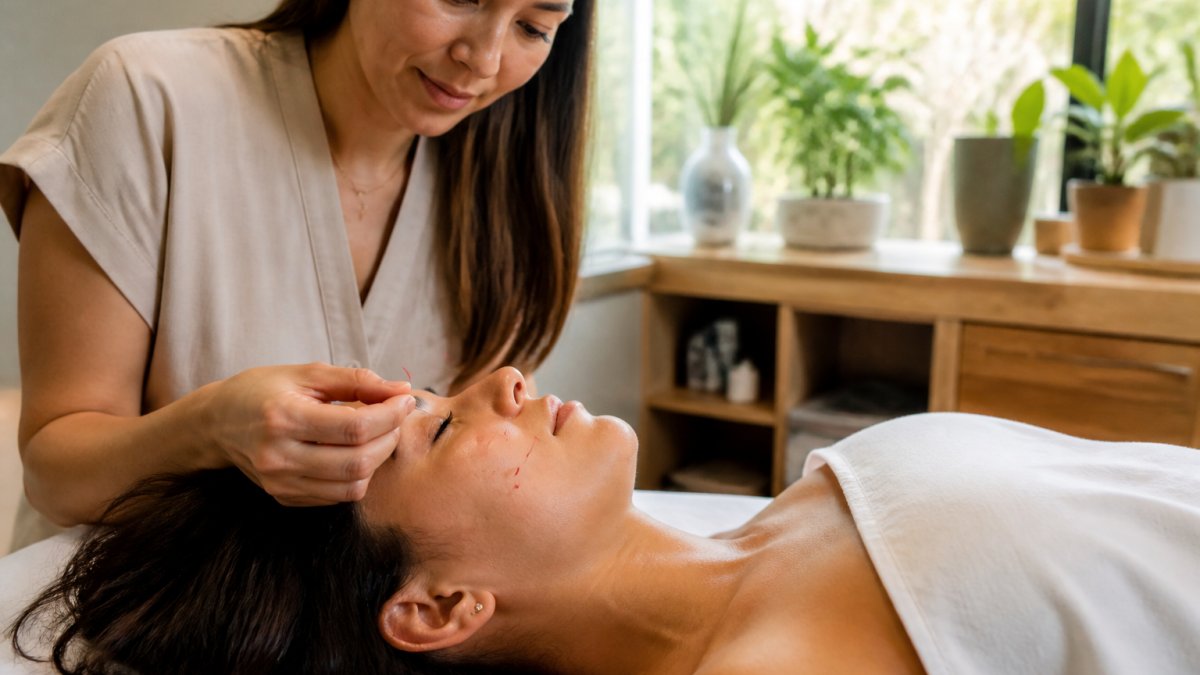
Facial cosmetic acupuncture is a minimally invasive treatment that inserts fine needles into specific points on the face and body to support skin firmness, circulation, and a more rested appearance. At Source Acupuncture in Pacific Beach, the benefits of cosmetic acupuncture for aging extend beyond the surface: the approach treats the face as part of a whole system, not an isolated canvas.
It differs from injectables in one key way. Nothing is being added or frozen. Instead, the goal is to wake up your skin’s own repair processes.
How It Differs From Traditional Body Acupuncture
Traditional acupuncture targets meridian points across the body to address pain, digestion, stress, and sleep. Cosmetic acupuncture keeps that whole-body logic but adds targeted work on the face.
Needles go into mimetic muscles, the small muscles that create expression lines. The aim is to release resting muscle tone in some areas and encourage activity in others. A session might combine body points for stress with facial points for contouring, so you’re not treating skin in isolation from the nervous system driving it.
How Cosmetic Acupuncture Works on Aging Skin
The mechanism is mechanical before it is mystical. When a fine needle enters the skin, it creates a controlled micro-trauma in the dermal layer. The body responds with a localized inflammatory cascade, the same basic repair signal triggered by microneedling or fractional laser, just far less intense. That signal recruits fibroblasts, the cells responsible for building collagen and elastin, and prompts them to lay down new structural protein in the treated area.
Collagen Production and the Dermal Layer
Collagen is the structural protein that keeps skin firm, and it is the first thing to go as you age. Starting in your mid-20s, you lose roughly 1% of your collagen per year, and the decline accelerates after menopause (PubMed). The dermal layer, the thick middle layer of skin, thins as a result, which is why mature skin looks crepey, loses bounce, and shows fine lines even at rest.
Micro-trauma from needling encourages fibroblasts to get back to work. Over a series of sessions, that repeated signal is what supports facial elasticity and skin texture. This is a gradual process, not an overnight one. It’s why a single session rarely delivers visible change and why a course of treatment matters more than any individual appointment.
Facial Circulation, Lymphatic Drainage, and Qi
Blood circulation carries oxygen and nutrients to skin cells and moves waste away. Lymphatic drainage handles fluid that would otherwise pool, which is part of why some people look puffy or tired rather than actually wrinkled. Needling along the face and neck encourages both, you can often see a temporary lift and de-puffing immediately after a session, even before collagen remodeling has had time to do anything.
In traditional Chinese medicine, this movement is described through Qi, the body’s vital energy. Whether you frame it as Qi or as microcirculation, the practical outcome is the same: better blood flow, less fluid retention, and a complexion that looks less fatigued.
What Cosmetic Acupuncture Cannot Fix
This is where most guides oversell. Cosmetic acupuncture works on skin quality, tone, and early laxity. It does not replace volume. If you have deep structural fat loss, hollowed cheeks, sunken temples, significant mid-face descent, needling will not rebuild that. Fat grafting, fillers, or a surgical lift address volume and structure; acupuncture addresses the skin envelope over it.
It also will not erase deep static furrows etched into the skin over decades, and it will not change bone resorption, which is a major driver of facial aging after 50. A balanced view: this treatment is best for prevention, early intervention, and maintenance alongside other modalities, not as a standalone reversal for advanced structural aging.
How Results Vary by Skin Type and Concern
Results are not uniform across skin types, and honest practitioners will tell you so.
- Dry, thin, mature skin tends to respond well because collagen support and improved circulation are exactly what it lacks. Expect gradual improvement in texture and glow.
- Oily or acne-prone skin can benefit from the circulation and lymphatic effects, but active breakouts should be avoided in treated areas to reduce the risk of spreading inflammation.
- Hyperpigmentation is not directly addressed by needling. In fact, any trauma to the skin, including needle micro-trauma, can occasionally trigger post-inflammatory hyperpigmentation in darker skin tones (Fitzpatrick IV-VI) (PubMed). Discuss this with your practitioner before starting.
- Laxity and sagging respond best when treatment starts earlier. Once laxity is advanced, acupuncture can support but not reverse it.
Knowing which category you fall into tells you more about your likely results than any general claim about the treatment.
Cosmetic Acupuncture vs Botox: How the Two Compare
These two approaches solve different problems, and treating them as competitors misses the point. Botox relaxes specific muscles to soften dynamic wrinkles. Cosmetic acupuncture works on skin quality, circulation, and muscle tone across the face. One is a targeted freeze; the other is a gradual, systemic nudge.
| Factor | Cosmetic Acupuncture | Botox |
|---|---|---|
| Mechanism | Micro-trauma, collagen stimulation | Neuromuscular blocking |
| Onset | Weeks, cumulative | Days |
| Duration | Maintained with sessions | Months, then repeat |
| Best for | Skin texture, tone, early laxity | Deep dynamic lines |
| Downtime | Minimal | Minimal |
For someone with deep furrows between the brows, acupuncture alone won’t erase them. For someone with dull tone, early fine lines and wrinkles, and a tired look, it’s a reasonable natural alternative. Many people use both, and there’s no rule against it.
How Many Acupuncture Sessions for Face Do You Need?
A common protocol is a series of sessions spaced close together, often weekly, followed by maintenance sessions at a longer interval. The honest answer is that treatment frequency depends on your skin, your age, your goals, and how consistently you show up.
What most guides miss is that consistency matters more than intensity. A client who completes a full initial series and then maintains will see more than someone who books three sessions, sees modest change, and stops. If you travel or work unpredictable hours, tell your practitioner up front. A realistic schedule you’ll actually keep beats an aggressive one you abandon.
Ask about a maintenance interval before you start, not after. Knowing your long-term cadence up front tells you whether the commitment fits your schedule and budget.
Facial Acupuncture Side Effects and Skin Type Suitability
Facial acupuncture side effects are typically mild and short-lived: small bruises, slight redness, or tenderness at needle sites. Serious complications are uncommon when treatment is performed by a licensed practitioner using sterile, single-use needles (peer-reviewed research). If you’re on blood thinners, pregnant, or have an active skin infection, get clearance from your physician first.
Skin type suitability varies. Thinner, drier, more mature skin often responds well because collagen support is exactly what it needs. Oily or acne-prone skin can still benefit, but active breakouts should be avoided in treated areas. Anyone with a history of cold sores should mention it, since needling can occasionally provoke an outbreak. Topical support remains a common secondary consideration for those curious about how collagen cream benefits compare to the internal stimulation provided by acupuncture.
Booking cosmetic acupuncture with an unlicensed provider to save money is the single biggest risk. Facial needling near eyes and vessels requires proper training and sterile technique. Verify credentials before you book anywhere.
What to Expect During a Session and Aftercare
A session usually starts with an assessment: your skin, your health history, your stress load, and what you actually want to change. Fine needles go in, you rest for a period, typically 20 to 30 minutes, and most people describe the experience as deeply relaxing rather than painful. You may feel a mild ache, warmth, or a dull tug at some points, which is normal and usually fades within seconds.

Aftercare Protocols That Protect Your Results
What you do in the 24 to 48 hours after a session affects how well your skin responds.
The first 24 hours:
- Skip strenuous exercise, saunas, hot yoga, and steam rooms, heat and sweat increase blood flow and can worsen bruising
- Avoid alcohol, which is a vasodilator and can prolong redness and bruising
- Don’t apply makeup over needle sites immediately after; wait at least 4 to 6 hours
- Keep the face out of direct sun and use a broad-spectrum SPF 30+ daily
- Drink water and prioritize sleep that night, recovery happens during rest
- Note any bruising and give it a day or two before judging results
The next 48 hours:
- Resume gentle skincare, but hold off on strong actives for 24 to 48 hours
- Avoid facial massage, gua sha, or aggressive exfoliation on treated areas
- Skip retinoids and high-concentration acids (glycolic, salicylic, lactic) for 48 hours to avoid compounding irritation
- Vitamin C and hydrating serums are fine and can support the repair process
Combining Cosmetic Acupuncture With Other Treatments
If you’re combining cosmetic acupuncture with microneedling, red light therapy, chemical peels, or injectables, spacing matters. Stacking too many treatments in the same week can overwhelm the skin rather than help it.
A common pattern practitioners follow:
- Microneedling: space at least 2 weeks apart from facial acupuncture, since both create micro-trauma
- Chemical peels: wait 1 to 2 weeks before or after, depending on peel depth
- Botox or fillers: wait about 2 weeks after injectables before needling the treated areas, and tell your acupuncturist exactly where you were injected
- Red light therapy: generally safe to combine, but keep it on a separate day if your skin is reactive
At Source Acupuncture, our practitioners map out a sequence so each modality supports the next instead of competing with it.
If you are on blood thinners, have a bleeding disorder, or are prone to keloid scarring, discuss aftercare and treatment timing with your practitioner and physician before booking. Bruising risk is higher and aftercare adjustments may be needed.
Take a photo in consistent lighting before your first session and again every 4 weeks. Subtle changes in tone and texture are easy to miss in the mirror but obvious side by side, and they help you and your practitioner decide whether to adjust the plan.
Realistic Expectations and Where Cosmetic Acupuncture Fits
Cosmetic acupuncture is not a facelift, and anyone promising that is overselling. It’s a gradual, cumulative treatment best suited to preventative aging, early laxity, dull tone, and people who want a non-invasive option without injectables.
Where it genuinely shines is combination therapy. Someone managing facial tension, dark circles, and sagging eyelids from stress and poor sleep often sees more improvement from a holistic approach than from a single targeted fix. The face reflects what’s happening underneath it.
Cosmetic acupuncture works best as a consistent, cumulative practice, not a one-off fix. Pair it with good aftercare and realistic timelines, and it earns its place in a long-term skin strategy.
If you’re weighing it against injectables, start with a consultation. A licensed practitioner can tell you honestly whether your goals fit what this treatment delivers. Source Acupuncture offers personalized care for stress, hormones, and immune support alongside cosmetic treatments, with a wellness membership program designed to make consistent sessions easier to maintain.
Frequently Asked Questions
Does cosmetic acupuncture actually work for fine lines and wrinkles?
Research on cosmetic acupuncture is still limited, and results vary by person. The treatment uses micro-trauma from fine needles to trigger collagen production and increase blood circulation in the dermal layer, which may soften fine lines and improve skin texture over a series of sessions. It works gradually rather than instantly, so most people see subtle changes after several weeks. It is not a replacement for dermatological procedures, and anyone with significant concerns should speak with a licensed practitioner about what is realistic for their skin.
How long do cosmetic acupuncture results last?
Results build over a course of treatment and typically fade if sessions stop. A common approach is a series of weekly visits followed by maintenance sessions every four to six weeks. How long results last depends on your age, skin condition, lifestyle, and how consistently you keep up with maintenance. Sun exposure, smoking, and poor sleep can shorten the effect. Your practitioner can set a maintenance schedule based on how your skin responds.
Is cosmetic acupuncture as good as Botox?
They work differently and are not directly interchangeable. Botox relaxes specific mimetic muscles to reduce dynamic wrinkles, and results appear within days. Cosmetic acupuncture takes a holistic approach, aiming to support collagen production, facial elasticity, and circulation across the face. It will not freeze expression lines the way Botox does. Some people use both, spacing them apart. A licensed practitioner can help you decide which option, or combination, fits your goals.
What are the potential facial acupuncture side effects?
Common facial acupuncture side effects are mild and short-lived: small bruises, slight soreness, or tiny marks where needles were placed. Serious complications are rare when a licensed practitioner uses sterile, single-use needles. Tell your practitioner about blood thinners, bleeding disorders, or active skin infections before treatment. If you have a history of cold sores, needling near the mouth may trigger an outbreak, so mention it during your consultation. Most people return to normal activity the same day.
Aging skin rarely has one cause, and it rarely has one fix. If you want a non-invasive option that works with your skin’s own repair processes rather than overriding them, Source Acupuncture offers licensed practitioners, personalized treatment plans, and a blend of traditional and advanced techniques including red light therapy and microneedling. Book a session and get an honest assessment of what cosmetic acupuncture can realistically do for your skin.