
Table of Contents
- Why Muscle Recovery Matters and What Slows It Down
- How to Reduce Delayed Onset Muscle Soreness
- Post-Workout Nutrition for Muscle Repair
- Sleep, Rest Days, and Active Recovery Techniques
- Acupuncture for Sports Injury Recovery
- Benefits of Red Light Therapy for Muscles
- Age-Specific Recovery Protocols and Cost-Effective Home Recovery
- Frequently Asked Questions
Last Updated: September 10, 2026
Why Muscle Recovery Matters and What Slows It Down
Muscle recovery is the physiological process your body uses to repair tissue damaged during exercise, replenish energy stores, and adapt to training stress. Skip it, and you train worse, sleep worse, and eventually break down.
Several factors slow recovery: inadequate protein intake, dehydration, poor sleep, chronic stress, and training the same muscle groups without enough rest. Alcohol is a bigger culprit than most people realize, since it disrupts muscle protein synthesis and sleep architecture. Research from the American College of Sports Medicine consistently emphasizes that recovery is not passive rest. It’s an active biological process you can support or sabotage.
Signs Your Muscles Are Not Recovering Well
- Persistent soreness lasting more than 72 hours after training
- Declining performance in consecutive workouts
- Elevated resting heart rate or disrupted sleep
- Nagging joint pain or muscle tightness that never fully resolves
- Mood changes, irritability, or low motivation to train
Pushing through these signs instead of addressing them is how overtraining syndrome develops. That can sideline you for weeks, not days.
How to Reduce Delayed Onset Muscle Soreness
Delayed onset muscle soreness (DOMS) is the tenderness and stiffness that shows up roughly 24 to 48 hours after unfamiliar or intense exercise and typically fades within 3 to 5 days (peer-reviewed research). It is driven less by lactic acid (which clears within about an hour) than by microscopic damage to muscle fibers from eccentric loading, the lengthening phase of a movement, like lowering a weight or running downhill, plus the inflammatory response that follows.
That mechanism explains why some remedies work and others don’t: you are not flushing out a toxin, you are managing tissue repair, inflammation, and nervous system sensitization.
What Actually Moves the Needle
Light movement beats complete rest. Low-intensity walking, cycling, or swimming increases blood flow and reduces stiffness without adding damage. Aim for 10 to 30 minutes at a conversational pace; complete rest leaves muscles stiffer.
The repeated-bout effect is your best long-term defense. After one bout of a movement, a second bout days to weeks later produces noticeably less soreness and damage, which is why a new program hurts most in week one and feels manageable by week three. Introduce new movements gradually.
Protein and carbohydrates within a few hours. Soreness and recovery both depend on amino acid availability and glycogen restoration. See the nutrition section below for specifics.
Sleep is non-negotiable. Most tissue repair and growth hormone release happens during deep sleep; shortchanging it slows the repair timeline DOMS reflects.
Gentle range-of-motion work. Slow, controlled stretching or mobility drills after soreness peaks can ease stiffness, though aggressive stretching of damaged muscle can worsen it. Keep it comfortable.
Modalities and Their Trade-Offs
- Foam rolling and massage: modest, short-term relief of tightness and perceived soreness. Best used consistently, not as a one-time fix.
- Cold therapy and ice baths: can blunt soreness and perceived fatigue, but some evidence suggests routine post-strength-training cold exposure may dampen the muscle-building signal. Save ice baths for competition recovery or when soreness is genuinely limiting, not after every hypertrophy session.
- Heat: useful for stiffness and relaxation, less so for acute inflammation.
- NSAIDs: relieve pain but may interfere with the inflammatory signaling that drives adaptation if used routinely. Occasional use for severe soreness is reasonable; daily use as a training habit is not.
- Acupuncture and bodywork: targeted at persistent tension and nervous system downregulation rather than the soreness itself.
What Most Guides Miss
DOMS is not purely mechanical. Inflammation, nervous system fatigue, and psychological stress all feed into how sore you feel and how quickly you bounce back, two athletes with identical training loads can report very different soreness based on sleep, stress, and prior exposure. That is why stress management and sleep belong in a DOMS conversation, not just stretching and ice.
Soreness that lasts beyond 72 hours, worsens over time, or comes with dark urine after intense exercise is not normal DOMS. Dark, cola-colored urine combined with severe muscle pain can signal rhabdomyolysis, a medical emergency. Seek care immediately.
If you are starting a new program, front-load the first two weeks with lighter loads and more reps before adding intensity. The repeated-bout effect will do more for your soreness than any supplement.
Post-Workout Nutrition for Muscle Repair
Post-workout nutrition for muscle repair comes down to three jobs: supply amino acids for tissue rebuilding, restore glycogen, and replace fluid and electrolytes lost through sweat. Timing matters, but total daily intake matters more, the old 30-minute “anabolic window” has been largely debunked.
Muscle protein synthesis stays elevated for roughly 24 hours after training, so spreading protein across the day beats cramming it into a single shake.
Protein: How Much and When
A practical target is roughly 0.25 to 0.4 grams of protein per kilogram of bodyweight per meal, or about 20 to 40 grams of high-quality protein within a few hours of training (acsm.org). For a 180-pound (about 82 kg) athlete, that is roughly 20 to 33 grams per meal.
Quality matters as much as quantity. A complete protein delivers all nine essential amino acids, and leucine, the amino acid that most directly triggers muscle protein synthesis, is the key lever. Roughly 2 to 3 grams of leucine per meal is the commonly cited threshold; whey, eggs, dairy, poultry, fish, and soy clear that bar easily. Plant-based eaters should aim slightly higher on total protein and combine sources (rice plus beans, for example).
Carbohydrates: Restoring Glycogen
Carbohydrates refill the glycogen your muscles burned during training. The urgency depends on your next session:
- Two sessions in one day, or training again within 8 hours: aim for roughly 1.0 to 1.2 grams of carbohydrate per kilogram of bodyweight per hour for the first few hours, paired with protein.
- Next workout is 24 hours away: total daily carbohydrate intake matters more than timing. Eat balanced meals and you will refill glycogen without obsessing over the clock.
For a 180-pound athlete, that fast-turnaround target works out to roughly 80 to 100 grams of carbohydrate per hour, a real meal plus a sports drink, not a single banana.
Hydration and Electrolytes
Hydration and electrolytes are often the missing piece. Water alone does not replace the sodium, potassium, and magnesium lost through sweat, and low electrolyte levels contribute to cramps, fatigue, and slower recovery heart rate normalization.
A practical approach:
- Drink water consistently through the day. Urine color remains one of the simplest markers, pale yellow means you are on track.
- Add electrolytes when workouts exceed an hour or when you sweat heavily. A common starting point is roughly 300 to 600 milligrams of sodium per hour of hard training, adjusted for how salty a sweater you are and how hot it is.
- Weigh yourself before and after long sessions. Every pound lost is roughly 16 to 24 ounces of fluid to replace, plus sodium.
- Potassium and magnesium come from food, bananas, potatoes, leafy greens, nuts, and beans, and support muscle function and relaxation.
Micronutrients Worth Knowing
- Omega-3 fatty acids: may help manage inflammation and support recovery. Fatty fish, walnuts, and flaxseed are good sources.
- Vitamin D and magnesium: support muscle function, contraction, and relaxation. Many people run low on both, especially in winter or with limited sun exposure.
The Cost-Effective Home Approach
You do not need expensive powders or recovery drinks. Chocolate milk, Greek yogurt with fruit, eggs on toast, a rice-and-bean bowl, or a tuna sandwich all deliver protein plus carbohydrate for a fraction of the cost of branded products. A simple electrolyte drink is water, a pinch of salt, and a squeeze of citrus. The basics, enough protein, carbohydrate, fluid, and sodium, cover the vast majority of what recovery nutrition is trying to accomplish. fitness recovery tools.
Prioritize in this order: total daily protein, total daily calories and carbohydrate, then timing and supplements. Most people who feel they recover poorly are simply under-eating protein and under-drinking fluid, not missing a special product.
Sleep, Rest Days, and Active Recovery Techniques
Sleep is the single most powerful recovery tool available, and it’s free. During deep sleep, the body releases growth hormone, repairs tissue, and regulates cortisol. Poor sleep hygiene and an irregular circadian rhythm undermine everything else you do for recovery.
Rest days don’t mean doing nothing. Active recovery techniques like walking, easy cycling, mobility work, and foam rolling promote blood flow and myofascial release without adding training stress.
Schedule at least one full rest day per week and one lighter “active recovery” day. The athletes who recover best aren’t the ones who train hardest. They’re the ones who plan recovery as deliberately as they plan workouts.
Foam rolling and massage target muscle tension and tightness, helping to move metabolic waste and improve flexibility, while compression garments offer modest circulatory support. These tools work best as part of a consistent routine, not one-off fixes.
Acupuncture for Sports Injury Recovery
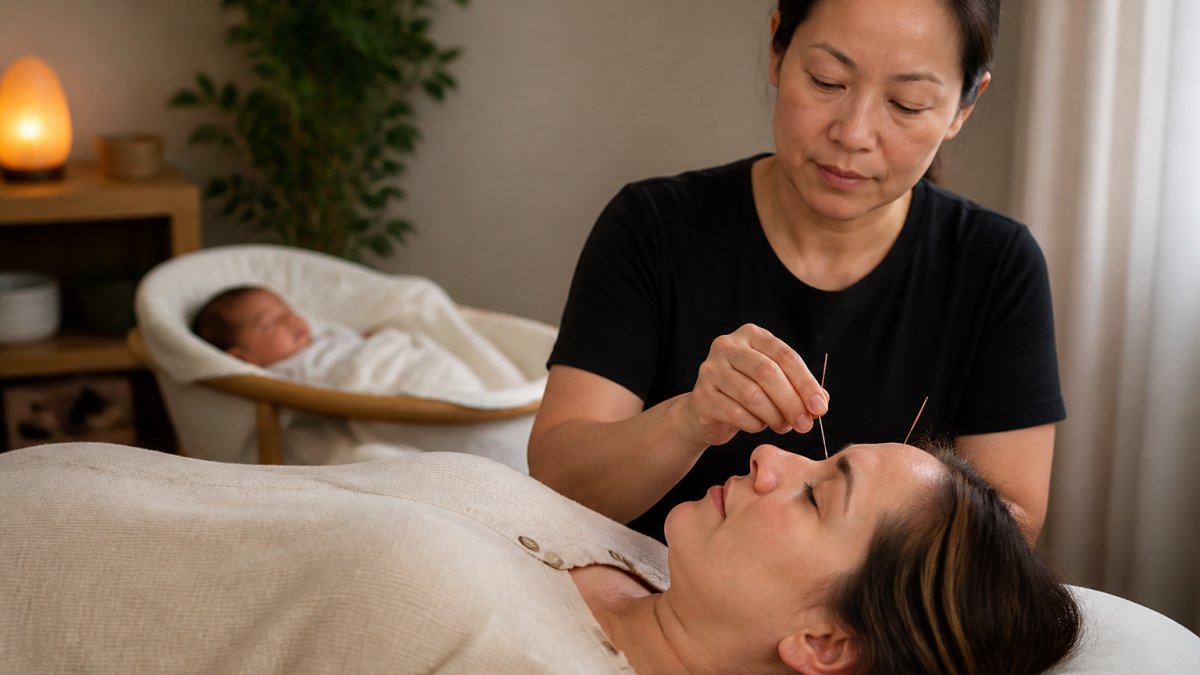
Acupuncture for sports injury recovery uses fine needles at specific points to influence blood flow, nervous system signaling, and the body’s natural pain response. Many athletes use it for recurring soreness, joint pain, and soft tissue injuries that haven’t resolved with rest alone.

At Source Acupuncture, our licensed practitioners build personalized treatment plans based on your training load, injury history, and recovery goals. Sessions often combine acupuncture with cupping to relieve muscle tension and support circulation, helping your body recover more efficiently between training sessions.
Benefits of Red Light Therapy for Muscles
The benefits of red light therapy for muscles come from its effect on cellular energy production and circulation. Red and near-infrared light penetrate tissue and may support tissue repair, reduce inflammation, and ease muscle fatigue when used consistently.
For recovery specifically, red light therapy is typically used after training or on rest days. It pairs well with acupuncture because both approaches aim to improve blood flow and support the body’s own repair mechanisms. Red light therapy is one part of a broader recovery plan, not a standalone cure.
Where it falls short: results depend on consistency and proper dosing. Occasional sessions won’t transform recovery. Regular use, combined with sleep, nutrition, and smart training, makes the difference.
Age-Specific Recovery Protocols and Cost-Effective Home Recovery
Recovery needs change with age, and most generic advice ignores that. Athletes in their 20s bounce back quickly with minimal intervention; by the 40s and beyond, tissue repair slows, hormonal shifts affect recovery, and joint stiffness lingers longer.
Age-specific adjustments worth making:
- Under 30: prioritize sleep and protein; recovery is more forgiving
- 30s to 40s: add structured mobility work and stress management
- 50s and older: emphasize consistency, lower-impact active recovery, and professional bodywork
Cost-effective home recovery is entirely possible. A foam roller, resistance band, and consistent sleep schedule cover most of the basics. What home tools can’t replicate is hands-on, personalized treatment for persistent tightness or injury.
At Source Acupuncture, our wellness membership program is designed for people who want consistent, ongoing recovery support rather than occasional appointments. Members receive deep discounts on services, making regular sessions more accessible than one-off visits. For busy professionals balancing training with high-stress schedules, that consistency is often what makes recovery actually work.
Frequently Asked Questions
What are the signs of poor muscle recovery?
Persistent soreness lasting more than three or four days, a resting heart rate that stays elevated, trouble sleeping, and a noticeable drop in workout performance all point to incomplete muscle recovery. Other signals include joint stiffness, mood changes, and feeling fatigued despite adequate rest. If these symptoms continue for more than a week, reduce training intensity and prioritize sleep, nutrition, and hydration. A qualified practitioner can help identify whether an underlying injury or overtraining syndrome is slowing your progress.
How does acupuncture support muscle recovery?
Acupuncture for sports injury recovery works by improving local blood flow, calming the nervous system, and easing muscle tension that builds up after hard training. Fine needles placed near tight or sore areas can help reduce pain signals and support tissue repair. Many athletes use it alongside foam rolling, stretching, and proper nutrition. Sessions are typically scheduled on rest days or after intense workouts so the body can respond without added physical stress.
What role does nutrition play in repairing muscle tissue?
Post-workout nutrition for muscle repair centers on protein, carbohydrates, and fluids. Protein provides amino acids that rebuild muscle fibers, while carbohydrates restore glycogen replenishment after training. Pairing 20 to 40 grams of protein with a carbohydrate source within a couple of hours of exercise supports muscle protein synthesis. Omega-3 fatty acids and adequate hydration with electrolytes also help manage inflammation and support overall recovery.
Can muscles recover in two days?
Recovery time depends on workout intensity, your training experience, and how well you sleep and eat. Mild soreness from moderate exercise often fades within 24 to 48 hours. Heavy resistance training or a new activity can cause delayed onset muscle soreness that peaks around 24 to 72 hours. If soreness lingers past three days or limits normal movement, give the muscle group more rest and focus on sleep, hydration, and light active recovery.