Table of Contents
- Understanding the Gut-Skin Axis
- 1. Add Fermented Foods to Support Gut Microbiota
- 2. Increase Fiber Intake for Microbial Diversity
- 3. Choose Foods for Gut-Skin Axis Support
- 4. Address the Gut Health and Acne Connection
- 5. Manage Stress and Sleep for Systemic Inflammation Control
- 6. Support Hydration and Mucosal Lining Health
- 7. How to Heal Gut Microbiome for Clear Skin
Last Updated: August 21, 2026
Understanding the Gut-Skin Axis
The gut-skin axis is the bidirectional communication system between your digestive microbiome and skin health. Your gut microbiota produces metabolites and short-chain fatty acids that affect skin barrier function systemically. When dysbiosis occurs (an imbalance in microbial diversity), systemic inflammation increases, triggering acne, eczema, rosacea, and other inflammatory skin conditions. At Source Acupuncture, we recognize that improving gut-skin axis function requires addressing internal balance, something topical treatments alone cannot achieve.
The gut-skin axis means your skin condition reflects your internal microbial health. Healing acne, eczema, or rosacea requires fixing dysbiosis first; topical treatments work best alongside gut healing.
This guide covers seven practical, evidence-based strategies to strengthen your gut-skin connection naturally. These approaches address fiber intake, fermented foods, stress management, hydration, and the specific skin conditions most affected by gut dysbiosis.
1. Add Fermented Foods to Support Gut Microbiota
Fermented foods are living sources of beneficial bacteria that directly seed your gut microbiota with probiotic strains. Unlike supplements, fermented foods deliver diverse bacterial populations in their natural food matrix, making them highly bioavailable.
Kefir is one of the most potent fermented sources available, containing dozens of probiotic strains that survive stomach acid better than many supplement formulations. Kimchi offers a fiber-rich alternative with capsaicin from chili peppers, which supports gut motility. Sauerkraut, tempeh, and miso work similarly. The key is consuming these foods consistently, aiming for a small serving of at least one fermented food daily.
Fermented foods work best when consumed with meals containing fat or protein. The food matrix helps probiotics survive gastric acid and reach the colon where they establish themselves in your microbiota.
How to start:
- Choose one fermented food that appeals to you
- Start with 2-3 tablespoons daily for the first week
- Increase to a quarter cup daily by week two
- Rotate between different fermented foods to maximize bacterial diversity
- Ensure products contain live and active cultures (check labels for "unpasteurized" or "contains live cultures")
The timeline for visible skin improvements typically ranges from 4-8 weeks as your microbiota stabilizes and systemic inflammation decreases.
2. Increase Fiber Intake for Microbial Diversity
Fiber is the primary fuel source for beneficial gut bacteria. The short-chain fatty acids produced when bacteria ferment fiber are critical for maintaining the intestinal barrier, reducing systemic inflammation, and supporting skin health.
Soluble fiber (found in oats, beans, apples, and psyllium) is fermented by gut bacteria into butyrate and other short-chain fatty acids (peer-reviewed research). Insoluble fiber (found in vegetables, whole grains, and legumes) adds bulk and supports gut motility. A practical approach is adding one high-fiber food per week to prevent digestive distress.
LOAM Prebiotic Fiber Formula combines multiple prebiotic fiber types specifically designed to nourish microbial diversity without causing bloating.
People with existing digestive sensitivity or those recovering from antibiotic use benefit most from gradual fiber increases paired with fermented foods. This combination rebuilds microbial diversity while preventing dysbiosis-related flares.
Fiber targets by condition:
- General gut health: 25-35g daily
- Acne or eczema: 35-45g daily (higher fiber supports greater microbial diversity)
- Severe dysbiosis: start at 15g and increase by 5g weekly
Track your intake for one week to establish a baseline, then increase incrementally. Most people reach optimal levels within 3-4 weeks.
3. Choose Foods for Gut-Skin Axis Support
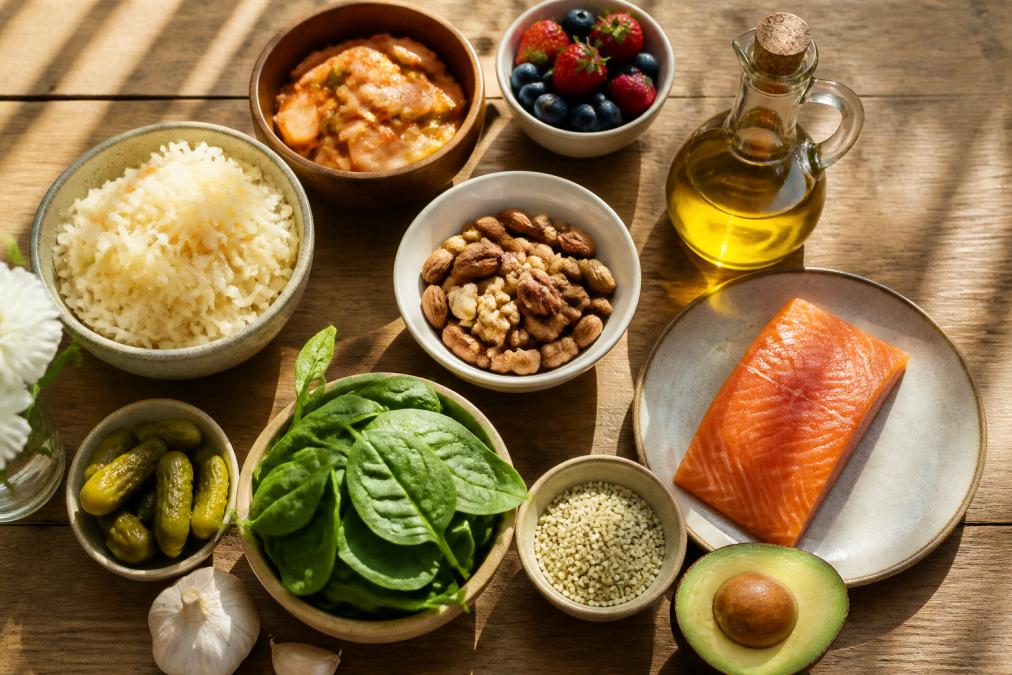
Mediterranean diet patterns consistently show the strongest association with skin health and microbiota diversity. These patterns emphasize olive oil, fish, vegetables, legumes, nuts, and whole grains while minimizing processed foods and refined sugars.
Antioxidant-rich foods deserve specific attention. Berries contain anthocyanins and catechins that reduce oxidative stress and feed beneficial bacterial strains. Green tea provides catechins shown to improve acne and skin barrier function. Omega-3 rich foods like fatty fish (salmon, mackerel, sardines) reduce systemic inflammation and support skin barrier function. NOW Foods Omega-3 supplements provide EPA and DHA when whole food sources aren’t accessible.
Foods to minimize include refined sugars, processed oils, and excessive alcohol. Even small reductions in processed food intake often produce visible improvements in skin clarity within 2-3 weeks.
Quick food swaps for gut-skin health:
- Replace refined grains with whole grains (brown rice, quinoa, oats)
- Swap vegetable oils for olive oil
- Choose wild-caught fish over processed meats
- Add berries to meals instead of processed desserts
- Use nuts and seeds as snacks instead of crackers
The Mindbodygreen Beauty & Gut Collagen+ supplement provides additional support by combining collagen peptides with hyaluronic acid and L-glutamine. Collagen directly supports skin elasticity while L-glutamine strengthens the intestinal lining, reducing leaky gut and systemic inflammation.
4. Address the Gut Health and Acne Connection
Acne represents one of the clearest manifestations of dysbiosis affecting skin. Dysbiosis increases intestinal permeability (leaky gut), allowing lipopolysaccharides to enter circulation and trigger systemic inflammation that manifests as acne, sebum overproduction, and impaired skin barrier function.
Specific probiotic strains show efficacy for acne reduction. Lactobacillus rhamnosus and Lactobacillus plantarum have been studied for their ability to reduce acne lesions and inflammatory markers (peer-reviewed research). The Gut Co Skin Health supplement specifically includes L. rhamnosus SP1 and LB21, strains selected for acne and eczema improvement.
Many people see acne improvements within 4-6 weeks of consistent gut-healing practices. However, severe acne may require 8-12 weeks as the microbiota fully rebalances and the intestinal lining repairs.
Natuderma Skin Probiotic Supplement offers a comprehensive 4-in-1 approach combining prebiotics, probiotics, postbiotics, and digestive enzymes. Postbiotics (fermentation byproducts from dead beneficial bacteria) provide anti-inflammatory compounds even when live bacteria haven’t fully established.
Acne can temporarily worsen during the first 1-2 weeks of gut healing as dysbiotic bacteria die off and release inflammatory compounds. This “die-off reaction” is temporary and indicates the healing process is working. Maintain consistency through this phase.
::: improve skin texture.
Acne-specific protocol:
- Start with fermented foods and fiber increases (week 1-2)
- Add a targeted probiotic like Gut + Skin Probiotic by GutPersonal (week 2 onward)
- Reduce inflammatory foods (refined sugars, vegetable oils)
- Increase antioxidant foods (berries, green tea, leafy greens)
- Expect temporary worsening weeks 1-2, then improvement weeks 3-6
5. Manage Stress and Sleep for Systemic Inflammation Control
Stress and poor sleep are primary drivers of dysbiosis and systemic inflammation. Cortisol elevation from chronic stress shifts your microbiota composition toward pathogenic strains while reducing microbial diversity. Sleep deprivation impairs intestinal barrier function and increases intestinal permeability (peer-reviewed research).
The gut-brain-skin axis means that stress management directly improves skin health. Sleep is when your body repairs the intestinal lining and consolidates immune tolerance. Missing 2-3 hours of sleep per night measurably worsens dysbiosis within days.
Source Acupuncture offers specialized protocols for stress and nervous system regulation through acupuncture and cupping, which reduce cortisol and support parasympathetic activation. These modalities work synergistically with dietary changes by addressing the neurological component of the gut-skin axis.

Sleep optimization steps:
- Maintain consistent sleep and wake times (even on weekends)
- Aim for 7-9 hours nightly
- Dim lights 1-2 hours before bed
- Avoid screens 30-60 minutes before sleep
- Keep your bedroom cool (65-68°F is ideal)
- Limit caffeine after 2 PM
Circadian rhythm disruption directly damages microbiota composition. Your beneficial bacteria follow a circadian pattern, with peak diversity occurring during your sleep window. Night shift work or irregular sleep schedules suppress this rhythm, leading to dysbiosis even when diet is optimized.
Many people notice reduced inflammation and clearer skin within 1-2 weeks of consistent sleep and stress management, even before microbiota fully rebalances.
6. Support Hydration and Mucosal Lining Health
Adequate hydration maintains mucosal lining integrity, which is the physical barrier preventing bacterial lipopolysaccharides from crossing into circulation. Dehydration thickens mucus, impairs gut motility, and creates an environment where dysbiotic bacteria thrive.
A practical baseline is half your body weight in ounces daily. A 150-pound person should aim for 75 ounces (about 2.2 liters). Urine color is a reliable indicator: pale yellow indicates adequate hydration, while dark yellow suggests dehydration.
Electrolyte balance matters alongside water intake. Sodium, potassium, and magnesium support optimal cellular hydration and intestinal function. Adding a pinch of sea salt to water or consuming electrolyte-rich foods like coconut water supports mucosal health more effectively than plain water alone.
L-glutamine is the primary fuel source for intestinal epithelial cells. The Mindbodygreen Beauty & Gut Collagen+ supplement includes L-glutamine specifically to support mucosal lining repair. When combined with adequate hydration, L-glutamine accelerates healing of leaky gut and reduces systemic inflammation.
:::tip
Drink water consistently throughout the day rather than consuming large amounts at once. Consistent hydration maintains steady mucosal production, while sporadic large intakes overwhelm the system without providing sustained benefits.
Hydration protocol:
- Calculate your baseline: half your body weight in ounces
- Drink 25% of that amount with each meal
- Add electrolytes (sea salt, mineral-rich foods) to support cellular hydration
- Monitor urine color as your primary indicator
- Increase intake on exercise days or in hot weather
Mucosal lining repair typically takes 4-6 weeks when supported by adequate hydration and L-glutamine.
7. How to Heal Gut Microbiome for Clear Skin
Healing your gut microbiome comprehensively requires combining all previous strategies into a coordinated protocol.
Weeks 1-2: Foundation Building
Start with fermented foods and hydration. Add one fermented food daily and increase water intake to your calculated baseline. Begin reducing processed foods.
Weeks 3-4: Fiber Introduction
Add one high-fiber food per week. Start with berries, then add leafy greens, then legumes. Implement sleep optimization and basic stress management.
Weeks 5-8: Targeted Support
If acne or eczema persists, add a targeted probiotic supplement like Gut + Skin Probiotic by GutPersonal or The Gut Co Skin Health. Continue fermented foods and fiber. Increase antioxidant-rich foods.
Weeks 9-12: Consolidation
Most people see measurable skin improvements by this point. Continue all previous strategies. If needed, add collagen support (Mindbodygreen Beauty & Gut Collagen+) for accelerated skin texture improvements.
The timeline for clear skin varies based on baseline dysbiosis severity. Mild acne may resolve within 4-6 weeks. Severe acne or eczema may require 12+ weeks. However, you should see some improvement, reduced inflammation, better digestion, improved sleep quality, within the first 2-3 weeks.
| Strategy | Timeline to Results | Effort Level | Best For |
|---|---|---|---|
| Fermented foods | 4-8 weeks | Low | Building microbial diversity |
| Fiber increases | 3-6 weeks | Low | Supporting beneficial bacteria |
| Targeted probiotics | 6-12 weeks | Low | Acne and eczema |
| Stress management | 1-2 weeks | Moderate | Immediate inflammation reduction |
| Sleep optimization | 1-2 weeks | Low | Microbiota stabilization |
| Hydration + L-glutamine | 4-6 weeks | Low | Mucosal lining repair |
Source Acupuncture practitioners can accelerate this process by addressing the neurological and energetic components of dysbiosis. Acupuncture reduces cortisol, supports parasympathetic activation, and improves digestive motility. When combined with dietary changes, acupuncture creates a synergistic effect where skin improvements occur faster and more completely than diet alone.
The gut microbiome heals in layers. Initial improvements occur within days. Systemic inflammation decreases within 1-2 weeks. Microbiota composition stabilizes within 4-8 weeks. Skin barrier function fully restores within 8-12 weeks. Consistency matters more than perfection. Most people find that once they experience the skin and energy improvements from a healthy microbiota, consistency becomes self-reinforcing.
Healing your gut-skin axis requires patience and consistency, but the results extend far beyond clearer skin. Most people report improved digestion, better sleep, reduced anxiety, and increased energy alongside skin improvements.
If you’re struggling with acne, eczema, rosacea, or other inflammatory skin conditions despite topical treatments, addressing your gut microbiota should be your first step. The strategies above are evidence-based and accessible.
Source Acupuncture’s practitioners specialize in supporting gut healing through personalized acupuncture protocols that reduce inflammation, improve digestion, and regulate your nervous system. These treatments work synergistically with dietary changes to address the gut-skin axis from multiple angles. Book a session to create a comprehensive healing plan tailored to your specific skin condition and digestive health.
Frequently Asked Questions
How does the gut-skin axis affect skin inflammation?
The gut microbiota influences systemic inflammation through metabolites like short-chain fatty acids (SCFAs). When dysbiosis occurs, the gut barrier weakens, allowing bacterial byproducts to enter the bloodstream and trigger inflammatory responses that manifest as acne, eczema, or rosacea. A healthy, diverse microbiome produces SCFAs that strengthen the mucosal lining and reduce oxidative stress, directly improving skin barrier function and reducing inflammation.
What are the best probiotic-rich foods for the gut health and acne connection?
Fermented foods like kefir, kimchi, sauerkraut, and miso contain live beneficial bacteria that support microbial diversity. These foods are particularly effective for the gut health and acne connection because they introduce multiple probiotic strains that help restore dysbiosis and reduce systemic inflammation. Start with small portions (1-2 tablespoons daily) to allow your digestive system to adjust, then gradually increase intake.
How long does it take to see skin improvements after changing your diet?
Most people notice initial changes in digestion within 2-3 weeks of dietary shifts, but visible skin improvements typically take 4-8 weeks of consistent practice. This timeline reflects the time needed for the gut microbiome to rebalance, for short-chain fatty acids to accumulate, and for skin cell turnover to occur. Results vary based on individual dysbiosis severity, baseline diet quality, and stress levels.
Can healing the gut resolve chronic skin conditions like acne or eczema?
Gut healing can significantly improve chronic skin conditions, but it works best as part of a comprehensive approach. For acne, addressing dysbiosis reduces inflammatory markers and sebum production. For eczema, a healthy gut barrier reduces immune overreaction. However, some conditions have multiple triggers (genetics, topical irritants, hormones). Working with a qualified practitioner, such as those at Source Acupuncture who specialize in integrative care, ensures you address root causes specific to your situation rather than treating symptoms alone.
This article was written using GrandRanker