
Table of Contents
- How Acupuncture Influences the Nervous System
- Understanding Sympathetic vs. Parasympathetic Nervous System Function
- Acupuncture Points for Anxiety and Nervous System Regulation
- How Long Does Acupuncture Take to Work for Stress and Nervous System Regulation
- Benefits of Acupuncture for Vagus Nerve Stimulation and Nervous System Health
- Acupuncture Aftercare for Nervous System Support
- Safety Considerations and Contraindications for Nervous System Disorders
- Conclusion: Building a Sustainable Nervous System Regulation Practice
Acupuncture for Nervous System Regulation: A Complete Guide
Last Updated: July 13, 2026
Acupuncture for nervous system regulation represents one of the most evidence-supported applications of traditional Chinese medicine in modern wellness practice. When acupuncture needles stimulate specific points on the body, they trigger measurable changes in how your nervous system communicates with your brain, influencing everything from heart rate variability to cortisol production. This guide covers the science behind nervous system regulation through acupuncture, the specific acupoints that create the most profound shifts, and practical strategies for tracking your progress.
How Acupuncture Influences the Nervous System
Acupuncture works through neuromodulation, using precise stimulation to alter how your nervous system processes signals. When an acupuncture needle reaches deeper tissue, it activates neural responses that send signals up the spinal cord to the brain, triggering physiological changes.
Most people operate in sympathetic dominance, with the "fight or flight" branch partially activated even when there’s no actual threat. Acupuncture nudges the system back toward balance by activating the parasympathetic nervous system, the "rest and digest" branch that initiates recovery.
Research shows that acupuncture influences the vagus nerve, the primary highway of parasympathetic signaling. Stimulating certain acupoints sends signals directly up the vagus nerve to the brainstem, triggering a relaxation response throughout your entire system. Heart rate drops. Blood pressure normalizes. Muscle tension releases. Cortisol, your primary stress hormone, begins to decline.
The most dramatic nervous system shifts happen when acupuncture is applied consistently over time. A single session provides acute relief, but weekly or biweekly treatments create lasting changes in your baseline nervous system state.
The Role of Neuromodulation
Needle insertion activates A-delta nerve fibers, which send inhibitory signals to the spinal cord, blocking pain signals from traveling upward, a principle called the "gate control theory of pain." Deeper needle placement stimulates C fibers, triggering the release of endogenous opioids and other neurotransmitters that produce prolonged relaxation.
Most significantly, acupuncture stimulates the release of GABA, serotonin, and dopamine. These neurotransmitters create calm, mood stability, and the ability to experience pleasure. When GABA levels rise, anxiety decreases. When serotonin increases, mood improves and pain perception drops.
Heart rate variability (HRV), the variation in time between heartbeats, increases after acupuncture, indicating a shift toward parasympathetic dominance. Blood pressure readings drop. Cortisol levels measured in saliva samples show measurable decline within hours of treatment.
Autonomic Nervous System Balance
Your autonomic nervous system exists in constant negotiation between sympathetic activation (arousal, mobilization) and parasympathetic activation (rest, recovery). Most chronic health conditions stem from a dysregulated autonomic system stuck too far toward the sympathetic side.
Acupuncture shifts this balance by directly activating parasympathetic pathways. The vagus nerve, which comprises about 75% of all parasympathetic fibers in your body, responds powerfully to acupuncture stimulation. Specific acupoints, particularly those on the ear, neck, and lower abdomen, have direct connections to vagal nuclei in the brainstem.
This shift has cascading effects. Your breathing naturally deepens and slows. Your digestive system reactivates. Immune function improves because the parasympathetic nervous system upregulates immune response while the sympathetic system suppresses it. Sleep quality typically improves because your nervous system can finally shift into the deep relaxation required for restorative sleep.
Understanding Sympathetic vs. Parasympathetic Nervous System Function
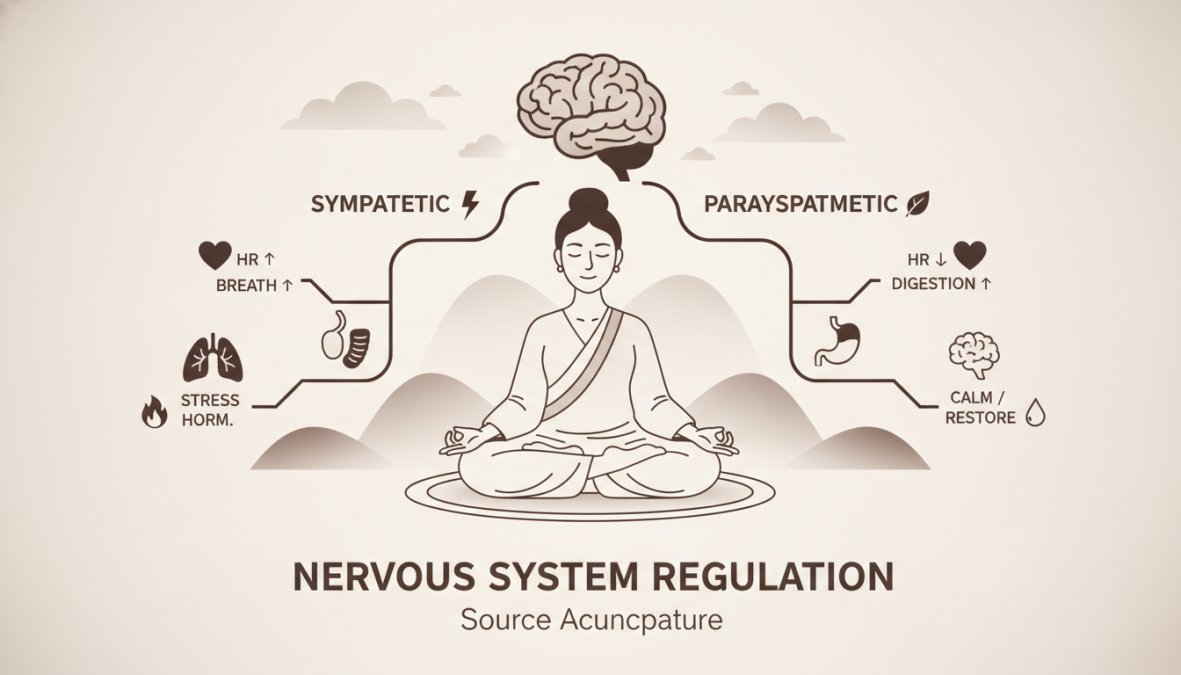
The sympathetic and parasympathetic branches of your autonomic nervous system are opposing forces designed to keep you alive. The problem in modern life is that your sympathetic nervous system stays partially activated even when you’re safe, creating a baseline state of low-grade alarm.
The Fight-or-Flight Response
Your sympathetic nervous system evolved to handle acute physical threats. When your brain perceives danger, the sympathetic branch floods your bloodstream with adrenaline and cortisol. Your heart rate accelerates. Blood vessels constrict. Digestion pauses. Immune function shifts from maintenance to acute response.
This response is invaluable during genuine physical emergencies but devastating when it activates in response to everyday stressors. Most people live in a state of chronic sympathetic activation, their nervous systems believing they’re under constant threat. Chronic sympathetic activation creates measurable health consequences: elevated cortisol suppresses immune function and disrupts sleep, sustained adrenaline increases inflammation, chronically elevated blood pressure stresses your cardiovascular system, and anxiety becomes the baseline state.
Acupuncture interrupts this pattern by directly activating the parasympathetic brake. When the parasympathetic nervous system activates, it sends a signal to your brain: "You’re safe now. It’s okay to rest and recover." Your sympathetic activation downregulates. Cortisol and adrenaline decline.
The Rest-and-Digest State
The parasympathetic nervous system is your recovery system. When activated, it tells your body that it’s safe to invest resources in long-term maintenance rather than short-term survival. Your heart rate drops. Blood vessels dilate, improving circulation. Digestion reactivates. Immune function returns to maintenance mode. Your attention broadens, allowing you to notice nuance rather than threat.
The parasympathetic nervous system is mediated primarily by the vagus nerve, which carries signals from your brain down to nearly every major organ system. Stimulating the vagus nerve through acupuncture essentially tells your entire body: "It’s safe to rest. It’s safe to digest. It’s safe to heal."
Many people in chronic stress states have lost the ability to activate their parasympathetic nervous system voluntarily. Acupuncture bypasses the need for willpower or conscious effort, directly activating parasympathetic pathways and creating a physiological state of rest and recovery that the nervous system then learns to access more easily.
The shift from sympathetic to parasympathetic activation is the primary mechanism through which acupuncture creates lasting nervous system regulation. Every treatment reinforces your nervous system’s ability to access this recovery state.
Acupuncture Points for Anxiety and Nervous System Regulation
Certain acupuncture points have direct anatomical connections to the vagus nerve or to brain regions that control parasympathetic activation. These points create more reliable and more pronounced nervous system shifts than points chosen randomly.
Key Acupoints and Their Functions
Auricular Points: The ear contains a complete microsystem of acupuncture points that map to the entire body. The auricular vagus point, located in the ear canal, has direct anatomical connections to the vagus nerve. The auricular shen men point (the "spirit gate") is equally powerful for anxiety and insomnia, creating a profound sense of mental clarity and emotional settling.
Vagal Points: Point CV-17 (the Sea of Qi point), located on the midline of the chest, has strong connections to both the vagus nerve and the heart. Point GV-24.5 (the Third Eye point), located between the eyebrows, activates the parasympathetic nervous system through connections to the prefrontal cortex, the brain region responsible for emotional regulation.
Central Nervous System Points: Point LI-4 (Large Intestine-4), located in the webbing between thumb and forefinger, is one of the most versatile acupuncture points. Point PC-6 (Pericardium-6), located on the inner forearm, has direct connections to the vagus nerve and is particularly effective for anxiety and insomnia.
Combining points from all three categories creates the most comprehensive nervous system reset.
Vagus Nerve Stimulation Through Acupuncture
The vagus nerve is the primary pathway through which acupuncture creates nervous system regulation. This single nerve carries approximately 80% of all parasympathetic signals from your brain to your body. When the vagus nerve is well-toned, meaning it’s responsive and easily activated, your entire nervous system becomes more resilient.
Direct needle stimulation of points with anatomical connections to the vagus nerve creates immediate signaling up the nerve to the brainstem. The brainstem then coordinates a whole-body parasympathetic response. Repeated stimulation over weeks and months increases vagal tone, your nervous system’s baseline capacity for parasympathetic activation.
Many patients report that after several weeks of regular acupuncture, they begin to notice spontaneous moments of calm throughout their day, even without treatment. This indicates that vagal tone has improved.
Vagus nerve stimulation can occasionally trigger a vasovagal response, a sudden drop in heart rate and blood pressure that creates dizziness or fainting. This is rare [with acupuncture](/the-powerful-healing-ability-of-e-stimulation-with-acupuncture/) but more common in people with a history of fainting or anxiety disorders. Inform your practitioner if you have a history of syncope (fainting) before treatment.
How Long Does Acupuncture Take to Work for Stress and Nervous System Regulation
Most people feel some degree of calm and relaxation during their first acupuncture session. However, this acute effect is not the same as nervous system regulation. Nervous system regulation means your baseline state shifts and your nervous system becomes more resilient.
Most practitioners recommend starting with weekly acupuncture sessions for the first 4-6 weeks. During this period, you’re essentially retraining your nervous system. Each session reinforces parasympathetic pathways. Your vagal tone gradually improves. By week 4-6, many patients notice they’re feeling calmer between sessions, not just during and immediately after treatment.
After 6-8 weeks of weekly treatment, most people can transition to biweekly or monthly maintenance sessions. Some people see significant shifts within 2-3 sessions, while others require 8-10 sessions before they notice substantial changes. This variation depends on how dysregulated your nervous system was to begin with, your stress load, your sleep quality, and your overall health status.
Tracking Progress and Measurable Outcomes
Heart rate variability (HRV) is the most reliable objective measure. You can measure HRV using smartphone apps or wearable devices that track the variation in time between heartbeats. HRV increases as your nervous system becomes more parasympathetically dominant.
Resting heart rate is another trackable metric. As your parasympathetic nervous system becomes more active, your resting heart rate naturally drops. Measuring your heart rate first thing in the morning, before getting out of bed, gives you a consistent baseline. You should see a 3-5 bpm drop after 4-6 weeks of regular acupuncture.
Sleep quality and sleep duration are worth tracking. Many patients see improvement in both within 2-3 weeks of starting treatment.
| Measurable Outcome | Timeline | Expected Change | How to Track |
|---|---|---|---|
| Resting heart rate | 4-6 weeks | 3-5 bpm decrease | Measure before rising from bed |
| Heart rate variability | 4-6 weeks | 10-20% increase | Use HRV app or wearable device |
| Sleep duration | 2-3 weeks | 30-60 minutes increase | Sleep tracking app or journal |
| Anxiety episodes | 4-8 weeks | Frequency and intensity decrease | Daily journal or symptom tracker |
| Stress recovery time | 6-8 weeks | Faster return to baseline after stress | Subjective assessment |
Track one or two of these metrics consistently for the first 8-12 weeks of treatment.
Benefits of Acupuncture for Vagus Nerve Stimulation and Nervous System Health
When your nervous system becomes properly regulated, cascading improvements appear across multiple body systems.
Stress Reduction and Cortisol Regulation
Cortisol is your primary stress hormone. In appropriate amounts, it helps you wake up in the morning and respond to challenges. Chronically elevated cortisol suppresses immune function, disrupts sleep, increases inflammation, impairs memory formation, and contributes to weight gain and metabolic dysfunction.
Acupuncture directly reduces cortisol levels. Studies examining salivary cortisol before and after acupuncture sessions show measurable cortisol decline. More importantly, the cortisol pattern normalizes. In healthy nervous systems, cortisol peaks in the early morning and gradually declines throughout the day, reaching its lowest point at night.
Acupuncture helps restore this natural cortisol rhythm. After several weeks of treatment, patients typically report that they wake more naturally, feel more energized in the morning, and experience appropriate afternoon energy decline. Nighttime cortisol drops sufficiently to allow deep sleep.
Pain Management Through Nervous System Reset
Chronic pain and nervous system dysregulation exist in a vicious cycle. Pain keeps your nervous system in sympathetic activation. Sympathetic activation increases pain perception and decreases pain tolerance. Acupuncture breaks this cycle by addressing both components simultaneously.
When acupuncture needles stimulate A-delta nerve fibers, they send inhibitory signals to the spinal cord that literally block pain signals from traveling upward to the brain. This creates immediate relief, often within minutes of needle insertion.
The deeper benefit comes from nervous system regulation. When your parasympathetic nervous system is properly activated, your pain threshold increases. You literally feel pain less intensely. Additionally, parasympathetic activation increases endogenous opioid production, creating natural pain relief that persists long after the treatment ends.
For chronic pain conditions like fibromyalgia, chronic back pain, and migraine headaches, acupuncture’s nervous system effects often prove more valuable than its direct pain-blocking mechanisms.
Acupuncture Aftercare for Nervous System Support
What you do after your acupuncture session matters as much as the session itself. The hours immediately following treatment represent a window of heightened nervous system plasticity. Aftercare practices that reinforce parasympathetic activation during this window accelerate your progress.
Post-Treatment Recommendations
Immediately after your acupuncture session, your nervous system is in a profoundly parasympathetic state. Give yourself at least 30-60 minutes of calm after treatment.
Hydration is critical. Acupuncture stimulates your lymphatic system and increases circulation. Drinking plenty of water in the hours after treatment supports this process. Most practitioners recommend drinking at least 16-32 ounces of water in the first hour after treatment.
Avoid strenuous exercise for at least 4-6 hours after treatment. Your nervous system is in recovery mode. Intense exercise activates your sympathetic nervous system, counteracting the parasympathetic benefits you just received. Light movement like walking is fine and actually beneficial.
Avoid alcohol for at least 24 hours after treatment. Alcohol disrupts the parasympathetic activation acupuncture created and interferes with sleep quality. Since sleep is when most nervous system healing occurs, protecting your sleep quality is essential.
Many practitioners recommend eating light, nourishing food within 1-2 hours after treatment. Avoid heavy, hard-to-digest foods.
The 24 hours after acupuncture is when your nervous system does most of its learning and integration. Prioritize sleep, hydration, and calm during this window.
Home-Based Nervous System Regulation Techniques
Between acupuncture sessions, you can amplify your results by practicing nervous system regulation techniques at home. These practices reinforce what acupuncture initiates and help your nervous system maintain its new, more regulated baseline.
Vagal breathing: The vagus nerve responds powerfully to slow, deep breathing, particularly to exhalation. Practice extending your exhalation to be longer than your inhalation. A 4-count inhale followed by a 6-count exhale activates the parasympathetic nervous system within seconds. Practice this for 5-10 minutes daily.
Cold water exposure: Brief exposure to cold water activates the vagus nerve through the dive reflex. Splashing your face with cold water or taking a 30-second cold shower activates parasympathetic pathways.
Progressive muscle relaxation: Systematically tensing and releasing muscle groups teaches your nervous system what genuine relaxation feels like. This 10-15 minute practice creates measurable parasympathetic activation.
Meditation and mindfulness: Any meditation practice that focuses your attention inward activates parasympathetic pathways. Simply sitting quietly for 10-20 minutes with attention on your breath creates nervous system benefits.
Gentle movement: Yoga, tai chi, or qigong create nervous system regulation through slow, intentional movement combined with breath awareness.
The most important principle is consistency. A 10-minute daily practice creates more benefit than a 60-minute practice once per week.
Safety Considerations and Contraindications for Nervous System Disorders
While acupuncture is generally safe, certain nervous system conditions require special consideration or modified treatment approaches.
People with severe anxiety disorders or panic disorder should inform their practitioner before treatment. The deep relaxation acupuncture creates can occasionally trigger anxiety in people with a history of panic attacks. Experienced practitioners can modify treatment intensity and point selection to minimize this risk.
People with a history of fainting or syncope should disclose this before treatment. Some acupuncture points can occasionally trigger a sudden drop in blood pressure and heart rate.
People taking blood thinners or who have bleeding disorders should inform their practitioner. Acupuncture creates minor bleeding in some cases, which is generally harmless but becomes a concern with blood thinning medications or clotting disorders.
People with severe needle phobia may find acupuncture triggering. The needles used in acupuncture are extremely thin, much thinner than hypodermic needles, and insertion is usually painless.
Pregnant people should work with practitioners who specialize in prenatal acupuncture. Certain acupuncture points can influence uterine contractions and should be avoided during pregnancy.
People with implanted medical devices like pacemakers should consult their cardiologist before acupuncture. Most modern pacemakers are unaffected by acupuncture, but this varies by device and should be verified.
Nervous system dysregulation underlies most chronic health conditions in modern life. Whether you’re dealing with anxiety, insomnia, chronic pain, or simply the accumulated stress of constant pressure, your nervous system is likely stuck in a state of chronic activation that your body can’t escape on its own.
Acupuncture for nervous system regulation offers a direct neurological pathway back to balance. Rather than requiring willpower or years of therapy, acupuncture stimulates your parasympathetic nervous system directly, creating measurable shifts in heart rate, cortisol levels, and nervous system resilience. Book a session with Source Acupuncture and begin your nervous system’s journey back to genuine regulation and resilience.
Frequently Asked Questions
How does acupuncture affect the nervous system and promote nervous system regulation?
Acupuncture influences the nervous system through neuromodulation, stimulating acupoints sends signals along neurological pathways that activate the parasympathetic nervous system and reduce sympathetic (fight-or-flight) dominance. This triggers the release of neurotransmitters like endorphins and serotonin, which calm the central nervous system and promote homeostasis. The vagus nerve, a key component of the autonomic nervous system, responds to acupuncture stimulation, helping restore balance between stress response and relaxation.
How many acupuncture sessions are typically needed to regulate the nervous system?
Most people notice initial improvements in stress and anxiety within 4-6 sessions, though nervous system regulation is a progressive process. Acute stress may respond faster (2-3 weeks), while chronic nervous system dysregulation often requires 8-12 sessions over 4-6 weeks for sustained benefits. Consistency matters more than frequency, weekly or bi-weekly sessions allow your nervous system to integrate the therapeutic effects. Progress tracking through heart rate variability, sleep quality, and stress symptoms helps measure your individual timeline.
What acupuncture points are most effective for calming the nervous system and reducing anxiety?
Key acupoints for nervous system regulation include Heart 7 (HT7), which promotes calm and emotional balance; Conception Vessel 4 (CV4), which supports deep relaxation; and Liver 3 (LV3), which helps regulate stress response. The vagus nerve responds particularly well to points on the ear and neck, including auricular acupuncture protocols designed for nervous system reset. Your practitioner customizes point selection based on your specific symptoms, whether you experience anxiety, insomnia, or physical tension from chronic stress.
Are there any safety concerns or contraindications for acupuncture if I have a nervous system disorder?
Acupuncture is generally safe, but certain nervous system conditions require modified treatment. If you have seizure disorders, severe autonomic dysfunction, or are taking medications that affect nervous system function, inform your practitioner beforehand. Acupuncture should not replace emergency care for acute neurological events. Licensed practitioners assess your medical history and adjust needle depth, point selection, and session frequency to ensure safety. Always seek treatment from a qualified acupuncturist familiar with nervous system conditions.
This article was written using GrandRanker